
 By John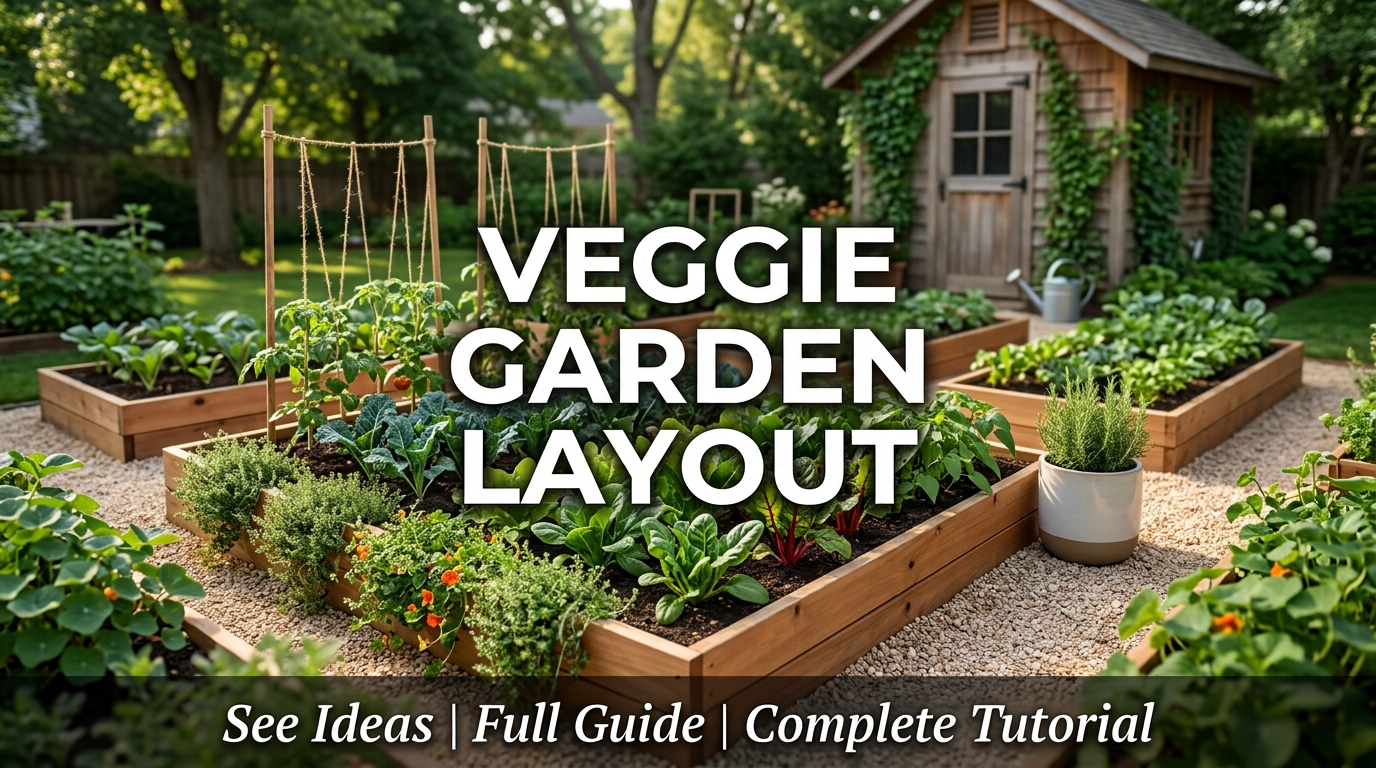
A well-planned veggie garden layout makes it easier to grow vegetables, herbs, and edible flowers while keeping the garden organized and productive. Whether you have a large backyard, a small urban plot, raised beds, containers, or a narrow side yard, the right layout can maximize growing space and simplify watering, harvesting, and maintenance.
The best vegetable garden designs combine practical pathways, good sunlight, accessible planting beds, and crops arranged according to their size and growing habits.
What Is a Veggie Garden Layout?
A veggie garden layout is a planned arrangement of vegetable beds, pathways, plants, supports, containers, and garden features.
A good layout considers:
- Sunlight
- Soil
- Water access
- Bed dimensions
- Walking paths
- Plant spacing
- Crop height
- Companion planting
- Rotation
- Harvest access
Planning these details before planting can save time and prevent overcrowding later.
Benefits of Planning a Veggie Garden Layout
A thoughtful layout can:
- Maximize growing space
- Improve accessibility
- Make watering easier
- Simplify harvesting
- Reduce wasted space
- Organize different crops
- Improve sunlight exposure
- Make maintenance more efficient
Even a simple sketch can make a major difference.
1. Raised Bed Veggie Garden Layout
Raised beds are one of the most popular vegetable garden layouts.
Arrange rectangular beds with pathways between them.
Use the beds for:
- Leafy greens
- Root vegetables
- Tomatoes
- Peppers
- Herbs
Keep beds narrow enough that you can reach the center without stepping on the soil.
2. Small Veggie Garden Layout
A small garden can produce a surprising amount of food when space is used efficiently.
Try:
- Compact raised beds
- Vertical trellises
- Container vegetables
- Succession planting
- Narrow pathways
Prioritize crops your household enjoys rather than trying to grow everything.
3. Backyard Veggie Garden Layout
A backyard vegetable garden can combine several growing zones.
Create separate areas for:
- Root crops
- Leafy vegetables
- Fruiting crops
- Herbs
- Vertical crops
- Compost
Place frequently harvested crops close to the house.
4. Large Vegetable Garden Layout
A large garden provides room for wider crop rotation and dedicated planting sections.
Divide the space into organized beds.
Use permanent pathways to make the garden easier to navigate and maintain.
5. Square Foot Garden Layout
A square-foot-inspired layout divides growing beds into smaller sections.
This approach can help organize compact crops and make spacing easier to manage.
Use a grid to plan different vegetables within the same raised bed.
6. Four Raised Bed Layout
Four rectangular raised beds can create a simple and attractive arrangement.
Leave a central or surrounding pathway for access.
Use each bed for different crop groups and rotate crops between seasons.
7. U-Shaped Veggie Garden Layout
A U-shaped arrangement creates a central working area surrounded by planting beds.
It works well when you want easy access to multiple crops.
Keep the center open enough for comfortable movement.
8. L-Shaped Vegetable Garden
An L-shaped garden can fit naturally into corners.
Use the longer section for larger crops and the shorter section for herbs, greens, or compact vegetables.
This layout works particularly well along fences or property boundaries.
9. Circular Veggie Garden Layout
Circular beds can create an attractive decorative vegetable garden.
Divide the circle into sections with narrow paths.
Use the center for a focal crop, trellis, herb feature, or ornamental element.
10. Keyhole Veggie Garden Layout
A keyhole garden uses a circular or rounded bed with an access path extending toward the center.
It allows you to reach much of the planting area without walking through the bed.
This layout can be useful where efficient access is important.
11. Long Narrow Veggie Garden
Long planting beds can work well along fences, walls, and side yards.
Use compact crops toward the edges and trellised crops where vertical space is available.
Leave enough room for walking and harvesting.
12. Veggie Garden Along a Fence
A sunny fence line can become a productive growing area.
Use the fence to support suitable climbing crops such as:
- Beans
- Peas
- Cucumbers
- Small melons where appropriate
Install strong trellising rather than relying on a fence that wasn’t designed to carry plant weight.
13. Vegetable Garden With Trellis
Vertical growing can dramatically increase productivity in small spaces.
Use trellises for suitable climbing crops.
Place taller structures where they won’t unnecessarily shade shorter vegetables.
14. Container Veggie Garden Layout
Containers make vegetable growing possible on patios, balconies, decks, and other small spaces.
Arrange containers according to:
- Sunlight
- Water requirements
- Plant height
- Harvest frequency
Use containers with adequate drainage.
15. Patio Veggie Garden Layout
A patio garden can use large containers, raised planters, and vertical supports.
Grow compact vegetables such as:
- Cherry tomatoes
- Peppers
- Lettuce
- Radishes
- Herbs
Choose varieties specifically suited to container growing when possible.
16. Balcony Veggie Garden Layout
Balcony gardens need careful planning.
Use:
- Lightweight containers
- Vertical planters
- Rail planters where permitted
- Compact vegetables
- Herbs
Check the balcony’s load capacity and local building rules before adding substantial planters.
17. Herb and Veggie Garden Layout
Combine herbs and vegetables in a dedicated edible garden.
Place frequently harvested herbs near the easiest access point.
Use perennial herbs in permanent locations and rotate annual vegetables around them.
18. Veggie Garden With Flowers
Flowers can make a vegetable garden more attractive and may provide resources for pollinators.
Include suitable flowers around or between vegetable beds.
Choose species that won’t aggressively spread or compete excessively with crops.
19. Companion Planting Layout
Companion planting involves growing selected plants together based on their potential compatibility.
Popular combinations may include:
- Tomatoes and basil
- Carrots and onions
- Lettuce and radishes
However, companion planting should not replace basic requirements such as proper spacing, sunlight, soil, watering, and pest management.
20. Three Sisters Garden Layout
The traditional Three Sisters planting system combines:
- Corn
- Beans
- Squash
The plants use different growth habits and can occupy different vertical and horizontal spaces.
Choose varieties suited to your climate and provide adequate room for vigorous growth.
21. Salad Garden Layout
Create a dedicated bed for frequently harvested salad crops.
Include:
- Lettuce
- Radishes
- Arugula
- Spinach
- Green onions
- Herbs
Use succession planting to maintain a steady harvest.
22. Tomato Garden Layout
Tomatoes need adequate spacing, sunlight, support, and airflow.
Arrange plants in rows or raised beds with sturdy cages or trellises.
Avoid placing plants so close together that foliage remains constantly crowded.
23. Root Vegetable Garden Layout
Root vegetables can be grouped in a dedicated bed.
Consider:
- Carrots
- Radishes
- Beets
- Turnips
Prepare deep, loose soil for crops that develop underground.
24. Leafy Greens Garden Layout
Leafy greens can be grown in compact beds.
Use:
- Lettuce
- Spinach
- Kale
- Swiss chard
- Asian greens
Plant according to local temperatures because some greens perform better during cooler seasons.
25. Vegetable Garden With Fruit Trees
Fruit trees can coexist with vegetables, but spacing and shade need careful consideration.
Place vegetables where they receive sufficient sunlight and avoid disturbing major tree roots.
Dwarf or compact fruit trees may be easier to integrate into smaller landscapes.
26. Vertical Veggie Garden Layout
Vertical growing is ideal for limited ground space.
Use:
- Trellises
- Garden arches
- Wall planters
- Vertical towers
- Hanging containers
Grow suitable climbing crops vertically to free up soil-level space.
27. Indoor-Outdoor Veggie Garden Layout
Place an outdoor vegetable garden close to the kitchen or back door when possible.
Keep herbs and frequently harvested greens within easy reach.
A nearby location can make it more convenient to harvest fresh ingredients regularly.
28. Kitchen Garden Layout
A kitchen garden combines vegetables, herbs, and edible flowers close to the home.
Use neat pathways and clearly defined beds.
Create a practical layout that makes harvesting and cooking convenient.
29. Rustic Veggie Garden Layout
A rustic vegetable garden can use natural materials.
Try:
- Wooden raised beds
- Gravel paths
- Natural stone
- Wooden trellises
- Simple fencing
Combine productive crops with flowers for a relaxed appearance.
30. Formal Veggie Garden Layout
A formal vegetable garden can use geometric beds and symmetrical paths.
Arrange vegetables in repeating patterns.
Use low edging or hedges to define the planting areas.
31. Modern Veggie Garden Layout
Modern vegetable gardens often use clean lines and minimal materials.
Consider:
- Rectangular raised beds
- Gravel
- Metal edging
- Timber
- Repeated planting
Keep the layout simple and functional.
32. Cheap Veggie Garden Layout
A productive vegetable garden doesn’t need expensive materials.
Use affordable options such as:
- Simple ground-level beds
- Recycled containers
- Homemade trellises
- Mulch pathways
- Locally available materials
Avoid using materials that may contain chemicals or contaminants unsuitable for food growing.
33. No-Dig Vegetable Garden Layout
A no-dig approach builds organic matter on top of the existing soil rather than repeatedly turning it.
Create clearly defined beds and cover pathways with suitable mulch.
Use healthy compost and other appropriate organic materials.
34. Hugelkultur-Inspired Garden Layout
Hugelkultur-inspired beds use woody material and organic matter beneath growing soil.
They can create raised growing areas, but the approach requires careful material selection and adequate moisture management.
Avoid using diseased or contaminated wood.
35. Vegetable Garden With Compost Area
Include a composting zone near, but not directly inside, the growing beds.
Place it where it is convenient to access but doesn’t interfere with pathways or harvest areas.
36. Vegetable Garden With Tool Storage
A small storage area can make gardening more efficient.
Keep frequently used tools close to the vegetable beds.
Store chemicals and sharp tools securely away from children and pets.
37. Accessible Veggie Garden Layout
For easier access, use raised beds and wide pathways.
Keep frequently harvested vegetables within comfortable reach.
A well-designed accessible garden can reduce bending and unnecessary walking.
38. Four-Season Veggie Garden Layout
Plan beds around seasonal crops.
For example, one bed might transition from:
- Cool-season greens
- To summer vegetables
- To fall crops
Succession planting allows the same space to remain productive for longer.
39. Crop Rotation Layout
Crop rotation means changing where related crop groups are planted from season to season.
Organize beds into crop categories and move them around the garden over time.
This can help with some pest and disease management issues and improve long-term planning.
40. Veggie Garden Layout With Pathways
Pathways should provide comfortable access without taking unnecessary space.
Popular materials include:
- Gravel
- Wood chips
- Stone
- Pavers
- Mulch
Keep paths wide enough for harvesting equipment and comfortable movement.
Best Vegetables for a Veggie Garden
Good choices depend on your climate and growing season.
Common options include:
- Tomatoes
- Peppers
- Cucumbers
- Carrots
- Radishes
- Lettuce
- Spinach
- Kale
- Beans
- Peas
- Onions
- Beets
- Squash
- Herbs
Choose crops that match your local growing conditions and the amount of sunlight available.
How to Plan a Veggie Garden Layout
Step 1: Measure the Space
Record the length and width of your available growing area.
Step 2: Observe Sunlight
Track which areas receive full sun and which become shaded.
Step 3: Identify Water Access
Place the garden where irrigation or watering is practical.
Step 4: Draw the Beds
Sketch raised beds, ground-level beds, containers, and pathways.
Step 5: Group Crops
Arrange plants according to size, growing season, and water requirements.
Step 6: Plan Vertical Space
Add trellises for suitable climbing crops.
Step 7: Leave Walking Space
Ensure every bed can be reached without stepping into the soil.
Step 8: Add Supporting Areas
Include compost, tool storage, water access, and harvesting space.
Step 9: Plan Succession and Rotation
Think beyond the current season and determine what will follow each crop.
Veggie Garden Layout Tips
Put Tall Crops on the North Side
Where practical, place tall crops toward the north side of the garden so they are less likely to shade shorter plants.
Keep Frequently Harvested Crops Close
Herbs and salad greens are easier to use when they’re near the kitchen.
Don’t Make Beds Too Wide
You should be able to reach the center without stepping on the growing soil.
Use Vertical Space
Trellises can increase productivity without requiring more ground area.
Group Similar Needs Together
Plants with similar sunlight and water requirements are easier to manage together.
Common Veggie Garden Layout Mistakes
Planting Without Measuring
Improvising can result in overcrowded beds and inadequate pathways.
Ignoring Sunlight
Tall plants can cast significant shade.
Making Beds Too Wide
If you cannot comfortably reach the center, maintenance becomes difficult.
Forgetting Mature Size
Small seedlings can become large plants surprisingly quickly.
Overcrowding Vegetables
Good airflow and proper spacing are important for healthy plants.
Growing Too Many Crops
Start with vegetables you actually enjoy eating and expand gradually.
Frequently Asked Questions
What is the best layout for a vegetable garden?
Raised rectangular beds with accessible pathways are a practical option for many gardeners, but the best layout depends on your available space, sunlight, soil, and growing goals.
How far apart should vegetable beds be?
Leave enough room for comfortable movement and maintenance. The ideal pathway width depends on whether you need to carry tools, wheel a cart, or simply walk between beds.
What vegetables should be planted together?
Plants can be grouped according to similar growing requirements. Some traditional companion combinations can also be useful, but spacing, sunlight, soil, and watering should remain the main priorities.
How do I maximize a small vegetable garden?
Use raised beds, succession planting, compact varieties, vertical supports, containers, and crops that produce repeatedly over a season.
Should a vegetable garden be in full sun?
Many common vegetables perform best with substantial sunlight, but requirements vary. Leafy greens and some herbs can tolerate less sun than many fruiting crops.
Conclusion
A successful veggie garden layout combines productivity with easy access and efficient use of space. Raised beds, square-foot-inspired grids, U-shaped layouts, narrow borders, container gardens, vertical structures, and formal geometric designs can all work when adapted to the site.
Start by studying sunlight, measuring the available space, and planning practical pathways. Choose crops that suit your climate and prioritize vegetables your household will actually use. With thoughtful organization, even a small garden can become a productive and attractive source of fresh vegetables, herbs, and edible flowers.