
 By John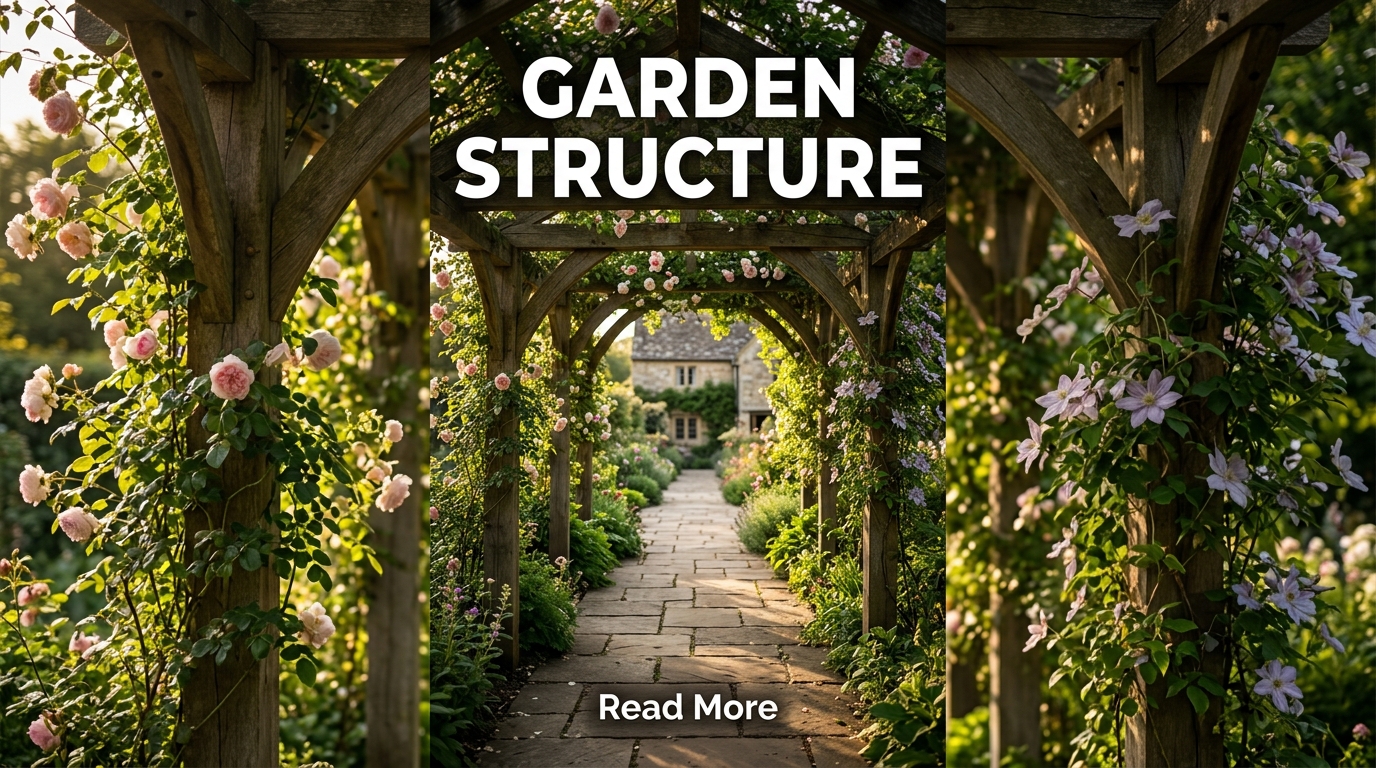
Garden structure plays an important role in creating an organized, attractive, and functional outdoor space. While plants provide color, texture, and seasonal interest, structures add height, definition, privacy, shelter, and architectural character to the landscape.
Garden structures can range from simple trellises and arches to pergolas, gazebos, garden rooms, walls, fences, raised beds, and decorative screens. The right structure can transform an ordinary backyard into a welcoming garden with distinct areas for relaxing, entertaining, growing plants, or enjoying nature.
Whether you have a large landscape or a small backyard, these garden structure ideas can help you create a more purposeful and beautiful outdoor environment.
1. Add a Garden Pergola
A pergola is one of the most versatile garden structures. Use it to define a seating area, provide partial shade, or create a framework for climbing plants. Wooden, metal, and modern minimalist designs can suit different garden styles.
2. Create a Garden Arbor
A garden arbor can mark an entrance or transition between different parts of the landscape. Add climbing roses, clematis, jasmine, or other suitable vines to soften the structure.
3. Install a Garden Trellis
Trellises provide vertical support for climbing plants while adding architectural interest. Place one against a wall, fence, or garden bed, or use a freestanding trellis as a decorative feature.
4. Build a Gazebo
A gazebo creates a dedicated outdoor destination for relaxing and entertaining. Add comfortable seating, lighting, and surrounding plants to make it an inviting garden retreat.
5. Create a Garden Archway
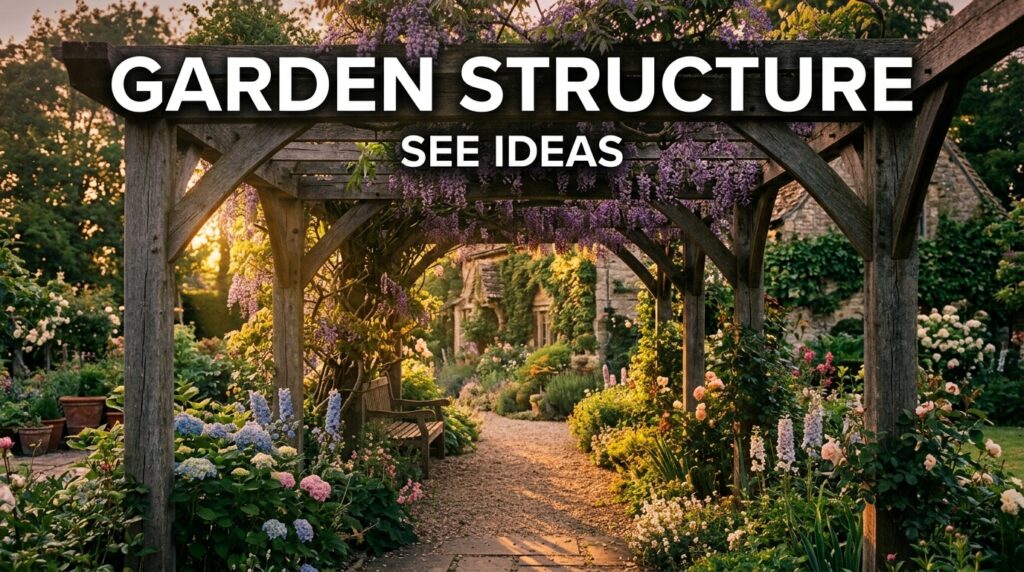
An archway can become a dramatic focal point along a pathway. Train climbing plants across the top to create a living entrance that changes throughout the growing season.
6. Add a Garden Fence
Fences provide boundaries, privacy, and structure. Choose wood, metal, stone, or another suitable material that complements your home’s architecture and garden style.
7. Create a Living Privacy Screen
Use tall shrubs, ornamental grasses, bamboo, climbing plants, or dense hedges to create a natural privacy barrier. Living screens can feel softer and more integrated than solid walls.
8. Build a Garden Wall
A garden wall can divide spaces, provide privacy, create raised beds, or serve as a backdrop for plants. Stone and brick walls are especially effective for traditional and cottage-style landscapes.
9. Add a Garden Room
A garden room can provide a separate space for working, relaxing, reading, dining, or entertaining. Position it where it complements the existing landscape rather than overwhelming the garden.
10. Create a Covered Seating Area
A covered structure allows you to enjoy the garden in different weather conditions. Add outdoor furniture, cushions, lighting, and climbing plants to make it comfortable and attractive.
11. Install a Small Pavilion
A pavilion can provide an elegant sheltered area within a larger garden. It can serve as an outdoor dining room, relaxation space, or focal point at the end of a pathway.
12. Add a Pergola Over a Patio
Connecting a pergola to a patio creates a strong relationship between the house and garden. Use climbing plants or outdoor curtains to provide additional shade and privacy.
13. Create a Garden Bridge
If your landscape includes a pond, stream, dry riverbed, or drainage feature, a small bridge can add character. Even a decorative bridge can create a strong visual focal point.
14. Build Raised Garden Beds
Raised beds provide structure while making vegetable, herb, and flower gardening easier to organize. Use timber, stone, brick, or other durable materials suitable for outdoor conditions.
15. Add Decorative Garden Screens
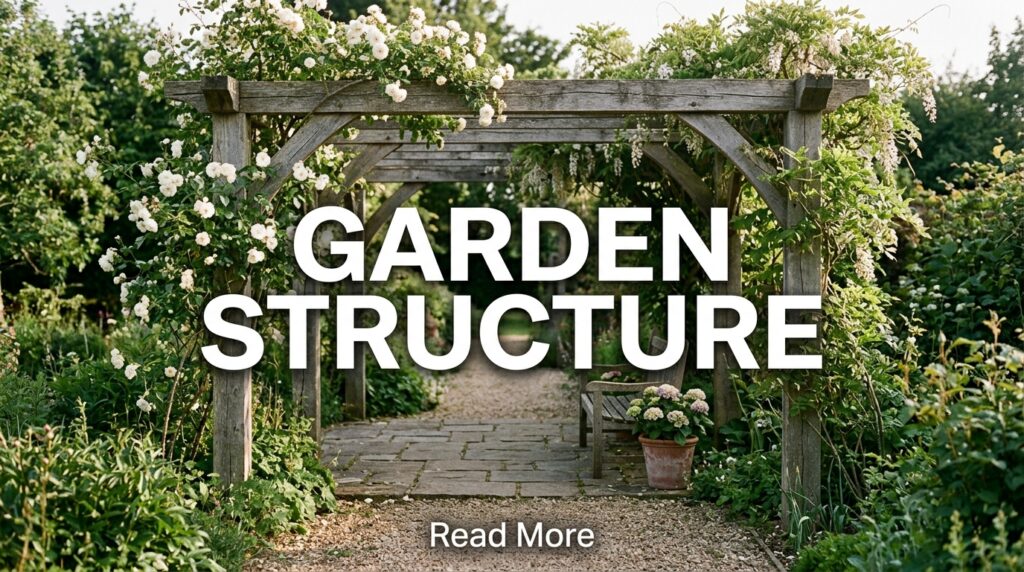
Screens can divide a garden into separate rooms or hide unattractive areas. Laser-cut metal, wooden lattice, slatted panels, and planted screens can provide both beauty and function.
16. Create a Garden Gate
A garden gate can make an entrance feel intentional and welcoming. Match the gate material and style with surrounding fences, paths, and architectural elements.
17. Use a Garden Pavilion as a Focal Point
Position a pavilion at the end of a long pathway or in a central area. This creates a destination and gives the garden a strong sense of perspective.
18. Add a Climbing Plant Frame
Simple frames made from wood or metal can support vines and create vertical interest. Use them around seating areas, pathways, or garden entrances.
19. Create a Small Greenhouse
A greenhouse can combine practical gardening with attractive garden architecture. Use it for seedlings, herbs, vegetables, or plants that need additional protection.
20. Build a Potting Shed
A potting shed provides a dedicated location for storing gardening tools, pots, soil, and supplies. Windows and climbing plants can make the structure an attractive part of the landscape.
21. Add a Garden Shed
A well-designed garden shed can provide valuable storage while contributing to the overall garden aesthetic. Choose colors and materials that complement your home’s exterior.
22. Create a Garden Pergola Walk
Instead of placing a pergola only over seating, use several connected frames to create a covered garden walkway. Climbing plants can gradually form a green tunnel.
23. Add a Gazebo Beside a Pond
Positioning a gazebo near a pond creates a relaxing destination where you can enjoy water, plants, and wildlife. Keep the surrounding planting natural and avoid overcrowding the water’s edge.
24. Build a Stone Retaining Wall
Retaining walls can manage changes in elevation while creating attractive planting opportunities. Use stone, brick, concrete, or other appropriate materials according to the landscape requirements.
25. Create Terraced Garden Structures
A sloped yard can be transformed with terraces and retaining walls. Each level can have a different planting theme, seating area, or garden function.
26. Add an Outdoor Fireplace Structure
A fireplace can become the centerpiece of an outdoor living area. Combine it with built-in seating, a pergola, or a patio to create a comfortable garden gathering space.
27. Build an Outdoor Kitchen Structure
An outdoor kitchen can provide cooking and dining space while making the garden more functional. Include durable counters, storage, seating, and suitable shelter where appropriate.
28. Create a Garden Reading Nook
A small structure with a bench, canopy, or pergola can create a peaceful reading retreat. Surround it with plants to provide privacy and a relaxing atmosphere.
29. Add a Children’s Garden Structure
A small playhouse, climbing frame, tunnel, or shaded shelter can make a garden more enjoyable for children. Choose safe materials and maintain clear visibility around play areas.
30. Create a Japanese-Inspired Structure
Simple wooden gates, bridges, fences, shelters, and screens can complement Japanese-inspired landscapes. Use restrained forms and natural materials to maintain a calm appearance.
31. Add a Cottage Garden Arbor
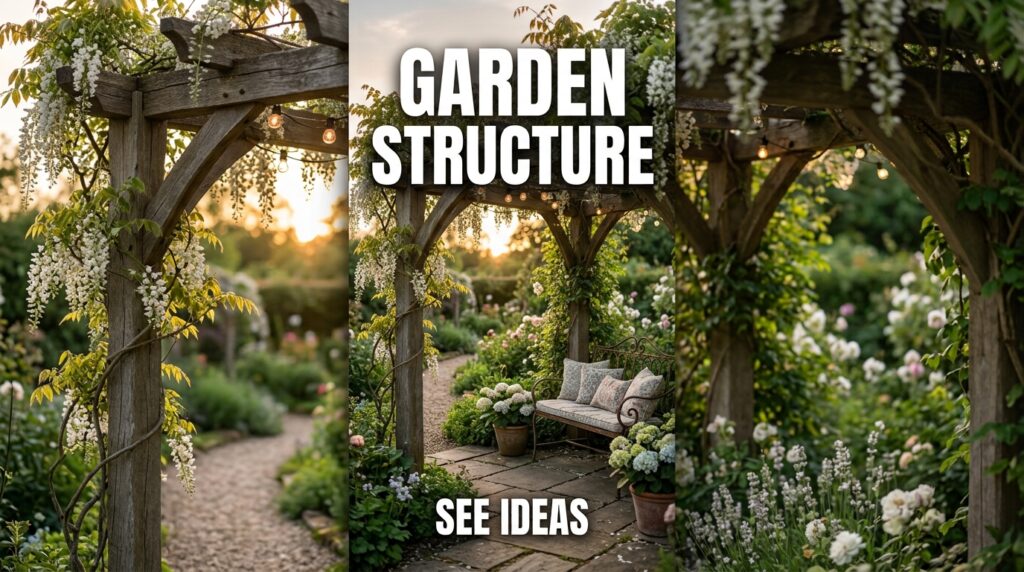
A rustic wooden arbor covered with flowering vines can become a charming feature in a cottage-style garden. Surround it with informal flowers and curved planting beds.
32. Use Modern Metal Structures
Metal pergolas, geometric screens, arches, and trellises can create a contemporary garden aesthetic. Combine them with architectural plants and clean-lined paving.
33. Create a Secret Garden Entrance
Use a gate, arch, hedge, or garden wall to conceal a portion of the landscape. A partially hidden entrance can make the garden feel mysterious and inviting.
34. Add Outdoor Lighting to Structures
Lighting can emphasize architectural details after sunset. Install subtle lights around pergolas, arches, pathways, walls, and seating areas to extend the garden’s usability into the evening.
35. Combine Multiple Garden Structures
For a larger landscape, combine several structures carefully. A pergola can connect to a patio, a trellis can support climbing plants, and a garden gate can lead toward a secluded seating area.
The key is to repeat materials, shapes, or colors so the structures feel like part of one cohesive garden design.
What Is a Garden Structure?
A garden structure is a built or architectural element that contributes to the organization, function, or appearance of a landscape.
Examples include:
- Pergolas
- Arbors
- Gazebos
- Trellises
- Garden rooms
- Fences
- Gates
- Walls
- Greenhouses
- Sheds
- Pavilions
- Bridges
- Raised beds
- Privacy screens
Some structures are primarily decorative, while others provide practical benefits such as shade, storage, privacy, or plant support.
How to Choose the Right Garden Structure
Start by identifying the purpose of the structure. Do you need shade, privacy, storage, seating, plant support, or simply a focal point?
Next, consider the size of your garden. A large gazebo may overwhelm a tiny courtyard, while a small trellis could disappear in a huge landscape.
Think about materials as well. Wood creates a warm natural appearance, metal can look modern and lightweight, while stone and brick provide a more permanent architectural feel.
Finally, consider maintenance. Choose weather-resistant materials and designs that are appropriate for your climate.
Garden Structure Ideas for Small Spaces
Small gardens benefit from structures that serve more than one purpose.
A pergola can provide shade and plant support. A trellis can provide privacy and vertical greenery. A bench with an overhead arbor can create a seating area without requiring a large footprint.
Wall-mounted planters and narrow screens can also add structure without consuming much floor space.
Garden Structure Ideas for Large Yards
Large gardens can accommodate multiple outdoor rooms. Use structures to divide the landscape into distinct zones for dining, entertaining, gardening, relaxing, and recreation.
A pergola near the house can create an outdoor living area, while a gazebo farther away can become a destination. Paths, hedges, walls, and arches can connect the different spaces.
Best Materials for Garden Structures
Wood
Wood offers a warm and natural appearance and works well with cottage, rustic, traditional, and contemporary gardens.
Metal
Metal is useful for arches, trellises, pergolas, screens, and modern structures. It can provide a lighter visual appearance than masonry.
Stone
Stone is durable and creates a timeless appearance. It is especially suitable for walls, retaining structures, pathways, and rustic landscapes.
Brick
Brick works well with traditional, formal, and cottage-style gardens. It can be used for walls, edging, raised beds, and architectural features.
How to Make Garden Structures Look Natural
Plants are one of the easiest ways to integrate structures into the landscape. Train vines across pergolas and arches, soften walls with planting, and surround structures with layered greenery.
Repeat materials throughout the garden. For example, if your pergola uses natural wood, consider using similar wood tones for benches, gates, or raised beds.
Avoid placing every structure in the center of the garden. Some of the most attractive designs use structures to frame views, mark transitions, or create hidden destinations.
Common Garden Structure Mistakes
Choosing the Wrong Scale
A structure that is too large can dominate a small garden, while one that is too small may look insignificant in a large landscape.
Ignoring the Existing Architecture
Garden structures should complement the style of the house rather than compete with it.
Using Too Many Structures
Too many architectural elements can make a garden feel cluttered. Select a few strong features and give them enough space.
Forgetting Maintenance
Wood may require protection, plants need pruning, and outdoor structures need periodic inspection. Consider long-term care before installation.
Blocking Important Views
Avoid placing tall structures where they block attractive views from windows, patios, or seating areas.
Frequently Asked Questions
What are examples of garden structures?
Common examples include pergolas, gazebos, arbors, trellises, garden rooms, fences, gates, walls, greenhouses, sheds, pavilions, and raised beds.
What is the most useful garden structure?
The best structure depends on your needs. Pergolas provide shade and plant support, sheds offer storage, trellises support climbing plants, and garden rooms provide additional living space.
How can I add structure to a small garden?
Use vertical elements such as trellises, arches, privacy screens, narrow pergolas, and wall-mounted structures. These add height without using much ground space.
Which material is best for a garden structure?
Wood, metal, stone, and brick can all work well. The best choice depends on the garden style, climate, budget, maintenance requirements, and intended use.
Can garden structures increase privacy?
Yes. Pergolas, screens, fences, walls, trellises, and living plant structures can help create more private outdoor areas.
Final Thoughts
Garden structure gives an outdoor space its framework, personality, and sense of organization. Plants may provide the changing colors and textures, but structures create lasting architectural interest that remains visible throughout the year.
Whether you choose a simple trellis for a small courtyard, a pergola for an outdoor living area, a gazebo for a large backyard, or a garden room for year-round use, the right structure can make your landscape more functional and inviting.
Focus on purpose, scale, materials, and relationship with the surrounding plants. With thoughtful planning, garden structures can turn an ordinary landscape into a beautifully organized outdoor space.