
 By John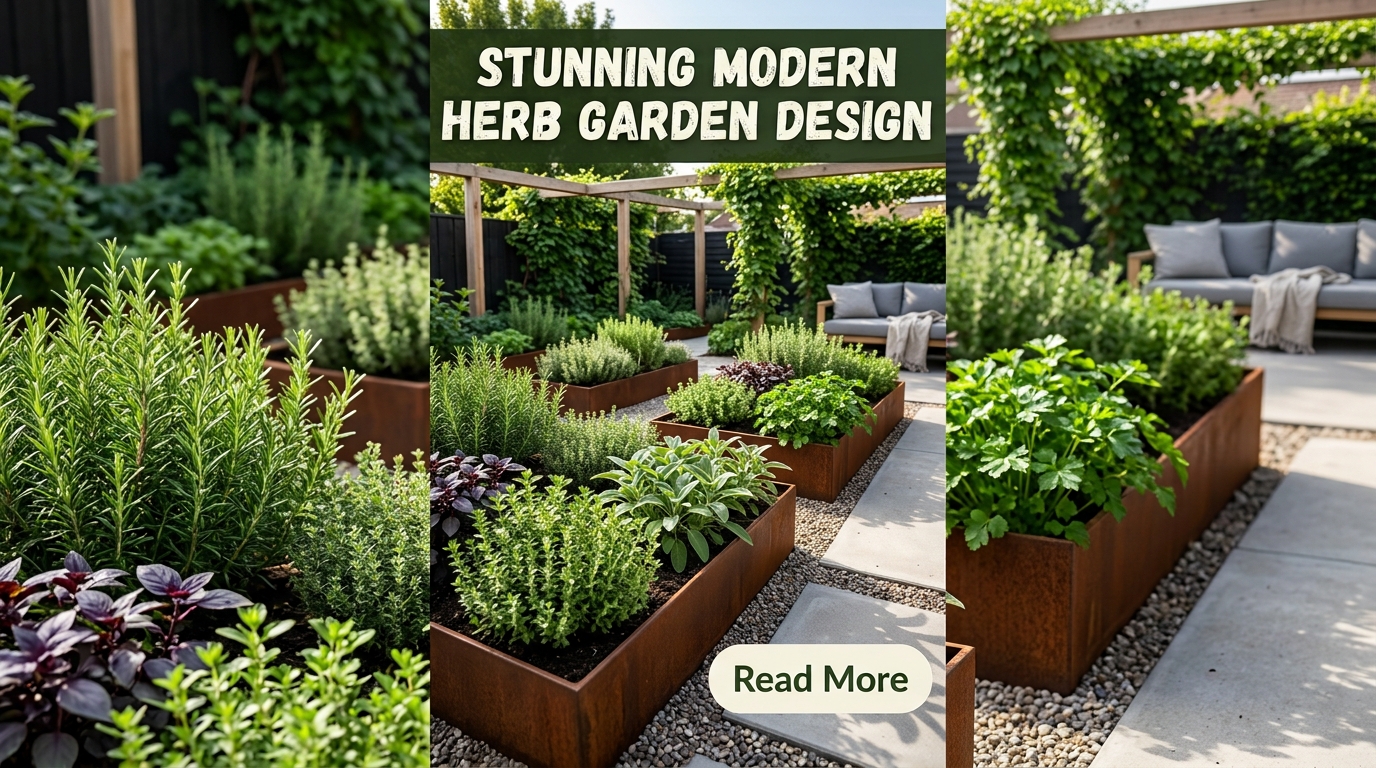
An herb garden design can turn a small outdoor area, backyard, patio, balcony, or kitchen corner into a productive and beautiful growing space. Herbs are useful for cooking, fragrant planting, pollinator-friendly gardens, and decorative landscaping, making them one of the most versatile choices for home gardeners.
Whether you prefer a formal herb garden, rustic kitchen garden, modern container display, or compact vertical garden, thoughtful planning can help you grow fresh herbs while creating an attractive landscape feature.
What Is an Herb Garden?
An herb garden is a dedicated growing space for culinary, aromatic, or ornamental herbs.
Popular herbs include:
- Basil
- Rosemary
- Thyme
- Mint
- Parsley
- Oregano
- Sage
- Chives
- Cilantro
- Dill
- Tarragon
- Lemon balm
Choose herbs according to your climate, available sunlight, soil, and intended use.
Benefits of an Herb Garden
Fresh Ingredients
Growing herbs at home provides convenient access to fresh leaves for cooking.
Fragrance
Many herbs release pleasant aromas when their foliage is brushed or crushed.
Attractive Foliage
Herbs offer different colors, textures, and forms that can complement ornamental plants.
Pollinator Interest
Some herbs produce flowers that attract bees and other beneficial insects.
Space Efficient
Many herbs grow successfully in containers, raised beds, window boxes, and vertical systems.
Easy to Customize
An herb garden can be designed to match almost any landscape style.
1. Kitchen Herb Garden
Place frequently used herbs close to the kitchen.
Basil, parsley, thyme, chives, and oregano can be convenient choices when their growing conditions are suitable.
2. Small Herb Garden
Use a compact raised bed, several containers, or a narrow planting strip.
Group herbs according to their watering and sunlight requirements.
3. Backyard Herb Garden

Create a dedicated herb bed within a larger landscape.
Use pathways around the bed to make harvesting and maintenance easy.
4. Raised Herb Garden
Raised beds provide a clearly defined growing area and can make planting and harvesting more accessible.
Choose appropriate construction materials and ensure adequate drainage.
5. Herb Garden in Containers
Containers are ideal for patios, balconies, decks, and small gardens.
Use pots with drainage holes and select containers large enough for the mature plants.
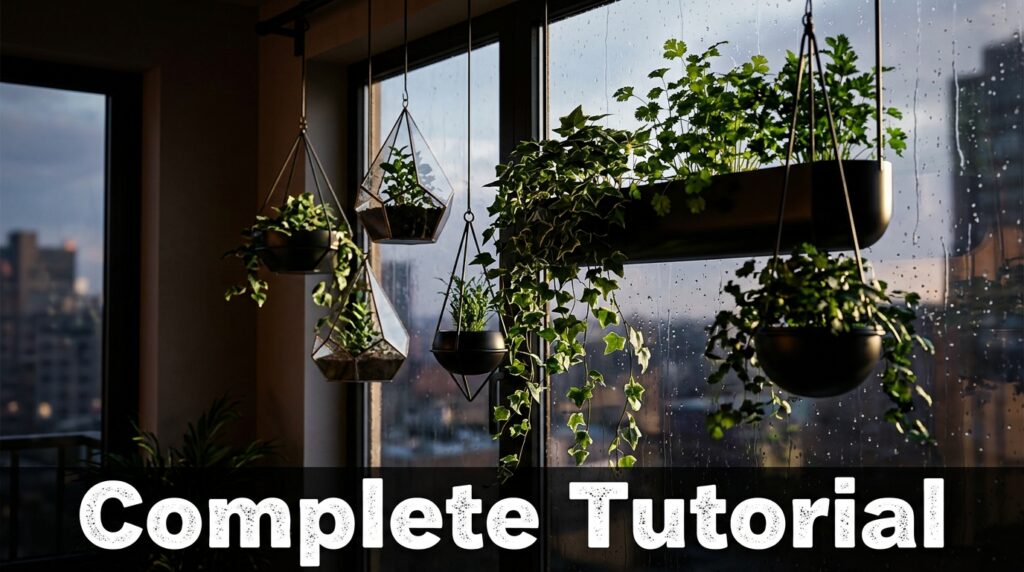
6. Vertical Herb Garden
Use wall planters, tiered shelves, hanging containers, or vertical planting systems.
This is an excellent option when horizontal space is limited.
7. Herb Garden Window Box
A sunny window box can hold compact herbs such as thyme, parsley, chives, or basil where conditions are appropriate.
Make sure the container drains properly.
8. Herb Garden on a Balcony
Use lightweight containers, railing planters, and compact shelving.
Consider wind exposure and secure containers appropriately.
9. Patio Herb Garden
Arrange attractive pots around a patio seating or dining area.
Keep cooking herbs within easy reach without obstructing pathways.
10. Formal Herb Garden
Create symmetrical beds divided by neat pathways.
Boxwood-style edging or other suitable low borders can emphasize the formal structure.
11. Cottage Herb Garden
Mix herbs with flowers, vegetables, and informal planting.
Let plants create a relaxed, abundant appearance while maintaining enough space for harvesting.
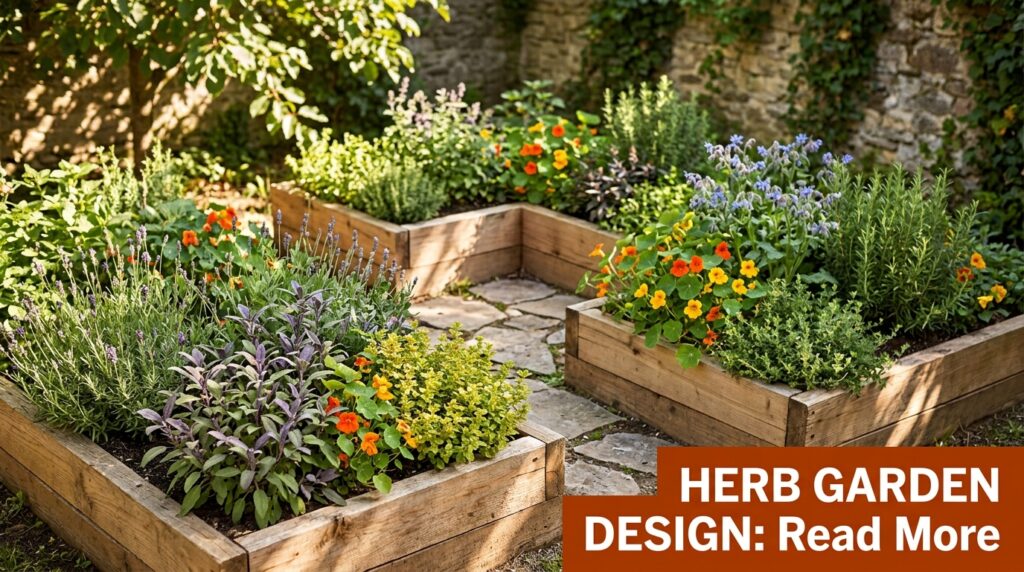
12. Rustic Herb Garden
Use wooden planters, stone borders, reclaimed containers, and natural materials.
Keep the arrangement informal and practical.
13. Modern Herb Garden
Use geometric planters, concrete containers, metal edging, and clean pathways.
Limit the number of materials to maintain a contemporary appearance.
14. Mediterranean Herb Garden
Use herbs such as rosemary, thyme, oregano, sage, and lavender where the climate permits.
Combine them with gravel, stone, and terracotta containers.
15. Spiral Herb Garden
A herb spiral uses a raised spiral-shaped bed to create different growing conditions at different heights.
Place herbs according to their preferences for moisture, sunlight, and drainage.
16. Herb Garden With Raised Tiers
Create several planting levels using appropriately constructed raised beds.
This can provide visual interest and improve access.
17. Herb Garden With Stone Edging
Use natural stone or suitable masonry to define the herb bed.
Ensure the edging is stable and does not interfere with drainage.
18. Herb Garden With Brick Border
Brick can create a traditional border around an herb bed.
It works particularly well with formal, cottage, and historic-inspired garden designs.
19. Herb Garden With Gravel Path
Gravel pathways can provide a practical surface between planting beds.
Use appropriate edging to keep gravel from spreading into the planting areas.
20. Herb Garden With Stepping Stones
Place stepping stones through larger herb beds to provide access without compacting the growing soil.
Make sure stones are stable and level.
21. Herb Garden Near a Patio
Position an herb bed close to outdoor dining or cooking areas.
Fragrant herbs can make the surrounding space especially pleasant.
22. Herb Garden Near the Kitchen
A dedicated garden outside the kitchen door can make harvesting quick and convenient.
Choose herbs based on the meals you regularly prepare.
23. Herb Garden With Flowers
Mix herbs with suitable flowers for additional color and pollinator interest.
Leave enough space for herbs to receive adequate sunlight and airflow.
24. Herb Garden With Vegetables
Combine herbs with vegetables in a productive kitchen garden.
Group plants according to their growing requirements rather than simply arranging them by appearance.
25. Herb Garden With Pollinator Plants
Allow suitable herbs such as flowering oregano, thyme, sage, or chives to bloom.
Flowers can provide resources for bees and other beneficial insects.
26. Herb Garden With Trellis
A small trellis can support suitable climbing or sprawling plants.
Make sure the structure is stable and does not shade sun-loving herbs excessively.
27. Herb Garden With Hanging Pots
Hanging containers can save floor space.
Use secure hooks and appropriately sized containers, especially in windy areas.
28. Herb Garden With Tiered Planter
A tiered planter creates several planting levels in a compact footprint.
Place sun-loving herbs where they receive sufficient light.
29. Indoor-Outdoor Herb Garden
Grow herbs indoors near a bright window and move suitable containers outdoors when weather permits.
Avoid sudden environmental changes for plants that are sensitive to temperature or intense sunlight.
30. Herb Garden in Recycled Containers
Repurpose suitable containers as herb planters.
Ensure they are clean, safe for growing plants, and have adequate drainage.
31. Herb Garden in Wooden Boxes
Wooden boxes can create an attractive rustic display.
Use untreated or appropriately outdoor-rated materials and provide drainage.
32. Herb Garden in Galvanized Containers
Metal containers can provide a modern farmhouse appearance.
Monitor soil temperatures in hot climates and ensure the containers drain effectively.
33. Herb Garden Along a Fence
A narrow planting strip beside a fence can make productive use of unused space.
Use the fence as a background rather than allowing it to block sunlight.
34. Herb Garden Along a Path
Plant low-growing herbs along a pathway where conditions are suitable.
Avoid placing herbs where frequent foot traffic could damage them.
35. Herb Garden Border
Use herbs as an edible border around vegetable or ornamental beds.
Low-growing thyme, chives, or other suitable herbs can provide attractive edging.
36. Herb Garden for Small Spaces
Use vertical planters, narrow containers, window boxes, and compact raised beds.
Choose a small collection of herbs that you use most often.
37. Herb Garden for Beginners
Start with easy herbs suited to your local climate.
Basil, chives, parsley, thyme, oregano, and mint can be useful choices depending on conditions.
38. Herb Garden for Kids
Give children a small section where they can plant, water, smell, and harvest herbs.
Avoid hazardous plants and supervise children around garden tools.
39. Herb Garden With Labels
Add attractive plant markers to identify each herb.
Labels can be made from wood, stone, metal, or other weather-resistant materials.
40. Beautiful Herb Garden Design
Combine attractive containers, neat pathways, layered planting, decorative edging, and useful herbs.
The most successful herb gardens balance beauty with easy access for harvesting and maintenance.
Best Herbs for a Home Garden
Basil
A popular culinary herb that generally prefers warmth and sunlight.
Rosemary
A fragrant herb that typically prefers well-drained soil and plenty of sunlight.
Thyme
Compact and useful for borders, containers, and dry conditions where suitable.
Mint
Fast-growing and best grown in containers where its spreading habit needs to be controlled.
Parsley
A versatile herb that can grow in containers or garden beds with suitable conditions.
Oregano
A flavorful herb that can also provide attractive flowering stems when allowed to bloom.
Sage
A textured, aromatic herb that can add structure to Mediterranean-style gardens.
Chives
Compact and easy to integrate into vegetable and flower beds in suitable climates.
How to Design an Herb Garden
Step 1: Choose the Location
Select a location with the amount of sunlight your chosen herbs require.
Step 2: Decide What to Grow
Choose herbs based on your cooking preferences and local growing conditions.
Step 3: Group Similar Herbs
Place herbs with similar water, soil, and sunlight requirements together.
Step 4: Plan Access
Leave enough space to reach plants easily for harvesting, pruning, and watering.
Step 5: Choose the Layout
Consider rows, raised beds, containers, spirals, tiers, or a formal geometric design.
Step 6: Prepare the Soil
Use suitable, well-draining soil or growing media appropriate for the herbs you plan to grow.
Step 7: Add Edging
Use stone, brick, timber, or another suitable material to define the growing area.
Step 8: Label Your Plants
Add attractive markers so every herb is easy to identify.
Step 9: Add Mulch Where Appropriate
Mulch can help conserve moisture and suppress weeds when used correctly.
Step 10: Maintain Regularly
Harvest herbs regularly, remove unhealthy growth, monitor pests, and provide water according to plant requirements.
Herb Garden Design Color Ideas
Green and Terracotta
Warm and Mediterranean-inspired.
Green and Gray
Elegant and contemporary.
Green and White
Fresh and minimalist.
Green and Purple
Colorful and attractive, especially when flowering herbs are included.
Green and Natural Stone
Organic and timeless.
Common Herb Garden Mistakes
Growing Herbs With Different Needs Together
Some herbs prefer dry conditions while others require more consistent moisture.
Overwatering
Poor drainage and excessive watering can cause root problems.
Planting Mint Directly in the Ground
Mint can spread aggressively, so containers are often easier to manage.
Ignoring Sunlight
Sun-loving herbs may struggle in heavily shaded locations.
Making Beds Too Wide
A bed that is difficult to reach can make harvesting and maintenance frustrating.
Forgetting Airflow
Crowded plants can have greater disease problems.
Using Poor Drainage
Most culinary herbs benefit from growing media that drains appropriately for the species.
Frequently Asked Questions
What is the best layout for an herb garden?
Rows, raised beds, containers, spirals, and geometric beds can all work. The best layout is one that provides suitable growing conditions and easy access.
How much sunlight does an herb garden need?
Many culinary herbs prefer several hours of sunlight, but requirements vary by species. Check each plant’s needs before choosing the location.
Can herbs grow in containers?
Yes. Many herbs grow very well in containers as long as the pot is appropriately sized and has adequate drainage.
Which herbs should be grown in separate containers?
Mint is commonly kept separate because of its vigorous spreading habit. Other herbs may also benefit from separate containers when their water or soil requirements differ significantly.
How do I make an herb garden look beautiful?
Combine attractive containers, organized planting, natural materials, decorative labels, pathways, and a mixture of foliage textures.
Conclusion
A well-planned herb garden design can combine productivity, beauty, fragrance, and outdoor enjoyment in almost any space. From a simple kitchen herb garden to a formal raised-bed layout or compact vertical display, there is a design suitable for nearly every home.
Choose herbs based on your climate and cooking habits, group plants according to their growing requirements, and keep the garden accessible for harvesting. With thoughtful organization and regular care, an herb garden can become both a practical food-growing space and an attractive part of your landscape.