
 By John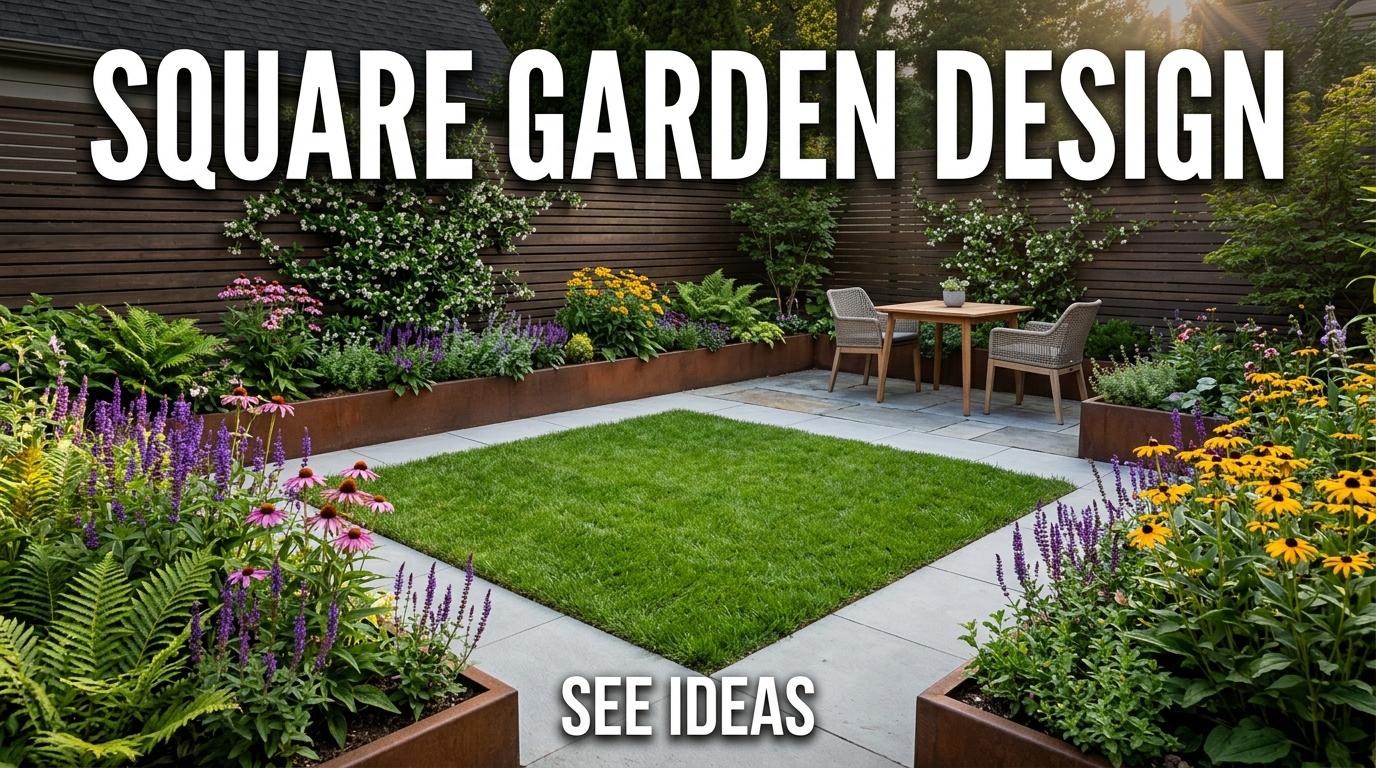
A square garden design can be both simple and surprisingly versatile. The balanced shape gives you a clear starting point for creating flower beds, lawns, patios, pathways, seating areas, vegetable gardens, and entertaining spaces. With thoughtful planning, even a small square backyard can feel spacious, organized, and inviting.
The key to designing a square garden is to work with its natural symmetry while avoiding a layout that feels too rigid. Curved paths, layered planting, different textures, and carefully positioned focal points can add softness and personality.
Whether you have a tiny courtyard, suburban backyard, modern outdoor space, or large square lawn, these square garden design ideas can help you make the most of the available space.
What Is a Square Garden Design?
A square garden design is a landscape layout planned around a roughly square-shaped outdoor space.
Because all four sides are relatively balanced, square gardens are especially suitable for:
- Symmetrical layouts
- Central focal points
- Geometric flower beds
- Patio areas
- Raised garden beds
- Formal landscaping
- Vegetable gardens
- Courtyard gardens
- Modern garden designs
- Family-friendly outdoor spaces
The best layout depends on the garden’s size, sunlight, drainage, access points, and how you plan to use it.
1. Simple Square Garden Design
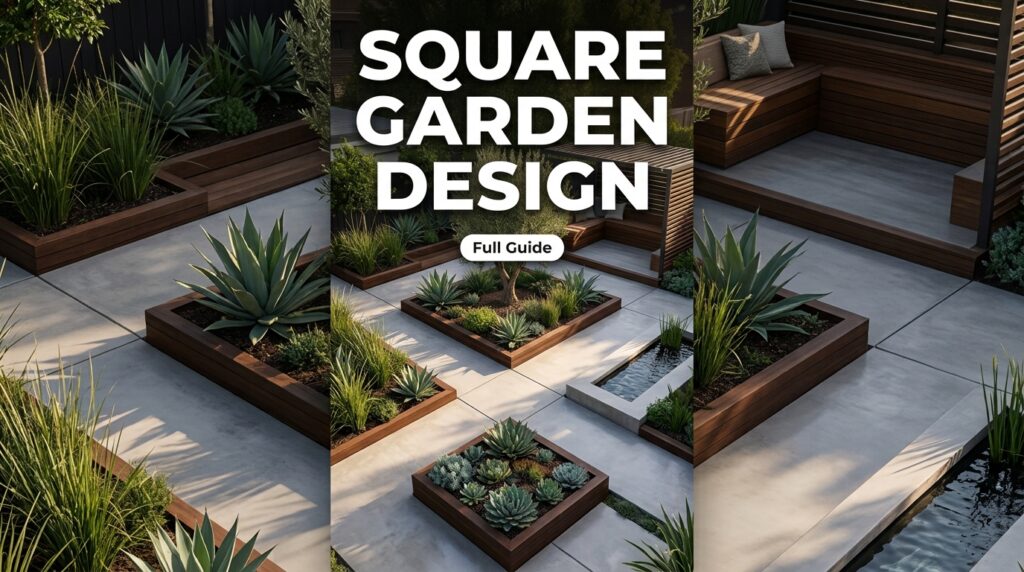
Keep the layout uncomplicated with a central lawn surrounded by planting borders.
A simple square garden is easy to maintain and can work with both traditional and contemporary homes.
2. Small Square Garden
Use the limited space efficiently by combining a compact seating area with vertical planting and narrow flower beds.
Avoid filling every corner with furniture or decorations.
3. Square Backyard Garden
Divide the backyard into functional zones.
For example, one section can be used for dining, another for planting, and the center can remain open for lawn or recreation.
4. Modern Square Garden
Use clean lines, geometric beds, large paving slabs, minimalist furniture, and architectural plants.
Keep the color palette simple for a polished contemporary appearance.
5. Formal Square Garden
Take advantage of the natural symmetry by creating matching planting beds on opposite sides.
A central fountain, sculpture, tree, or seating area can become the main focal point.
6. Square Cottage Garden
Soften the geometry with informal planting.
Use roses, flowering perennials, herbs, shrubs, and winding paths to create a relaxed cottage atmosphere.
7. Square Garden With Central Lawn
Place a square or rectangular lawn in the center and surround it with flower beds.
This is one of the easiest layouts to adapt to different garden sizes.
8. Square Garden With Central Tree
A carefully selected tree can become a strong focal point.
Choose a species that will remain an appropriate size for the garden and consider its mature canopy, roots, shade, and maintenance requirements.
9. Square Garden With Central Fountain
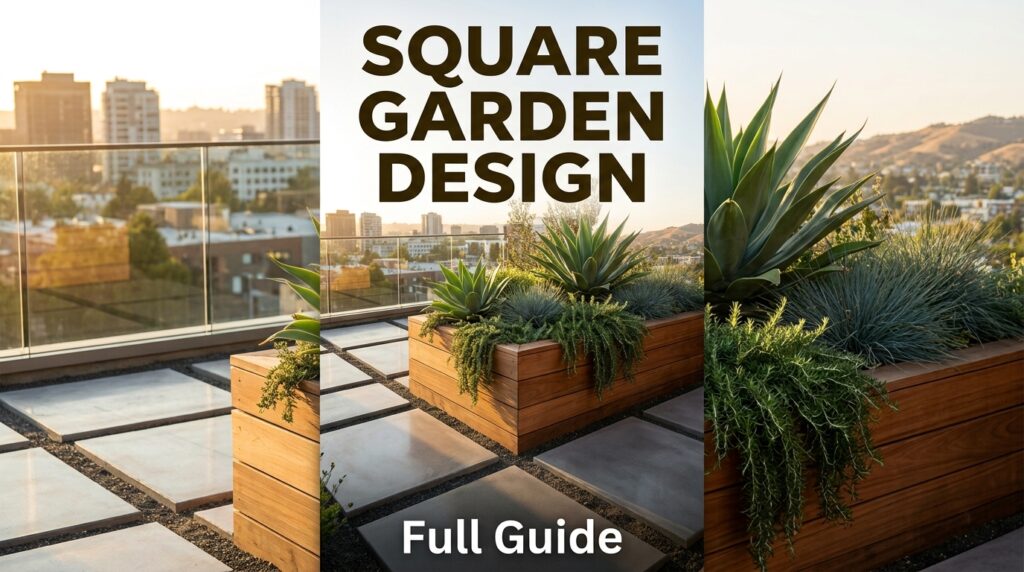
A fountain can emphasize the symmetry of the garden.
Surround it with low planting or paving to keep the central feature visible.
10. Square Garden With Four Flower Beds
Divide the garden into four planting sections around a central pathway or feature.
Repeat similar plants in each section to create cohesion.
11. Square Garden With Cross Path
Create two pathways that cross through the center of the garden.
This layout divides the space into four distinct areas and works especially well in formal landscapes.
12. Square Garden With Circular Feature
Introduce a circular lawn, patio, pond, or planting bed inside the square garden.
The contrast between geometric square boundaries and a rounded central feature adds visual interest.
13. Square Garden With Patio
Place a patio at one end or in the center of the garden.
Surround it with planting to connect the hardscape with the landscape.
14. Square Garden With Seating Area
Create a dedicated seating zone using a bench, chairs, or outdoor sofa.
Position it where you can enjoy the best view of the garden.
15. Square Garden With Dining Area
Use one section for an outdoor dining table.
Keep surrounding pathways clear so people can comfortably move around the table.
16. Square Garden With Pergola
A pergola can define an outdoor room within the square garden.
Use suitable climbing plants to soften the structure and provide additional visual interest.
17. Square Garden With Raised Beds
Raised beds can divide the garden into organized planting zones.
They are especially useful for vegetables, herbs, and compact flower gardens.
18. Square Vegetable Garden Design
Create four or more square planting beds separated by narrow paths.
This layout makes crop rotation, watering, harvesting, and maintenance easier to organize.
19. Square Herb Garden
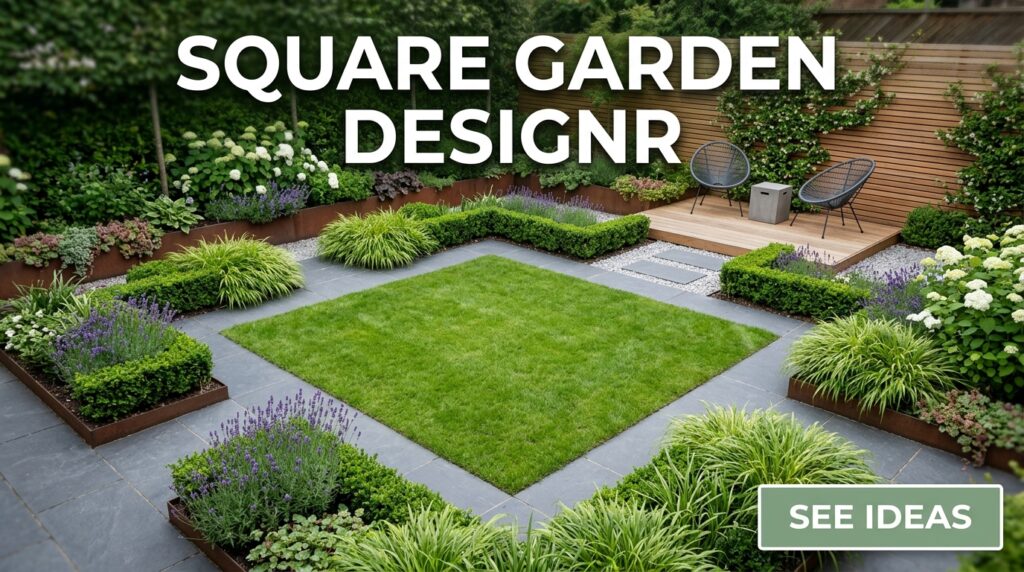
Use geometric beds for culinary herbs.
A central pot, birdbath, or small feature can create a focal point.
20. Square Flower Garden
Fill the garden with layered flowering plants.
Use taller plants toward the back or center and shorter varieties around paths and borders.
21. Square Garden With Gravel
Replace part of the lawn with gravel to create a low-maintenance seating or pathway area.
Combine gravel with stone, timber, or architectural planting for a modern look.
22. Square Garden With Stone Pathways
Stone paths can emphasize the geometric structure.
Use consistent paving materials to create a cohesive appearance.
23. Square Garden With Brick Edging
Brick edging can give a square garden a traditional character.
Use it to define lawns, flower beds, and pathways.
24. Square Garden With Retaining Walls
If the square garden is sloped, retaining walls can create terraces.
Ensure significant retaining structures are properly designed for soil loads and drainage.
25. Square Garden With Water Feature
A pond, fountain, or other suitable water feature can serve as a focal point.
Keep the surrounding area accessible for cleaning and maintenance.
26. Square Zen Garden
Use gravel, stones, simple planting, timber, and restrained decoration.
A symmetrical framework combined with natural textures can create a peaceful atmosphere.
27. Square Japanese-Inspired Garden
Combine carefully positioned stones, shrubs, gravel, timber, and water features.
Avoid overcrowding and allow negative space to become part of the design.
28. Square Mediterranean Garden
Use stone paving, gravel, terracotta, and drought-tolerant plants suited to your climate.
A small seating area can complete the relaxed outdoor atmosphere.
29. Square Tropical Garden
Use lush, climate-appropriate foliage plants around a central seating area.
Layer plants by height to create depth while keeping pathways clear.
30. Square Garden With Privacy Screen
Use fencing, hedges, trellises, or vertical planting around the boundaries.
This can make the garden feel more private without consuming too much floor space.
31. Square Garden With Vertical Planting
Use walls and fences for climbing plants, hanging planters, or vertical garden systems.
Vertical landscaping is particularly helpful in small square gardens.
32. Square Garden With Fire Pit
Create a dedicated fire pit area on a suitable noncombustible surface.
Maintain safe clearances from plants, structures, fences, and furniture.
33. Square Garden With Outdoor Kitchen
Use one side of the garden for an outdoor kitchen and dining area.
Plan utilities, ventilation, drainage, weather protection, and fire safety carefully.
34. Square Garden for Families
Keep a central area open for children and place planting around the perimeter.
Use durable surfaces and avoid plants with sharp, irritating, or toxic characteristics in areas accessible to children.
35. Luxury Square Garden
Combine symmetrical planting, premium paving, a central water feature, outdoor furniture, lighting, layered greenery, and a well-designed patio.
Use repetition to make the different elements feel connected.
Square Garden Layout Ideas
The shape of the garden gives you several useful layout options.
Central Layout
Place one major feature in the middle and surround it with planting or paths.
Four-Zone Layout
Divide the square into four sections using crossing pathways.
Perimeter Layout
Keep the center open and place planting beds around the boundaries.
Corner Layout
Use one or more corners for seating, dining, storage, or garden structures.
Diagonal Layout
Use diagonal pathways or planting lines to make the garden feel less rigid.
Circular-Center Layout
Place a circular patio, lawn, or planting bed inside the square framework.
How to Design a Square Garden
Step 1: Measure the Space
Record the garden’s dimensions, entrances, existing structures, walls, fences, and significant level changes.
Step 2: Study Sunlight
Observe where sunlight falls throughout the day.
This will help you position seating and select appropriate plants.
Step 3: Identify the Main Purpose
Decide whether your priority is:
- Entertaining
- Relaxing
- Gardening
- Dining
- Children’s play
- Wildlife
- Growing vegetables
- Privacy
Step 4: Create Zones
Divide the garden into functional areas while maintaining comfortable circulation.
Step 5: Choose a Focal Point
A tree, fountain, sculpture, pergola, patio, or seating area can anchor the design.
Step 6: Plan Pathways
Ensure pathways connect the important parts of the garden without creating unnecessary hardscape.
Step 7: Add Planting
Choose plants based on sunlight, soil, moisture, climate, and mature size.
Step 8: Introduce Curves
If the garden feels too geometric, use curved planting borders or a circular focal point to soften the design.
Step 9: Add Lighting
Use appropriate outdoor lighting around pathways, seating, entrances, and focal points.
Step 10: Review the Design From the House
Look at the garden from inside your home as well as from within the garden.
The best focal points should be visible from important viewpoints.
Best Plants for a Square Garden
There is no universal plant list because plant suitability depends on location.
For Sunny Borders
Consider suitable flowering perennials, ornamental grasses, roses, lavender, salvia, and other climate-appropriate plants.
For Shady Corners
Where conditions permit, consider ferns, hostas, heucheras, and suitable shade-tolerant shrubs.
For Vertical Planting
Suitable climbers can include clematis, climbing roses, jasmine, or other locally appropriate species.
For Formal Gardens
Evergreen shrubs and plants that respond well to pruning can provide structure.
For Low-Maintenance Gardens
Choose locally adapted plants with appropriate drought, heat, or moisture tolerance.
Square Garden Color Schemes
Green and White
Fresh and elegant.
Purple and Green
A strong contrast for flower borders.
Pink and Cream
Soft and romantic.
Blue and Silver
Calm and sophisticated.
Yellow and Green
Bright and cheerful.
Burgundy and Green
Dramatic and modern.
How to Make a Square Garden Look Bigger
Use Diagonal Lines
Diagonal pathways can visually lengthen the garden.
Keep the Center Open
An uncluttered central area can make the space feel more spacious.
Use Vertical Elements
Trees, arches, pergolas, and climbing plants draw the eye upward.
Create Layers
Low, medium, and tall planting adds depth.
Use Repetition
Repeating plants and materials creates continuity rather than visual clutter.
Add a Focal Point
A carefully positioned focal point can encourage the eye to travel through the garden.
Common Square Garden Design Mistakes
Too Much Symmetry
Perfect symmetry can sometimes make a garden feel rigid.
Balance formal structure with softer planting or curved elements.
Oversized Furniture
Large furniture can quickly consume a small square garden.
Too Many Pathways
Excessive paving reduces valuable planting and usable space.
Ignoring Shade
Trees, walls, fences, and buildings can significantly change growing conditions.
Planting Without Considering Mature Size
Always plan for the eventual size of trees and shrubs.
Poor Drainage
Ensure water can move away from structures and does not remain trapped in planting areas.
Using Too Many Materials
A consistent material palette usually produces a more cohesive result.
Frequently Asked Questions
What is the best layout for a square garden?
A central lawn surrounded by borders, a four-zone layout, or a perimeter planting design can all work well. The best option depends on the garden’s size and intended use.
How do I make a square garden look less boring?
Introduce curves, circular features, layered planting, varied textures, diagonal pathways, and a strong focal point.
What can I put in the middle of a square garden?
Popular focal points include a tree, fountain, pond, sculpture, circular patio, seating area, or ornamental planter.
Is a square garden good for vegetables?
Yes. Square and rectangular raised beds are particularly easy to organize for vegetables and herbs.
How do I design a small square garden?
Prioritize one or two main functions, use compact furniture, maximize vertical planting, keep pathways simple, and avoid overcrowding.
Can I create a modern square garden?
Absolutely. Geometric paving, clean edging, architectural plants, minimalist furniture, and simple color schemes work especially well.
Final Thoughts
A square garden provides a naturally balanced foundation for creative landscaping. Its regular shape makes it easy to organize patios, lawns, flower beds, vegetable gardens, seating areas, and pathways, while thoughtful use of curves and natural planting can prevent the design from feeling too formal.
Start by deciding how you want to use the space, then establish functional zones and choose a focal point. Use repetition to create cohesion, vertical planting to add height, and suitable plants to bring color and texture.
Whether your garden is tiny or spacious, a well-planned square garden design can transform a simple outdoor area into a beautiful, practical, and welcoming extension of your home.