
 By John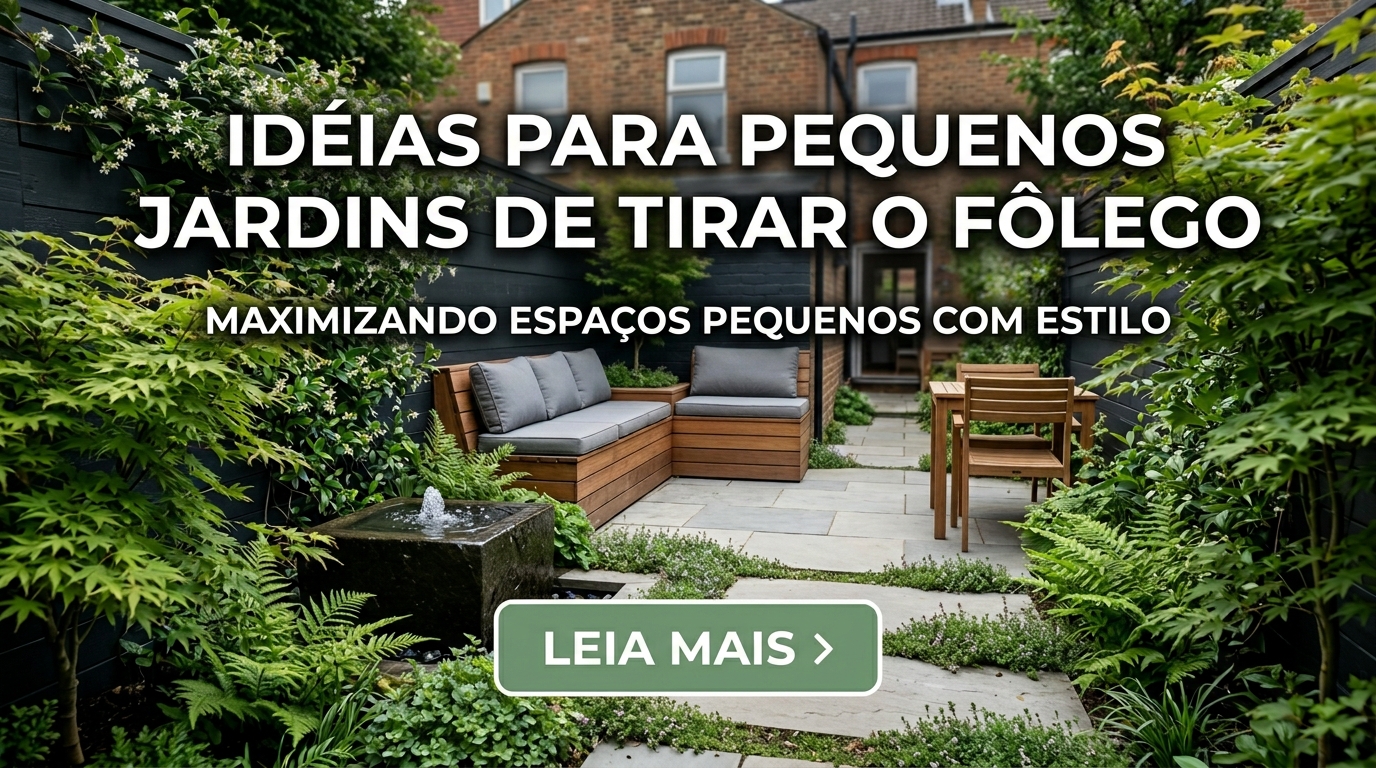
A small garden landscape design can transform even the most compact outdoor area into a stunning and functional retreat. Limited space does not mean limited possibilities. With smart planning, creative layouts, and carefully selected plants, a small garden can feel spacious, inviting, and full of character. Whether you have a tiny backyard, narrow side yard, patio garden, courtyard, or front garden, thoughtful landscape design can maximize every square foot.
The key to successful small garden landscaping is balancing beauty and functionality. By incorporating vertical elements, multi-purpose features, attractive planting schemes, and efficient layouts, you can create an outdoor space that feels larger and more enjoyable than its actual size.
This complete guide explores small garden landscape design ideas, layouts, plant choices, hardscaping features, and practical tips to help you make the most of your outdoor area.
Why Small Garden Landscape Design Matters
A well-designed small garden offers many benefits.
It improves the appearance of your property and increases curb appeal.
It creates a relaxing outdoor space for entertaining, gardening, or unwinding.
Good landscape design makes a small area feel larger and more organized.
It also helps maximize functionality by ensuring every part of the garden serves a purpose.
Even the smallest outdoor space can become a beautiful extension of your home.
Start with a Garden Plan
Before making changes, create a simple design plan.
Measure the available space and note existing features such as fences, walls, trees, and pathways.
Identify areas that receive full sun, partial shade, or deep shade.
Decide how you want to use the garden.
Common goals include:
- Outdoor dining
- Relaxation
- Gardening
- Entertaining guests
- Growing vegetables
- Creating a play area
A clear plan helps prevent overcrowding and ensures a balanced design.
Choose a Simple Layout
Simple layouts work best in small gardens.
Too many features can make the space feel cluttered.
Use clean lines and clear zones to create a sense of order.
Popular small garden layouts include:
Central Lawn Design
A small lawn surrounded by planting beds creates openness and balance.
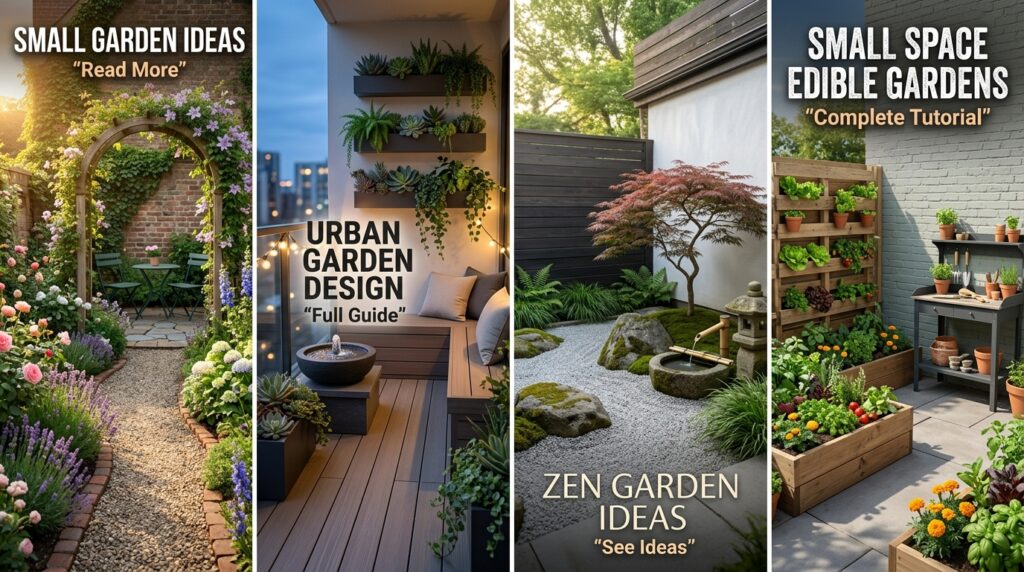
Courtyard Layout
Hardscaping and container plants create a stylish, low-maintenance space.
Layered Garden Design
Plants of different heights create depth and visual interest.
Multi-Zone Layout
Separate areas for seating, planting, and pathways maximize functionality.
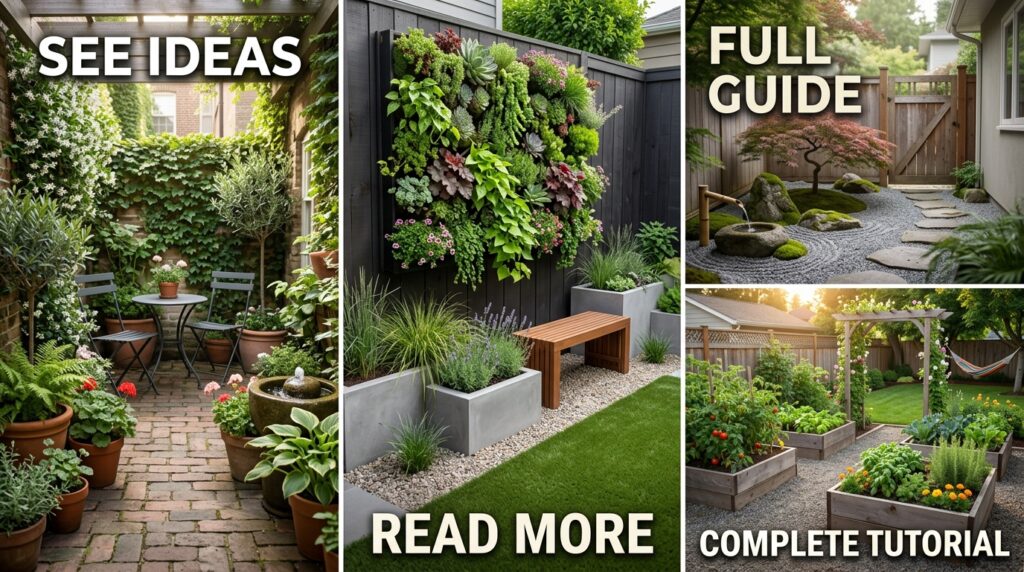
Use Vertical Space
Vertical gardening is one of the most effective ways to maximize a small garden.
Walls, fences, and trellises provide valuable growing space without taking up ground area.
Popular vertical gardening options include:
- Wall planters
- Hanging baskets
- Trellises
- Climbing plants
- Living walls
Vertical elements draw the eye upward and make the garden feel larger.
Select the Right Plants
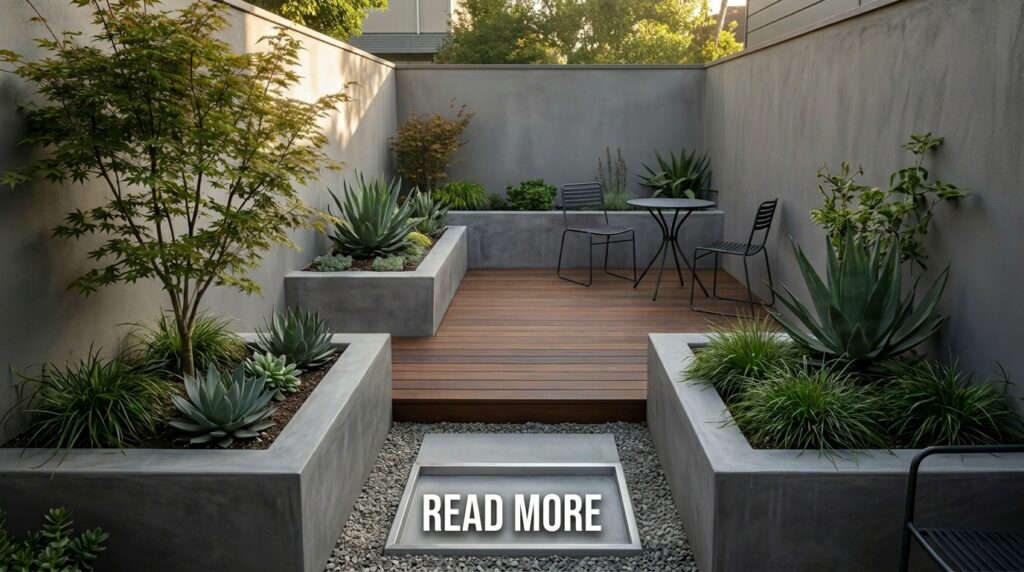
Plant selection plays a major role in small garden design.
Choose plants that suit your climate, sunlight conditions, and maintenance preferences.
Avoid overly large plants that can quickly overwhelm the space.
Popular choices for small gardens include:
- Lavender
- Boxwood
- Hydrangeas
- Hostas
- Ornamental grasses
- Roses
- Salvia
- Japanese maples
Combining evergreen plants with seasonal flowers provides year-round interest.
Create Layers with Plant Heights
Layering adds depth and dimension.
Position taller plants at the back of borders.
Medium-sized plants should occupy the middle area.
Low-growing flowers and ground covers belong at the front.
This arrangement creates a fuller appearance while maintaining visibility.
Layering helps small gardens feel more dynamic and visually appealing.
Add a Focal Point
Every garden benefits from a focal point.
A focal point draws attention and gives the design purpose.
Popular focal points include:
- Water features
- Decorative planters
- Garden sculptures
- Small trees
- Seating areas
- Garden arches
Choose one primary feature to avoid visual clutter.
Incorporate Curved Pathways
Curved pathways can make a small garden appear larger.
They create a sense of movement and encourage exploration.
Materials such as gravel, natural stone, brick, or pavers work well.
Gentle curves soften the landscape and add visual interest.
Even short pathways can significantly enhance the design.
Use Light Colors
Light colors help create an open and airy atmosphere.
Choose pale flowers such as white, soft pink, lavender, and light blue.
Light-colored paving and furniture also contribute to a spacious feeling.
Dark colors can still be used as accents for contrast and depth.
The right color palette can dramatically influence how large a garden feels.
Create a Small Seating Area
A seating area transforms a garden into a usable living space.
Options include:
- Bistro sets
- Benches
- Adirondack chairs
- Built-in seating
Choose furniture scaled appropriately for the available space.
Position seating to take advantage of garden views and sunlight.
Comfortable seating encourages relaxation and enjoyment.
Use Mirrors to Create Depth
Garden mirrors are a clever design trick.
They reflect plants and light, creating the illusion of additional space.
Position mirrors carefully to reflect attractive views.
Decorative mirror frames can become garden features themselves.
This technique is especially effective in narrow courtyards and enclosed gardens.
Incorporate Water Features
Water features add movement, sound, and tranquility.
Small garden options include:
- Wall fountains
- Container ponds
- Birdbaths
- Compact waterfalls
Water creates a calming atmosphere while attracting birds and beneficial wildlife.
Even a modest water feature can become a striking focal point.
Add Garden Lighting
Outdoor lighting extends garden enjoyment into the evening.
Popular options include:
- Solar pathway lights
- String lights
- Lanterns
- LED uplighting
Lighting highlights important features and improves safety.
Soft lighting creates a warm and inviting atmosphere.
Use Containers for Flexibility
Container gardening is ideal for small spaces.
Pots can be rearranged easily to change the design.
Containers allow you to grow flowers, herbs, vegetables, and small shrubs.
Mixing different container sizes creates visual interest.
Decorative pots can also serve as design elements.
Design a Small Vegetable Garden
Even compact spaces can produce fresh vegetables.
Raised beds and containers work particularly well.
Popular vegetables for small gardens include:
- Tomatoes
- Lettuce
- Peppers
- Herbs
- Spinach
- Radishes
Vertical supports maximize growing space while maintaining organization.
Include Multi-Functional Features
Every feature should serve a purpose.
Examples include:
- Storage benches
- Raised beds with seating edges
- Vertical planters
- Decorative screens for privacy
Multi-functional elements help maximize limited space.
They also improve practicality and efficiency.
Budget-Friendly Small Garden Ideas
Creating a beautiful small garden does not require a large budget.
Grow plants from seeds.
Use recycled materials for planters and pathways.
Build DIY raised beds.
Repurpose old furniture as garden décor.
Start with a few key features and expand gradually.
Thoughtful planning often matters more than spending money.
Common Small Garden Design Mistakes
Avoid overcrowding the space with too many plants.
Do not use oversized furniture or structures.
Avoid excessive decorations that create visual clutter.
Ensure pathways remain functional and accessible.
Choose plants appropriate for the available space and growing conditions.
A simple design often produces the best results.
Maintenance Tips
Regular maintenance keeps a small garden looking its best.
Prune plants to prevent overcrowding.
Remove weeds promptly.
Clean pathways and seating areas regularly.
Monitor irrigation needs during dry periods.
Refresh mulch annually to improve appearance and soil health.
Consistent care ensures long-term success.
Benefits of Small Garden Landscape Design
A well-designed small garden provides numerous advantages.
It enhances property value and curb appeal.
It creates a peaceful outdoor retreat.
It supports pollinators and local wildlife.
It encourages outdoor living and relaxation.
Most importantly, it demonstrates that beautiful landscapes are possible regardless of space limitations.
Final Thoughts
Small garden landscape design is all about making the most of available space through smart planning, creative ideas, and thoughtful plant selection. By incorporating vertical gardening, layered planting, focal points, seating areas, and efficient layouts, you can create a stunning outdoor environment that feels much larger than its actual size.
Whether you are designing a cozy courtyard, a compact backyard, or a narrow side garden, the right landscape design can transform a small area into a beautiful and functional retreat. With careful planning and regular maintenance, your small garden can become one of the most enjoyable and attractive parts of your home for years to come.