
 By John
Rock Garden Design Ideas: Creative Landscaping, Natural Stone Features, Succulents, and Modern Outdoor Inspiration
Rock garden design ideas are a perfect way to create a stunning, low-maintenance landscape that combines the beauty of natural stone with colorful plants, textures, and creative outdoor features. Whether you have a small front yard, a sloped backyard, a dry landscape, or a spacious garden, a well-designed rock garden adds depth, character, and year-round visual appeal.
From modern minimalist layouts with decorative gravel to rustic alpine gardens filled with boulders and flowering perennials, rock gardens can complement almost any home style. By carefully selecting rocks, drought-tolerant plants, pathways, and decorative accents, you can create an outdoor space that is both functional and beautiful while reducing water usage and maintenance.
This complete guide explores the best rock garden design ideas, landscaping techniques, plant selections, layout tips, decorating inspiration, maintenance advice, and DIY projects to help you build the perfect rock garden.
What Is a Rock Garden?
A rock garden is a landscaped area that uses rocks, stones, gravel, and carefully selected plants to create a natural and visually appealing outdoor environment. It often mimics mountain landscapes, desert scenery, or natural rocky hillsides.
Common features include:
- Large boulders
- Decorative gravel
- Natural stone
- Succulents
- Alpine plants
- Ground covers
- Stepping stones
- Dry creek beds
- Garden pathways
- Accent lighting
A rock garden blends natural textures with hardy plants for lasting beauty.
Benefits of a Rock Garden
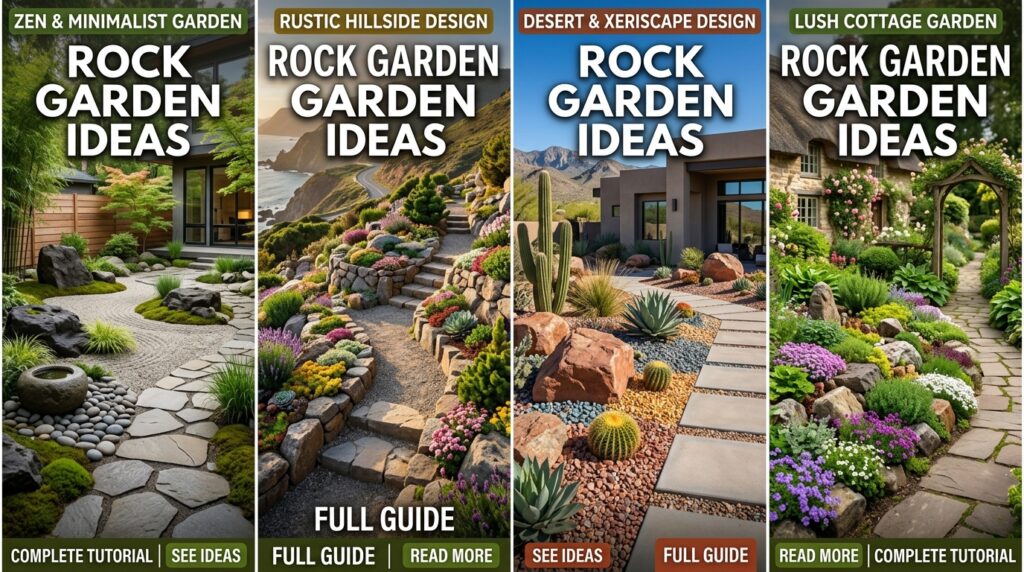
Rock gardens offer numerous advantages.
Benefits include:
- Low maintenance
- Water-efficient landscaping
- Year-round visual appeal
- Excellent drainage
- Weed reduction
- Increased property value
- Erosion control
- Unique natural beauty
Rock gardens are ideal for both modern and traditional landscapes.
Planning Your Rock Garden
Before starting your project, consider:
- Garden size
- Sun exposure
- Soil quality
- Drainage
- Existing landscape
- Climate
- Budget
- Plant selection
A thoughtful plan ensures a balanced and long-lasting design.
Choose the Right Rocks
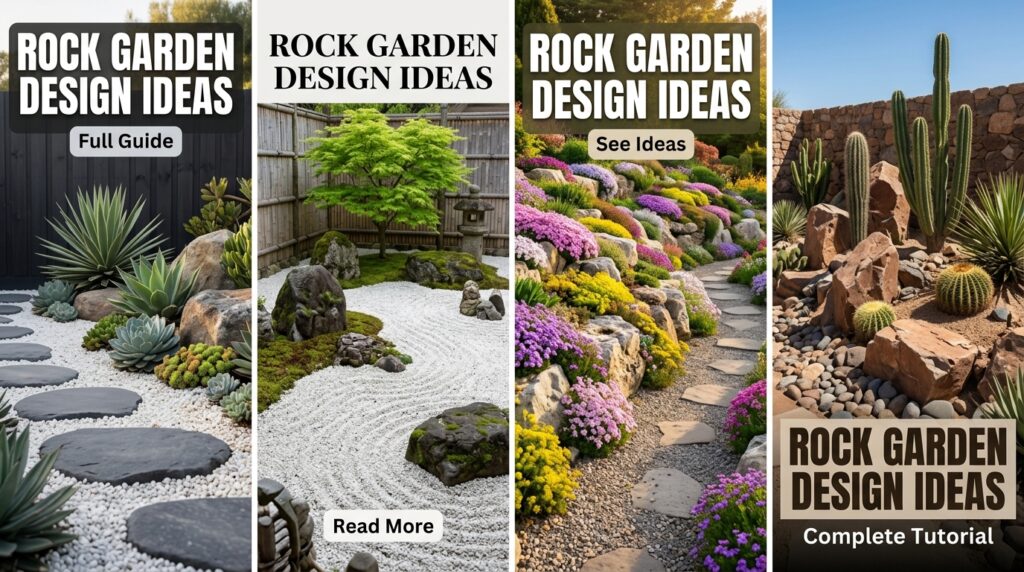
The rocks you select define the overall appearance.
Popular choices include:
- Granite
- Limestone
- Sandstone
- River rock
- Slate
- Basalt
Use a mix of large and small stones to create a natural look.
Create Natural-Looking Layouts
Avoid placing rocks in straight lines.
Instead:
- Group stones together
- Partially bury large boulders
- Vary rock sizes
- Leave space for plants
- Mimic natural landscapes
Natural arrangements create a more authentic appearance.
Add Decorative Gravel
Gravel fills empty spaces beautifully.
Popular gravel types include:
- Pea gravel
- Crushed stone
- White gravel
- Black gravel
- River pebbles
Gravel improves drainage while reducing weeds.
Best Plants for Rock Gardens
Choose drought-tolerant plants that thrive in well-drained soil.
Excellent options include:
- Sedum
- Hens and Chicks
- Sempervivum
- Lavender
- Creeping Thyme
- Ice Plant
- Yucca
- Agave
These plants require minimal maintenance.
Alpine Plants
Alpine plants naturally complement rocky landscapes.
Popular choices include:
- Saxifraga
- Aubrieta
- Dianthus
- Campanula
They provide colorful blooms in compact spaces.
Succulent Rock Gardens
Succulents create modern, sculptural landscapes.
Popular varieties include:
- Echeveria
- Aloe
- Jade Plant
- Haworthia
- Agave
Mix different shapes and colors for visual interest.
Add Ground Covers
Ground covers soften the edges of rocks.
Excellent choices include:
- Creeping Thyme
- Irish Moss
- Blue Star Creeper
- Creeping Phlox
They help suppress weeds while adding color.
Rock Garden Pathways
Guide visitors through your landscape.
Use:
- Stepping stones
- Flagstone
- Gravel paths
- River rocks
Curved pathways create a more natural flow.
Dry Creek Bed
A dry creek bed adds texture and helps manage drainage.
Include:
- River stones
- Large boulders
- Ornamental grasses
- Drought-tolerant flowers
This feature creates the appearance of a natural stream.
Water Features
Combine rocks with flowing water.
Ideas include:
- Waterfalls
- Bubbling rocks
- Small ponds
- Cascading fountains
Water contrasts beautifully with stone textures.
Rock Garden Lighting
Outdoor lighting highlights your landscape after sunset.
Install:
- LED spotlights
- Solar path lights
- Uplighting
- Landscape lanterns
Lighting creates dramatic nighttime effects.
Decorative Accessories
Complete your design with:
- Stone sculptures
- Rustic pots
- Driftwood
- Metal garden art
- Decorative lanterns
Keep decorations simple to maintain a natural appearance.
Sloped Rock Garden Ideas
Rock gardens work especially well on hillsides.
Benefits include:
- Controls erosion
- Improves drainage
- Creates visual layers
- Maximizes difficult spaces
Use retaining stones where necessary.
Small Rock Garden Ideas
Compact gardens can still make a big impact.
Ideas include:
- Container rock gardens
- Mini succulent displays
- Gravel borders
- Decorative boulders
- Raised beds
Simple designs work best in smaller spaces.
Sustainable Rock Gardening
Eco-friendly practices include:
- Native plants
- Rainwater harvesting
- Organic mulch
- Permeable gravel
- Drought-resistant landscaping
These methods conserve water and reduce maintenance.
Seasonal Maintenance
Maintain your rock garden throughout the year.
Spring
- Remove weeds
- Add fresh gravel
- Fertilize plants
Summer
- Water deeply during dry periods
- Trim overgrown plants
- Inspect drainage
Autumn
- Remove fallen leaves
- Divide perennials
- Clean pathways
Winter
- Protect sensitive succulents
- Inspect stones after freezing weather
- Remove debris
Routine care keeps your rock garden attractive year-round.
Common Design Mistakes
Avoid these common problems:
- Using too many rock types
- Poor drainage
- Overcrowding plants
- Placing rocks unnaturally
- Ignoring mature plant size
- Excessive decorations
A simple and balanced design always looks best.
Maintenance Tips
Keep your rock garden looking beautiful by:
- Pulling weeds regularly
- Raking gravel
- Pruning plants
- Cleaning stones
- Refreshing mulch where needed
- Replacing damaged plants
Minimal maintenance keeps the landscape fresh.
Frequently Asked Questions
What plants grow best in a rock garden?
Succulents, sedum, creeping thyme, lavender, agave, yucca, hens and chicks, alpine plants, and ornamental grasses are excellent choices.
Is a rock garden low maintenance?
Yes. Rock gardens require less watering, fewer weeds, and minimal pruning compared to traditional flower gardens.
Can I build a rock garden in a small yard?
Absolutely. Small rock gardens using decorative gravel, compact plants, and carefully placed stones work beautifully in limited spaces.
What type of rock is best?
Granite, limestone, sandstone, slate, and river rocks are among the most popular choices because they are durable and attractive.
How do I make a rock garden look natural?
Use rocks of varying sizes, group them naturally, partially bury larger stones, add layered planting, and avoid perfectly symmetrical arrangements.
Conclusion
Rock garden design ideas provide an excellent way to create a beautiful, water-wise, and low-maintenance landscape that can be enjoyed throughout the year. By combining natural stone, decorative gravel, drought-tolerant plants, and thoughtfully designed pathways, you can transform any outdoor space into an eye-catching feature that complements your home’s architecture.
Whether you’re designing a modern front yard, a rustic backyard retreat, or a sloped hillside landscape, careful planning and quality materials will help you achieve lasting beauty. With routine maintenance and creative landscaping, your rock garden will continue to thrive while offering texture, color, and timeless appeal for years to come.