
 By John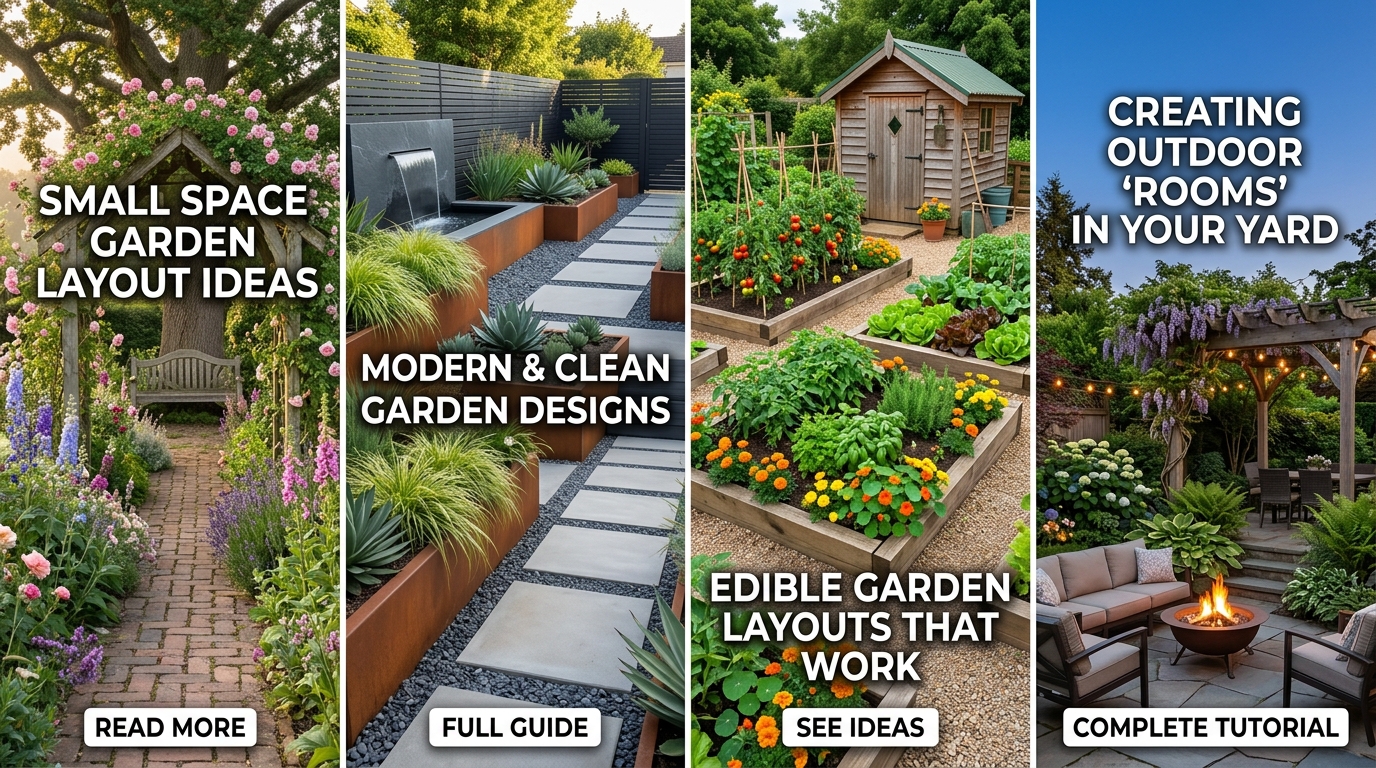
A well-designed garden layout is the foundation of creating an attractive, organized, and practical outdoor space. Whether you want a flower garden, vegetable garden, modern landscape, cottage-style retreat, or a relaxing backyard oasis, the right layout helps maximize space while improving beauty and usability.
Garden layouts combine structure, planting areas, pathways, seating, decorative elements, and functional zones to create a balanced environment. A thoughtful design not only improves appearance but also makes gardening easier and more enjoyable throughout every season.
In this guide, you’ll discover everything about garden layout ideas, including planning, zoning, pathways, plant placement, and inspiring design styles.
What Is a Garden Layout?
A garden layout is the arrangement and organization of plants, structures, pathways, and outdoor features within a garden space.
Garden layouts often include:
- Planting beds
- Lawn areas
- Pathways
- Seating zones
- Decorative borders
- Water features
- Outdoor lighting
- Raised beds
- Vertical gardens
The goal is to create a visually appealing and functional outdoor environment.
Benefits of a Good Garden Layout
1. Maximizes Available Space
Proper layouts make gardens feel larger and more organized.
2. Improves Visual Balance
Structured designs create attractive outdoor spaces.
3. Makes Maintenance Easier
Organized layouts simplify watering and care.
4. Supports Healthy Plant Growth
Good spacing improves airflow and sunlight.
5. Enhances Outdoor Living
Creates comfortable spaces for relaxing and entertaining.
How to Plan a Garden Layout
1. Measure Your Space
Understand available dimensions before designing.
Consider:
- Width and length
- Existing structures
- Sunlight patterns
- Drainage
- Access points
2. Choose Your Garden Purpose
Decide how you want to use the space.
Popular Uses:
- Flower garden
- Vegetable garden
- Family garden
- Relaxation area
- Entertaining space
3. Divide Into Zones
Organize the garden into functional areas.
Examples:
- Planting zone
- Seating area
- Walkways
- Decorative section
- Dining area
4. Select a Style
Choose a consistent design approach.
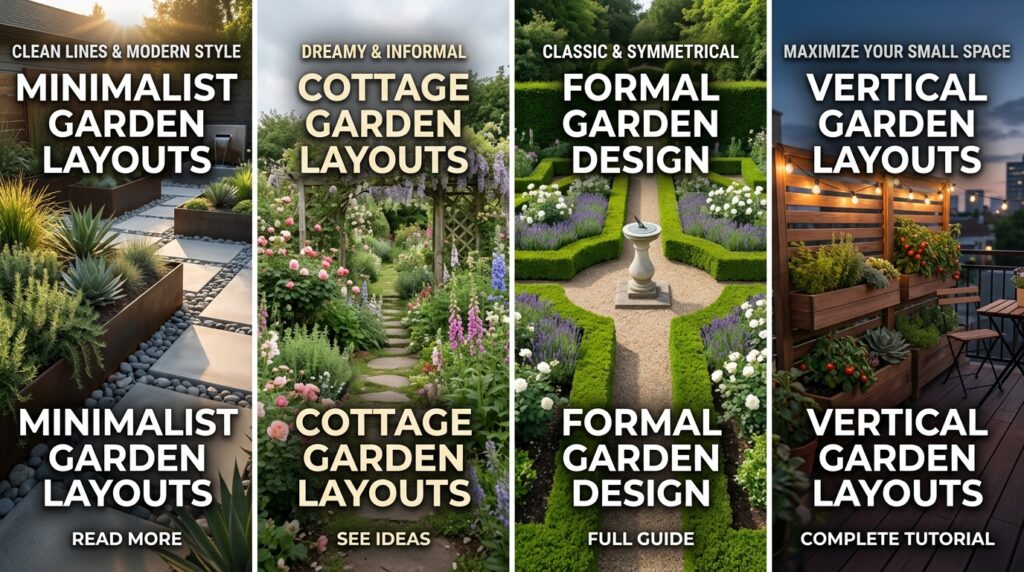
Popular Styles:
- Modern
- Cottage
- Tropical
- Minimalist
- Mediterranean
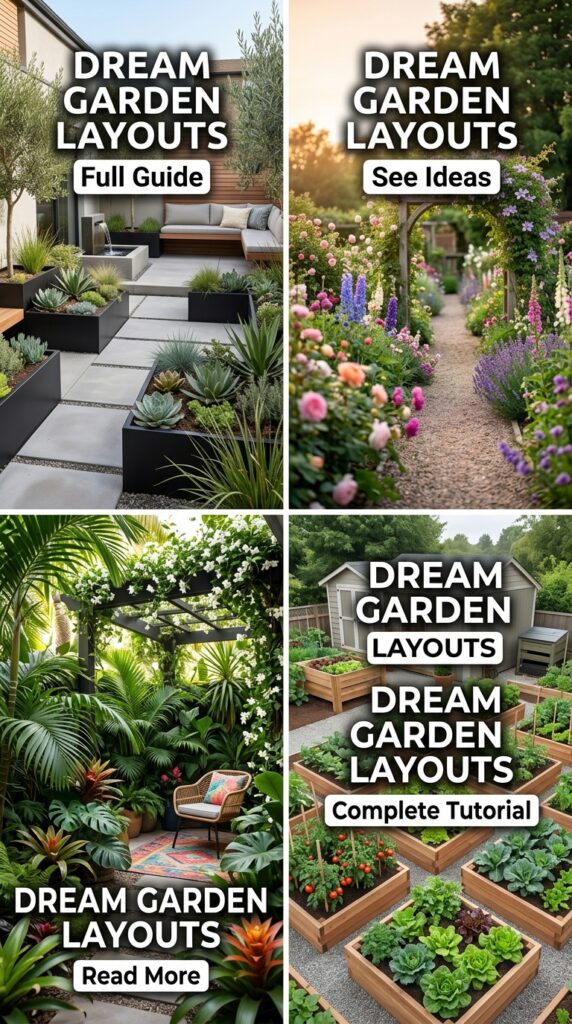
Best Garden Layout Styles
1. Modern Garden Layout
Modern layouts emphasize simplicity.
Features:
- Geometric lines
- Structured planting
- Neutral colors
- Clean pathways
Ideal for contemporary homes.
2. Cottage Garden Layout
Cottage gardens feel relaxed and romantic.
Include:
- Mixed flowers
- Curved borders
- Rustic decor
- Layered planting
3. Tropical Garden Layout
Tropical gardens create lush atmosphere.
Popular Plants:
- Palms
- Ferns
- Bamboo
- Large-leaf greenery
4. Formal Garden Layout
Formal gardens focus on symmetry.
Features:
- Balanced planting
- Defined pathways
- Structured borders
5. Natural Garden Layout
Natural gardens create soft flowing landscapes.
Include:
- Wildflowers
- Organic shapes
- Native plants
Small Garden Layout Ideas
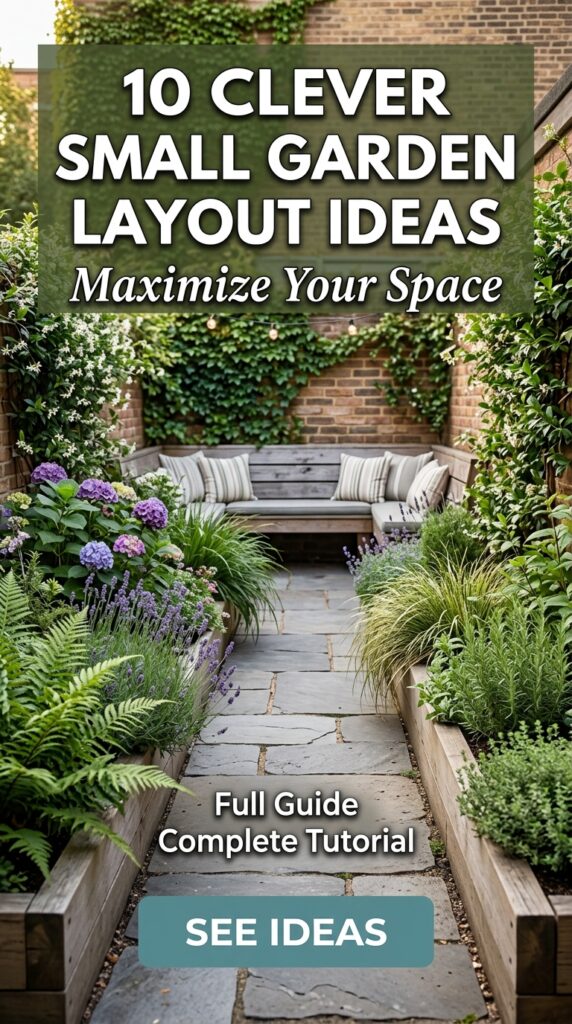
Compact gardens can still feel spacious.
Vertical Garden Layout
Grow upward to save floor space.
Multi-Functional Design
Combine seating and planting areas.
Corner Garden Layout
Maximize unused spaces.
Layered Planting
Create depth and visual interest.
Backyard Garden Layout Ideas
Backyards offer flexibility for creative design.
Lounge Area Layout
Create relaxing seating zones.
Outdoor Dining Garden
Perfect for entertaining.
Multi-Level Garden
Adds dimension and interest.
Family-Friendly Layout
Include open and flexible spaces.
Front Garden Layout Ideas
Front gardens improve home appearance.
Symmetrical Design
Creates elegant curb appeal.
Flower Border Layout
Adds color and softness.
Minimalist Front Garden
Simple and clean appearance.
Pathway-Centered Layout
Guide visitors naturally.
Vegetable Garden Layout Ideas
Productive gardens benefit from organization.
Raised Bed Layout
Easy maintenance and efficient planting.
Grid Garden Layout
Organized and productive design.
Companion Planting Layout
Supports healthy growth.
Vertical Vegetable Garden
Ideal for compact spaces.
Garden Pathway Ideas
Pathways define movement and structure.
Stone Walkways
Elegant and durable.
Gravel Paths
Affordable and low maintenance.
Brick Paths
Classic garden style.
Stepping Stones
Decorative and functional.
Garden Seating Layout Ideas
Comfortable seating improves outdoor experience.
Garden Benches
Classic and practical.
Outdoor Sofas
Perfect for entertaining.
Dining Sets
Functional and welcoming.
Hanging Chairs
Create cozy corners.
Garden Lighting Layout Ideas
Lighting adds atmosphere and usability.
Solar Lighting
Eco-friendly option.
String Lights
Warm and inviting.
Spotlights
Highlight focal points.
Path Lighting
Improve safety and appearance.
Water Feature Layout Ideas
Water features create relaxing environments.
Garden Fountain
Beautiful focal point.
Reflecting Pool
Modern elegance.
Mini Pond
Natural atmosphere.
Water Wall
Space-saving and stylish.
DIY Garden Layout Ideas
DIY projects personalize outdoor spaces.
DIY Raised Beds
Organize planting efficiently.
DIY Pathways
Affordable garden upgrade.
DIY Vertical Gardens
Perfect for small areas.
DIY Decorative Borders
Add visual structure.
Seasonal Garden Layout Ideas
Spring Garden Layout
Introduce fresh planting and flowers.
Summer Garden Layout
Focus on seating and shade.
Autumn Garden Layout
Add warm textures and color.
Winter Garden Layout
Use evergreen structure.
Low Maintenance Garden Layout Ideas
Simple designs reduce upkeep.
Best Features:
- Native plants
- Gravel landscaping
- Mulching
- Drip irrigation
- Perennial planting
These simplify maintenance.
Common Garden Layout Mistakes to Avoid
Overcrowding Plants
Allow room for growth.
Ignoring Sunlight
Match plants to lighting conditions.
Poor Path Planning
Ensure comfortable movement.
Mixing Too Many Styles
Keep design consistent.
Why Garden Layout Planning Matters
Garden layouts continue to grow in popularity because they support:
- Better organization
- Easier maintenance
- Beautiful landscaping
- Functional outdoor living
- Long-term garden success
A good layout turns ordinary outdoor areas into enjoyable living spaces.
Conclusion
A thoughtfully designed garden layout creates a beautiful, organized, and functional outdoor environment that supports both style and practicality. Whether you prefer a modern landscape, a cozy cottage garden, a productive vegetable garden, or a relaxing backyard retreat, the right layout helps maximize beauty and comfort.
By combining planting zones, pathways, seating, lighting, water features, and decorative accents, you can create a garden layout that feels balanced, inviting, and visually stunning throughout every season.