
 By John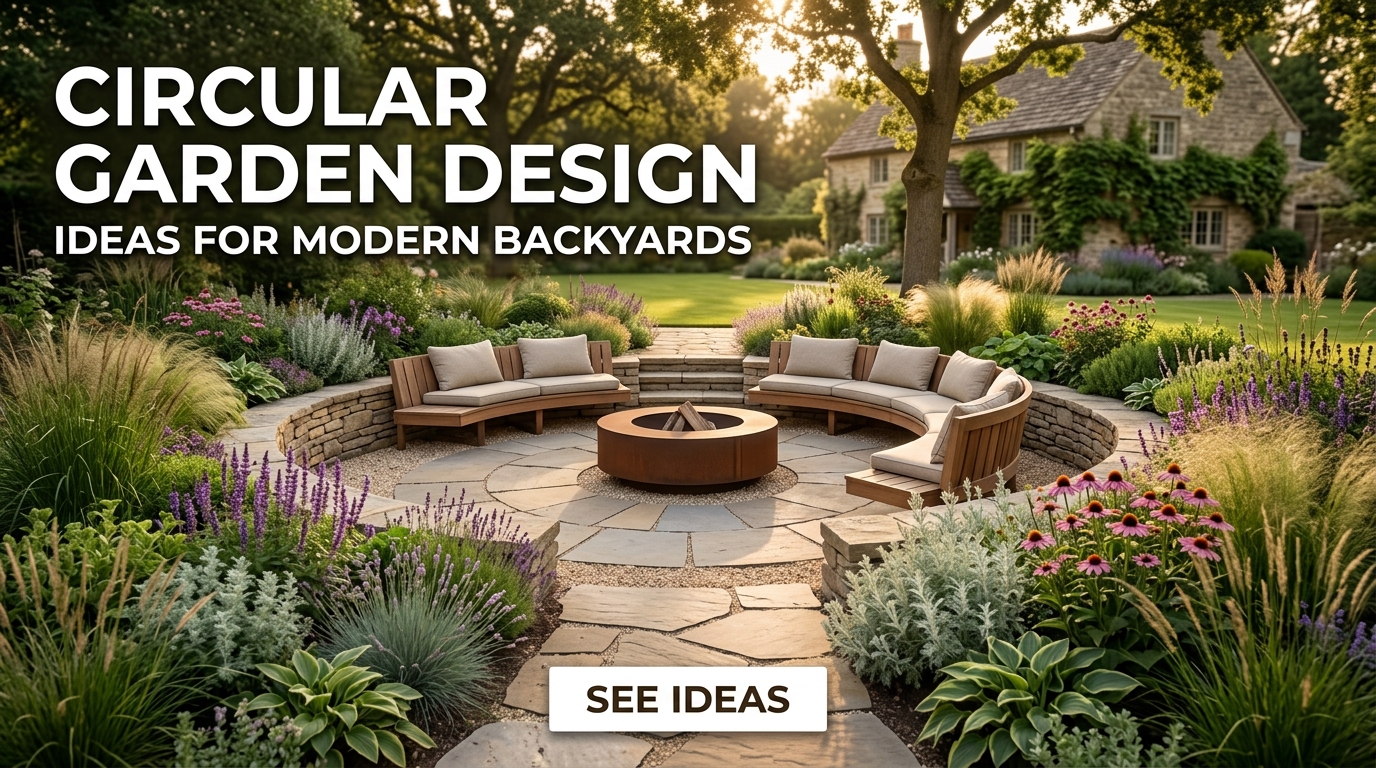
Circular Garden Design Ideas, Round Flower Beds, Curved Pathways, Garden Focal Points, and Landscape Inspiration
A circular garden design is one of the most visually appealing and timeless landscaping styles. Unlike traditional rectangular layouts, circular gardens introduce soft curves, balance, and harmony into outdoor spaces. Whether used in a large backyard, front yard, courtyard, or small garden, circular designs naturally draw the eye and create attractive focal points that make landscapes feel more organized and inviting.
Circular gardens can be designed in countless ways, from formal geometric layouts and elegant rose gardens to modern minimalist landscapes and cottage-style flower beds. By incorporating curved pathways, symmetrical planting schemes, water features, and decorative elements, homeowners can create a garden that feels both functional and artistic.
This complete guide explores circular garden design principles, layout ideas, plant selections, focal points, maintenance tips, and landscaping inspiration to help you create a stunning round garden.
What Is a Circular Garden Design?
A circular garden design is a landscape layout built around one or more circular shapes. The circle often serves as the main focal point, with pathways, planting beds, seating areas, or decorative features arranged around it.
Common elements include:
- Circular flower beds
- Round lawns
- Curved pathways
- Central fountains
- Garden sculptures
- Seating areas
- Symmetrical planting
Circular layouts create flow and visual balance throughout the garden.
Benefits of Circular Garden Design
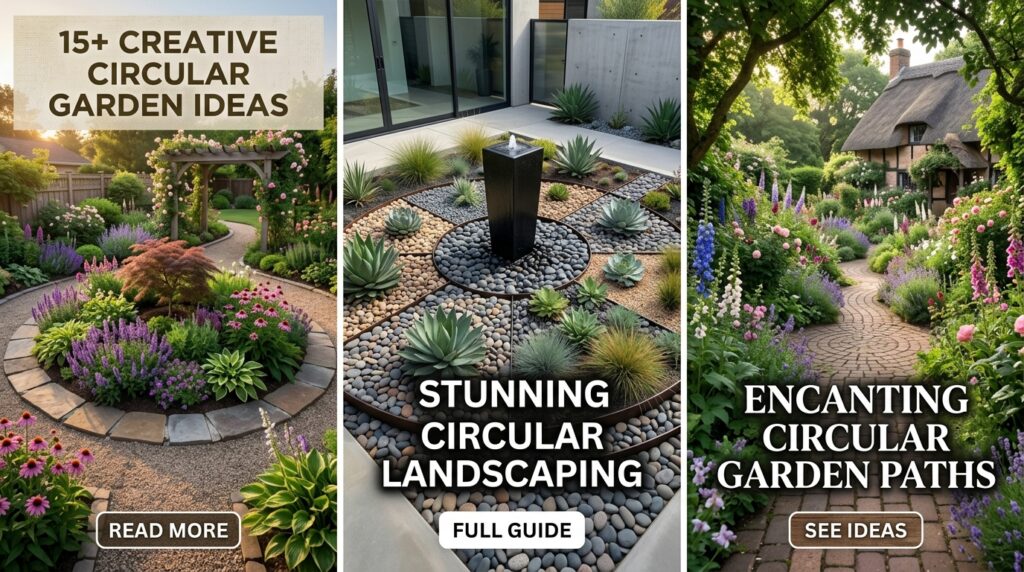
Circular gardens offer many advantages over traditional straight-line layouts.
Creates a Strong Focal Point
The eye is naturally drawn toward the center of a circle.
Softens the Landscape
Curved lines create a more natural and relaxing appearance.
Improves Flow
Circular pathways encourage movement and exploration.
Works in Various Garden Sizes
Round designs can be adapted for both small and large spaces.
Adds Visual Interest
The unique shape immediately makes a garden stand out.
Planning Your Circular Garden
Before construction begins, consider:
Available Space
Measure the area carefully to determine the ideal size.
Purpose
Decide whether the garden will be decorative, functional, or both.
Sun Exposure
Choose plants based on available sunlight.
Style
Select a design theme that complements your home and landscape.
Circular Flower Bed Ideas
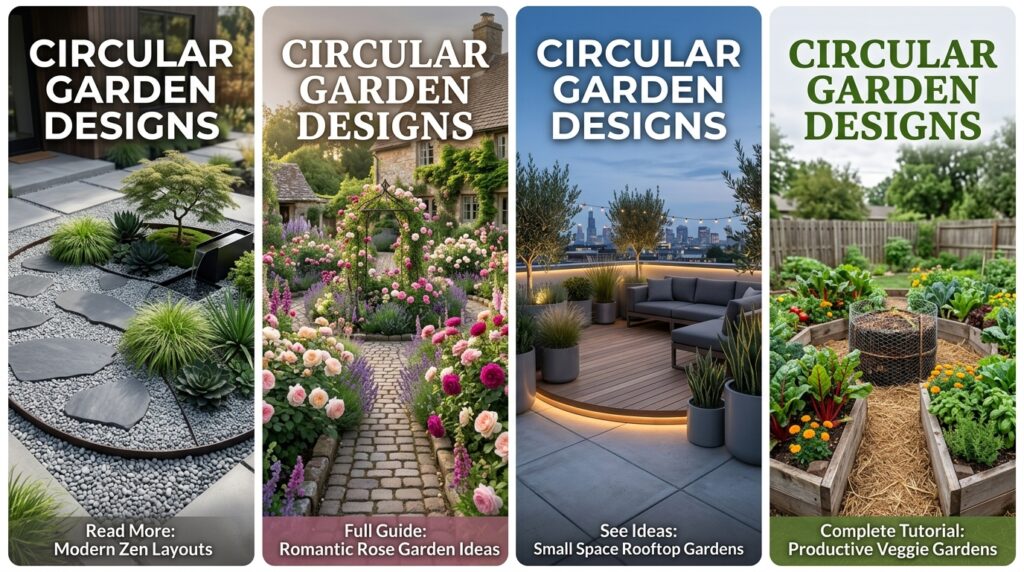
Flower beds are one of the most popular circular garden features.
Popular options include:
- Rose gardens
- Perennial beds
- Wildflower circles
- Seasonal displays
Plant taller flowers in the center and shorter varieties around the edges for layered interest.
Central Focal Point Ideas
The center of a circular garden often becomes the main attraction.
Popular focal points include:
Garden Fountains
Add movement and soothing sounds.
Sculptures
Create visual drama and artistic appeal.
Bird Baths
Attract wildlife and provide charm.
Ornamental Trees
Offer height and year-round interest.
Garden Obelisks
Perfect for climbing plants and vertical accents.
A strong focal point anchors the entire design.
Circular Lawn Designs
Round lawns create a clean and elegant appearance.
Benefits include:
- Open visual space
- Defined planting areas
- Easy integration with pathways
Circular lawns work particularly well in formal landscapes.
Curved Pathway Ideas
Curved pathways enhance the circular theme.
Materials include:
- Natural stone
- Brick
- Gravel
- Concrete pavers
Paths can radiate from the center or wrap around the garden.
Formal Circular Garden Designs
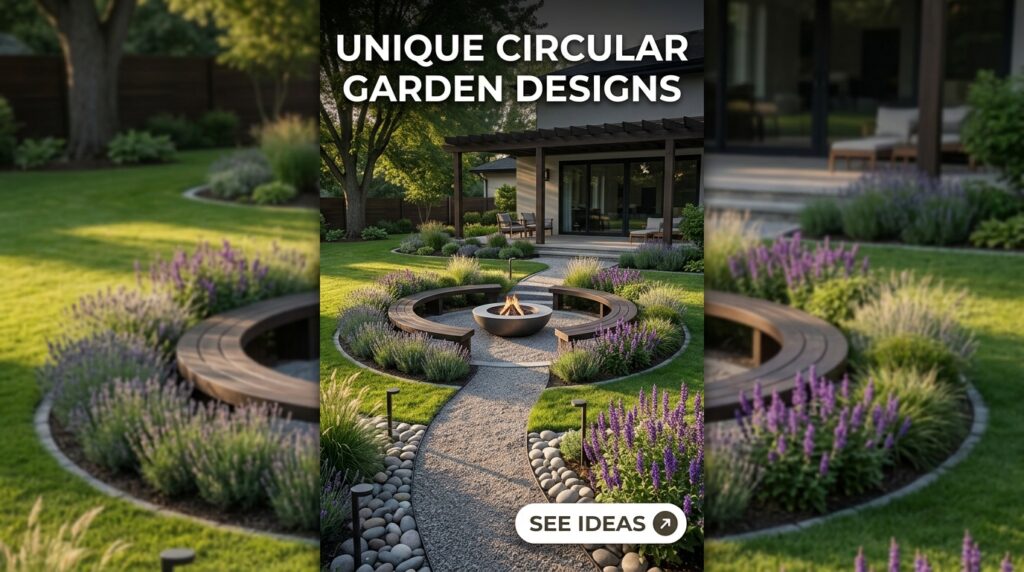
Formal gardens often rely on symmetry and geometry.
Features include:
- Boxwood hedges
- Symmetrical flower beds
- Central fountains
- Structured pathways
Formal circular gardens create a sophisticated appearance.
Cottage-Style Circular Gardens
Cottage gardens embrace a softer, more relaxed style.
Include:
- Mixed flower plantings
- Roses
- Lavender
- Decorative arches
- Garden benches
The circular shape adds structure while maintaining a natural feel.
Modern Circular Garden Ideas
Modern gardens focus on simplicity and clean lines.
Popular elements include:
- Minimalist planting
- Decorative gravel
- Geometric patterns
- Sculptural plants
- Contemporary furniture
A circular layout creates a striking modern statement.
Circular Vegetable Gardens
Round designs can also be practical.
Benefits include:
- Easy access to plants
- Efficient use of space
- Attractive appearance
Raised beds arranged in a circular pattern are particularly effective.
Circular Herb Garden Ideas
Herb gardens are perfect for circular layouts.
Popular herbs include:
- Basil
- Rosemary
- Thyme
- Mint
- Oregano
Organize herbs by height, color, or culinary use.
Water Features in Circular Gardens
Water elements enhance the sense of tranquility.
Ideas include:
- Reflecting pools
- Circular ponds
- Fountains
- Water bowls
Water creates movement and visual interest.
Circular Seating Areas
A circular seating area encourages conversation.
Options include:
- Garden benches
- Fire pit seating
- Outdoor dining sets
- Pergola-covered lounges
These spaces become natural gathering areas.
Best Plants for Circular Gardens
Choose plants that complement the design.
Popular options include:
Roses
Classic and elegant.
Lavender
Adds fragrance and structure.
Hydrangeas
Provide large, colorful blooms.
Salvia
Offers long-lasting color.
Ornamental Grasses
Create movement and texture.
Boxwood
Ideal for formal borders.
Circular Garden Designs for Small Spaces
Small gardens can benefit greatly from circular layouts.
Ideas include:
- Single circular flower beds
- Mini herb gardens
- Decorative stone circles
- Compact seating areas
Even a small circular feature can transform a landscape.
Circular Garden Borders
Borders help define the shape.
Popular materials include:
- Brick edging
- Natural stone
- Decorative metal edging
- Low hedges
Well-defined borders enhance the overall design.
Seasonal Interest in Circular Gardens
Ensure year-round beauty by including:
Spring
- Tulips
- Daffodils
- Flowering bulbs
Summer
- Roses
- Lavender
- Perennials
Autumn
- Ornamental grasses
- Colorful foliage
Winter
- Evergreens
- Decorative structures
Seasonal variety keeps the garden attractive throughout the year.
Lighting for Circular Gardens
Proper lighting highlights key features after dark.
Use:
- Path lights
- Spotlights
- Lanterns
- String lights
Lighting creates a magical nighttime atmosphere.
Common Circular Garden Design Mistakes
Avoid these common problems:
- Oversized focal points
- Poor plant spacing
- Ignoring scale
- Lack of balance
- Inconsistent themes
Careful planning prevents these issues.
Maintenance Tips
Keep your circular garden looking beautiful by:
- Pruning regularly
- Refreshing mulch
- Dividing perennials
- Maintaining pathways
- Cleaning water features
Routine care preserves the garden’s structure and appearance.
Frequently Asked Questions
What is a circular garden design?
A circular garden design is a landscape layout organized around one or more circular shapes, often featuring a central focal point.
Are circular gardens suitable for small yards?
Yes. Circular flower beds, herb gardens, and seating areas work exceptionally well in small spaces.
What is the best focal point for a circular garden?
Fountains, sculptures, bird baths, ornamental trees, and decorative planters are popular choices.
Which plants work best in circular gardens?
Roses, lavender, hydrangeas, boxwood, salvia, and ornamental grasses are excellent options.
Are circular gardens difficult to maintain?
No. Maintenance requirements depend on plant selection, but most circular gardens are no more difficult to maintain than traditional layouts.
Conclusion
A circular garden design offers a unique and elegant approach to landscaping by introducing balance, flow, and visual harmony. Whether you prefer a formal garden with geometric precision, a charming cottage-style retreat, a productive vegetable garden, or a modern outdoor space, circular layouts provide endless creative possibilities.
By incorporating attractive focal points, curved pathways, carefully selected plants, and thoughtful design elements, you can create a circular garden that becomes the centerpiece of your landscape. With proper planning and maintenance, a round garden can provide beauty, functionality, and enjoyment for many years to come.