
 By John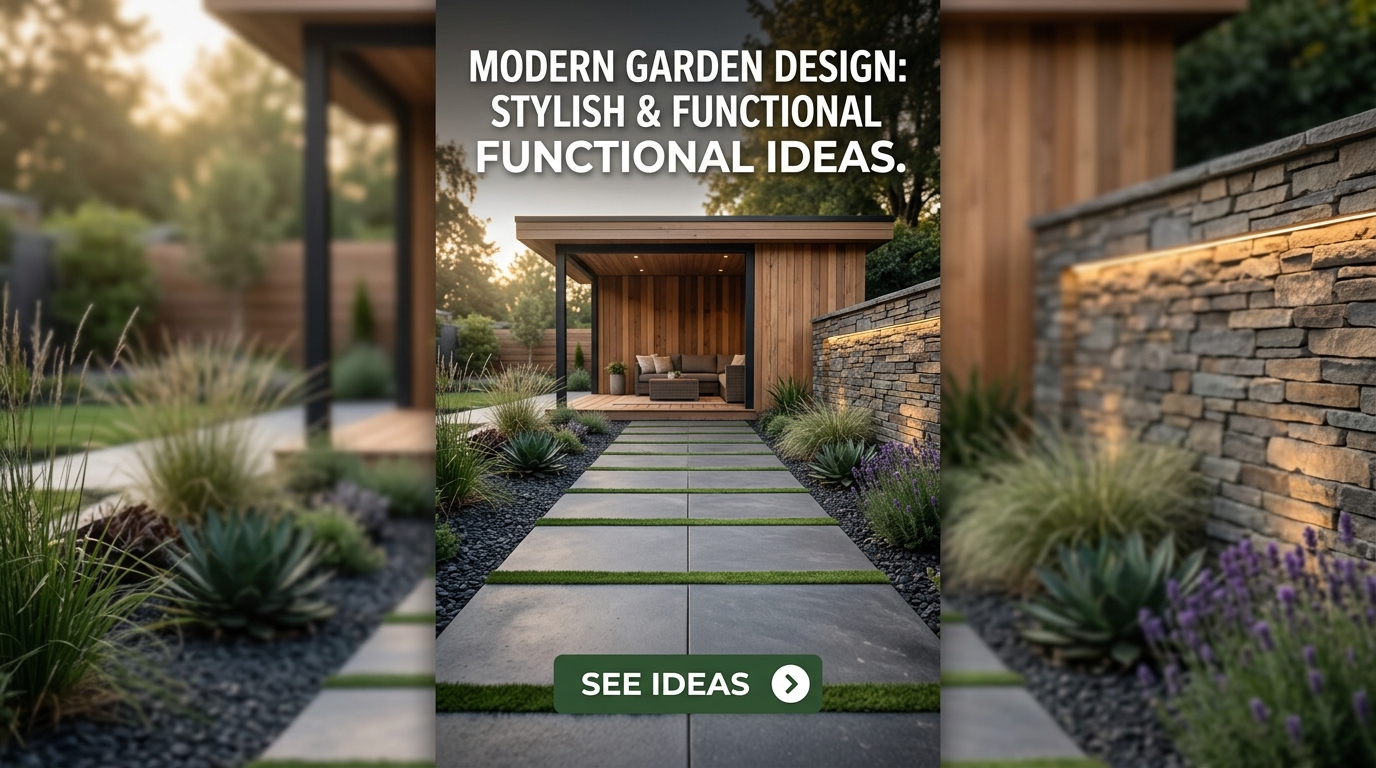
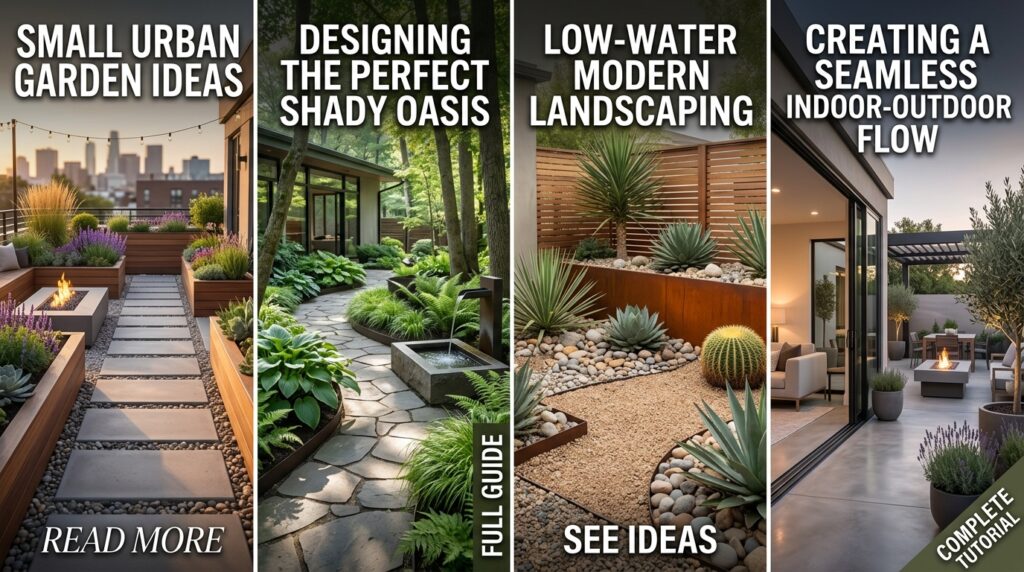
Contemporary garden design combines clean lines, functional spaces, and stylish materials to create outdoor areas that feel both elegant and practical. Unlike traditional gardens that focus on dense planting and ornamental features, contemporary gardens emphasize simplicity, structure, and a seamless connection between indoor and outdoor living.
Whether you have a compact urban courtyard, a suburban backyard, or a spacious landscape, contemporary garden design can be adapted to suit any space. By incorporating minimalist planting schemes, geometric layouts, and modern materials, you can create an outdoor retreat that is timeless, sophisticated, and easy to maintain.
What Is Contemporary Garden Design?
Contemporary garden design is a modern landscaping style characterized by:
- Clean lines
- Geometric shapes
- Minimalist planting
- Functional outdoor spaces
- Sustainable materials
- Integrated lighting
- Modern water features
The focus is on creating a balanced environment that is visually appealing while remaining practical for everyday use.
Benefits of Contemporary Gardens
Low Maintenance
Contemporary gardens typically use fewer plant varieties and simple layouts, making them easier to maintain.
Year-Round Appeal
Structural elements such as paving, sculptures, and evergreen plants provide interest throughout the seasons.
Maximizes Space
Modern designs make efficient use of both small and large gardens.
Enhances Property Value
A professionally designed contemporary garden can significantly increase curb appeal and resale value.
Encourages Outdoor Living
These gardens often include dedicated areas for dining, entertaining, and relaxation.
Key Elements of Contemporary Garden Design
Geometric Layouts
Straight lines and defined spaces are hallmarks of contemporary gardens.
Popular features include:
- Square planting beds
- Rectangular patios
- Symmetrical pathways
- Linear water features
Modern Materials
Common materials include:
- Concrete
- Steel
- Composite decking
- Natural stone
- Glass
- Timber
Mixing textures adds depth and visual interest.
Minimalist Planting
Choose plants with architectural forms, such as:
- Ornamental grasses
- Boxwood
- Agave
- Bamboo
- Lavender
- Alliums
Stick to a limited plant palette for a cohesive look.
Outdoor Lighting
Incorporate:
- LED pathway lights
- Recessed deck lighting
- Wall-mounted fixtures
- Spotlights for feature plants
Lighting extends the usability of your garden into the evening.
Contemporary Garden Layout Ideas
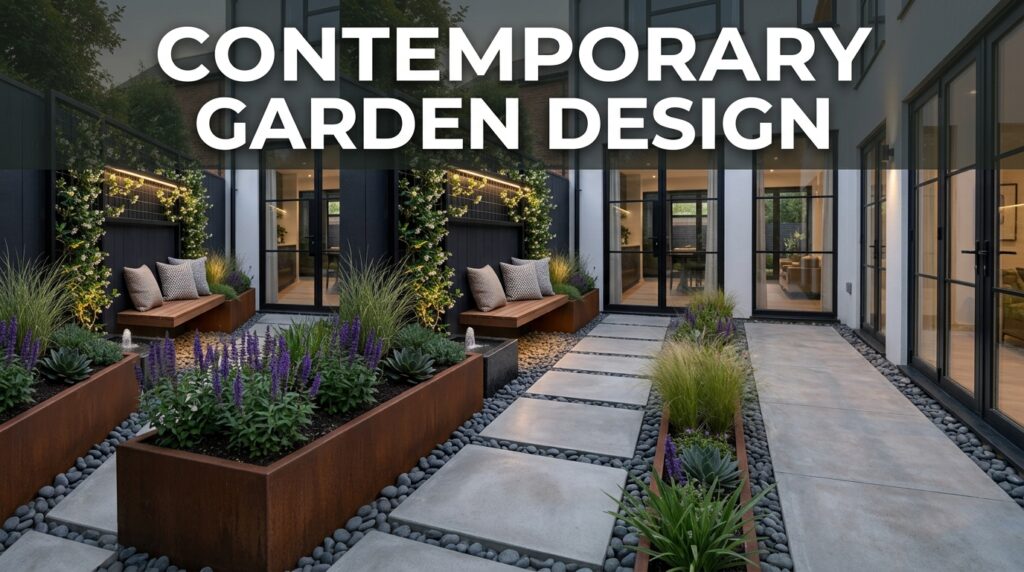
Courtyard Garden
Perfect for urban homes.
Include:
- Large planters
- Built-in seating
- Vertical planting
Open-Plan Garden
Create distinct zones for:
- Dining
- Lounging
- Gardening
- Entertainment
Rooftop Garden
Use lightweight containers and modern furniture to maximize space.
Poolside Garden
Combine sleek paving with tropical plants and subtle lighting.
Best Plants for Contemporary Gardens
Ornamental Grasses
- Miscanthus
- Blue Fescue
- Fountain Grass
Evergreen Shrubs
- Boxwood
- Yew
- Pittosporum
Architectural Plants
- Agave
- Yucca
- Phormium
Flowering Plants
- Lavender
- Salvia
- Echinacea
These plants provide texture, movement, and structure.
Hardscaping Ideas
Hardscaping plays a major role in contemporary gardens.
Consider:
- Concrete pavers
- Floating steps
- Raised beds
- Corten steel edging
- Gravel pathways
Hardscaping helps define spaces and reduce maintenance requirements.
Water Features
Modern water features include:
- Reflecting pools
- Wall fountains
- Water blades
- Minimalist ponds
Water adds movement and a sense of tranquility.
Contemporary Garden Furniture
Choose furniture with:
- Clean silhouettes
- Neutral colours
- Weather-resistant materials
Popular options include:
- Modular sofas
- Dining sets
- Hanging chairs
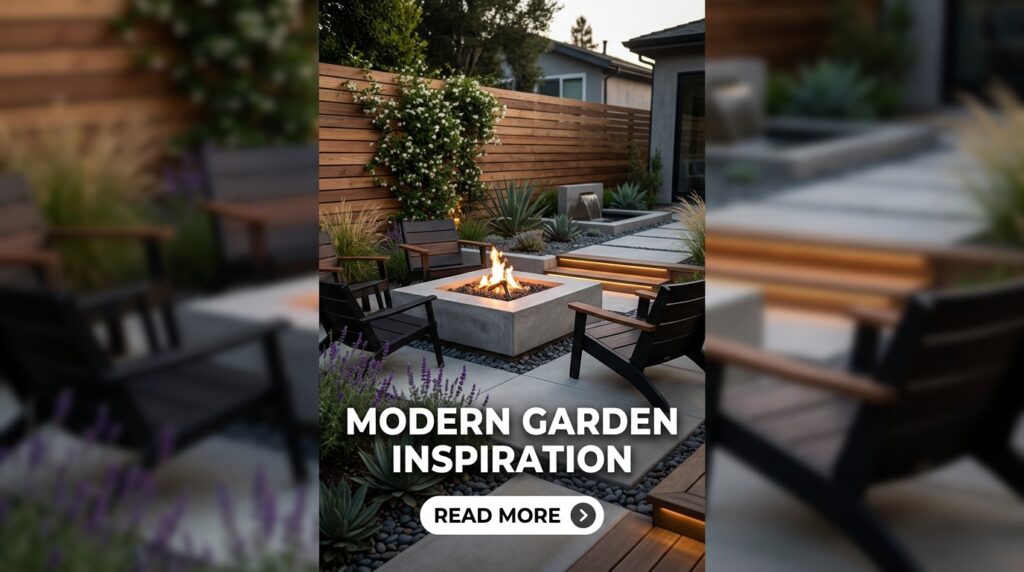
- Fire pit seating
Comfort is just as important as style.
Small Contemporary Garden Ideas
For compact spaces, try:
- Vertical gardens
- Built-in benches
- Folding furniture
- Large statement planters
A simple design can make a small garden feel larger and more inviting.
Sustainable Design Tips
Make your contemporary garden eco-friendly by:
- Installing rainwater collection systems
- Using native plants
- Choosing permeable paving
- Incorporating solar lighting
Sustainability is an important aspect of modern landscaping.
Common Mistakes to Avoid
Using Too Many Materials
Stick to two or three primary materials for a cohesive appearance.
Overplanting
Minimalism is key in contemporary design.
Ignoring Functionality
Ensure the garden meets your lifestyle needs.
Poor Lighting
Thoughtful lighting design enhances both safety and aesthetics.
Neglecting Maintenance
Even low-maintenance gardens benefit from regular care.
Frequently Asked Questions
What defines a contemporary garden?
A contemporary garden is defined by clean lines, modern materials, minimalist planting, and functional outdoor spaces.
Are contemporary gardens expensive?
Costs vary depending on size and materials, but contemporary designs can be adapted to suit a wide range of budgets.
What plants work best in contemporary gardens?
Ornamental grasses, architectural plants, and evergreen shrubs are among the most popular choices.
Can contemporary gardens work in small spaces?
Yes. Their minimalist approach makes them particularly well suited to courtyards, patios, and urban gardens.
Are contemporary gardens low maintenance?
Generally, yes. They often require less upkeep than traditional cottage or formal gardens.
Conclusion
Contemporary garden design offers the perfect balance of style, functionality, and simplicity. By combining geometric layouts, modern materials, and carefully selected plants, you can create an outdoor space that feels both sophisticated and welcoming.
Whether you’re redesigning a small courtyard or planning a large landscape transformation, contemporary principles can help you build a garden that reflects modern living while providing a peaceful retreat from everyday life. With thoughtful planning and a focus on quality over quantity, your contemporary garden can remain beautiful and functional for years to come.