
 By John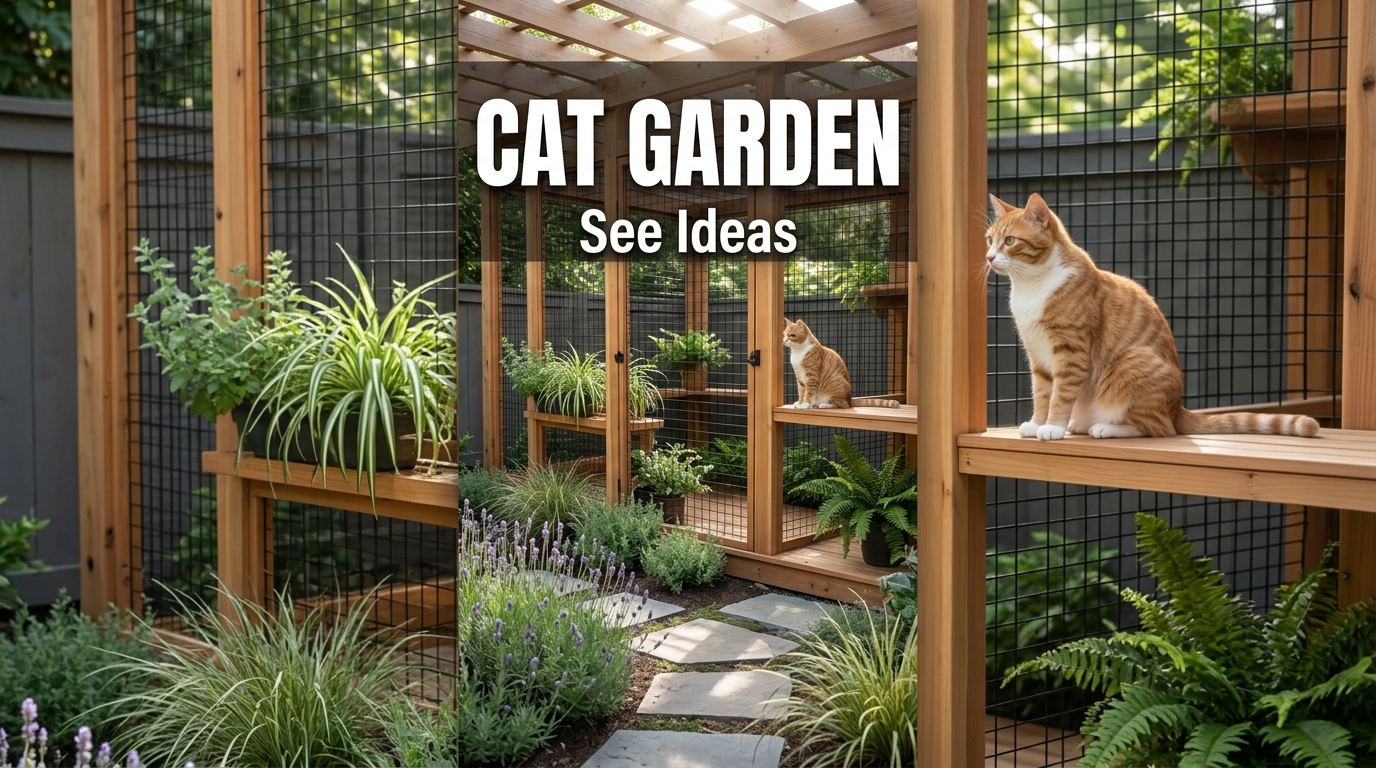
A cat garden is a specially designed outdoor space where cats can safely explore, climb, hide, rest, and enjoy natural surroundings. Whether you have a spacious backyard, small patio, balcony, or enclosed garden, thoughtful design can turn an ordinary outdoor area into an engaging environment for cats.
A successful cat garden combines safe planting, climbing opportunities, sheltered resting places, sensory enrichment, and secure boundaries. The goal is to provide stimulation while reducing exposure to hazards such as traffic, toxic plants, pesticides, and unsafe escape routes.
What Is a Cat Garden?
A cat garden is an outdoor landscape designed with a cat’s safety and natural behaviors in mind.
It can include:
- Cat-safe plants
- Secure fencing
- Enclosed catios
- Climbing structures
- Scratching posts
- Hiding spaces
- Shaded resting areas
- Tunnels
- Observation platforms
- Safe digging areas
A cat garden can be a dedicated space or a small section of an existing landscape.
Benefits of a Cat Garden
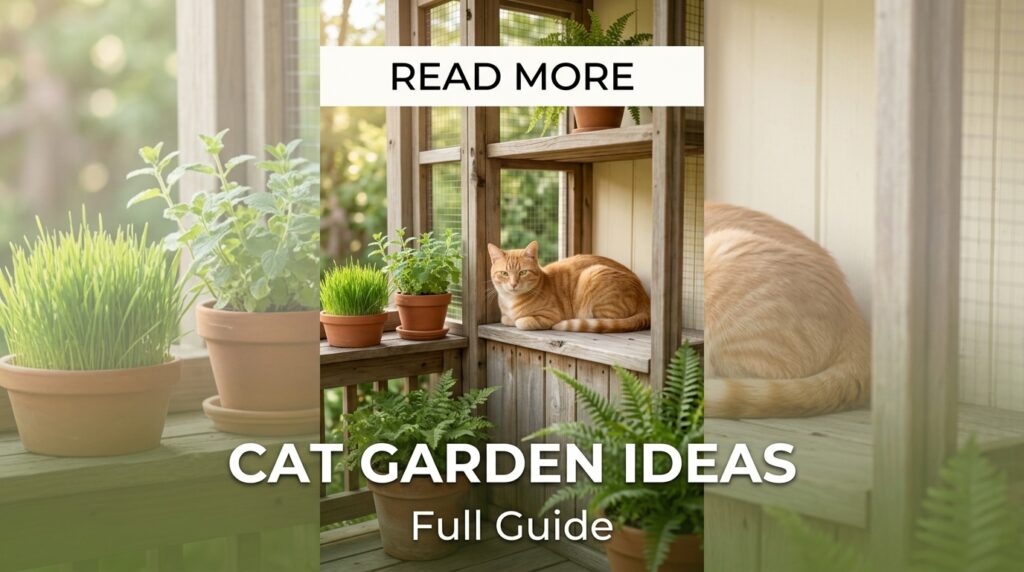
A thoughtfully designed cat garden can provide:
- Outdoor enrichment
- Opportunities to explore
- Safe access to fresh air
- Places to climb and observe
- Sensory stimulation
- Resting and hiding areas
- Exercise and play
Every cat is different, so design the space around its age, personality, mobility, and comfort level.
1. Enclosed Cat Garden
An enclosed garden provides a controlled outdoor environment.
Use secure:
- Fencing
- Mesh
- Catio structures
- Covered runs
- Enclosed patios
Check the entire enclosure for gaps, climbable escape routes, sharp edges, and other hazards.
2. DIY Cat Garden
A simple DIY cat garden can be created with a few basic additions.
Try:
- Wooden platforms
- Cat-safe plants
- Scratching posts
- Tunnels
- Cardboard shelters
- Outdoor beds
- Logs for climbing
Only use untreated or appropriately finished materials that are safe for pets and outdoor conditions.
3. Catio Garden
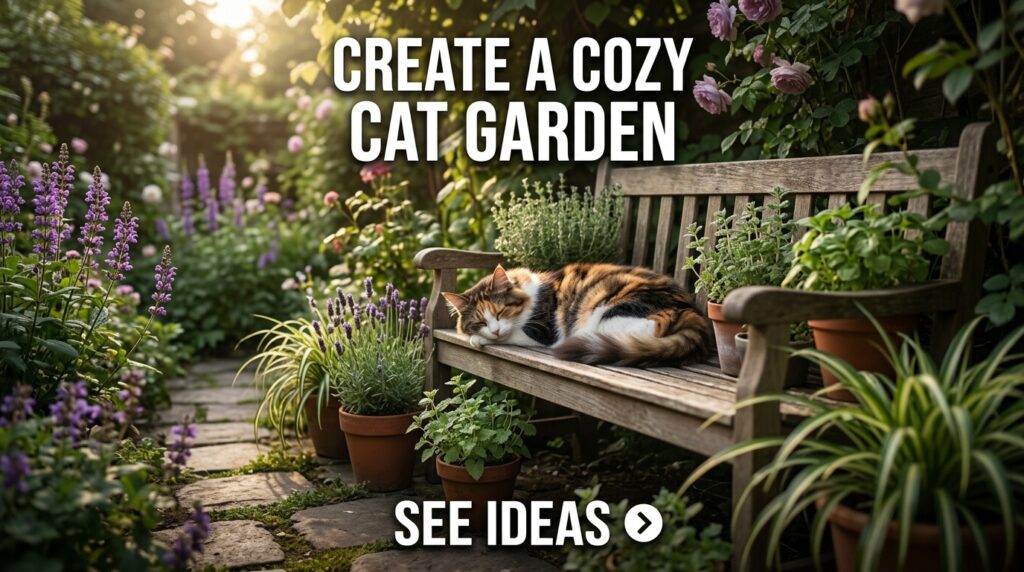
A catio combines a cat enclosure with outdoor garden elements.
Include:
- Shelves
- Platforms
- Climbing structures
- Safe plants
- Scratching surfaces
- Shaded areas
- Comfortable resting spots
A roof or secure overhead enclosure can help prevent escapes and protect cats from some outdoor hazards.
4. Small Cat Garden
Even a tiny garden can provide enrichment.
Use vertical space with:
- Wall shelves
- Climbing posts
- Raised platforms
- Hanging planters placed safely out of reach
- Small tunnels
Keep the layout open enough for cats to move comfortably.
5. Cat Garden on a Balcony
A balcony can become an enriching cat space when securely enclosed.
Consider:
- Cat-safe netting or an appropriately engineered enclosure
- Planters
- Cat shelves
- Shaded beds
- Scratching surfaces
Never rely on an ordinary balcony railing to contain a cat.
Before installing structures or heavy planters, check building rules and balcony load limits.
6. Cat Garden With Cat Grass
Cat grass can provide a simple sensory feature.
Commonly used cat-grass plants may include suitable grasses such as:
- Wheatgrass
- Oat grass
- Barley grass
- Rye grass
Grow them without pesticides or other substances that could be harmful to cats.
7. Cat Garden With Catnip
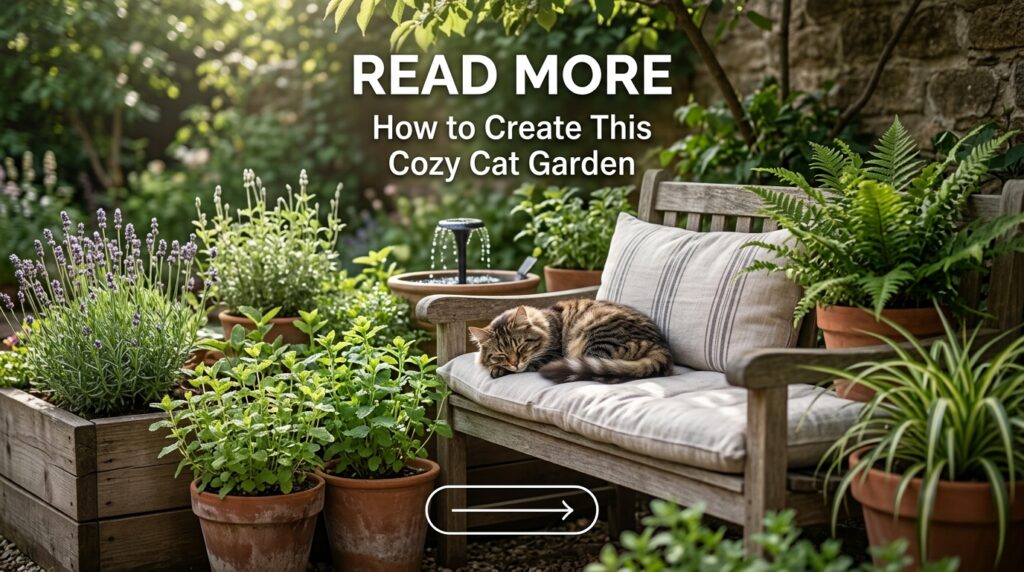
Catnip can be an enjoyable addition for cats that respond to it.
Plant it in a dedicated area or container and protect young plants while they establish.
Not every cat reacts to catnip, so consider it an optional enrichment plant rather than an essential feature.
8. Cat Garden With Catmint
Catmint can provide flowers and aromatic foliage while creating a garden-friendly environment.
Choose plants carefully and ensure all varieties used around cats are confirmed safe.
Keep the garden free from chemical treatments that could harm pets.
9. Cat Garden With Safe Flowers
Flowers can make a cat garden attractive, but plant selection requires care.
Before planting, verify that every species is non-toxic to cats.
Avoid assuming a plant is safe simply because it is commonly grown in gardens.
10. Cat Garden With Herbs
Some herbs can add scent and texture to a pet-friendly garden.
Always verify the safety of each herb before introducing it.
Avoid pesticides, herbicides, and chemical fertilizers that could expose cats to harmful substances.
11. Cat Garden With Hiding Places
Cats often appreciate sheltered spaces where they can retreat.
Create hiding areas with:
- Dense but safe planting
- Wooden shelters
- Small tunnels
- Covered beds
- Garden boxes
Make sure hiding structures remain dry, ventilated, and easy to inspect.
12. Cat Garden With Climbing Structures
Cats naturally enjoy climbing and observing their surroundings.
Add:
- Platforms
- Shelves
- Cat trees
- Sturdy posts
- Raised walkways
All structures should be stable and designed to support the cat’s weight.
13. Cat Garden With Scratching Posts
Outdoor scratching stations can provide enrichment while protecting other garden features.
Use durable scratching materials such as appropriately secured sisal or untreated suitable wood.
Place scratching stations near areas cats naturally explore.
14. Cat Garden With Logs
Stable logs can create natural climbing and scratching opportunities.
Before using them, inspect for:
- Rot
- Insects
- Sharp splinters
- Chemical contamination
Secure larger pieces so they cannot roll or collapse.
15. Cat Garden With Stones
Smooth stones can add texture and visual interest.
Avoid sharp or unstable rocks that could cause injuries.
Large stones can also provide warm resting surfaces in suitable weather, but always ensure cats have access to shade and cooler areas.
16. Cat Garden With a Water Feature
A small water feature can make the garden more interesting, but water safety is essential.
Use shallow, easily monitored features and keep water clean.
A dedicated fresh-water bowl is generally a simpler option for providing drinking water.
Avoid deep ponds or water features where a cat could become trapped or struggle to escape.
17. Cat Garden With a Sand Area
Some cats enjoy digging and exploring loose materials.
Create a dedicated digging area using clean, pet-appropriate material.
Keep it separate from plants and food-growing areas and maintain it regularly.
18. Cat Garden With Sensory Plants
A sensory garden can provide different textures and scents.
Use carefully selected cat-safe plants with:
- Soft foliage
- Aromatic leaves
- Interesting textures
- Cat-friendly grasses
Always verify plant safety before introducing new species.
19. Cat Garden With Butterfly-Friendly Plants
A garden can attract butterflies and other beneficial insects.
Choose plants that support local pollinators while ensuring the species are safe for cats.
Avoid pesticides whenever possible and use pet-safe gardening practices.
20. Cat Garden With Bird Watching Area
Cats naturally enjoy observing birds, but allowing cats to hunt wildlife can create risks for both animals.
A secure catio with elevated observation platforms allows cats to watch outdoor activity while preventing them from roaming freely.
Place bird feeders away from the enclosure if appropriate, and consider local wildlife impacts.
21. Cat Garden With Window View
A garden visible from a window can provide indoor enrichment.
Create an attractive view using:
- Cat-safe planting
- Bird-safe landscaping
- Trees
- Shrubs
- Moving grasses
A comfortable indoor perch can give cats a safe place to watch the garden.
22. Cat Garden With Shaded Resting Area
Shade is essential for outdoor comfort.
Provide:
- Covered beds
- Pergolas
- Shade cloth
- Dense but safe planting
- Sheltered platforms
Make sure shaded areas remain adequately ventilated.
23. Cat Garden for Indoor Cats
Indoor cats can benefit from controlled outdoor enrichment.
A secure catio, enclosed porch, or properly designed garden run can allow outdoor experiences without unrestricted roaming.
Introduce the area gradually and monitor your cat’s behavior.
24. Cat Garden for Multiple Cats
Multiple cats need enough resources to avoid competition.
Provide several:
- Resting areas
- Hiding spots
- Water stations
- Climbing platforms
- Scratching areas
Create multiple routes through the space so cats can move away from each other comfortably.
25. Cat Garden for Kittens
Kittens need especially secure environments.
Check for:
- Small gaps
- Toxic plants
- Sharp objects
- Unstable structures
- Escape routes
- Dangerous chemicals
Use appropriately sized climbing and resting features and supervise young cats outdoors.
26. Cat Garden for Older Cats
Older cats may benefit from easier access rather than tall climbing structures.
Use:
- Low platforms
- Ramps
- Soft resting areas
- Non-slip surfaces
- Easy-to-reach water
Avoid forcing cats to climb or jump to access essential resources.
27. Cat Garden With a Cat Tunnel
Tunnels can encourage exploration and play.
Use commercially designed outdoor pet tunnels or carefully constructed structures that are:
- Stable
- Ventilated
- Free of sharp edges
- Easy to inspect
- Large enough for the cat
Avoid tunnels where a cat could become trapped.
28. Cat Garden With a Cat Fence
A secure cat fence can help define the garden.
However, fence systems vary greatly in effectiveness. A determined or agile cat may find ways around ordinary barriers.
A fully enclosed catio is generally more predictable for containment.
29. Cat Garden With Outdoor Furniture
A small chair, bench, or table can provide additional observation points.
Make sure furniture is stable and doesn’t create an easy route over the enclosure.
Keep cushions dry and inspect outdoor materials regularly.
30. Cat Garden With Night Lighting
Subtle outdoor lighting can make an enclosure easier to monitor after dark.
Use:
- Low-level pathway lighting
- Motion-sensitive lights
- Soft wall lighting
Avoid excessive brightness and ensure electrical equipment is rated for outdoor conditions.
Best Plants for a Cat Garden
Plant selection should prioritize feline safety.
Potential choices may include appropriately identified, non-toxic species such as:
- Cat grass
- Catnip
- Catmint
- Spider plant
- Certain herbs
- Other verified pet-safe plants
Plant toxicity can vary by species, cultivar, and plant part. Verify every plant against a reliable veterinary or animal-poison resource before introducing it.
Plants to Avoid Around Cats
Some common garden plants can be extremely dangerous to cats.
Particular caution is warranted with:
- Lilies
- Certain bulbs
- Oleander
- Sago palm
- Some ornamental plants
Lilies are especially dangerous to cats, and exposure can cause severe poisoning.
If you suspect your cat has eaten a potentially toxic plant, contact a veterinarian or appropriate animal poison service promptly.
How to Create a Cat Garden
Step 1: Secure the Space
Install an enclosure or other reliable barrier.
Step 2: Check Existing Plants
Remove or isolate plants that may be toxic to cats.
Step 3: Add Safe Planting
Introduce verified cat-safe grasses and plants.
Step 4: Create Vertical Space
Add secure shelves, platforms, or climbing structures.
Step 5: Add Hiding Places
Provide covered areas where cats can retreat.
Step 6: Add Scratching Features
Use stable scratching posts or suitable natural materials.
Step 7: Provide Water and Shade
Make fresh water and cool resting areas readily available.
Step 8: Inspect Regularly
Check fences, mesh, plants, structures, and garden surfaces for hazards.
Cat Garden Safety Tips
Keep cats away from:
- Toxic plants
- Pesticides
- Herbicides
- Fertilizers
- Rodenticides
- Sharp tools
- Open water
- Unsecured structures
- Traffic
- Unsafe escape routes
Avoid using garden chemicals around cats unless the product is specifically appropriate and used exactly according to its directions.
Cat Garden Maintenance
Regularly:
- Remove damaged plants
- Inspect fencing
- Check climbing structures
- Clean water bowls
- Remove waste
- Trim hazardous growth
- Inspect tunnels
- Check for pests
- Keep resting areas dry
Watch your cat’s behavior and modify the garden if a feature appears stressful or unsafe.
Common Cat Garden Mistakes
Using Toxic Plants
Never assume a common garden plant is safe for cats.
Creating Escape Routes
Cats can squeeze through surprisingly small gaps and climb unexpected surfaces.
Making Structures Unstable
Every elevated platform should be firmly secured.
Leaving Chemicals Accessible
Store fertilizers, pesticides, tools, and other garden products securely away from pets.
Forgetting Shade
Cats need access to cool, protected areas during warm weather.
Allowing Unsupervised Roaming
A garden may still contain traffic, predators, toxic plants, diseases, and other hazards even if it seems quiet.
Frequently Asked Questions
What plants are safe for a cat garden?
Suitable plants can include verified cat grass, catnip, catmint, and other species confirmed as non-toxic to cats. Always verify individual plants before planting.
Can I make a cat garden in a small space?
Yes. Use vertical shelves, compact planters, tunnels, scratching posts, and an enclosed catio to make a small area more enriching.
Is catnip necessary in a cat garden?
No. Catnip is optional, and some cats don’t respond to it.
How do I keep my cat from escaping the garden?
A secure, fully enclosed structure with appropriate mesh and a roof is more reliable than ordinary fencing alone. Inspect the enclosure regularly for gaps and weaknesses.
Can cats safely roam in a normal backyard?
A normal backyard may contain hazards such as traffic, toxic plants, chemicals, predators, parasites, and escape routes. A secure enclosure provides a more controlled environment.
Conclusion
A cat garden can give cats a stimulating outdoor experience while keeping them protected from many of the hazards associated with unrestricted roaming. The most successful designs combine secure boundaries with safe plants, climbing structures, scratching surfaces, hiding places, shade, water, and sensory enrichment.
You don’t need a huge yard to create a cat-friendly garden. A small enclosed patio, balcony catio, or carefully designed garden corner can provide plenty of opportunities for exploration and relaxation. Prioritize safety first, verify every plant, inspect structures regularly, and design the space around your cat’s individual needs.