
 By John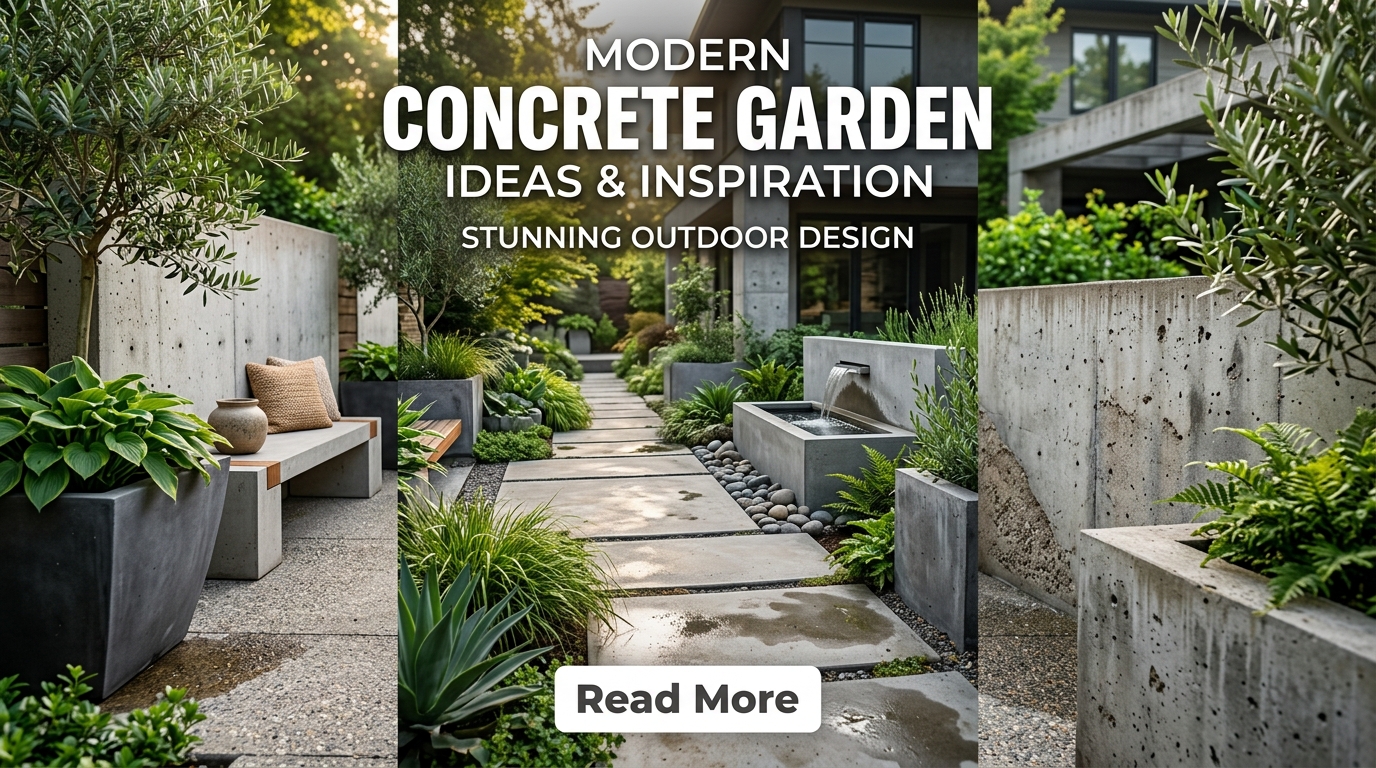
Concrete Garden Ideas: Stylish Patios, Pathways, Planters, and Contemporary Outdoor Landscaping
A concrete garden combines modern design, durability, and low-maintenance landscaping to create a stylish and functional outdoor space. Once considered a purely practical building material, concrete has become one of the most popular choices for contemporary gardens thanks to its clean lines, versatility, and ability to complement a wide range of plants and architectural styles.
Whether you’re designing a sleek backyard, a minimalist courtyard, or a small urban garden, concrete can be used to create patios, pathways, retaining walls, raised garden beds, benches, planters, water features, and decorative elements. When paired with lush greenery, ornamental grasses, colorful flowers, and natural wood, concrete creates a striking balance between modern structure and organic beauty.
This complete guide explores the best concrete garden ideas, landscaping tips, design inspiration, materials, maintenance advice, and practical solutions for creating a beautiful outdoor space.
What Is a Concrete Garden?
A concrete garden is a landscape that incorporates concrete as a primary design element. Instead of serving only as a construction material, concrete becomes part of the garden’s style through pathways, patios, furniture, planters, and decorative features.
Common concrete garden elements include:
- Patios
- Walkways
- Raised beds
- Planters
- Garden walls
- Benches
- Water features
- Fire pit surrounds
- Stepping stones
- Decorative sculptures
Concrete provides a clean and timeless foundation for modern landscaping.
Benefits of a Concrete Garden
Concrete offers many advantages for outdoor spaces.
Benefits include:
- Long-lasting durability
- Low maintenance
- Modern appearance
- Weather resistance
- Versatile design options
- Easy cleaning
- Strong structural support
- Complements many garden styles
Properly installed concrete can last for decades.
Planning Your Concrete Garden
Before beginning your project, evaluate:
- Available space
- Drainage
- Sunlight
- Existing landscaping
- Outdoor lifestyle
- Budget
- Plant selection
- Maintenance requirements
Careful planning creates a balanced and functional landscape.
Concrete Garden Patio Ideas
A concrete patio provides a durable outdoor living area.
Popular finishes include:
- Smooth concrete
- Brushed concrete
- Stamped concrete
- Exposed aggregate
- Polished concrete
Add outdoor furniture and potted plants to create an inviting entertainment space.
Concrete Garden Pathways
Pathways connect different parts of the landscape.
Popular styles include:
- Straight walkways
- Curved paths
- Large concrete slabs
- Floating stepping stones
- Textured finishes
Surround paths with ornamental grasses and flowering plants for a softer appearance.
Concrete Raised Garden Beds
Raised beds improve both appearance and functionality.
Benefits include:
- Better drainage
- Improved soil quality
- Defined planting areas
- Long-lasting structure
Concrete beds are ideal for vegetables, herbs, and flowering plants.
Concrete Garden Planters
Large concrete planters make elegant focal points.
Suitable plants include:
- Olive trees
- Japanese maples
- Lavender
- Boxwood
- Ornamental grasses
Mix different planter sizes for visual interest.
Concrete Retaining Walls
Retaining walls create usable planting space on sloped landscapes.
Advantages include:
- Soil stabilization
- Terraced gardens
- Modern appearance
- Increased planting area
Use climbing plants to soften the look of concrete walls.
Concrete Garden Benches
Built-in seating combines beauty and practicality.
Enhance benches with:
- Wooden seat tops
- Outdoor cushions
- Shade trees
- Decorative lighting
Position benches near flower beds or water features.
Concrete Water Features
Water softens the bold appearance of concrete.
Ideas include:
- Modern fountains
- Reflecting pools
- Cascading walls
- Water bowls
The sound of flowing water creates a peaceful atmosphere.
Concrete Fire Pit Area
A concrete fire pit creates a stylish gathering place.
Surround it with:
- Comfortable seating
- Gravel
- Outdoor lighting
- Evergreen shrubs
Fire pits extend the use of your garden into cooler evenings.
Decorative Concrete Stepping Stones
Stepping stones add texture and function.
Arrange them through:
- Gravel
- Lawn
- Ground covers
- Decorative pebbles
They encourage exploration while protecting planted areas.
Soften Concrete with Plants
Balance hard surfaces using lush planting.
Excellent choices include:
- Lavender
- Hydrangeas
- Salvia
- Boxwood
- Ferns
- Ornamental grasses
- Hostas
- Coneflowers
Layer plants to create depth and natural contrast.
Vertical Gardens
Combine concrete walls with greenery.
Grow:
- Ivy
- Ferns
- Succulents
- Herbs
- Flowering vines
Vertical gardens maximize space while softening hard materials.
Outdoor Lighting
Lighting highlights concrete features after dark.
Use:
- LED uplights
- Path lights
- Wall lights
- Solar lighting
- Recessed patio lights
Warm lighting creates a welcoming evening atmosphere.
Decorative Accessories
Complete the design with:
- Ceramic pots
- Metal sculptures
- Wooden furniture
- Gravel
- Natural stone accents
Accessories add warmth and personality.
Sustainable Concrete Garden
Create an eco-friendly landscape by including:
- Rainwater harvesting
- Native plants
- Permeable paving
- Compost
- Drip irrigation
Sustainable practices reduce water use and improve plant health.
Small Concrete Garden Ideas
Compact spaces can benefit from concrete design.
Ideas include:
- Courtyard patios
- Built-in seating
- Raised planters
- Vertical gardens
- Container arrangements
Simple layouts make small gardens feel larger.
Seasonal Garden Care
Maintain your concrete garden throughout the year.
Spring
- Clean patios
- Inspect cracks
- Refresh mulch
- Plant seasonal flowers
Summer
- Water plants deeply
- Clean outdoor furniture
- Check drainage
Autumn
- Remove fallen leaves
- Trim plants
- Seal concrete if needed
Winter
- Avoid harsh de-icing chemicals
- Protect potted plants
- Clean surfaces regularly
Routine care preserves both concrete and landscaping.
Common Design Mistakes
Avoid these common problems:
- Too much exposed concrete
- Poor drainage
- Lack of greenery
- Overcrowded layouts
- Ignoring shade
- Choosing oversized features
Balance hardscape with soft planting for the best results.
Maintenance Tips
Concrete gardens require relatively little maintenance.
Regular tasks include:
- Sweeping debris
- Washing surfaces
- Sealing concrete when necessary
- Removing weeds from joints
- Inspecting for cracks
- Caring for surrounding plants
Routine maintenance keeps the garden looking fresh.
Frequently Asked Questions
Is concrete suitable for gardens?
Yes. Concrete is durable, weather-resistant, and highly versatile, making it an excellent material for patios, pathways, planters, retaining walls, and decorative features.
How do I make a concrete garden look less harsh?
Use ornamental grasses, flowering plants, climbing vines, wooden furniture, and decorative lighting to soften hard surfaces.
Is concrete low maintenance?
Yes. Properly installed concrete requires only occasional cleaning, sealing, and inspection while offering decades of reliable performance.
Can I use concrete in a small backyard?
Absolutely. Concrete patios, raised beds, built-in benches, and planters work especially well in compact outdoor spaces.
Which plants pair well with concrete landscaping?
Lavender, hydrangeas, boxwood, ornamental grasses, salvia, Japanese maple, succulents, and evergreen shrubs all complement modern concrete designs.
Conclusion
A concrete garden combines modern elegance with practical functionality to create an outdoor space that is both beautiful and durable. Whether you’re installing a contemporary patio, raised garden beds, decorative planters, retaining walls, or stylish pathways, concrete provides a strong foundation that enhances a wide variety of landscaping styles.
By balancing clean concrete lines with lush greenery, colorful flowers, natural wood, and thoughtful lighting, you can design a welcoming garden that feels warm, sophisticated, and easy to maintain. With careful planning and regular upkeep, a concrete garden will remain an attractive and functional outdoor retreat for many years, offering timeless appeal and year-round enjoyment.