
 By John
A fruit tree garden combines beauty and productivity, turning an ordinary outdoor space into a landscape filled with blossoms, foliage, shade, and fresh fruit. From compact backyard orchards to espaliered trees along garden walls, fruit trees can be incorporated into gardens of many sizes and styles.
What Is a Fruit Tree Garden?
A fruit tree garden is a landscape designed around fruit-producing trees. It can be a dedicated orchard or a mixed garden where fruit trees grow alongside flowers, herbs, vegetables, pathways, and seating areas.
Popular fruit trees include:
- Apple
- Pear
- Peach
- Plum
- Apricot
- Cherry
- Fig
- Citrus
- Pomegranate
- Mulberry
Choose varieties that are suitable for your local climate, soil, chill requirements, and available space.
Benefits of a Fruit Tree Garden
Fresh Fruit
Grow seasonal fruit directly in your own garden.
Beautiful Blossoms
Many fruit trees produce attractive spring flowers.
Wildlife Interest
Flowers and fruit can provide resources for pollinators and wildlife.
Shade
Larger trees can create comfortable shaded areas.
Garden Structure
Fruit trees can provide height and visual structure.
Productive Landscaping
A fruit garden combines ornamental beauty with practical food production.
1. Backyard Fruit Tree Garden

Plant several fruit trees around the perimeter of a backyard while keeping the center open for lawn, seating, or other garden uses.
Choose tree sizes carefully to avoid overcrowding.
2. Small Fruit Tree Garden
Compact gardens can use dwarf or naturally smaller varieties.
Place trees along boundaries or in carefully planned planting beds.
3. Mini Orchard Garden
Create a small orchard with several compatible fruit trees planted in organized rows or groups.
Consider pollination requirements before selecting varieties.
4. Fruit Tree Garden With Lawn
Use fruit trees as focal points within a lawn.
Leave enough clearance around trunks for mowing and maintenance.
5. Fruit Tree Garden With Flowers
Plant suitable flowers beneath or around fruit trees where light and root conditions allow.
Use flowers that complement the seasonal blossoms without competing excessively for resources.
6. Fruit Tree Garden With Vegetable Beds
Combine fruit trees with vegetables in a productive backyard garden.
Keep sun-loving vegetables away from areas that become heavily shaded as trees mature.
7. Fruit Tree Garden With Herbs
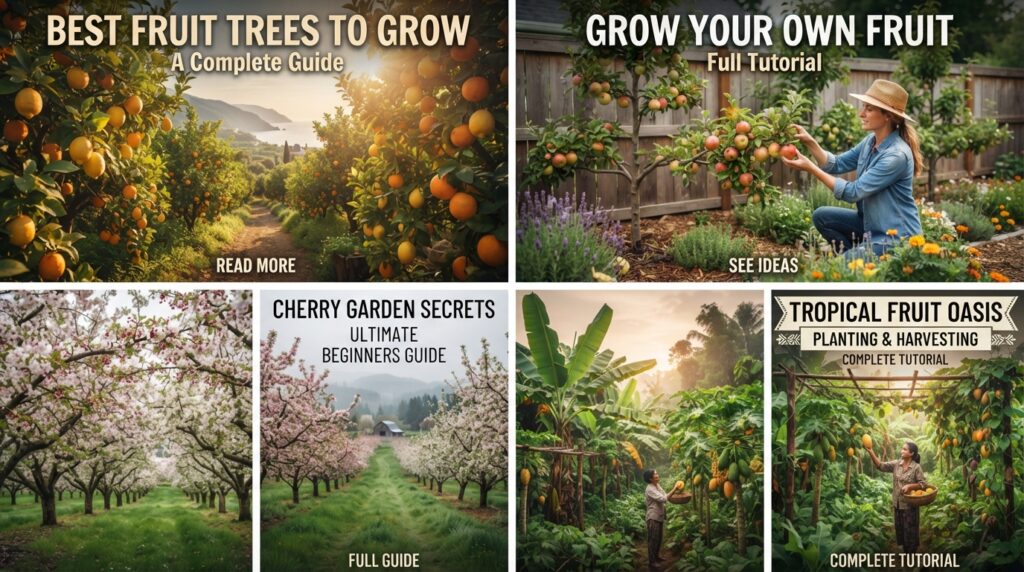
Herbs can complement a productive garden.
Use suitable herbs around trees while considering their sunlight, water, and soil requirements.
8. Fruit Tree Garden With Raised Beds
Raised beds can organize vegetables and flowers around an orchard-style garden.
Keep beds far enough from tree trunks to avoid damaging roots.
9. Fruit Tree Garden With Gravel Path
A gravel path can create easy access between trees.
Use suitable edging to keep gravel contained.
10. Fruit Tree Garden With Stone Path
Natural stone pathways can give an orchard a timeless appearance.
Create comfortable walking routes for harvesting and maintenance.
11. Fruit Tree Garden With Seating
Place a bench beneath a suitable mature tree or near the orchard edge.
Make sure the location remains comfortable and safe during fruit drop and maintenance.
12. Fruit Tree Garden With Pergola
A pergola can create a transition between the house and orchard.
Use it as a dining or seating area while keeping fruit trees nearby.
13. Fruit Tree Garden With Fence
A fence can define the orchard and provide protection where appropriate.
Choose a design that complements the garden style.
14. Fruit Tree Garden Along a Wall
Train suitable fruit trees against a sunny wall using espalier or other trained forms.
This can be an excellent space-saving technique when done correctly.
15. Espalier Fruit Tree Garden
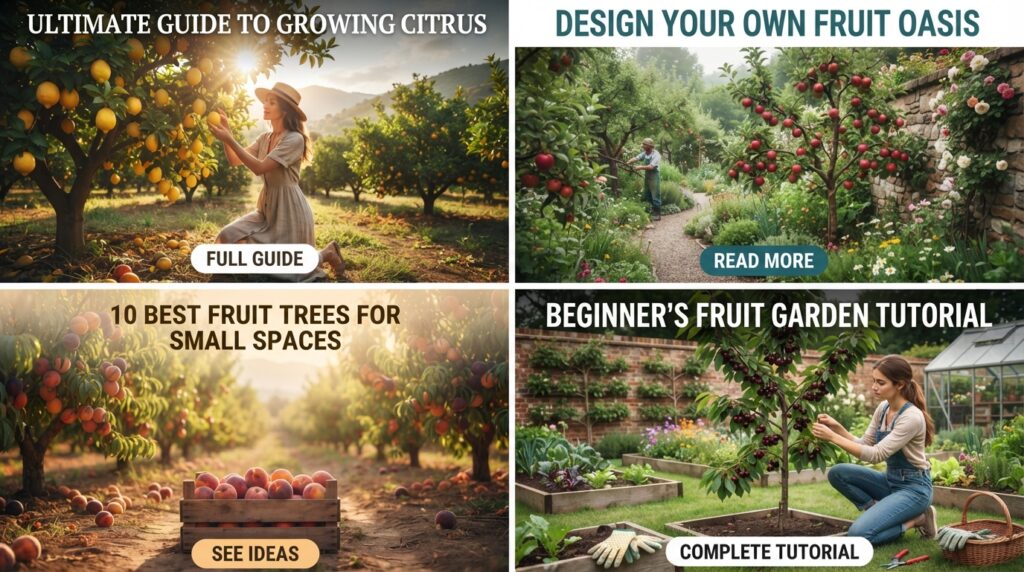
Espalier training allows trees to grow in controlled shapes against walls, fences, or supports.
It can provide attractive architectural structure while making harvesting easier.
16. Citrus Fruit Tree Garden
Citrus trees can create fragrant flowers and colorful fruit in suitable climates.
Examples include:
- Lemon
- Orange
- Lime
- Mandarin
- Grapefruit
Protect trees from unsuitable temperatures and choose locally adapted varieties.
17. Apple Tree Garden
Apple trees can provide spring flowers followed by fruit.
Many varieties benefit from compatible pollination partners, so check the requirements of the chosen cultivars.
18. Peach Tree Garden
Peach trees can create beautiful spring blossoms and summer fruit in appropriate climates.
Choose varieties adapted to local winter and summer conditions.
19. Fig Tree Garden
Figs can work well in warm climates.
Plant them where they receive sufficient sunlight and provide enough room for mature growth.
20. Pomegranate Tree Garden
Pomegranate trees can add attractive flowers and distinctive fruit in warm, sunny environments.
They can work well in Mediterranean-inspired landscapes.
21. Cherry Tree Garden
Flowering cherries can provide spectacular seasonal displays.
Choose fruiting varieties suited to your climate and available garden space.
22. Pear Tree Garden
Pear trees can provide spring flowers and attractive fruit.
Check pollination needs and mature dimensions when selecting varieties.
23. Plum Tree Garden
Plum trees can combine ornamental blossoms with productive fruit.
Select cultivars according to your local climate and pollination requirements.
24. Tropical Fruit Tree Garden
In warm climates, consider locally suitable tropical fruit trees such as mango, guava, papaya, or other regionally adapted species.
Give each tree enough space to reach its mature size.
25. Mediterranean Fruit Tree Garden
Combine suitable fruit trees with gravel, stone, herbs, and drought-tolerant plants.
Olive, fig, citrus, and pomegranate can create a Mediterranean-inspired atmosphere where climate permits.
26. Cottage Fruit Tree Garden
Create a relaxed orchard by combining fruit trees with flowering borders, herbs, and informal pathways.
Allow the garden to feel abundant while maintaining access for harvesting.
27. Formal Fruit Tree Garden
For a structured landscape, plant trees in symmetrical rows.
Add clipped hedges, straight pathways, and geometric planting beds.
28. Rustic Orchard Garden
Use natural materials such as timber, stone, gravel, and simple fencing.
Add a rustic bench or shed to complete the countryside atmosphere.
29. Modern Fruit Tree Garden
Use clean-lined raised beds, simple paving, architectural containers, and carefully spaced fruit trees.
Keep the planting palette restrained.
30. Fruit Tree Garden Privacy Screen
Trees can help create privacy as they mature.
Select appropriate species and planting distances so the trees have enough room to develop healthy canopies.
31. Fruit Tree Garden Shade Area
A mature fruit tree can create valuable shade.
Plan seating or shade-loving planting around the tree only after considering its roots, fruit drop, and maintenance needs.
32. Fruit Tree Garden For Pollinators
Plant pollinator-friendly flowers near fruit trees to support bees and other beneficial insects.
Avoid unnecessary pesticide use, especially during flowering.
33. Fruit Tree Garden For Wildlife
Use locally appropriate trees and companion plants to create habitat.
Provide additional resources such as native flowers, water, and shelter where appropriate.
34. Fruit Tree Garden With Berry Bushes
Combine fruit trees with berry-producing shrubs such as suitable currants, berries, or locally adapted species.
Keep plant heights layered for easier harvesting.
35. Fruit Tree Garden With Vegetable Patch
Create separate zones for trees and vegetables.
Place taller trees where they won’t cast excessive shade over sun-loving crops.
36. Fruit Tree Garden In Containers
Some dwarf fruit trees can be grown successfully in large containers.
Use suitable varieties, adequate drainage, appropriate potting media, and regular care.
37. Fruit Tree Garden For Beginners
Start with one or two varieties suited to your region.
Learn about planting, watering, pruning, pollination, and pest management before expanding.
38. Low-Maintenance Fruit Tree Garden
Choose disease-resistant, climate-adapted varieties and plan the orchard for easy access.
Mulching and efficient irrigation can help reduce maintenance.
39. Fruit Tree Garden With Outdoor Dining
Place a dining area near, but not directly beneath, fruit trees.
This creates a beautiful connection between the productive garden and outdoor living space.
40. Fruit Tree Garden With Garden Arch
Use an arch to mark the entrance to the orchard.
Surround it with flowers or suitable climbing plants for a welcoming transition.
Best Fruit Trees for a Garden
The best fruit tree depends heavily on your climate and soil.
Potential options include:
- Apple
- Pear
- Peach
- Plum
- Apricot
- Fig
- Citrus
- Cherry
- Pomegranate
- Mulberry
Before planting, check mature size, pollination requirements, disease resistance, chill hours, heat tolerance, and local suitability.
How to Design a Fruit Tree Garden
Step 1: Assess Your Space
Measure the garden and identify sunny, shaded, wet, and dry areas.
Step 2: Check Your Climate
Select fruit trees adapted to your local growing conditions.
Step 3: Plan Mature Tree Size
Don’t design only around the size of young nursery trees.
Step 4: Check Pollination Requirements
Some fruit trees are self-fertile, while others produce better crops with compatible pollinators.
Step 5: Plan Access
Leave enough room for watering, pruning, harvesting, and maintenance.
Step 6: Prepare the Soil
Improve drainage and soil conditions as needed for your selected trees.
Step 7: Add Companion Planting
Introduce suitable flowers, herbs, vegetables, or groundcovers around the orchard.
Step 8: Plan Irrigation
Provide consistent watering during establishment and according to the needs of mature trees.
Step 9: Maintain the Trees
Prune, mulch, monitor pests and diseases, and harvest fruit at the appropriate time.
Fruit Tree Garden Color Ideas
Green and White
Fresh and classic.
Green and Pink
Romantic during blossom season.
Green and Purple
Beautiful with plum trees and purple flowering companions.
Green and Yellow
Bright and cheerful.
Green and Red
Strong seasonal contrast from fruit and foliage.
Common Fruit Tree Garden Mistakes
Planting Trees Too Close Together
Crowded canopies can reduce airflow and sunlight.
Ignoring Pollination
Some cultivars need compatible varieties nearby for reliable fruit production.
Choosing the Wrong Climate
A tree may grow but fail to fruit well if its temperature requirements aren’t met.
Overwatering
Poor drainage can damage roots.
Planting Too Deep
Plant trees according to reputable planting guidance and avoid burying the trunk flare.
Neglecting Pruning
Poorly managed trees can become difficult to harvest and maintain.
Forgetting Mature Height
Large trees can eventually interfere with buildings, paths, power lines, or neighboring spaces.
Frequently Asked Questions
What is the best fruit tree for a backyard?
There isn’t one universal choice. The best tree depends on your climate, available space, soil, desired fruit, and pollination conditions.
Can fruit trees grow in a small garden?
Yes. Dwarf varieties, compact cultivars, containers, and espalier-trained trees can make fruit growing possible in limited spaces.
How many fruit trees do I need?
It depends on the species and cultivar. Some trees are self-fertile, while others benefit from compatible pollination partners.
Can flowers grow around fruit trees?
Yes, provided the companion plants are compatible with the available sunlight, moisture, soil, and root conditions.
How long does it take fruit trees to produce fruit?
The timeline varies widely by species, cultivar, rootstock, growing conditions, and whether the tree was purchased as a young or mature plant.
Conclusion
A fruit tree garden can combine productive gardening with beautiful landscaping. Blossoms, foliage, fruit, shade, pathways, and companion plants can turn an orchard into a welcoming outdoor space.
Start with fruit trees suited to your local climate and available space, then design pathways and planting areas around their mature size. With thoughtful planning and regular care, a fruit tree garden can provide seasonal beauty and homegrown harvests for years to come.