
 By John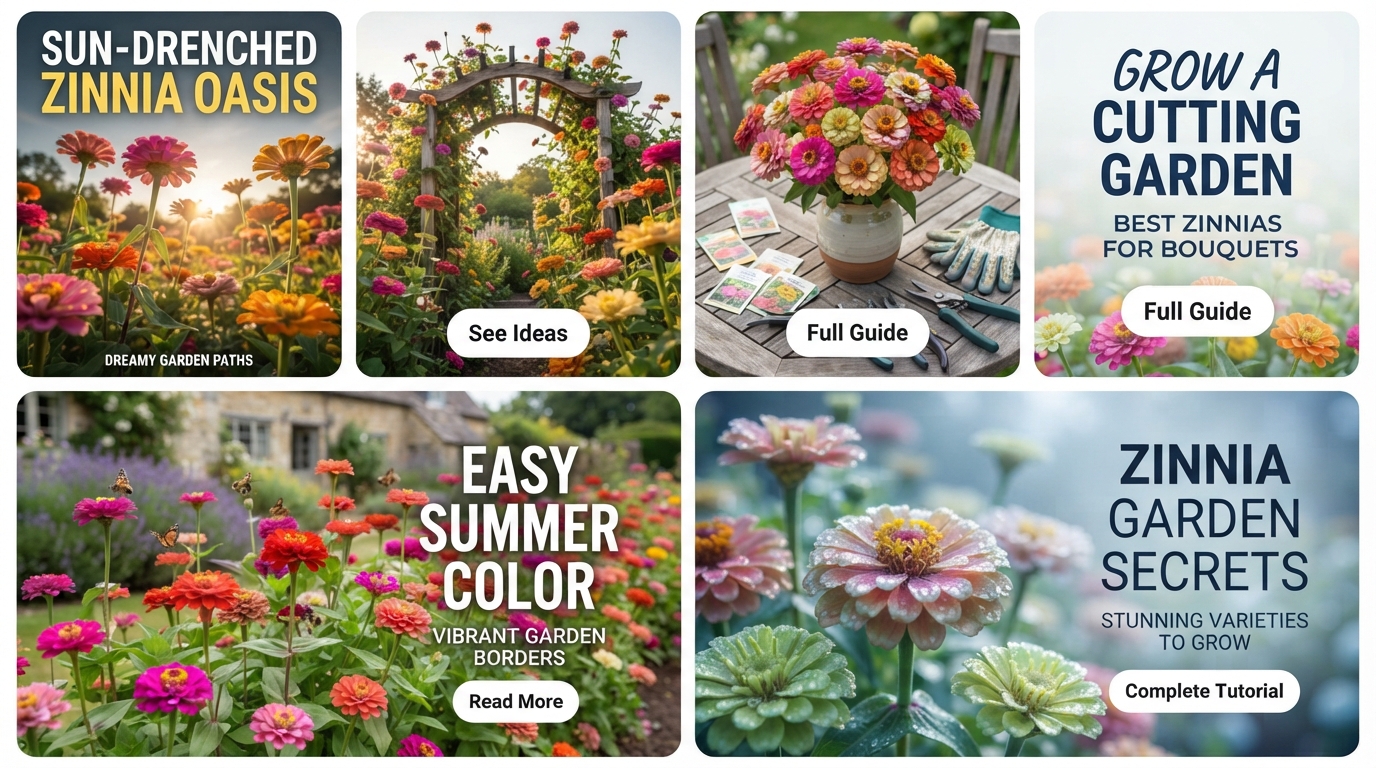
A zinnias garden is a cheerful way to fill your outdoor space with vibrant color, abundant blooms, and long-lasting summer interest. Zinnias are popular garden flowers because they come in many colors, flower forms, and sizes, making them suitable for flower beds, borders, containers, cutting gardens, cottage landscapes, and vegetable gardens.
Whether you want a colorful backyard display or a simple beginner-friendly flower bed, zinnias can create a lively and welcoming garden.
What Is a Zinnias Garden?
A zinnias garden is a planting area where zinnias are used as the main flowering feature or combined with complementary flowers, foliage plants, herbs, and ornamental grasses.
Zinnias are available in shades such as:
- Pink
- Red
- Orange
- Yellow
- White
- Purple
- Magenta
- Peach
- Bi-color combinations
Their upright stems and bright flowers make them especially effective when planted in groups.
Benefits of Growing Zinnias
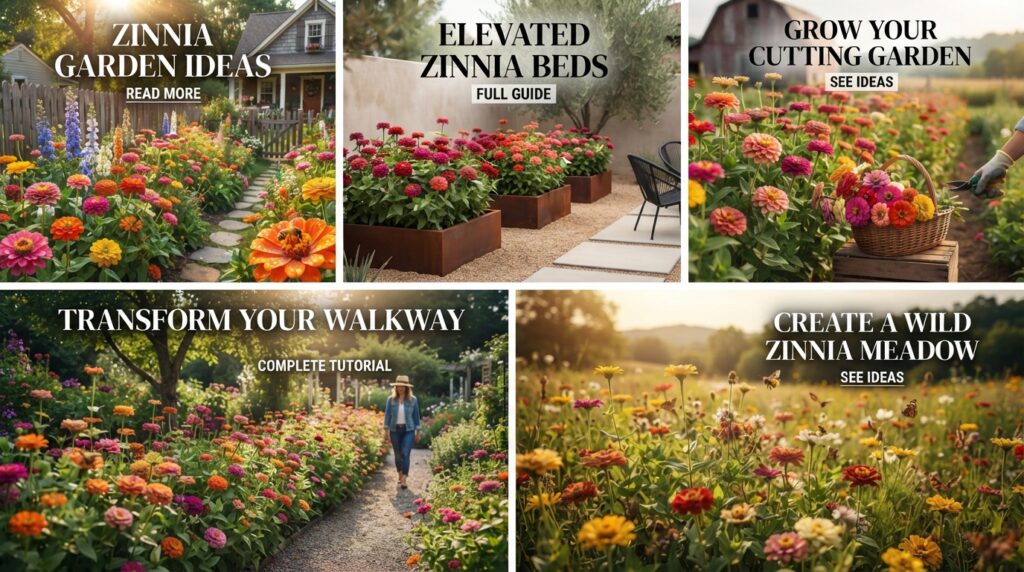
Bright Summer Color
Zinnias can provide a strong display of colorful flowers during the warm growing season.
Great for Cutting
Many varieties produce attractive stems for bouquets.
Pollinator-Friendly
Open-flowered varieties can provide food for bees, butterflies, and other pollinators.
Beginner-Friendly
Zinnias are generally easy to grow when provided with suitable sunlight, soil, water, and airflow.
Versatile
They can grow in borders, containers, raised beds, cottage gardens, and cutting gardens.
1. Colorful Zinnias Garden
Create a bold flower bed by mixing several zinnia colors.
Combine pink, orange, yellow, red, and white flowers for a lively rainbow-inspired display.
Plant flowers in groups instead of scattering single plants throughout the bed.
2. Small Zinnias Garden
A small flower bed can produce a surprisingly colorful display.
Choose compact varieties and plant them along a sunny pathway, patio edge, or garden border.
3. Zinnia Cottage Garden
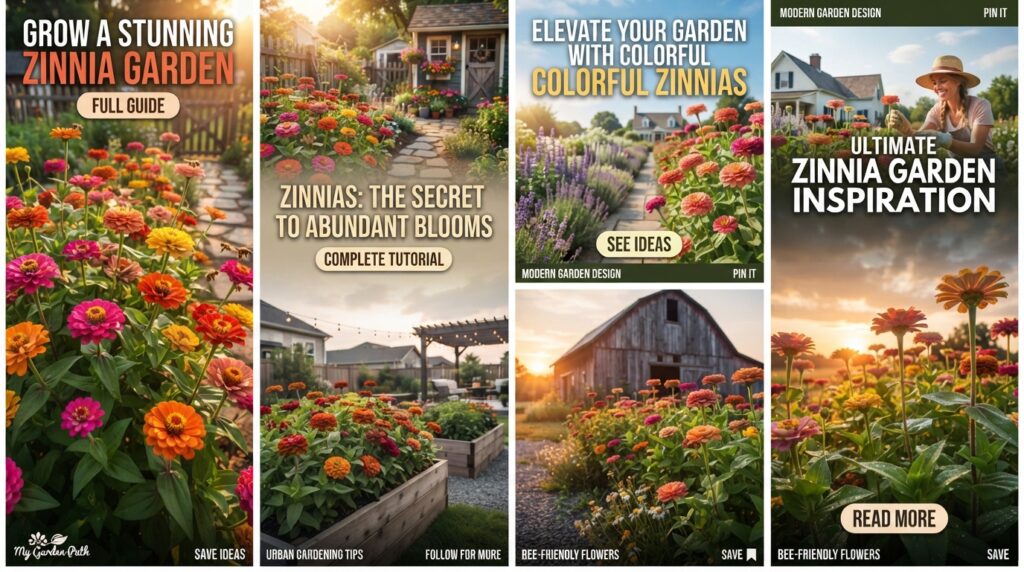
Zinnias fit beautifully into relaxed cottage-style planting.
Combine them with:
- Cosmos
- Lavender
- Marigolds
- Salvia
- Coneflowers
- Herbs
- Ornamental grasses
Use informal groupings to create a natural appearance.
4. Zinnia Cutting Garden
Create a dedicated bed for cut flowers.
Plant zinnias in rows or blocks so stems are easy to reach and harvest.
Regular harvesting can encourage continued flowering on many varieties.
5. Zinnia Border Garden
Use zinnias along the edge of a flower bed or pathway.
Place taller varieties toward the back and shorter varieties near the front.
6. Zinnia Vegetable Garden
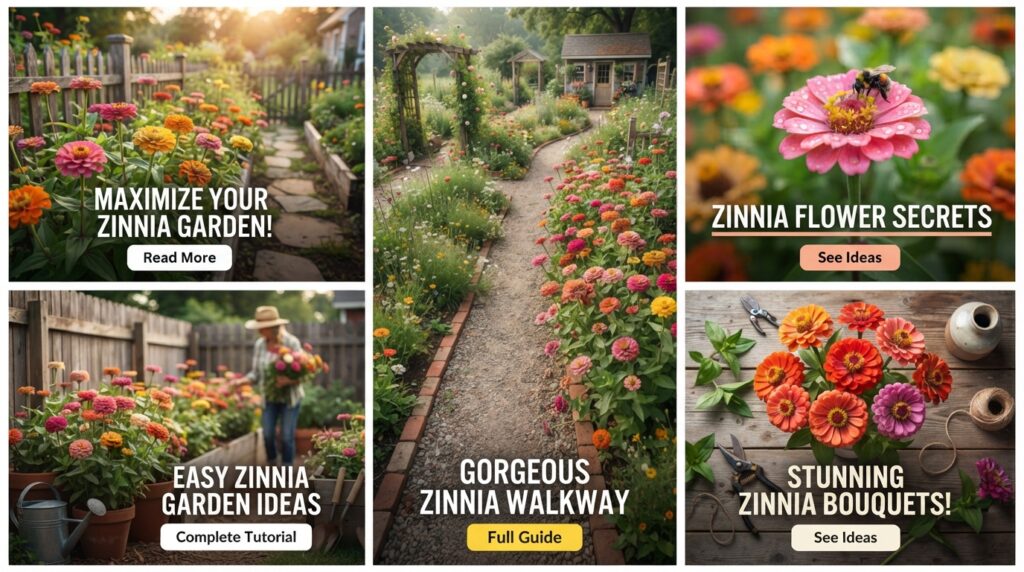
Add flowers around vegetable beds to bring color and pollinator activity into a productive garden.
Plant zinnias where they won’t shade sun-loving vegetables.
7. Zinnia Raised Bed Garden
Raised beds can make it easier to create a dedicated flower display.
Use well-draining soil and leave enough space between plants for airflow.
8. Zinnia Container Garden
Zinnias can be grown in containers when the variety and pot size are appropriate.
Choose containers with drainage holes and place them in a sunny location.
9. Zinnia Window Box
Compact zinnias can create a colorful display near windows, balconies, or entrances.
Combine them with trailing or foliage plants for additional texture.
10. Zinnia Patio Garden
Use large containers of zinnias around a patio seating area.
Repeat the same colors in several pots to create a coordinated design.
11. Pink Zinnias Garden
Create a soft romantic garden using different shades of pink.
Combine pale pink, hot pink, and magenta flowers with green foliage.
12. White Zinnias Garden
White zinnias create a fresh and elegant appearance.
Pair them with silver foliage, green shrubs, or pastel flowers.
13. Red Zinnias Garden
Red zinnias can create a dramatic focal area.
Balance their strong color with white flowers and green foliage.
14. Orange Zinnias Garden
Orange zinnias bring warmth and energy to summer borders.
Combine them with yellow, peach, and red flowers for a sunset-inspired planting scheme.
15. Yellow Zinnias Garden
Yellow zinnias brighten sunny borders.
Pair them with blue or purple flowers for contrasting color.
16. Purple and Pink Zinnias Garden
Purple and pink create a romantic, colorful combination.
Use green foliage between the flowers to prevent the planting from feeling visually crowded.
17. Rainbow Zinnia Garden
Create a rainbow effect by arranging zinnias from warm colors to cool colors.
You can also mix the colors randomly for a more natural cottage-garden look.
18. Tall Zinnia Garden
Tall varieties can create a colorful backdrop behind lower flowers.
Use them toward the rear of borders or along fences.
19. Dwarf Zinnia Garden
Compact varieties are useful for:
- Small gardens
- Containers
- Front borders
- Window boxes
- Patio planters
Check the mature height before planting.
20. Zinnia Garden Along a Fence
Plant zinnias in a sunny strip beside a fence.
The fence can provide a visual background for the colorful flowers.
21. Zinnia Garden Around a Tree
Create a flower bed around a suitable tree, but avoid disturbing major roots.
Make sure the area receives enough sunlight because zinnias generally perform best in bright conditions.
22. Zinnia Garden With Marigolds
Zinnias and marigolds create a bright, cheerful combination.
Use contrasting colors and different plant heights to add depth.
23. Zinnia Garden With Cosmos
Cosmos add airy foliage and delicate flowers beside fuller zinnia blooms.
This pairing works especially well in informal summer gardens.
24. Zinnia Garden With Sunflowers
Tall sunflowers can create a dramatic background for shorter zinnias.
Place sunflowers where they won’t cast excessive shade over the zinnias.
25. Zinnia Garden With Lavender
Lavender provides fragrant foliage and purple flowers that contrast beautifully with bright zinnias.
Make sure both plants receive suitable sunlight and drainage.
26. Zinnia Garden With Salvia
Salvia can introduce vertical flower spikes and contrasting purple, blue, or red tones.
Combine different heights to create a layered border.
27. Zinnia Garden With Ornamental Grass
Fine-textured grasses can soften the bold flower shapes of zinnias.
Use grasses as background or structural plants.
28. Zinnia Garden With Herbs
Plant zinnias beside herbs such as basil, thyme, sage, or rosemary where growing conditions overlap.
The combination creates a productive and colorful garden.
29. Zinnia Garden With Butterfly Plants
Combine zinnias with other nectar-rich flowers to create a pollinator-friendly garden.
Choose plants suited to your local region and growing conditions.
30. Zinnia Garden With Garden Path
A pathway through or beside the flowers makes the garden easier to enjoy and maintain.
Use gravel, stone, brick, or another suitable outdoor surface.
31. Zinnia Garden With Garden Arch
A garden arch can provide vertical structure at the entrance to a flower bed.
Train suitable climbing plants over the arch while planting zinnias around its base.
32. Zinnia Garden With Rustic Features
Add rustic elements such as:
- Wooden planters
- Vintage-style containers
- Natural stone
- Simple benches
- Timber edging
Let the flowers remain the main attraction.
33. Modern Zinnia Garden
Create a contemporary display by planting zinnias in organized blocks of one or two colors.
Surround them with gravel, concrete, or simple geometric borders.
34. Zinnia Garden With White Fence
A white fence provides a clean backdrop for colorful zinnias.
Bright pink, red, orange, and purple blooms stand out particularly well.
35. Zinnia Garden With Blue Flowers
Pair warm-colored zinnias with blue flowers for strong color contrast.
The combination can make both flower groups appear more vibrant.
36. Zinnia Garden For Beginners
Start with a sunny bed, well-draining soil, suitable varieties, and a simple color scheme.
Avoid overcrowding and monitor plants regularly for pests and disease.
37. Low-Maintenance Zinnia Garden
Group zinnias in larger blocks and use mulch around plants to help reduce weeds and conserve soil moisture.
Remove spent flowers when appropriate to encourage continued blooming.
38. Zinnia Garden For Pollinators
Choose open-centered zinnia varieties when attracting pollinators is a priority.
Combine them with a range of locally suitable flowering plants to provide resources throughout the growing season.
39. Zinnia Garden For Bouquets
Plant extra zinnias if you want to cut flowers regularly.
Harvest stems when flowers are appropriately developed and keep cut stems in clean water.
40. Zinnia Garden In Pots
Container-grown zinnias are perfect for patios, balconies, entrances, and small gardens.
Use a suitable potting mix, provide drainage, and water according to weather and container conditions.
Best Zinnia Growing Conditions
Zinnias generally prefer:
- Plenty of sunlight
- Well-drained soil
- Good airflow
- Regular moisture without waterlogging
- Adequate spacing
- Warm growing conditions
Exact requirements vary by variety and local climate.
Zinnia Garden Color Combinations
Pink and White
Soft and romantic.
Orange and Yellow
Warm and cheerful.
Red and White
Bold and classic.
Purple and Pink
Colorful and elegant.
Orange and Purple
Dramatic and eye-catching.
Rainbow Colors
Playful and vibrant.
How to Create a Zinnias Garden
Step 1: Choose a Sunny Location
Select an area that receives sufficient sunlight for zinnias.
Step 2: Prepare the Soil
Improve the planting area as needed and make sure it drains well.
Step 3: Select Your Varieties
Choose varieties based on mature height, flower form, color, and available space.
Step 4: Plan the Color Scheme
Decide whether you want a single-color display, complementary colors, or a rainbow garden.
Step 5: Plant With Adequate Space
Follow the spacing recommendations for your chosen variety.
Step 6: Add Companion Plants
Combine zinnias with flowers, herbs, grasses, or foliage plants that have compatible growing conditions.
Step 7: Maintain Airflow
Avoid overcrowding to help reduce problems associated with excessive humidity and poor circulation.
Step 8: Harvest and Deadhead
Cut flowers for bouquets and remove spent blooms when appropriate to encourage further flowering.
Common Zinnia Garden Mistakes
Planting in Too Much Shade
Insufficient sunlight can reduce flowering and weaken growth.
Overwatering
Waterlogged soil can cause root problems.
Crowding Plants
Poor airflow can increase the risk of fungal diseases.
Ignoring Mature Height
Tall varieties can shade smaller plants.
Choosing Colors Without a Plan
Too many unrelated colors can make a small garden feel chaotic.
Forgetting Pollinators
If wildlife is important, choose open flowers and avoid unnecessary pesticide use.
Frequently Asked Questions
Are zinnias easy to grow?
Yes. Zinnias are generally considered easy-to-grow annual flowers when planted in suitable sunlight and well-drained soil.
Do zinnias need full sun?
Zinnias generally perform best with plenty of direct sunlight.
Can zinnias grow in containers?
Yes. Compact varieties are particularly suitable for containers with good drainage.
Are zinnias good for butterflies?
Yes. Zinnia flowers can provide nectar for butterflies and other pollinators, especially varieties with accessible flower centers.
How do I make zinnias bloom more?
Provide suitable sunlight, moisture, spacing, and growing conditions. Regularly harvesting flowers or removing spent blooms can encourage continued flowering in many varieties.
Conclusion
A zinnias garden is an easy way to bring vibrant seasonal color, pollinator activity, and cheerful character to your outdoor space. From rainbow flower beds and cottage borders to raised beds, containers, and dedicated cutting gardens, zinnias can fit into many different garden styles.
Choose varieties suited to your climate and space, give them plenty of sunlight and good airflow, and combine them with complementary plants for a colorful garden that stays lively throughout the growing season.