
 By John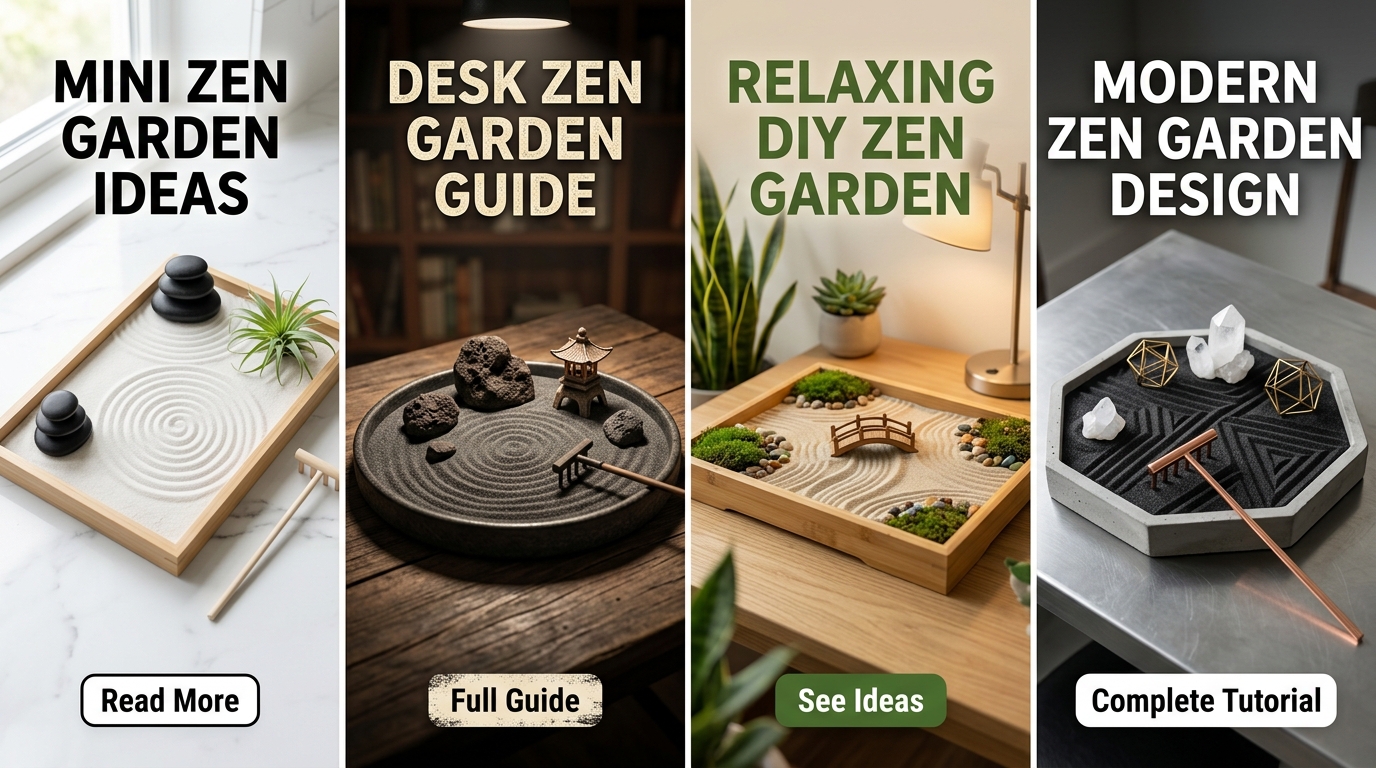
A mini Zen garden is a simple, calming space designed around natural materials, minimal decoration, and thoughtful arrangement. Even a tiny corner, tabletop, balcony, patio, or small container can become a peaceful retreat with gravel, stones, moss, miniature plants, and carefully selected accents.
Inspired by Japanese garden aesthetics, mini Zen gardens focus on simplicity, balance, texture, and negative space rather than overcrowding. They can be created indoors or outdoors and adapted to almost any available space.
What Is a Mini Zen Garden?
A mini Zen garden is a compact landscape inspired by traditional Japanese garden principles.
Common elements include:
- Gravel or sand
- Natural stones
- Moss
- Small plants
- Wood
- Bamboo
- Simple ornaments
- Water features
- Small pathways
- Minimal seating
Not every mini Zen garden needs all of these elements. A simple arrangement can be more effective.
Benefits of a Mini Zen Garden
A small Zen-inspired garden can:
- Create a peaceful atmosphere
- Add greenery to small spaces
- Provide a decorative focal point
- Make patios and balconies feel more inviting
- Encourage mindful outdoor time
- Require relatively little space
The maintenance level depends on whether you use living plants, water features, or only decorative materials.
1. Simple Mini Zen Garden

Start with a shallow garden bed or container.
Add a layer of fine gravel and arrange three or five natural stones in an asymmetrical composition.
Leave open space around the stones for a minimalist appearance.
2. Tabletop Mini Zen Garden
A tabletop Zen garden is ideal for desks, shelves, patios, or small outdoor tables.
Use:
- A shallow tray
- Fine sand or gravel
- Small stones
- A miniature rake
- One simple ornament
Keep the arrangement uncluttered.
3. Mini Zen Garden With Rocks
Rocks can become the primary focal point.
Choose stones with natural shapes and varied sizes.
Arrange them in a balanced composition rather than placing them randomly.
4. Mini Zen Garden With Sand
Fine sand or light-colored gravel can create a clean visual foundation.
Use a small rake to create simple lines or patterns around stones.
Keep the pattern simple and refresh it whenever necessary.
5. Mini Zen Garden With Moss
Moss can add a soft green contrast to stone and gravel.
Use moss only where the moisture, humidity, shade, and temperature conditions are appropriate.
6. Mini Zen Garden With Succulents

Compact succulents can work well in sunny miniature gardens.
Combine them with gravel and stones for a dry-landscape appearance.
Use containers with drainage and avoid excessive watering.
7. Mini Zen Garden With Bamboo
Bamboo can introduce a recognizable Japanese-inspired element.
For small gardens, use suitable clumping or container-friendly varieties rather than aggressive spreading types.
8. Mini Zen Garden With a Lantern
A small lantern can provide a strong focal point.
Choose a scale appropriate for the garden and avoid adding too many decorative elements.
9. Mini Zen Garden With Water
A tiny fountain or water bowl can introduce sound and movement.
Keep water features clean and safe, especially around children and pets.
10. Mini Zen Garden With a Small Bridge
A miniature bridge can create a charming focal point in a larger container or garden bed.
Pair it with stones, moss, and carefully placed plants.
Keep proportions consistent so the bridge doesn’t dominate the design.
11. Mini Zen Garden With a Path
Create a tiny pathway using stepping stones.
Arrange stones with comfortable visual spacing and surround them with gravel or moss.
12. Mini Zen Garden With a Bonsai
A bonsai can become the centerpiece of a miniature Japanese-inspired garden.
Choose a bonsai species suited to your climate and growing conditions.
Remember that bonsai are living plants requiring specialized care.
13. Mini Zen Garden With Pebbles
Small pebbles can provide texture and contrast.
Use several shades or sizes sparingly to create subtle visual variation.
14. Mini Zen Garden With Driftwood
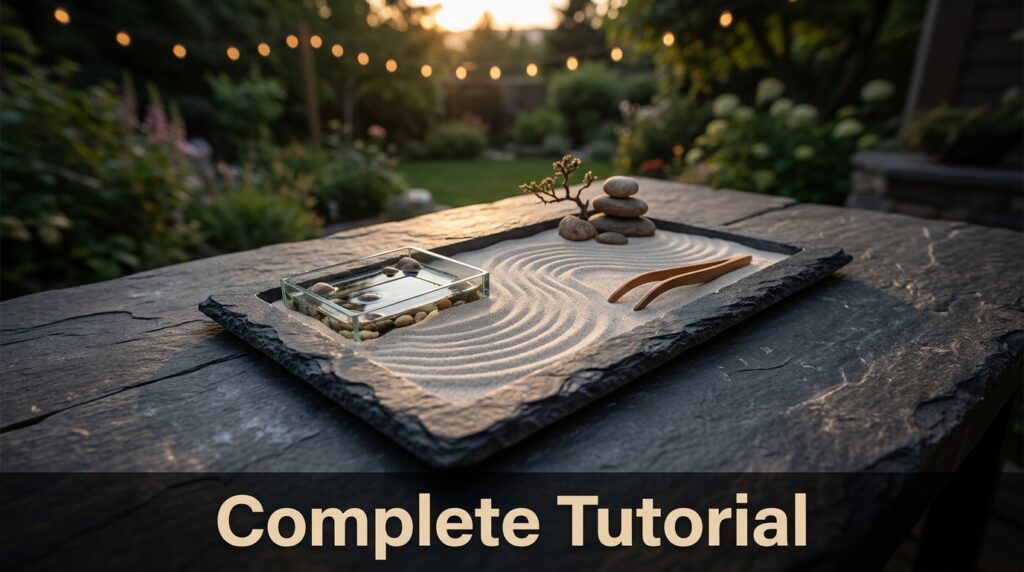
Natural wood can add an organic element.
Use weather-resistant wood outdoors and make sure pieces are stable.
15. Mini Zen Garden With Succulent Rocks
Create a miniature dry landscape using rocks, gravel, and small succulents.
Place larger stones toward the back and smaller plants toward the foreground.
16. Mini Zen Garden for a Balcony
A balcony can accommodate a small Zen corner using:
- Containers
- Gravel
- Compact plants
- Small stones
- A stool or floor cushion
Choose lightweight materials where appropriate and consider wind exposure.
17. Mini Zen Garden for a Patio
Use a shallow raised bed or several containers to create a small outdoor retreat.
Position it near seating so the garden can be enjoyed while relaxing.
18. Mini Zen Garden for a Small Courtyard
A courtyard can use a compact Zen garden as its central focal point.
Combine gravel, large stones, moss, and one sculptural plant.
Use vertical walls or fences as a quiet backdrop.
19. Mini Zen Garden Under a Tree
A shaded area beneath a suitable tree can become a peaceful retreat.
Use shade-tolerant plants and avoid disturbing major tree roots.
20. Mini Zen Garden Beside a Path
A small garden beside a pathway can provide a moment of visual calm.
Use simple stones, gravel, and one or two plants.
21. Mini Zen Garden Around a Bench
Create a small seating area surrounded by gravel and carefully placed stones.
Add low-maintenance plants around the edges.
22. Modern Mini Zen Garden
For a contemporary interpretation, use:
- Dark gravel
- Pale stone
- Concrete
- Simple containers
- Architectural plants
Keep the palette restrained.
23. Rustic Mini Zen Garden
Use natural stone, weathered wood, gravel, and simple greenery.
Avoid excessive decoration to maintain a peaceful atmosphere.
24. Indoor Mini Zen Garden
An indoor miniature garden can be created in a shallow tray.
Use decorative sand, stones, and non-living accents if indoor light isn’t sufficient for plants.
Place it somewhere protected from spills and excessive humidity.
25. Mini Zen Garden for an Office
A tabletop garden can provide a small decorative break from a busy workspace.
Use a shallow tray with sand, stones, and a miniature rake.
26. Mini Zen Garden for a Bedroom
Keep the design soft and uncluttered.
Use natural colors and subtle textures rather than bright decorative objects.
27. Mini Zen Garden for an Apartment
Use a small container or balcony planter.
A few stones, gravel, and one compact plant can create the desired effect without taking up much room.
28. Mini Zen Garden With Candlelight
Outdoor candles can create a warm atmosphere during evening relaxation.
Use stable, outdoor-appropriate holders and place flames away from dry vegetation and flammable materials.
29. Mini Zen Garden With Solar Lighting
Small solar lights can subtly illuminate stones and pathways after dark.
Position lights so they highlight the garden rather than overpower it.
30. Mini Zen Garden With a Water Bowl
A simple water bowl can serve as a minimalist water element.
Clean it regularly and prevent standing water from becoming a nuisance.
31. Mini Zen Garden With Decorative Stones
Use stones as symbolic focal elements.
Choose natural-looking materials and limit the number of colors to maintain visual harmony.
32. Mini Zen Garden With Groundcover
Compact groundcovers can soften the edges of gravel and stones.
Choose plants suited to the amount of light and moisture available.
33. Mini Zen Garden With Ferns
Ferns can provide lush texture in shady miniature gardens.
Use species that remain appropriately sized for the space.
34. Mini Zen Garden With Japanese Maple
In a larger miniature landscape, a small Japanese maple can provide seasonal color and structure.
Select a compact cultivar and allow sufficient room for mature growth.
35. Mini Zen Garden With a Stone Basin
A small stone basin can introduce a traditional-inspired water element.
Position it securely on a stable surface.
36. Mini Zen Garden With Gravel Patterns
Create simple flowing lines in the gravel using a small rake.
Curved lines can visually suggest water or movement.
Refresh the patterns whenever the surface becomes disturbed.
37. Mini Zen Garden With Three Stones
A simple three-stone arrangement can create a strong focal point.
Use different sizes and shapes while keeping the composition balanced.
38. Mini Zen Garden With a Feature Wall
A small wall can provide a backdrop for stones, bamboo, plants, or a simple water feature.
Use materials that complement the surrounding architecture.
39. Mini Zen Garden With Recycled Materials
Repurpose suitable containers, old wooden trays, or reclaimed stones.
Make sure reused materials are clean, safe, and appropriate for outdoor conditions.
40. DIY Mini Zen Garden
Creating a mini Zen garden can be a simple weekend project.
Materials
You may need:
- Shallow container
- Gravel or sand
- Natural stones
- Small plants
- Miniature rake
- Decorative wood or lantern
Steps
- Choose a suitable container or garden area.
- Add a layer of gravel or sand.
- Position the largest stones first.
- Add smaller stones and plants.
- Leave open areas between features.
- Create simple patterns in the gravel.
- Add one subtle decorative feature if desired.
- Place the garden somewhere it can be easily enjoyed.
Mini Zen Garden Design Principles
Keep It Simple
Avoid adding too many objects.
Create Balance
Use different sizes and shapes while maintaining visual harmony.
Leave Negative Space
Empty areas are an important part of minimalist garden design.
Use Natural Materials
Stone, wood, gravel, and plants create a more organic appearance.
Repeat Textures
Repeating gravel, stone, or foliage can make a small garden feel cohesive.
Choose a Focal Point
One major feature is usually enough for a miniature garden.
Best Plants for a Mini Zen Garden
Suitable plants depend on whether the garden is indoors, outdoors, sunny, shady, humid, or dry.
Potential choices include:
- Moss
- Ferns
- Dwarf grasses
- Small bonsai
- Compact succulents
- Miniature shrubs
- Small Japanese-inspired plants
Always check mature size and growing requirements before planting.
How to Maintain a Mini Zen Garden
Maintenance depends on the design.
Typical tasks include:
- Removing fallen leaves
- Cleaning stones
- Raking gravel
- Trimming plants
- Removing weeds
- Watering living plants
- Cleaning water features
Keep gravel free from excessive organic debris to preserve the clean appearance.
Common Mini Zen Garden Mistakes
Adding Too Many Decorations
Minimalism works best when every feature has a purpose.
Choosing Plants That Become Too Large
Always check mature dimensions.
Ignoring Drainage
Standing water can damage plants and containers.
Using Too Many Colors
Natural neutral colors generally create a calmer appearance.
Overcrowding the Container
Leave enough open space around focal elements.
Using Unsuitable Indoor Plants Outdoors
Match plants to the actual climate and exposure.
Frequently Asked Questions
What do you need for a mini Zen garden?
A shallow container, sand or gravel, a few natural stones, and optionally a small plant or simple decorative element are enough to create a miniature Zen-inspired garden.
Can I make a mini Zen garden indoors?
Yes. A shallow tray with decorative sand, stones, and non-living elements can work well indoors.
How do you make a mini Zen garden look good?
Keep the design simple, use natural materials, vary stone sizes, create open space, and choose one clear focal point.
Are mini Zen gardens easy to maintain?
Simple gravel-and-stone gardens require relatively little maintenance. Designs containing living plants or water features need additional care.
Can I make a mini Zen garden without plants?
Yes. Gravel, stones, wood, and other carefully selected natural elements can create an attractive minimalist composition without living plants.
Conclusion
A mini Zen garden is a simple way to introduce calm, texture, and natural beauty into a small space. Whether you create a tabletop arrangement, balcony garden, patio feature, or compact outdoor landscape, the most important principles are simplicity, balance, natural materials, and intentional placement.
Start with a small number of stones, a neutral gravel base, and plenty of open space. Add plants, water, lighting, or other elements only when they contribute to the overall design. A thoughtfully arranged miniature garden can become a beautiful and peaceful focal point in almost any home.