
 By John
A grass garden can create a beautiful, natural, and low-maintenance landscape using ornamental grasses, lawn grasses, meadow plants, and grass-like groundcovers. Unlike a traditional lawn, a grass-focused garden emphasizes texture, movement, height, color, and seasonal interest.
From modern minimalist yards to cottage gardens, prairie landscapes, rock gardens, and contemporary patios, grasses can soften hard surfaces while adding structure and movement to outdoor spaces.
What Is a Grass Garden?
A grass garden is a landscape where grasses are used as major design elements rather than simply covering the ground with lawn.
A grass garden may include:
- Ornamental grasses
- Native grasses
- Meadow grasses
- Groundcover grasses
- Lawn areas
- Flowering perennials
- Gravel
- Natural stone
- Trees and shrubs
- Garden pathways
The design can be formal and geometric or relaxed and naturalistic.
Benefits of a Grass Garden
Grass-based landscaping can provide:
- Attractive texture
- Movement in the breeze
- Seasonal interest
- Soft visual transitions
- Wildlife habitat
- Erosion control
- Low-maintenance planting options
- Modern landscape appeal
The actual water and maintenance requirements depend heavily on the grass species and local climate.
1. Ornamental Grass Garden
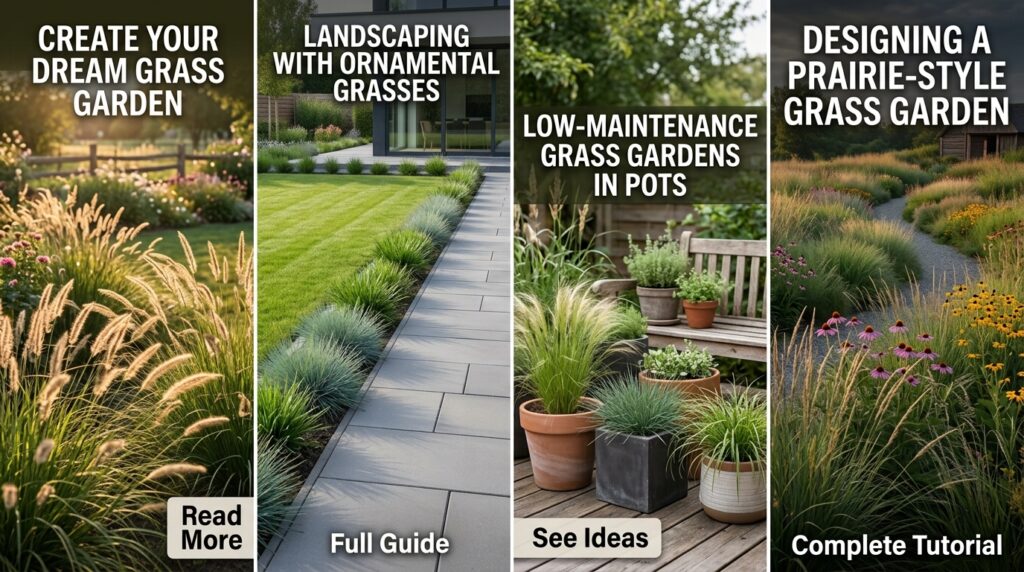
Create a dedicated planting bed filled with ornamental grasses of different heights.
Combine upright grasses with softer, arching varieties to create contrast.
Use gravel or stone around the planting area for a clean finish.
2. Modern Grass Garden
Modern gardens look especially attractive with grasses arranged in simple groups.
Try:
- Concrete paths
- Gravel
- Geometric beds
- Repeated grass varieties
- Minimal furniture
Keep the plant palette limited for a clean appearance.
3. Small Grass Garden
A small garden can use compact ornamental grasses as accents.
Plant them:
- Along pathways
- Around patios
- Beside walls
- In raised beds
- In containers
Avoid oversized varieties that can overwhelm the available space.
4. Front Yard Grass Garden
Replace some traditional lawn with ornamental grass planting beds.
Create layers using taller grasses toward the back and shorter grasses near paths.
Add evergreen shrubs or flowering perennials for additional structure.
5. Backyard Grass Garden
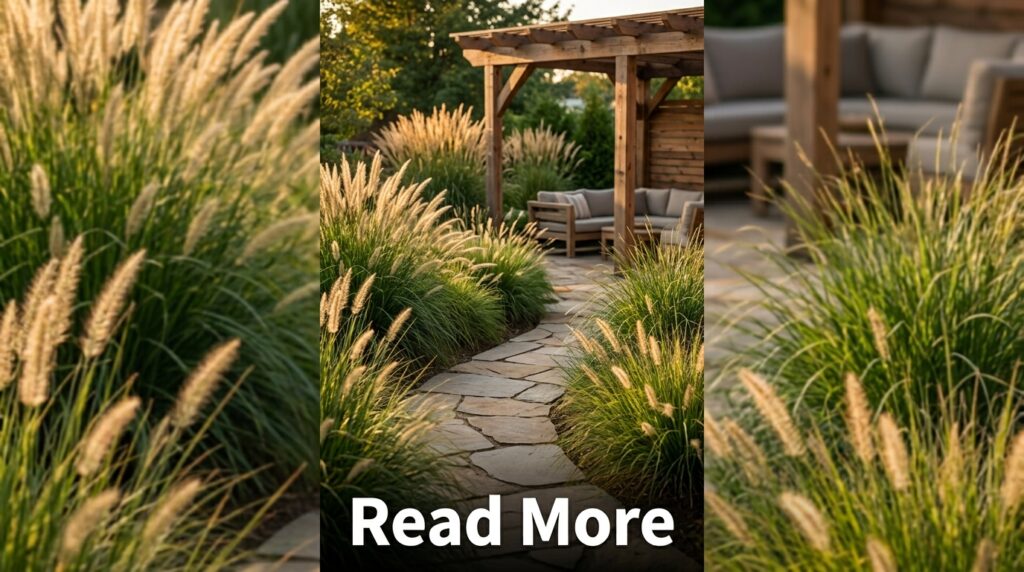
A backyard grass garden can combine ornamental planting with outdoor living areas.
Surround a patio or seating area with grasses to create a soft, private atmosphere.
6. Grass Border Garden
Use grasses as a border along:
- Fences
- Walkways
- Patios
- Driveways
- Flower beds
Repeat the same species at intervals for visual consistency.
7. Grass and Flower Garden
Combine grasses with flowering perennials.
The fine foliage of grasses provides an attractive background for flowers.
Choose companion plants with similar sunlight, soil, and moisture requirements.
8. Grass and Lavender Garden
Lavender and ornamental grasses can create a relaxed, Mediterranean-inspired appearance where their growing requirements overlap.
Use gravel or stone mulch to reinforce the dry-garden aesthetic.
9. Grass and Wildflower Garden
Create a naturalistic meadow effect by combining grasses with suitable wildflowers.
Choose native or locally adapted plants where possible.
Avoid invasive species that can spread beyond the garden.
10. Prairie Grass Garden
A prairie-inspired garden uses grasses and flowering perennials to recreate the appearance of a natural grassland.
Use groups of plants rather than isolated specimens for a more convincing effect.
11. Tall Grass Garden
Tall grasses can create dramatic vertical structure.
Use them:
- Behind seating
- Along boundaries
- Beside buildings
- Around garden rooms
Check mature height before planting near windows or pathways.
12. Short Grass Garden
Short ornamental grasses are useful for smaller landscapes.
They can create low borders without blocking views.
Combine them with stones, gravel, or flowering groundcovers.
13. Grass Garden With Gravel
Gravel provides an excellent contrast to soft grass foliage.
Create planting islands within a gravel garden and use large stones as focal points.
Choose gravel appropriate for walking and drainage requirements.
14. Grass Garden With Rocks
Combine ornamental grasses with natural rocks for a low-maintenance landscape.
Place larger rocks first and arrange grasses around them to create a natural composition.
15. Grass Rock Garden
A grass rock garden can combine drought-tolerant grasses with stones and gravel.
Select species suited to dry conditions rather than assuming all ornamental grasses have low water needs.
16. Grass Garden With Trees
Trees provide a strong upper layer above ornamental grasses.
Use grasses beneath suitable trees only when their light and moisture requirements match the site.
17. Grass Garden With Shrubs
Shrubs provide evergreen or woody structure while grasses add movement.
Place shrubs toward the back and grasses in front to create layered planting.
18. Grass Garden Along a Fence
Tall grasses can soften a plain fence and provide additional privacy.
Leave enough clearance for maintenance and fence repairs.
Choose non-invasive varieties that remain appropriate for the available space.
19. Grass Garden Along a Pathway
Plant grasses on either side of a garden path.
Use shorter varieties close to the walking surface so they don’t obstruct movement.
For a formal look, repeat the same grass along both sides.
20. Grass Garden Around a Patio
Grasses can soften the edges of a hard patio.
Use containers or planting beds around the perimeter.
Choose varieties that won’t drop excessive debris into outdoor living areas.
21. Grass Garden Around a Pool
Ornamental grasses can create a resort-like pool landscape.
Choose varieties that are:
- Non-invasive
- Suitable for the climate
- Appropriate for the available space
- Not excessively messy
Avoid plants that shed large amounts of material directly into the pool.
22. Grass Garden With Water Feature
Grasses pair beautifully with ponds, fountains, and streams.
Plant moisture-loving grasses near appropriate water features and drought-tolerant species in drier areas.
Always match plants to their actual moisture requirements.
23. Grass Garden With Fountain
A fountain can provide a central focal point surrounded by ornamental grasses.
Use low grasses around the fountain so the water feature remains visible.
24. Grass Garden With Pathway
Create a winding path through taller grasses for a naturalistic experience.
Use durable paving or compacted gravel for the walking surface.
25. Grass Garden With Bench
Place a bench among grasses to create a peaceful viewing area.
Choose a location with an attractive view and sufficient clearance around the seating.
26. Grass Garden With Lighting
Low garden lighting can highlight grass textures at night.
Illuminate:
- Grass clusters
- Pathways
- Trees
- Walls
- Architectural features
Use outdoor-rated fixtures and install electrical systems safely.
27. Drought-Tolerant Grass Garden
Some ornamental grasses can perform well with limited irrigation once established.
Choose species suited to your local climate and soil.
Combine them with gravel, stone, and other compatible drought-tolerant plants.
28. Low-Maintenance Grass Garden
Create a simple planting scheme using a few reliable grass varieties.
Group plants in larger masses instead of creating many tiny planting pockets.
Mulching can help reduce weed growth and conserve moisture.
29. Native Grass Garden
Native grasses can provide valuable habitat and may be well adapted to local environmental conditions.
Combine them with native flowering plants to create a wildlife-friendly landscape.
30. Tropical Grass Garden
In warm climates, suitable ornamental grasses can contribute to a lush tropical landscape.
Combine grasses with:
- Palms
- Large-leaved plants
- Tropical flowering plants
- Stone
- Water features
Choose species appropriate for the local climate and rainfall.
31. Japanese-Inspired Grass Garden
Grasses can add movement and softness to a Japanese-inspired landscape.
Combine them with:
- Rocks
- Gravel
- Water
- Simple pathways
- Carefully selected trees
Use repetition and restraint rather than excessive decoration.
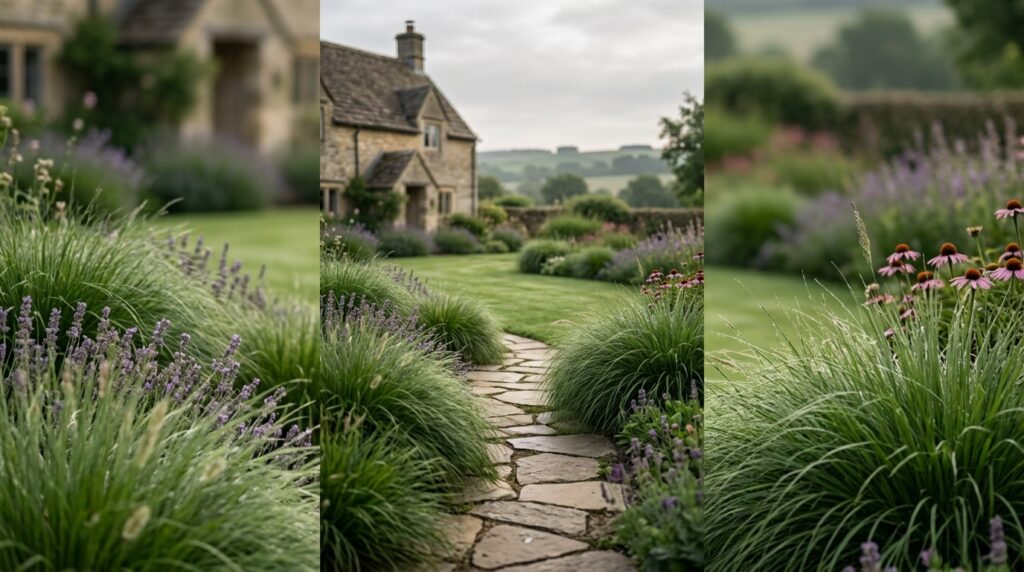
32. Cottage Grass Garden
Use grasses among cottage-style flowers to create a relaxed landscape.
Combine them with roses, perennials, herbs, and informal pathways.
Allow some plants to intermingle naturally while maintaining enough space for healthy growth.
33. Contemporary Grass Garden
A contemporary design can use repeated blocks of grasses against modern architecture.
Try:
- Linear beds
- Concrete
- Dark gravel
- Metal edging
- Simple outdoor furniture
Keep the plant palette consistent.
34. Grass Garden With Containers
Ornamental grasses can make striking container plants.
Choose containers with adequate drainage and enough room for the mature root system.
Use lightweight containers where weight is a concern.
35. Balcony Grass Garden
Compact ornamental grasses can add movement to balconies and terraces.
Choose varieties suited to containers and exposed conditions.
Check balcony load limits before adding large or heavy planters.
36. Grass Garden for Slopes
Grasses can be useful on slopes because their root systems can help hold soil.
Choose species appropriate for the slope, climate, and erosion conditions.
For significant erosion problems, professional site assessment may be appropriate.
37. Grass Garden for Privacy
Tall grasses can create seasonal screening.
Plant them in groups along property boundaries or around seating areas.
Remember that many deciduous grasses lose their screening effect during winter.
38. Grass Garden With Evergreen Plants
Combine ornamental grasses with evergreen shrubs for year-round structure.
The evergreen foliage provides a stable framework while grasses contribute seasonal movement.
39. Grass Garden With Garden Art
Sculptures and decorative features can contrast with flowing grass foliage.
Use one or two strong focal pieces rather than overcrowding the landscape.
40. Grass Meadow Garden
Create a meadow-inspired landscape using grasses and flowering plants.
Allow plants to form natural-looking groups while maintaining paths for access.
Choose species suited to your region and avoid introducing invasive plants.
Popular Types of Ornamental Grass
Different grasses provide different shapes and textures.
Common landscape categories include:
Fountain Grasses
Known for arching foliage and attractive flower plumes.
Feather Reed Grasses
Often valued for their upright growth and formal appearance.
Switchgrass
Useful for naturalistic and prairie-inspired landscapes.
Blue Fescue
Compact and often valued for blue-gray foliage.
Muhly Grass
Known for attractive airy flower displays in suitable climates.
Japanese Forest Grass
A useful option for shaded or partially shaded locations where conditions are appropriate.
Always check the specific species or cultivar for mature size, hardiness, invasiveness, and water requirements.
Grass Garden Layout Ideas
Linear Layout
Plant grasses in long repeated rows along a wall or pathway.
Island Bed
Create a central grass planting island surrounded by lawn, gravel, or paving.
Layered Border
Use tall grasses in the back, medium plants in the middle, and low groundcovers in front.
Naturalistic Cluster
Plant groups of grasses in irregular drifts for a meadow-inspired appearance.
Symmetrical Layout
Repeat matching grass clusters on both sides of a path or entrance.
How to Design a Grass Garden
Step 1: Study the Site
Observe sunlight, soil, drainage, wind, and available space.
Step 2: Choose the Garden Style
Decide between modern, prairie, cottage, naturalistic, Japanese-inspired, or another design direction.
Step 3: Select Suitable Grasses
Choose plants according to climate, mature size, soil, and water requirements.
Step 4: Plan Plant Groups
Group grasses in repeated masses instead of scattering individual plants randomly.
Step 5: Add Companion Plants
Use flowers, shrubs, trees, or groundcovers that have compatible requirements.
Step 6: Add Hardscape
Introduce gravel, stone, paths, edging, or seating.
Step 7: Create a Focal Point
Use a tree, sculpture, bench, fountain, or architectural feature.
Step 8: Plan Maintenance
Consider pruning, watering, dividing, weeding, and seasonal cleanup before planting.
Grass Garden Maintenance
Ornamental grass care depends on the species.
Typical tasks may include:
- Watering during establishment
- Removing weeds
- Cutting back deciduous grasses at the appropriate time
- Removing damaged foliage
- Dividing overcrowded clumps
- Checking for pests or disease
- Removing unwanted seedlings
Some grasses remain attractive through winter and should not be cut back until late winter or early spring.
Common Grass Garden Mistakes
Planting Without Checking Mature Size
A small nursery plant can become a large garden feature.
Assuming Every Grass Is Drought Tolerant
Water requirements vary significantly between species.
Choosing Invasive Species
Check local recommendations before planting ornamental grasses.
Planting Too Closely
Crowded grasses can suffer from poor airflow and become difficult to maintain.
Ignoring Winter Appearance
Deciduous grasses can look very different after flowering season.
Using Too Many Varieties
A limited selection often creates a stronger landscape composition.
Frequently Asked Questions
What is the best grass for a garden?
There is no single best grass. Choose a species according to your climate, sunlight, soil, available space, desired height, and maintenance preferences.
Are grass gardens low maintenance?
They can be, especially when well-adapted species are chosen and planted in suitable conditions. However, ornamental grasses still require appropriate watering, pruning, and occasional division.
Can ornamental grasses grow in shade?
Some varieties tolerate partial shade, while others require full sun. Always check the requirements of the specific species or cultivar.
Can grasses be planted in small gardens?
Yes. Compact varieties can work well in borders, containers, courtyards, and small planting beds.
Do ornamental grasses come back every year?
Many ornamental grasses are perennial in climates where they are hardy, while others are treated as annuals or may not survive cold winters.
Conclusion
A grass garden can bring movement, texture, structure, and natural beauty to almost any landscape. Whether you prefer a modern garden filled with clean lines, a relaxed prairie meadow, a low-maintenance rock garden, or a lush backyard retreat, ornamental grasses offer many design possibilities.
Start by choosing grasses suited to your local conditions and available space. Combine them with compatible trees, shrubs, flowers, stones, pathways, and seating to create layers and visual interest. With thoughtful plant selection and regular care, a grass garden can remain attractive across multiple seasons.