
 By John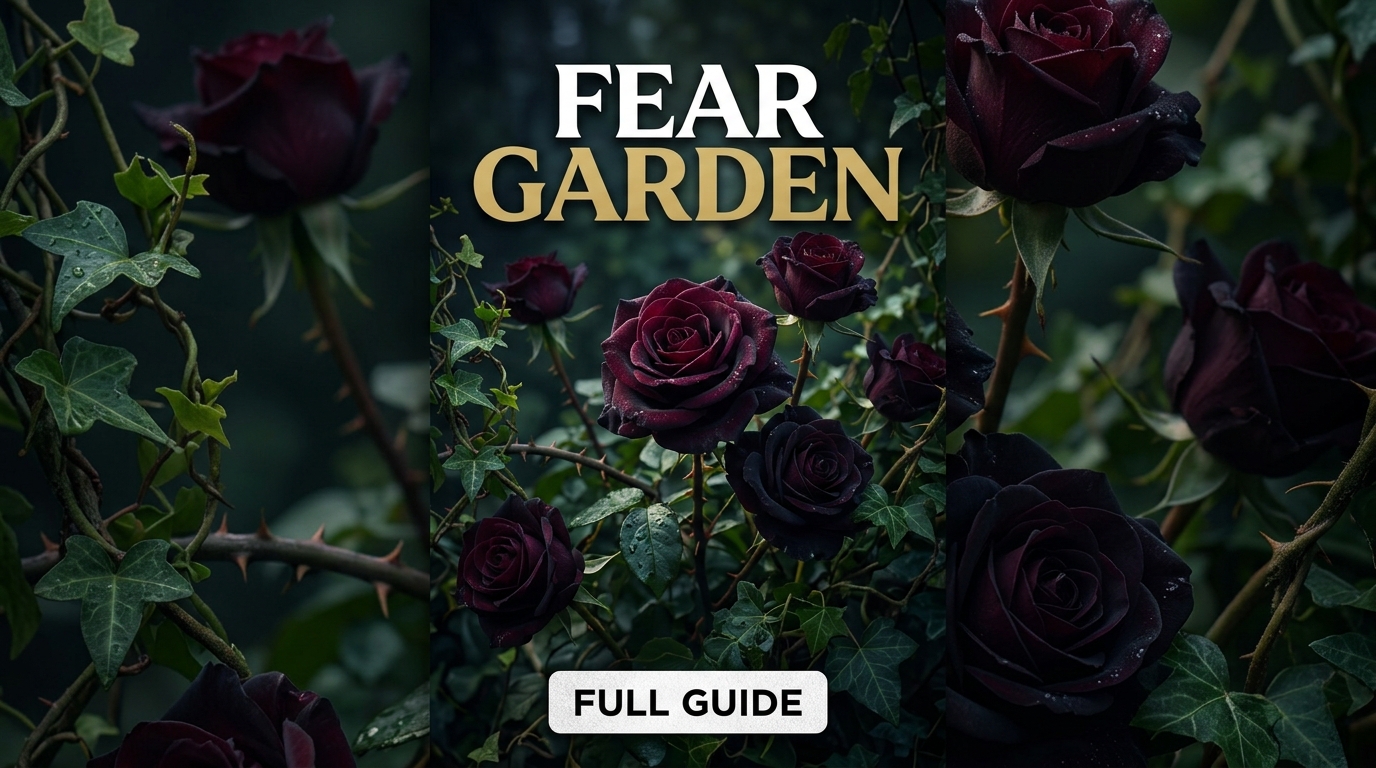
A fear garden is a dark and mysterious outdoor space designed to create an eerie, dramatic, and slightly spooky atmosphere. Unlike a traditional garden focused on bright flowers and cheerful colors, a fear garden uses unusual plants, weathered materials, shadows, sculptures, winding paths, and atmospheric lighting to create a sense of mystery.
Whether you want a Halloween-inspired landscape, gothic garden, haunted garden, or simply a dramatic outdoor space, there are many creative ways to bring a fear garden aesthetic to life.
What Is a Fear Garden?
A fear garden is a garden designed around mysterious, spooky, gothic, or unsettling visual elements.
Common features include:
- Dark foliage
- Twisted branches
- Weathered stone
- Old gates
- Winding paths
- Gothic sculptures
- Lanterns
- Fog effects
- Dark flowers
- Moss
- Overgrown planting
- Dramatic lighting
The goal doesn’t have to be frightening. A fear garden can simply feel mysterious, unusual, atmospheric, and imaginative.
1. Gothic Fear Garden
Create a gothic garden using dark colors and architectural features.
Combine:
- Black or deep green foliage
- Stone paths
- Gothic-style containers
- Iron fencing
- Statues
- Lanterns
Use repetition to create a cohesive design.
2. Haunted Garden
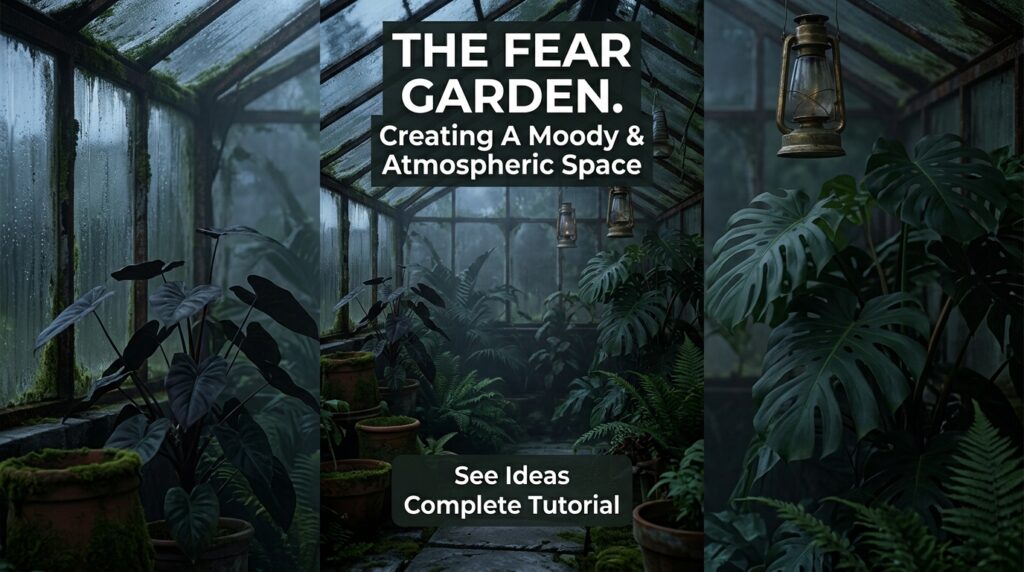
Create the appearance of an abandoned garden that nature is slowly reclaiming.
Use:
- Overgrown plants
- Weathered pots
- Moss-covered stones
- Old-looking gates
- Twisted branches
- Winding pathways
Keep the garden safe and structurally sound even when creating an intentionally neglected appearance.
3. Dark Flower Garden
Choose flowers and foliage in deep shades.
Consider:
- Burgundy
- Deep purple
- Dark red
- Nearly black flowers
- Silver foliage
- Deep green leaves
Pair dark flowers with pale stones or white flowers for contrast.
4. Spooky Halloween Garden
Turn your garden into a seasonal Halloween display.
Add:
- Pumpkins
- Lanterns
- Spider decorations
- Artificial cobwebs
- Dark planters
- Seasonal signs
Keep decorations away from pathways and avoid creating trip hazards.
5. Witch Garden
Create a mysterious herb-inspired garden with an old-world appearance.
Include suitable:
- Herbs
- Fragrant plants
- Hanging containers
- Rustic shelves
- Wooden signs
- Stone pathways
Avoid growing or handling plants that are toxic simply for their appearance, particularly where children or pets have access.
6. Witchy Cottage Garden
Combine cottage-garden planting with a darker aesthetic.
Use:
- Roses
- Lavender
- Herbs
- Dark flowers
- Climbing plants
- Rustic fencing
Add a weathered bench or archway as a focal point.
7. Dark Fairy Garden
Create a miniature garden with a mysterious woodland theme.
Use:
- Tiny doors
- Moss
- Miniature houses
- Small stones
- Twigs
- Miniature lanterns
A dark color palette can give a traditional fairy garden a more mysterious character.
8. Fear Garden With Fog
Fog can create a dramatic atmosphere around pathways and planting.
For events, use appropriate outdoor fog equipment and keep visibility clear around steps and walkways.
9. Fear Garden With Lanterns
Lanterns can create dramatic shadows after sunset.
Place them along:
- Paths
- Gates
- Seating areas
- Planting beds
Use outdoor-rated lighting and stable fixtures.
10. Fear Garden With Sculptures
Sculptures can create strong focal points.
Consider:
- Gothic figures
- Animal sculptures
- Abstract forms
- Weathered statues
- Raven or crow-inspired decorations
Use durable outdoor materials.
11. Fear Garden With Stone

Natural stone can make a garden feel ancient and mysterious.
Use stone for:
- Walls
- Pathways
- Edging
- Seating
- Decorative features
Moss and weathered textures can enhance the atmosphere.
12. Fear Garden With an Old Gate
A weathered-looking gate can create a dramatic entrance.
Surround it with climbing plants and tall grasses.
Make sure the gate remains structurally safe and easy to open.
13. Fear Garden With a Winding Path
A winding path can create suspense by preventing visitors from seeing the entire garden at once.
Use curves, plants, and focal points to create a sense of discovery.
14. Dark Woodland Garden
Use trees, shrubs, ferns, moss, and shade-tolerant plants to create a woodland atmosphere.
Keep pathways clear and well maintained even if the planting looks wild.
15. Dead Tree Garden
A naturally dead tree or carefully selected decorative branch can become an atmospheric feature.
Never use unstable dead trees or branches that could fall.
A safe artificial feature can provide a similar appearance.
16. Fear Garden With Ravens
Raven or crow-inspired decorations can reinforce a gothic garden theme.
Place one or two sculptures on a fence, branch, or garden structure rather than overcrowding the landscape.
17. Fear Garden With Dark Roses
Deep red and burgundy roses can create a dramatic romantic atmosphere.
Combine them with dark foliage and pale stone for contrast.
18. Fear Garden With Black Flowers
Flowers with naturally very dark blooms can create a striking visual effect.
Combine dark flowers with:
- Silver foliage
- White flowers
- Gray stone
- Deep green shrubs
19. Fear Garden With White Flowers
White flowers can create a ghostly contrast against dark foliage.
Try creating a moonlit-style planting scheme with pale blooms and silver leaves.
20. Fear Garden With Red Flowers
Red flowers can provide dramatic color against dark greenery.
Use red as an accent rather than covering the entire garden.
21. Fear Garden With Moss
Moss can create an old, woodland-inspired appearance in suitable shady and humid environments.
Use moss where local growing conditions support it naturally.
22. Fear Garden With Ferns
Ferns can create dense, shadowy foliage.
They work particularly well beneath suitable trees or in shaded corners.
Choose varieties that match your local climate.
23. Fear Garden With Grasses
Tall ornamental grasses can create movement and partially obscure views.
Use them around pathways and boundaries while maintaining clear sightlines where needed.
24. Fear Garden With Creeping Vines
Climbing and trailing plants can soften walls and structures.
Choose non-invasive species and provide appropriate support.
Keep vines away from structures where they could cause damage.
25. Fear Garden With a Stone Statue
A weathered stone statue can serve as the centerpiece of a gothic landscape.
Place it against a simple background of shrubs, grasses, or dark foliage.
26. Abandoned Garden Look
Create an intentionally overgrown appearance with carefully controlled planting.
Allow selected areas to look wild while keeping paths, steps, and seating maintained.
This gives the garden an abandoned atmosphere without creating actual maintenance problems.
27. Fear Garden With Broken Pottery
Old-looking pottery can create a rustic, mysterious aesthetic.
Use stable containers without sharp edges and ensure broken pieces cannot injure visitors.
28. Fear Garden With a Secret Door
A decorative door hidden behind foliage can create a sense of mystery.
Use it as a visual feature rather than blocking necessary access.
29. Fear Garden With a Hidden Bench
Place a bench behind planting so it feels like a secret retreat.
Keep enough clearance around the seating for comfortable access.
30. Fear Garden With a Pond
A dark water feature can become a dramatic centerpiece.
Surround it with suitable moisture-loving plants and stones.
Add safe lighting around the water’s edge.
31. Fear Garden With a Small Fountain
A weathered fountain can create a gothic focal point.
Choose a design that fits the scale of the garden.
32. Fear Garden With a Bridge
A small bridge can make a garden feel like a mysterious woodland landscape.
Pair it with rocks, water, moss, and tall planting where appropriate.
Ensure the bridge has a stable surface and suitable handrails when needed.
33. Fear Garden With Black Fence
Dark fencing can create a dramatic background for plants.
Use black, charcoal, or weathered finishes and soften the structure with greenery.
34. Fear Garden With Ironwork
Decorative iron gates, arches, and fencing can reinforce a gothic style.
Choose properly treated outdoor materials to reduce corrosion.
35. Fear Garden With Mirror
A carefully positioned outdoor-rated mirror can create an illusion of greater depth.
Place it securely and avoid positioning it where reflected sunlight could create a hazard.
36. Fear Garden With Dramatic Lighting
Use lighting to create shadows and highlight unusual plants or sculptures.
Try:
- Uplights
- Path lights
- Lanterns
- Hidden accent lights
Avoid excessive brightness so the garden retains its mysterious character.
37. Small Fear Garden
A small garden can still have a strong spooky aesthetic.
Use three main elements:
- Dark foliage
- One dramatic focal point
- Atmospheric lighting
Keep the rest of the space simple.
38. Fear Garden in a Courtyard
A courtyard can become an enclosed gothic retreat.
Use dark walls, climbing plants, stone, containers, and a central sculpture.
39. Fear Garden on a Budget
You don’t need expensive landscaping materials.
Try:
- Reused containers
- Natural branches
- Gravel
- Homemade signs
- Secondhand garden furniture
- Solar lanterns
- Dark-colored planters
Prioritize safe, weather-resistant materials.
40. DIY Fear Garden
A simple DIY fear garden can be created in a weekend.
Materials
You may need:
- Dark planters
- Gravel
- Stones
- Plants
- Lanterns
- Decorative branches
- Garden sculptures
- Weather-resistant decorations
Steps
- Choose a garden corner.
- Clear unwanted weeds and debris.
- Define the planting area.
- Add dark foliage and structural plants.
- Place stones and decorative features.
- Add a focal sculpture or gate.
- Install subtle outdoor lighting.
- Add seasonal decorations if desired.
Best Plants for a Fear Garden
Plant choices depend on climate, soil, light, and desired appearance.
Potential options include:
- Ferns
- Ornamental grasses
- Dark-leaved heucheras
- Deep-colored roses
- Lavender
- Hostas
- Ivy where non-invasive and appropriate
- Silver-leaved plants
- Dark foliage shrubs
Always verify that plants are suitable for your local environment and safe around children and pets.
Fear Garden Color Ideas
Black and Burgundy
Dramatic and gothic.
Purple and Silver
Mysterious and sophisticated.
White and Dark Green
Ghostly and elegant.
Red and Black
Bold and theatrical.
Gray and Green
Moody and natural.
How to Design a Fear Garden
Step 1: Choose the Mood
Decide whether you want gothic, haunted, witchy, woodland, Halloween, or mysterious.
Step 2: Select a Dark Color Palette
Use deep greens, burgundy, purple, gray, silver, and occasional white.
Step 3: Establish Structure
Use fences, arches, trees, shrubs, or walls to frame the garden.
Step 4: Add Texture
Combine foliage, stone, wood, gravel, moss, and metal.
Step 5: Create Mystery
Use curved pathways, partially hidden features, and layered planting.
Step 6: Add a Focal Point
Choose a sculpture, fountain, tree, gate, or unusual plant.
Step 7: Add Lighting
Use subtle lighting to emphasize important features after dark.
Step 8: Maintain Safety
Keep pathways clear, structures stable, and lighting properly installed.
Common Fear Garden Mistakes
Using Too Many Decorations
Too many spooky objects can make the garden look cluttered.
Making Pathways Too Dark
Atmospheric lighting should never compromise safe movement.
Choosing Invasive Plants
Research plants before introducing them to your garden.
Ignoring Mature Plant Size
Overgrown plants can quickly block paths and windows.
Using Unsafe Structures
Old-looking gates, bridges, statues, and branches should still be structurally secure.
Overusing Artificial Cobwebs
Loose decorative materials can become litter and may pose problems for wildlife.
Frequently Asked Questions
What is a fear garden?
A fear garden is a dark, mysterious, gothic, or spooky garden designed around atmospheric planting, unusual decorations, dramatic textures, and moody landscaping.
How do I make my garden look spooky?
Use dark foliage, weathered stone, winding paths, dramatic plants, gothic-style decorations, and subtle nighttime lighting.
What plants are good for a spooky garden?
Ferns, ornamental grasses, dark-leaved plants, deep-colored flowers, silver foliage, and suitable climbing plants can create a mysterious atmosphere.
Can I create a fear garden in a small space?
Yes. A few dark plants, stones, a small sculpture, and atmospheric lighting can create a strong theme in a courtyard, patio, or small garden.
Is a fear garden only for Halloween?
No. A gothic or mysterious garden can be enjoyed throughout the year. Seasonal Halloween decorations can simply be added temporarily.
Conclusion
A fear garden offers a creative alternative to traditional landscaping by combining dark plants, natural textures, mysterious pathways, weathered materials, and atmospheric lighting. Whether you want a dramatic gothic garden, haunted woodland, witch-inspired retreat, or subtle moody landscape, the possibilities are almost endless.
Start with a restrained color palette and a strong focal point. Add layers of foliage, stone, wood, and lighting to build atmosphere while keeping paths and structures safe. With thoughtful design, a fear garden can become an intriguing outdoor space that feels mysterious without becoming cluttered.