
 By John
A shady garden can transform a low-light area into a lush, peaceful outdoor retreat. Instead of treating shade as a landscaping limitation, use it as an opportunity to grow shade-tolerant plants, create layered foliage, add woodland textures, and design a cool garden space with plenty of character.
Whether you have a completely shaded backyard, a garden beneath trees, a narrow side yard, or a small north-facing courtyard, there are many ways to make the space attractive and functional.
What Is a Shady Garden?
A shady garden is a landscape designed for an area that receives limited direct sunlight.
Shade can be created by:
- Large trees
- Buildings
- Fences
- Walls
- Pergolas
- Neighboring structures
- Dense shrubs
The amount of shade matters. Full shade, partial shade, morning shade, and dappled shade can support different plants.
Benefits of a Shady Garden
A well-designed shade garden can:
- Create a cool outdoor retreat
- Reduce heat around seating areas
- Support shade-loving plants
- Add lush foliage
- Provide habitat for wildlife
- Make use of difficult garden spaces
- Create a peaceful woodland atmosphere
1. Small Shady Garden

A small shaded corner can become an attractive foliage garden.
Use:
- Ferns
- Hostas where suitable
- Heucheras
- Shade-tolerant grasses
- Moss
- Groundcovers
Keep the planting palette simple so the small space doesn’t feel crowded.
2. Shady Backyard Garden
Transform a shaded backyard into a relaxing retreat with layered planting and comfortable seating.
Place taller plants toward the back and low groundcovers around paths and seating.
3. Shady Front Yard Garden
A shaded front yard can benefit from foliage plants that provide structure without requiring full sun.
Use containers, pathways, shrubs, and textured groundcovers to create visual interest.
4. Garden Under Trees
The area beneath mature trees can become a beautiful woodland-inspired garden.
Choose plants that tolerate the specific combination of shade, root competition, and soil moisture found beneath the tree.
Avoid heavily digging into established tree roots.
5. Woodland Shade Garden
Create a naturalistic woodland effect using:
- Ferns
- Native groundcovers
- Shade-tolerant perennials
- Trees
- Moss where naturally suitable
- Fallen-branch textures
Use curved paths and irregular planting groups for a natural appearance.
6. Shady Cottage Garden

A cottage-style shade garden can combine foliage with shade-tolerant flowering plants.
Use informal borders, natural stone, rustic containers, and winding paths.
7. Shady Flower Garden
Shade doesn’t mean giving up flowers.
Depending on your climate, suitable choices may include:
- Impatiens
- Begonias
- Foxgloves
- Astilbes
- Bleeding hearts
- Columbines
Always check individual light requirements before planting.
8. Shady Fern Garden
Ferns are classic shade-garden plants.
Combine different fern shapes and sizes to create layers.
Use rocks, logs, and natural mulch to reinforce a woodland aesthetic.
9. Shady Moss Garden
Moss can create a soft, peaceful landscape in locations with suitable shade, moisture, and humidity.
Use moss where it naturally thrives rather than forcing it into dry or sunny conditions.
10. Shady Rock Garden
A rock garden can work in shade when paired with plants that tolerate low light.
Use stones as structural features and add shade-tolerant foliage around them.
11. Shady Zen Garden
Create a minimalist retreat using:
- Gravel
- Natural stones
- Ferns
- Moss
- Simple pathways
- Wooden elements
Leave plenty of open space for a calm appearance.
12. Shady Japanese-Inspired Garden
Use layered greenery, stones, pathways, and carefully selected trees or shrubs.
Dappled shade can create especially beautiful light effects.
Keep the design restrained rather than overcrowded.
13. Shady Garden With Water Feature
A shaded pond or fountain can become a peaceful focal point.
Surround it with suitable moisture-loving plants and natural stone.
Keep water features clean and safely maintained.
14. Shady Garden With a Bench
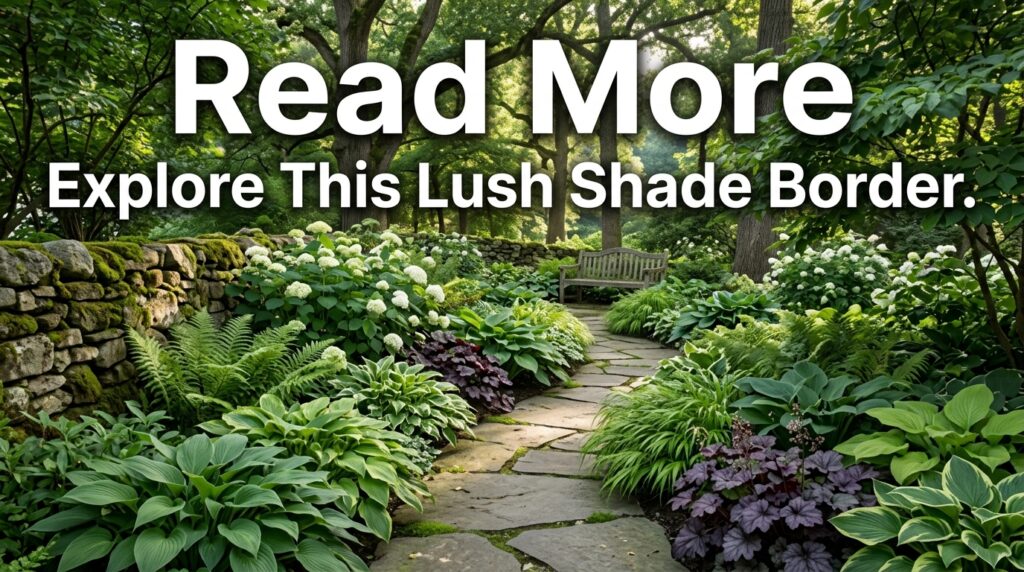
Place a bench beneath a suitable tree or beside lush foliage.
This can create a quiet reading or relaxation area.
Keep enough clearance around the bench for comfortable access.
15. Shady Garden With Pathway
Create a winding path through the planting.
Use:
- Natural stone
- Brick
- Gravel
- Stepping stones
- Bark or suitable mulch
Choose surfaces that remain stable and safe in damp conditions.
16. Shady Garden With Hostas
Hostas are popular shade-garden plants in suitable climates.
Their broad foliage provides strong texture and can create attractive borders.
Protect them from pests such as slugs where necessary.
17. Shady Garden With Heuchera
Heucheras can add colorful foliage to shade gardens.
Depending on the variety, leaves can range from green and silver to burgundy and purple.
18. Shady Garden With Hydrangeas
Some hydrangeas perform well with morning sun and afternoon shade or bright filtered light.
Provide sufficient moisture and choose a variety suited to your climate.
19. Shady Garden With Astilbe
Astilbes can provide colorful flower spikes in suitable moist, shaded locations.
Use them alongside ferns and other compatible plants for layered texture.
20. Shady Garden With Groundcovers
Groundcovers can fill spaces beneath trees and between larger plants.
Choose species that are suitable for shade and won’t aggressively spread beyond the intended area.
21. Shady Garden With Evergreen Plants
Evergreen shrubs and foliage plants can provide structure throughout the year.
Use them as a backdrop for seasonal shade-tolerant flowers.
22. Shady Garden With Grasses
Some ornamental grasses tolerate partial shade.
Choose varieties based on actual light conditions and avoid assuming that all grasses thrive in deep shade.
23. Shady Garden With Bamboo
Bamboo can create a lush vertical effect, but species selection is important.
Choose non-invasive clumping varieties where appropriate and install containers or root barriers when needed.
24. Shady Garden With Trellis
A trellis can add vertical structure to a shaded garden.
Select climbing plants according to their shade tolerance.
25. Shady Garden With Climbing Plants
Suitable climbing plants can soften walls, fences, and pergolas.
Always consider mature size and whether the plant is invasive in your area.
26. Shady Courtyard Garden
A shaded courtyard can become an elegant enclosed garden.
Use containers, vertical greenery, stone paving, and a small seating area.
27. Shady Balcony Garden
A balcony with limited sunlight can still support attractive container plants.
Choose plants based on the amount of direct and indirect light available.
Make sure containers are stable and drainage is adequate.
28. Shady Patio Garden
Add container plants around a shaded patio to soften hard surfaces.
Use varying container heights to create layers.
29. Shady Garden Along a Fence
A fence can create a narrow strip of shade.
Use shade-tolerant shrubs, ferns, groundcovers, and containers to turn the area into a green border.
30. Narrow Shady Garden
For a narrow side yard, use vertical elements and repeated planting.
Try:
- Wall planters
- Trellises
- Narrow shrubs
- Ferns
- Stepping stones
Keep the central pathway clear.
31. Shady Garden With Large Leaves
Large-leaved plants can create dramatic texture.
Combine different leaf shapes rather than relying on a single plant variety.
32. Shady Tropical Garden
In warm, humid climates, shade can be ideal for many tropical foliage plants.
Use large leaves, ferns, palms, and layered planting suited to local conditions.
33. Shady Secret Garden
Create a secluded garden with dense planting, an archway, and a hidden seating area.
Use a winding path to reveal different sections gradually.
34. Shady Fairy Garden
A miniature fairy garden can work beautifully in a shaded corner.
Add:
- Miniature houses
- Moss
- Small stones
- Tiny pathways
- Shade-tolerant plants
Avoid tiny loose objects if young children or pets have access.
35. Shady Garden With Stone Wall
A stone wall can provide structure and a natural backdrop.
Plant suitable shade-tolerant species around the base.
36. Shady Garden With Gravel
Gravel can brighten a dark garden and provide contrast against green foliage.
Choose a surface that remains stable and drains appropriately.
37. Shady Garden With Outdoor Lighting
Lighting can highlight foliage and pathways after sunset.
Use subtle, outdoor-rated fixtures and avoid excessive brightness.
38. Low-Maintenance Shady Garden
Use plants that naturally thrive in the available light and moisture conditions.
Mulch can help reduce weeds and maintain soil moisture.
Group plants according to similar care requirements.
39. Native Shady Garden
Native plants adapted to local woodland or shaded environments can be excellent choices.
They may also support local insects, birds, and other wildlife.
40. DIY Shady Garden
A basic shady garden can be created with a few simple steps.
Materials
You may need:
- Shade-tolerant plants
- Compost or suitable soil amendments
- Mulch
- Natural stones
- Containers
- Garden edging
- Outdoor seating
Steps
- Observe the area throughout the day.
- Determine whether it receives full shade, partial shade, or dappled light.
- Check drainage and soil conditions.
- Remove weeds and unwanted plants carefully.
- Select plants suited to the exact conditions.
- Arrange taller plants behind shorter ones.
- Add paths or stones.
- Install seating if desired.
- Apply an appropriate mulch layer.
- Water new plants according to their requirements.
Best Plants for a Shady Garden
Potential shade-tolerant choices include:
- Ferns
- Hostas
- Heucheras
- Astilbes
- Begonias
- Impatiens
- Foxgloves
- Bleeding hearts
- Certain hydrangeas
- Native woodland plants
The best choice depends on your climate, soil, moisture, and exact light conditions.
Shady Garden Color Ideas
Green and White
Fresh and elegant.
Green and Purple
Rich and dramatic.
Silver and Green
Cool and sophisticated.
Pink and Green
Soft and romantic.
Burgundy and Green
Moody and luxurious.
How to Design a Shady Garden
Step 1: Study the Light
Observe how sunlight changes throughout the day and across seasons.
Step 2: Check the Soil
Look at drainage, moisture, texture, and existing tree roots.
Step 3: Choose a Style
Select woodland, cottage, Japanese-inspired, modern, tropical, or another style.
Step 4: Build Layers
Use trees, shrubs, perennials, groundcovers, and containers to create depth.
Step 5: Add Hardscape
Introduce paths, stones, walls, seating, or decorative structures.
Step 6: Add a Focal Point
Use a bench, fountain, sculpture, large stone, or distinctive plant.
Step 7: Mulch Appropriately
Mulch can help conserve moisture and reduce weeds, but keep it away from tree trunks and plant crowns.
Step 8: Maintain Regularly
Water, prune, weed, and monitor plants according to their specific needs.
Common Shady Garden Mistakes
Assuming All Shade Is the Same
Deep shade and bright filtered shade support different plants.
Planting Sun-Loving Flowers
Always check the light requirements of individual plants.
Ignoring Tree Roots
Large trees can compete strongly for water and nutrients.
Overwatering
Shade does not automatically mean soil stays wet.
Choosing Invasive Groundcovers
Research spreading habits before planting.
Overcrowding Plants
Give plants enough room to reach mature size.
Frequently Asked Questions
What grows well in a shady garden?
Ferns, hostas, heucheras, astilbes, begonias, and various woodland plants can perform well in suitable shade conditions.
Can a shady garden have flowers?
Yes. Many flowering plants tolerate partial or filtered shade. Choose varieties according to the exact amount of available light.
How do I make a dark garden look brighter?
Use pale gravel, light-colored stones, silver foliage, white flowers, reflective surfaces where appropriate, and subtle garden lighting.
Can I grow vegetables in shade?
Most fruiting vegetables need substantial sunlight, but some leafy greens and herbs can tolerate partial shade. Check the specific crop requirements.
How do I design a garden under trees?
Use plants that tolerate both shade and root competition, minimize soil disturbance around established roots, and use mulch appropriately.
Conclusion
A shady garden can be one of the most peaceful and beautiful areas of a landscape. Instead of fighting limited sunlight, embrace it by choosing plants and materials that thrive in cooler, lower-light conditions.
Start by observing the exact type of shade, then build a layered design with foliage, flowers, pathways, natural stone, and a comfortable focal area. With the right plant selection and thoughtful layout, even a dark garden corner can become a lush and inviting outdoor retreat.