
 By John
A rustic garden fence can instantly give an outdoor space warmth, character, and a timeless countryside feel. Whether you’re enclosing a vegetable garden, defining flower beds, creating privacy, or simply adding decorative structure, rustic fencing can blend beautifully with plants and natural surroundings.
From weathered wood and reclaimed boards to woven branches and stone posts, there are many ways to create a rustic garden fence that feels natural rather than overly manufactured. The best design depends on your garden style, climate, budget, and the level of privacy or protection you need.
What Makes a Garden Fence Rustic?
Rustic fencing typically emphasizes natural textures, imperfect finishes, and traditional materials.
Common features include:
- Weathered wood
- Rough timber
- Reclaimed boards
- Natural branches
- Woven willow
- Stone posts
- Wire mesh
- Handmade gates
- Natural stains
- Uneven or informal shapes
The goal is usually to create a relaxed, organic appearance that complements the landscape.
Why Add a Rustic Garden Fence?
A rustic fence can provide several practical and decorative benefits.
It can:
- Define garden boundaries
- Protect plants
- Add privacy
- Support climbing plants
- Create a garden backdrop
- Improve curb appeal
- Separate garden rooms
- Add character to a plain yard
Choose the fence height and construction based on what you need it to accomplish.
Rustic Wooden Garden Fence

Wood is one of the most versatile materials for rustic gardens.
Popular styles include:
- Vertical pickets
- Horizontal boards
- Split-rail fencing
- Rough timber fencing
- Reclaimed wood panels
- Simple post-and-rail designs
Letting some of the wood’s natural texture show through can enhance the rustic appearance.
Reclaimed Wood Fence
Reclaimed boards can give a garden fence instant character.
Different board tones, knots, and natural imperfections create a lived-in appearance.
Before using reclaimed wood outdoors:
- Check for structural damage
- Remove protruding nails
- Avoid contaminated or chemically treated materials of unknown origin
- Ensure the wood is suitable for outdoor use
Seal or finish the wood appropriately if needed.
Rustic Picket Fence
A simple picket fence works beautifully around cottage-style gardens.
Use it to frame:
- Flower beds
- Front gardens
- Vegetable gardens
- Pathways
- Small yards
Paint it white for classic cottage charm, or leave it natural for a more earthy appearance.
Rustic Split-Rail Fence
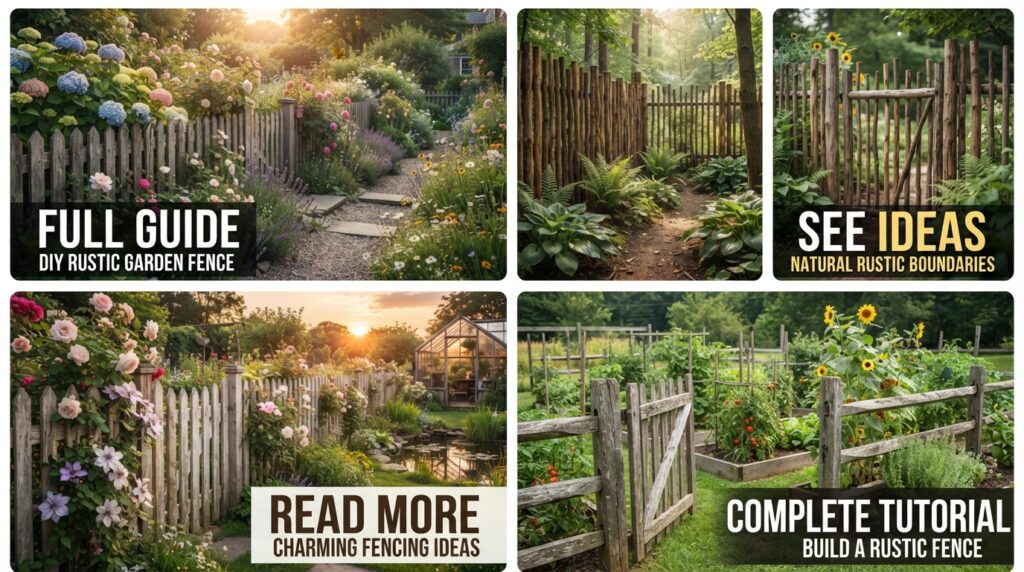
Split-rail fencing creates a relaxed country landscape.
It works especially well around:
- Large gardens
- Rural properties
- Orchards
- Meadow-style planting
- Vegetable gardens
Because it is relatively open, it provides definition without making the garden feel enclosed.
Rustic Branch Fence
Branches can be arranged horizontally or vertically to create a natural garden boundary.
This style works particularly well with:
- Woodland gardens
- Cottage gardens
- Wildflower gardens
- Rustic landscapes
Use sturdy, appropriate branches and construct the fence securely.
Woven Willow Garden Fence
Woven fencing has a handcrafted appearance that fits naturally into cottage and country gardens.
It can be used for:
- Low borders
- Vegetable gardens
- Pathway edges
- Decorative screens
Choose materials that are appropriate for your climate and expected lifespan.
Rustic Wire and Wood Fence
Combining wooden posts with wire mesh creates a practical rustic fence.
This option is especially useful for:
- Vegetable gardens
- Chicken areas
- Small animal protection
- Garden boundaries
Wire mesh can provide security while timber posts soften the appearance.
Rustic Stone and Wood Fence
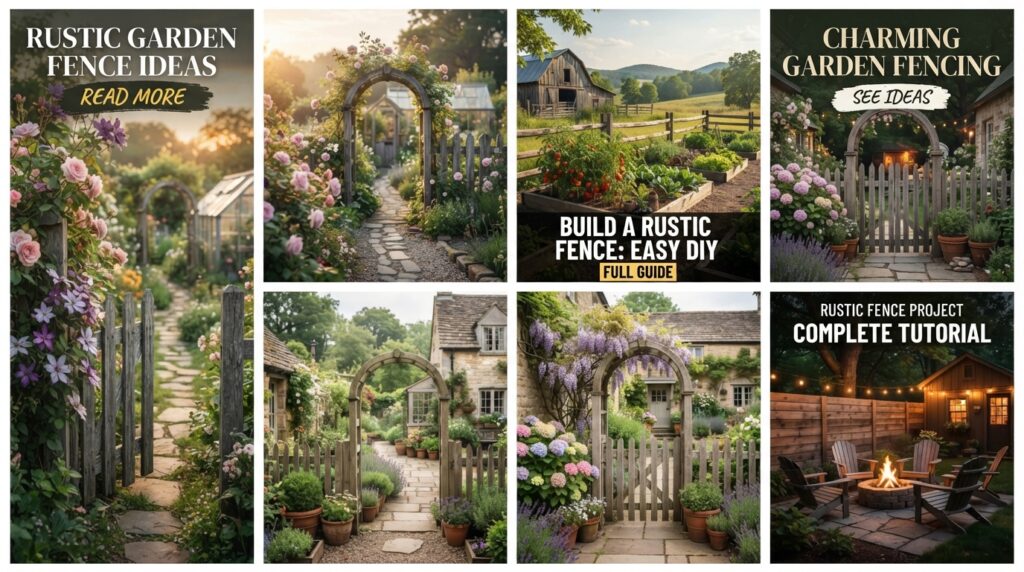
Combine natural stone posts with wooden panels for a substantial countryside look.
Stone provides permanence while wood adds warmth and texture.
This style works particularly well with:
- Cottage gardens
- Country homes
- Traditional landscapes
- Large flower borders
Rustic Garden Fence for Privacy
If privacy is important, choose a taller fence with closely spaced boards.
Enhance privacy by adding:
- Climbing roses
- Clematis
- Jasmine
- Honeysuckle
- Evergreen shrubs
Choose plants based on your climate and the fence’s available sunlight.
Rustic Fence With Climbing Plants
A rustic fence provides an excellent support structure for climbing plants.
Consider:
- Climbing roses
- Clematis
- Honeysuckle
- Jasmine
- Passionflower
Make sure the fence is strong enough to support mature plants.
Rustic Vegetable Garden Fence
A rustic fence can protect edible crops while making the garden more attractive.
Use:
- Wooden posts
- Wire mesh
- Rustic gates
- Raised beds
- Natural mulch
Choose mesh openings based on the pests you need to exclude.
Rustic Fence With a Garden Gate
A gate can become the centerpiece of the fence.
Try:
- Reclaimed wood gates
- Arched timber gates
- Simple picket gates
- Rustic metal hardware
- Wooden latch systems
Add climbing plants around the entrance for a welcoming effect.
Rustic Garden Fence on a Budget
You can create rustic charm without spending a fortune.
Consider:
- Reclaimed suitable timber
- Simple post-and-wire designs
- DIY installation
- Locally available materials
- Natural branches
- Secondhand gates
Always prioritize structural safety and durable materials over appearance alone.
DIY Rustic Garden Fence
Building a simple rustic fence can be a satisfying project.
Step 1: Measure the Area
Determine the fence length and desired height.
Step 2: Mark the Posts
Space posts according to the fence design and structural requirements.
Step 3: Install the Posts
Set posts securely using an appropriate installation method for the soil and fence type.
Step 4: Attach Rails or Boards
Secure horizontal rails, vertical boards, or wire mesh.
Step 5: Add a Gate
Install a suitable gate if access is required.
Step 6: Finish the Fence
Apply an appropriate exterior finish if needed, or allow suitable wood to weather naturally.
Check local rules and property boundaries before constructing a permanent fence.
Rustic Fence Colors
Natural tones usually work best.
Popular choices include:
- Natural wood
- Warm brown
- Dark walnut
- Gray
- Charcoal
- Soft white
- Muted green
Choose a color that complements your home, plants, and other outdoor features.
Rustic Fence Landscaping Ideas
Soften a fence by planting along its base.
Try:
- Lavender
- Roses
- Ornamental grasses
- Hydrangeas
- Perennials
- Ferns
- Native plants
Layer plants by height to create a fuller appearance.
Rustic Fence Lighting
Lighting can highlight the fence after sunset.
Use:
- Solar lanterns
- String lights
- Fence-mounted lights
- Low-level pathway lights
Keep wiring and fixtures suitable for outdoor use.
Rustic Fence for Small Gardens
Small gardens benefit from lightweight fencing designs.
Consider:
- Low picket fences
- Narrow trellis panels
- Woven branch borders
- Simple wire fencing
- Short reclaimed-wood panels
Avoid tall, solid fencing if it makes the space feel cramped, unless privacy is the priority.
Common Rustic Fence Mistakes
Using Unsuitable Wood
Some wood products deteriorate quickly outdoors.
Poor Post Installation
Unstable posts can cause the entire fence to lean or fail.
Ignoring Drainage
Prevent water from remaining against wooden components.
Making the Fence Too Tall
Large fences can overwhelm a small garden.
Forgetting Maintenance
Wood may require cleaning, sealing, staining, or repairs.
Skipping Property Checks
Verify boundaries and local requirements before construction.
Frequently Asked Questions
What is the best material for a rustic garden fence?
Wood is one of the most popular choices, but branches, woven willow, stone, and wire can also create attractive rustic designs.
How do I make a new fence look rustic?
Use naturally textured materials, muted finishes, reclaimed suitable wood, simple hardware, and informal landscaping.
What plants look good along a rustic fence?
Roses, lavender, hydrangeas, ornamental grasses, ferns, and suitable climbing plants can complement rustic fencing.
Can I build a rustic fence myself?
Yes. Simple designs such as picket, post-and-rail, and wire-and-wood fences can be suitable DIY projects if you have the necessary skills and follow local requirements.
How can I make a rustic fence more private?
Use closely spaced boards or panels and combine them with suitable climbing plants or shrubs.
Conclusion
A rustic garden fence can combine function and beauty while giving your outdoor space a warm countryside character. Whether you choose reclaimed wood, split rails, woven branches, wire mesh, or a combination of natural materials, the right fence can define your garden while blending beautifully with plants and landscaping.
Choose materials suited to your climate, install the structure securely, and finish the design with flowers, climbing plants, a charming gate, and subtle lighting. With thoughtful planning, your rustic garden fence can become an attractive feature that adds privacy, protection, and timeless garden appeal.