 By John
A roses garden is the epitome of elegance, romance, and timeless beauty. For centuries, roses have been cherished for their stunning blooms, enchanting fragrance, and incredible variety of colors and forms. Whether you’re designing a formal rose garden, a charming cottage landscape, or a modern backyard retreat, roses can transform any outdoor space into a breathtaking sanctuary.
From classic hybrid tea roses and climbing varieties to compact shrub roses and fragrant English roses, there is a rose suitable for every garden size and style. With proper planning and care, a rose garden can provide months of spectacular blooms while attracting pollinators and enhancing your home’s curb appeal.
This complete guide explores the best rose garden ideas, layouts, plant combinations, and maintenance tips to help you create your own floral masterpiece.
Why Create a Rose Garden?
Rose gardens offer numerous benefits, including:
- Beautiful seasonal blooms
- Wonderful fragrance
- Increased property appeal
- Excellent cut flowers
- Pollinator support
- Versatile landscaping options
A well-designed rose garden quickly becomes the focal point of any outdoor space.
Choosing the Right Rose Varieties

Selecting the right roses is essential for long-term success.
Hybrid Tea Roses
Known for:
- Large blooms
- Long stems
- Ideal cut flowers
Popular colors include red, pink, yellow, and white.
Floribunda Roses
These roses produce clusters of flowers throughout the season.
Benefits include:
- Continuous blooming
- Easy maintenance
- Compact growth
Climbing Roses
Perfect for:
- Arches
- Trellises
- Pergolas
- Garden walls
Climbing roses add height and drama to the landscape.
English Roses
English roses combine old-fashioned charm with modern performance.
Features include:
- Strong fragrance
- Repeat flowering
- Romantic appearance
Shrub Roses
Excellent for:
- Borders
- Hedges
- Low-maintenance gardens
Shrub roses are among the easiest varieties to grow.
Rose Garden Layout Ideas
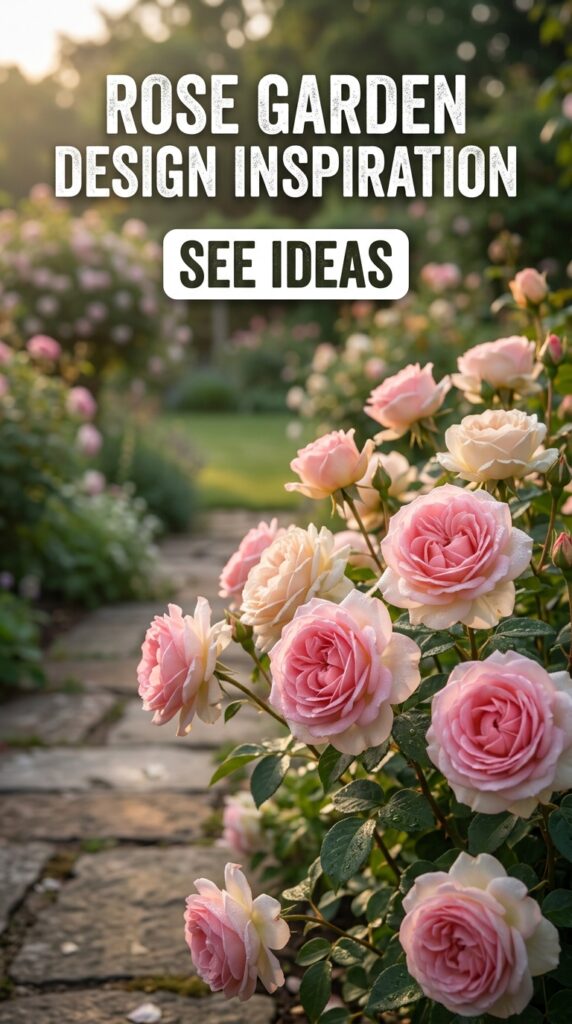
Formal Rose Garden
Include:
- Symmetrical pathways
- Boxwood hedges
- Central fountain
- Geometric flower beds
Cottage Rose Garden
Combine roses with:
- Lavender
- Foxgloves
- Delphiniums
- Catmint
This style creates a relaxed and abundant appearance.
Small Rose Garden
Perfect for compact spaces.
Use:
- Containers
- Miniature roses
- Vertical supports
Modern Rose Garden
Features:
- Clean lines
- Concrete pathways
- Minimalist planting
- White and pastel roses
Best Location for Roses
Most roses require:
- 6–8 hours of sunlight daily
- Well-draining soil
- Good air circulation
Avoid planting roses in areas with excessive shade or poor drainage.
Preparing the Soil
Healthy soil is the foundation of a successful rose garden.
Add:
- Compost
- Organic matter
- Well-rotted manure
Roses thrive in fertile, slightly acidic soil.
Companion Plants for Roses
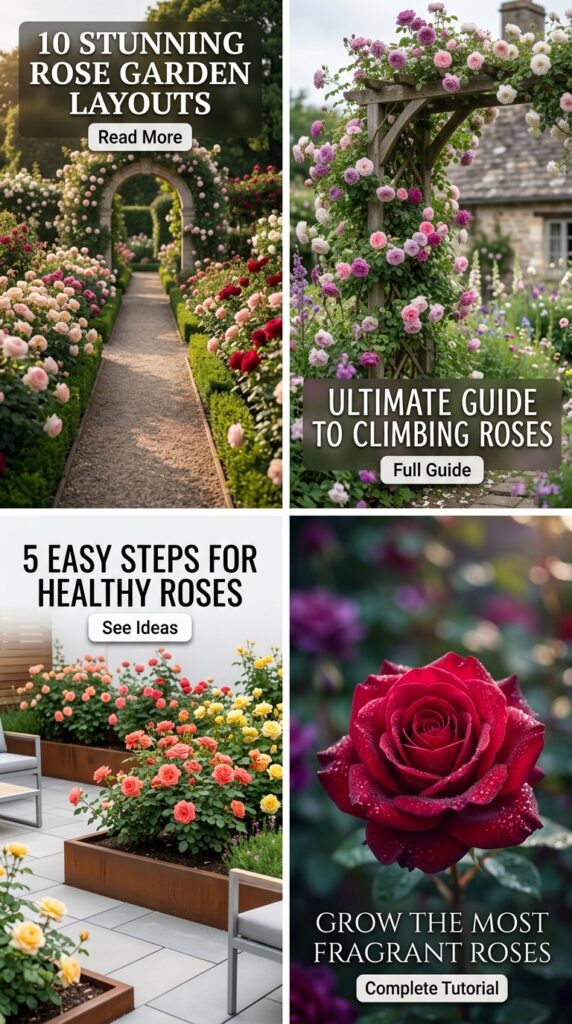
Pair roses with plants that complement their beauty.
Excellent companions include:
Lavender
Adds fragrance and attracts pollinators.
Salvia
Provides contrasting flower spikes.
Catmint
Softens the appearance of rose beds.
Alliums
Offer striking architectural interest.
Geraniums
Fill gaps and suppress weeds.
Companion planting improves both aesthetics and biodiversity.
Rose Garden Color Schemes
Classic Red and White
Elegant and timeless.
Pastel Garden
Combine:
- Soft pink
- Cream
- Lavender
Monochromatic Garden
Choose different shades of a single color.
Rainbow Garden
Celebrate the full spectrum of rose colors.
A cohesive palette creates a polished appearance.
Create Vertical Interest
Use climbing roses on:
- Pergolas
- Garden arches
- Trellises
- Fences
Vertical elements help maximize space and create dramatic focal points.
Add Garden Features
Enhance your rose garden with:
- Benches
- Birdbaths
- Sundials
- Fountains
- Decorative urns
These features provide additional charm and functionality.
Watering Roses
Proper watering is essential.
Tips:
- Water deeply.
- Avoid wetting foliage.
- Water early in the morning.
Consistent moisture promotes healthy growth and flowering.
Fertilizing Roses
Feed roses regularly during the growing season.
Use:
- Organic rose fertilizer
- Compost
- Balanced plant food
Follow product instructions for best results.
Pruning Tips
Pruning encourages healthy growth and abundant blooms.
Prune to:
- Remove dead wood
- Improve airflow
- Shape the plant
- Encourage flowering
Different rose varieties may have specific pruning requirements.
Pest and Disease Management
Common rose problems include:
- Aphids
- Black spot
- Powdery mildew
- Japanese beetles
Prevent issues by:
- Maintaining good airflow
- Watering properly
- Removing affected foliage
Healthy plants are naturally more resistant to pests and diseases.
Seasonal Care
Spring
- Fertilize
- Mulch
- Prune
Summer
- Deadhead blooms
- Water regularly
Autumn
- Clean fallen leaves
- Reduce fertilization
Winter
- Protect plants from severe frost
- Apply mulch around the base
Seasonal care ensures year-round garden health.
Small Rose Garden Ideas
If space is limited, consider:
- Container roses
- Raised beds
- Vertical gardening
- Miniature varieties
Even a small patio can support a beautiful rose display.
Rose Garden for Pollinators
Roses attract many beneficial insects.
Combine them with:
- Lavender
- Coneflowers
- Bee balm
- Verbena
Pollinator-friendly gardens support local ecosystems.
Common Rose Garden Mistakes
Avoid these common errors:
Planting in Shade
Roses need plenty of sunlight.
Overcrowding Plants
Allow adequate spacing for airflow.
Overwatering
Excess moisture can lead to disease.
Neglecting Pruning
Regular pruning improves plant health.
Poor Soil Preparation
Invest time in creating fertile soil before planting.
Frequently Asked Questions
How much sun do roses need?
Most roses require at least six hours of direct sunlight each day.
What are the easiest roses to grow?
Shrub roses and floribundas are among the easiest and most reliable options.
Can roses grow in containers?
Yes. Many compact and miniature varieties perform exceptionally well in pots.
How often should I water roses?
Water deeply once or twice a week, depending on weather conditions.
What is the best companion plant for roses?
Lavender is one of the most popular companions due to its fragrance, color contrast, and pollinator benefits.
Conclusion
A roses garden is a timeless addition to any landscape, offering beauty, fragrance, and elegance throughout the growing season. Whether you choose a formal rose garden, a romantic cottage design, or a compact container display, roses provide endless opportunities for creativity and enjoyment.
By selecting suitable varieties, preparing the soil properly, and providing consistent care, you can create a thriving rose garden that becomes the highlight of your outdoor space. With their captivating blooms and enduring appeal, roses continue to be one of the world’s most beloved garden plants—and for good reason.