
 By John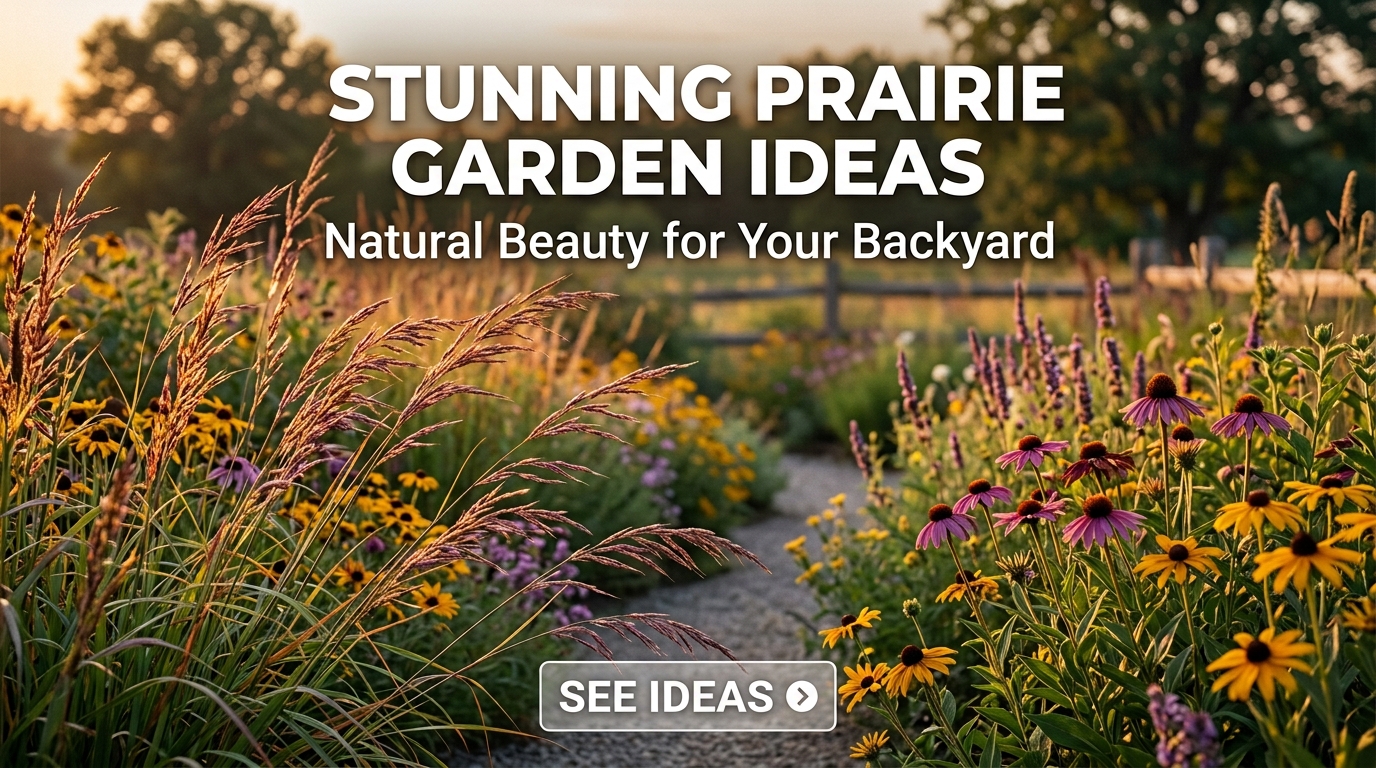
A prairie garden brings the beauty of open grasslands into your landscape with ornamental grasses, native flowers, wildflowers, and relaxed natural planting. Instead of formal rows and perfectly clipped borders, prairie-style gardens focus on movement, texture, biodiversity, and seasonal interest.
Whether you have a large backyard, a small urban garden, a sloping yard, or a simple flower border, prairie garden ideas can help you create an outdoor space that feels natural while still looking thoughtfully designed.
What Is a Prairie Garden?
A prairie garden is a landscape inspired by natural grassland ecosystems. It typically combines grasses with flowering perennials and other plants adapted to the local environment.
Unlike a traditional flower garden, a prairie garden often emphasizes:
- Ornamental grasses
- Native plants
- Wildflowers
- Naturalistic planting
- Seasonal color
- Wildlife habitat
- Movement and texture
- Low-maintenance landscaping
The exact plant selection should reflect your local climate and ecosystem rather than copying a plant list from another region.
Why Create a Prairie Garden?
Prairie-style landscapes can provide several benefits when they are designed with appropriate locally adapted plants.
Natural Beauty
The combination of grasses and flowers creates a relaxed landscape that changes throughout the seasons.
Wildlife Support
A diverse planting can provide food and shelter for pollinators, birds, and other wildlife.
Seasonal Interest
Prairie gardens can remain visually interesting after many flowers finish blooming because ornamental grasses and seed heads provide structure.
Reduced Lawn
Replacing portions of lawn with perennial planting can create a more diverse landscape.
Movement
Tall grasses and flowers move beautifully in the breeze, giving the garden a dynamic quality.
1. Native Prairie Garden
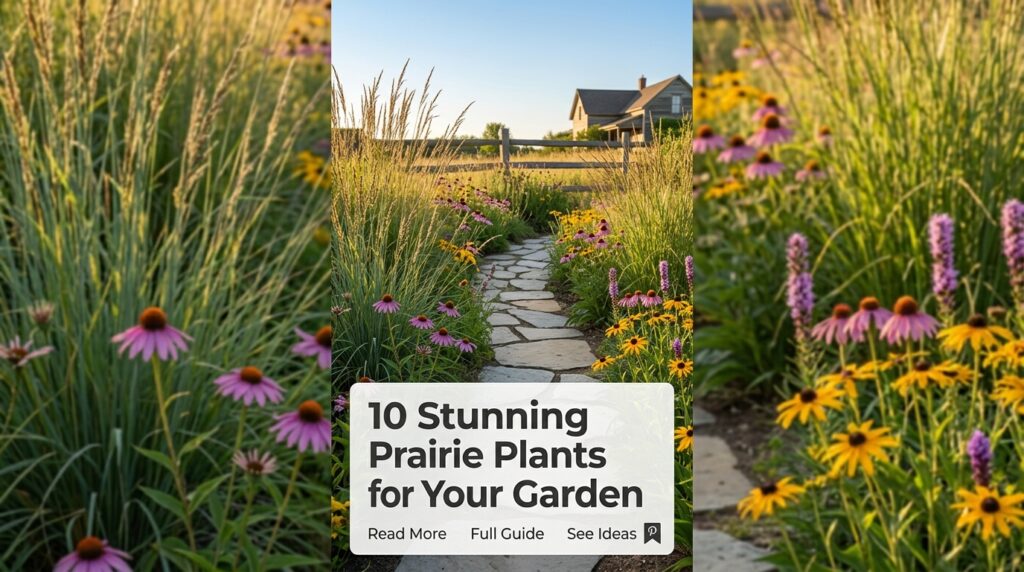
Build your garden around plants naturally adapted to your region.
Native species can be especially valuable for supporting local wildlife and reducing the need for intensive care once established.
2. Backyard Prairie Garden
Convert part of a lawn into a naturalistic planting area.
Use groups of grasses and flowering plants rather than scattering individual plants randomly.
3. Small Prairie Garden
A small border can capture the prairie aesthetic.
Choose compact grasses and a limited number of flowering perennials to avoid overcrowding.
4. Prairie Flower Garden
Combine grasses with flowering plants that bloom at different times.
This creates a succession of color throughout the growing season.
5. Prairie Grass Garden
Make ornamental grasses the dominant feature.
Mix different heights, textures, and forms to create movement and depth.
6. Wildflower Prairie Garden
Combine suitable wildflowers with grasses for a meadow-like appearance.
Choose species appropriate for your local environment and avoid invasive plants.
7. Prairie Garden Border
Use prairie planting along fences, driveways, pathways, or property edges.
Repeat key grasses and flowers to create visual continuity.
8. Prairie Garden Along a Path
Create a winding path through naturalistic planting.
Allow grasses and flowers to frame the walkway while keeping the walking surface clear.
9. Prairie Garden With Ornamental Grasses
Use grasses as the structural foundation of the design.
Different textures can provide interest even when flowers are not blooming.
10. Prairie Garden With Wildflowers
Add seasonal flowers among grasses to create a colorful, informal appearance.
Plant in generous groups for a more natural effect.
11. Prairie Garden With a Stone Path
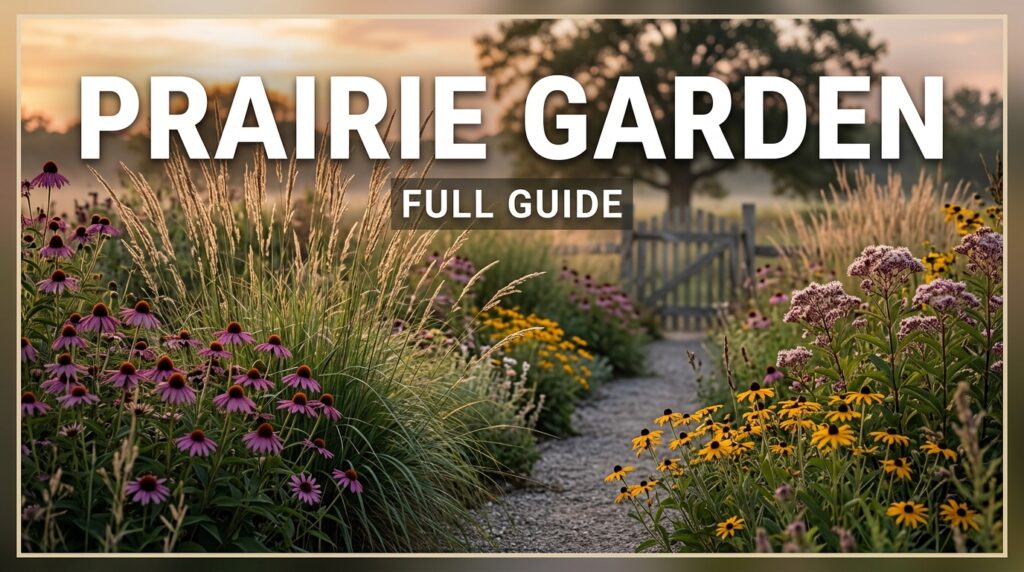
Combine naturalistic planting with a simple stone pathway.
The hardscape provides structure while the grasses soften the edges.
12. Prairie Garden With Gravel
A gravel path or seating area can contrast beautifully with lush prairie planting.
Use appropriate edging to prevent gravel from spreading into planting beds.
13. Prairie Garden With a Bench
Place a simple bench within or beside the planting.
Choose a location where the surrounding flowers and grasses can be enjoyed without creating a maintenance problem.
14. Prairie Garden With a Fire Pit
Create a dedicated fire pit area surrounded by suitable hardscaping.
Maintain appropriate clearances from dry grasses, flowers, fences, structures, and furniture.
15. Prairie Garden With a Pond
A pond can provide an attractive focal point and create habitat for suitable wildlife.
Use plants appropriate for the water’s edge and local conditions.
16. Prairie Garden With a Rain Garden
A rain garden can combine attractive planting with stormwater management.
Select plants that can tolerate periodic wet conditions as well as the expected dry periods.
17. Prairie Garden on a Slope
Prairie-style plants can work well on sloped landscapes when the species are appropriate for the site’s conditions.
Use erosion-control techniques and professional advice where slopes are steep or unstable.
18. Prairie Garden Around a Tree
Use shade-tolerant plants around trees where conditions allow.
Avoid piling soil against the trunk or damaging major roots.
19. Prairie Garden With Trees
Combine small or appropriately sized trees with grasses and flowering perennials.
The trees provide vertical structure while the lower planting creates a naturalistic ground layer.
20. Prairie Garden With Shrubs
Add shrubs for year-round structure and habitat.
Position them among grasses and flowers rather than creating a rigid hedge.
21. Modern Prairie Garden
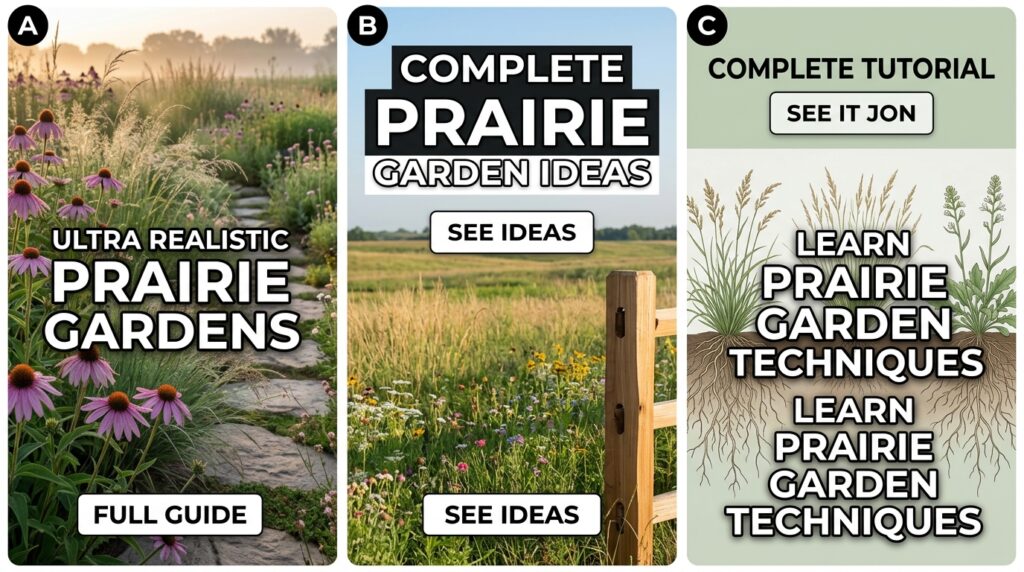
Use naturalistic planting with clean architectural lines.
A simple concrete path, steel edging, or modern seating can contrast beautifully with soft grasses.
22. Cottage Prairie Garden
Combine prairie grasses with informal flowering plants.
The result can blend the relaxed appearance of a cottage garden with the movement of a naturalistic landscape.
23. Contemporary Prairie Garden
Keep the plant palette controlled and repeat large groups of grasses.
Use geometric pathways and simple garden structures to create a sophisticated appearance.
24. Prairie Garden With Purple Flowers
Purple flowers can create a striking contrast against green and golden grasses.
Choose locally appropriate flowering plants suited to the site’s conditions.
25. Prairie Garden With Yellow Flowers
Yellow blooms can bring warmth and energy to the planting.
Use them selectively so the overall landscape remains balanced.
26. Prairie Garden With White Flowers
White flowers create a softer and more refined prairie appearance.
They can also stand out beautifully against darker grasses and foliage.
27. Prairie Garden With Pollinator Plants
Choose diverse flowering plants that provide nectar and pollen throughout the season.
Avoid unnecessary pesticide use and include a range of flower forms where appropriate.
28. Prairie Garden for Birds
Leave selected seed heads standing through autumn and winter where practical.
Dense grasses can also provide shelter for wildlife.
29. Prairie Garden With a Seating Area
Create a small outdoor room within the landscape.
A simple bench, chairs, or patio can provide a place to experience the movement and seasonal changes of the garden.
30. Prairie Garden Privacy Screen
Use tall grasses and suitable shrubs to create a natural privacy screen.
Planting should be positioned so mature growth does not obstruct pathways or neighboring properties.
31. Prairie Garden Entrance
Frame a gate or entrance with tall grasses and flowering plants.
Use repeated planting on both sides for a balanced appearance.
32. Prairie Garden Near a Fence
A fence can provide a strong background for naturalistic planting.
Mix different plant heights to soften the hard boundary.
33. Prairie Garden With Sculptures
Simple sculptures can become focal points within a sea of grasses.
Use weather-resistant materials and give the artwork enough surrounding space to remain visible.
34. Prairie Garden With a Water Feature
A small fountain or other suitable water feature can add sound and movement.
Surround it with moisture-appropriate plants and maintain safe access.
35. Large Prairie Landscape
For a large property, create broad drifts of grasses and flowering perennials.
Repeat plant groups across the landscape to make the large space feel intentional rather than random.
Best Plants for a Prairie Garden
The best plants depend heavily on your location. In North American prairie regions, commonly used native plants can include suitable species of:
Prairie Grasses
- Little bluestem
- Big bluestem
- Switchgrass
- Prairie dropseed
- Sideoats grama
Flowering Perennials
- Coneflowers
- Black-eyed Susans
- Blazing star
- Milkweed species
- Asters
- Goldenrods
Plant selections should be based on your local ecosystem, soil, rainfall, and hardiness zone.
If you live outside a prairie region, consider using native or climate-appropriate plants that create a similar naturalistic effect rather than importing prairie species that may not perform well.
How to Design a Prairie Garden
Step 1: Study Your Site
Observe sunlight, drainage, soil, wind exposure, and existing vegetation.
Step 2: Choose a Naturalistic Plant Palette
Select grasses and flowering plants that can thrive in your conditions.
Step 3: Plan Plant Groups
Plant in drifts or groups rather than isolated specimens.
Step 4: Layer Plant Heights
Use low ground covers, medium flowers, tall grasses, and larger structural plants.
Step 5: Create a Path
A simple path allows you to move through the planting and makes maintenance easier.
Step 6: Add a Focal Point
Use a bench, sculpture, tree, water feature, or architectural element.
Step 7: Repeat Key Plants
Repeating several species throughout the garden creates cohesion.
Step 8: Include Wildlife Plants
Choose flowers and grasses that can provide food and shelter for appropriate local wildlife.
Step 9: Add Seasonal Structure
Include plants with attractive seed heads, stems, bark, or foliage for interest beyond the main flowering season.
Step 10: Allow the Garden to Mature
Naturalistic landscapes often look better as plants fill in and develop their full forms.
Prairie Garden Color Ideas
Green and Gold
A classic natural combination created by grasses and yellow flowers.
Purple and Green
Purple blooms provide strong contrast against foliage.
Pink and Purple
A softer, romantic palette for a flowering prairie border.
White and Green
Simple and elegant.
Burgundy and Gold
Create drama with dark foliage and warm flowers.
Multicolor Prairie
Combine several seasonal flower colors for a lively naturalistic display.
Prairie Garden Maintenance
Prairie gardens are often described as low maintenance, but they are not maintenance-free.
Water During Establishment
New plants generally require more consistent watering until their roots become established.
Control Weeds
Weed control is especially important during the early stages of a prairie planting.
Divide Plants When Necessary
Some perennial plants may eventually need division to maintain vigor and spacing.
Cut Back at the Right Time
Many prairie-style plants can be left standing through winter for wildlife value and visual structure before being cut back according to the needs of the garden.
Monitor Invasive Plants
Remove unwanted aggressive species before they spread throughout the planting.
Refresh the Design
Replace plants that fail to thrive and adjust groups as the garden matures.
Common Prairie Garden Mistakes
Using Too Many Species
A very large plant list can make a small garden look chaotic.
Ignoring Local Conditions
Plants should match the site’s soil, moisture, sunlight, and climate.
Planting Only Flowers
Grasses provide important structure and movement.
Making It Too Formal
Perfectly spaced rows can undermine the naturalistic prairie appearance.
Expecting Instant Results
Prairie gardens often need time to establish and develop.
Neglecting Weeds
Weed control is particularly important during establishment.
Forgetting Winter Interest
Leave suitable grasses and seed heads standing where practical to extend seasonal interest.
Frequently Asked Questions
What is the best plant for a prairie garden?
There is no single best plant. A successful prairie garden usually combines several locally appropriate grasses and flowering perennials with different heights and bloom periods.
Are prairie gardens low maintenance?
They can require less mowing and watering than some conventional landscapes once established, but they still need weed control, seasonal maintenance, and occasional plant management.
Can I create a prairie garden in a small yard?
Yes. Use a compact selection of grasses and flowering perennials in a defined border or planting bed.
What grasses are good for prairie gardens?
Suitable options vary by region. In North American prairie landscapes, little bluestem, big bluestem, switchgrass, prairie dropseed, and sideoats grama are examples of commonly used native grasses.
Can a prairie garden attract pollinators?
Yes. A diverse selection of flowering plants can provide nectar and pollen for bees, butterflies, and other pollinators.
Do prairie gardens need watering?
New plantings typically need regular watering while establishing. Mature plants may require less supplemental irrigation depending on species and local rainfall.
Final Thoughts
Prairie garden ideas offer a beautiful alternative to traditional lawns and highly structured landscapes. By combining grasses, wildflowers, native plants, pathways, seating areas, and natural materials, you can create a garden filled with movement, texture, wildlife, and seasonal interest.
The most successful prairie gardens are designed around the local environment. Choose plants that naturally suit your climate and soil, group them in generous drifts, provide room for mature growth, and allow the garden to evolve over time.
Whether you create a small prairie-inspired border or transform a large section of your landscape, this naturalistic style can bring a relaxed and timeless character to your outdoor space.