
 By John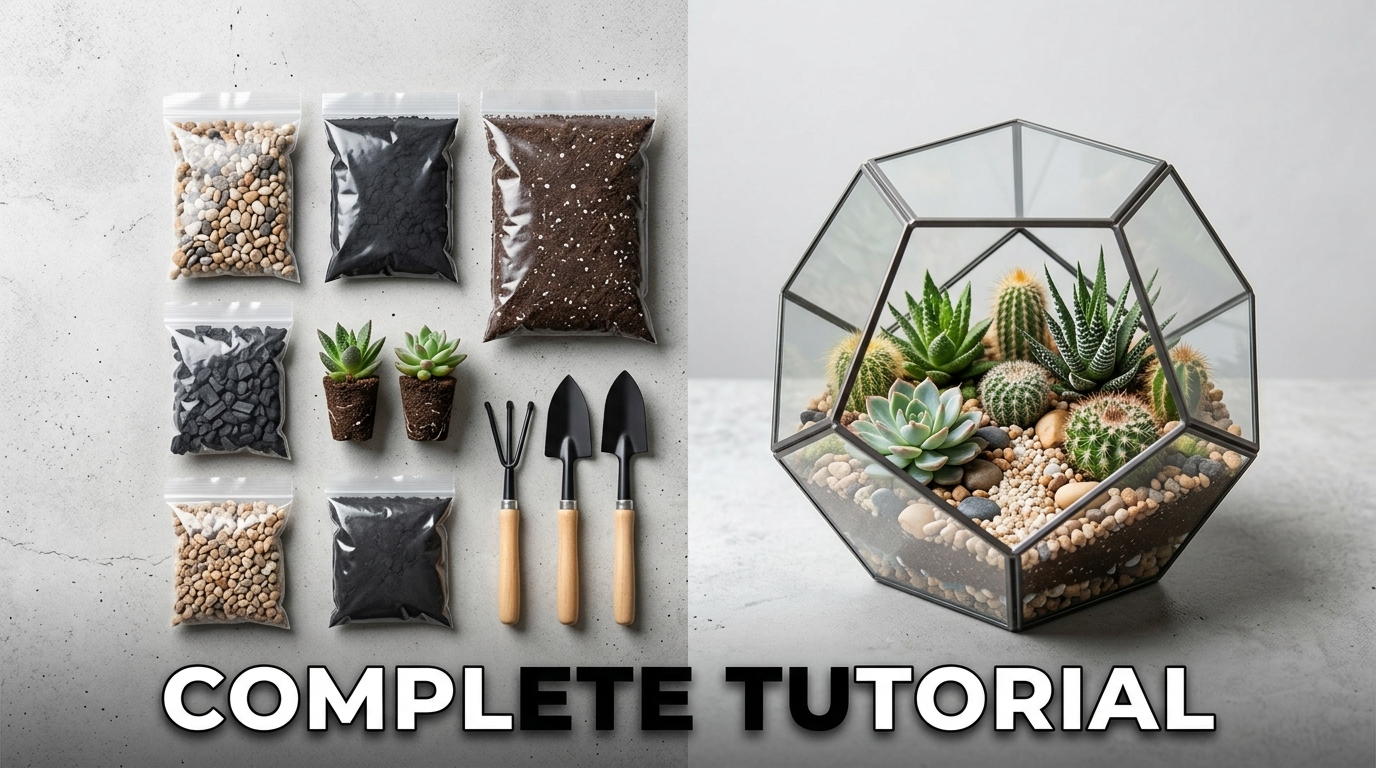
A miniature garden DIY project is a fun and creative way to bring a tiny world to life using plants, miniature decorations, and everyday containers. Whether you want a fairy garden, a tiny village, a miniature woodland, or a whimsical landscape, these small gardens make beautiful decorations for patios, balconies, porches, or indoor spaces with adequate light.
The best part is that you don’t need a large backyard or expensive materials. With a little imagination and a few simple supplies, you can build a charming miniature garden that reflects your personal style.
What Is a Miniature Garden?
A miniature garden is a scaled-down landscape created inside a container, planter, raised bed, or small outdoor space.
It often includes:
- Small plants
- Tiny houses
- Mini furniture
- Pebble pathways
- Decorative stones
- Mini fences
- Fairy accessories
- Tiny bridges
- Moss
- Small figurines
The goal is to create a realistic tiny landscape that looks like a miniature version of a full-sized garden.
Why Make a DIY Miniature Garden?
Creating a miniature garden offers many benefits:
- Encourages creativity
- Suitable for small spaces
- Great family activity
- Adds unique garden décor
- Easy to personalize
- Can be expanded over time
It is also a fun way to introduce children to gardening with appropriate supervision.
Choose the Right Container
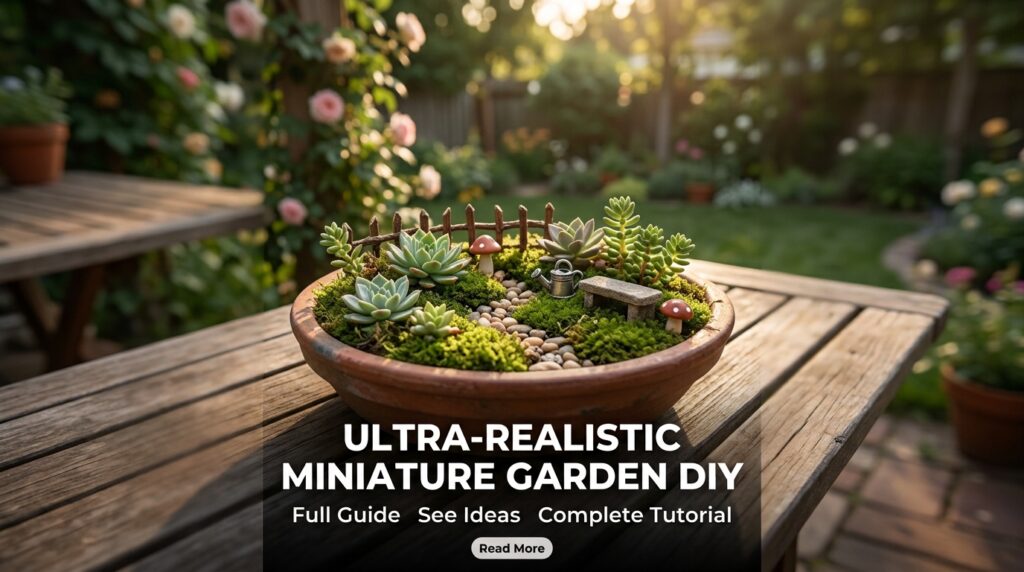
Almost any container with drainage can become a miniature garden.
Popular choices include:
- Terracotta pots
- Wooden boxes
- Ceramic bowls
- Metal tubs
- Vintage containers
- Raised planters
- Window boxes
If using a container without drainage, take extra care with watering to avoid waterlogged soil.
Gather Your Materials
Basic supplies include:
- Potting mix suited to your chosen plants
- Small plants
- Decorative gravel
- Pebbles
- Moss
- Miniature accessories
- Small twigs
- Sand
- Tiny stones
Choose materials that are weather-resistant if the garden will remain outdoors.
Best Plants for a Miniature Garden
Select slow-growing or naturally compact plants.
Good options include:
- Moss
- Small succulents
- Sedum
- Baby tears
- Dwarf ferns
- Creeping thyme
- Mini ivy
- Small ornamental grasses
Always match plants with similar light, watering, and soil requirements.
Step-by-Step DIY Miniature Garden
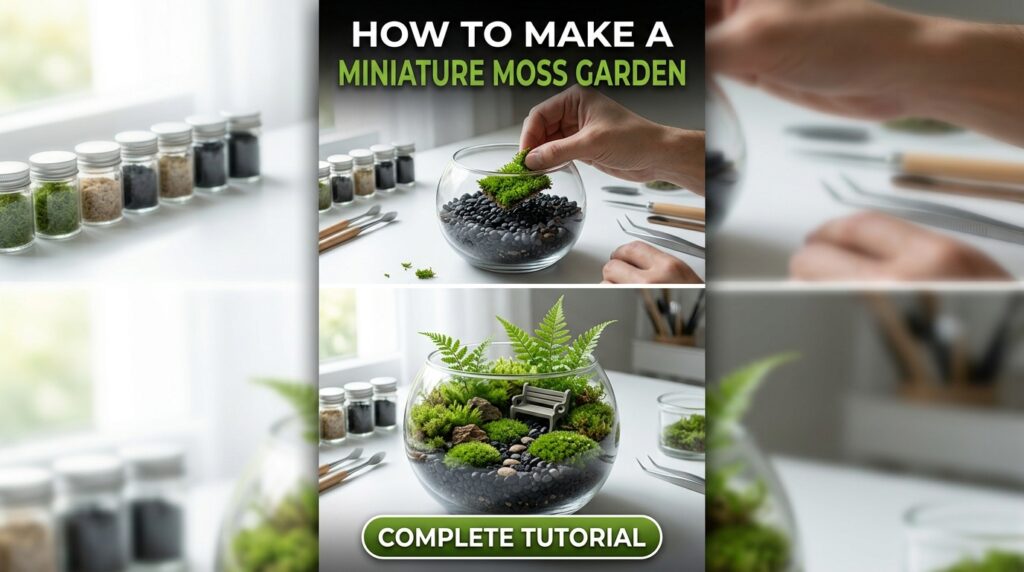
Step 1: Choose a Theme
Decide on the style before you begin.
Popular themes include:
- Fairy garden
- Cottage garden
- Woodland
- Beach scene
- Desert landscape
- Japanese-inspired garden
- Tiny farm
- Fantasy village
A clear theme helps create a cohesive design.
Step 2: Prepare the Container
Fill the container with an appropriate growing medium, leaving space for decorations and plants.
Step 3: Arrange the Main Features
Place larger elements first, such as:
- Mini houses
- Bridges
- Trees
- Benches
Experiment with the layout before planting.
Step 4: Plant Carefully
Position taller plants toward the back and lower-growing plants near the front.
Leave enough room for future growth.
Step 5: Add Pathways
Create tiny paths using:
- Pebbles
- Gravel
- Sand
- Crushed stone
Curved paths make the miniature landscape feel more natural.
Step 6: Decorate
Finish with:
- Tiny fences
- Lanterns
- Mushrooms
- Animal figurines
- Mini signs
- Decorative stones
Use decorations sparingly to avoid overcrowding.
Fairy Garden DIY
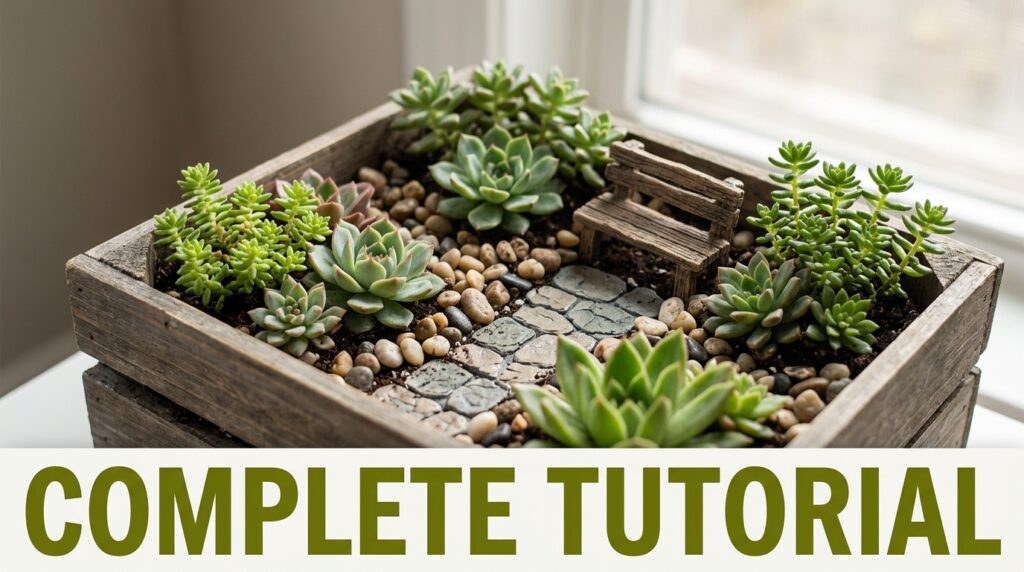
Fairy gardens remain one of the most popular miniature garden styles.
Include:
- Tiny fairy house
- Mini bridge
- Moss
- Pebble path
- Small flowers
- Fairy figurines
Hide small details among the plants to create a sense of discovery.
Miniature Cottage Garden
Create a charming countryside scene with:
- Mini picket fence
- Tiny flower beds
- Small bench
- Rustic pathway
- Mini watering can
Use flowering plants with fine foliage where suitable.
Miniature Zen Garden
A peaceful Japanese-inspired design may include:
- Sand or fine gravel
- Small rocks
- Moss
- Mini bamboo accents
- Tiny bridge
- Stone lantern
Keep the layout simple and balanced.
Miniature Desert Garden
Use drought-tolerant plants such as small succulents alongside:
- Decorative sand
- Pebbles
- Tiny cacti (handle carefully)
- Rocks
Provide the bright light these plants require.
DIY Miniature Garden for Kids
Children often enjoy helping create miniature landscapes.
Ideas include:
- Tiny dinosaurs
- Animal figurines
- Colorful houses
- Small cars
- Fairy doors
- Storybook scenes
Young children should be supervised, especially when using small parts or tools.
Outdoor Miniature Garden
For outdoor displays, choose weather-resistant materials.
Use:
- Frost-resistant containers where needed
- Durable figurines
- Outdoor-safe glue if assembling decorations
- Plants suited to your climate
Protect delicate accessories during severe weather.
Indoor Miniature Garden
Indoor miniature gardens can brighten a windowsill or tabletop.
Choose plants suited to indoor conditions and place the garden where it receives the appropriate amount of light.
Avoid overwatering, particularly in containers without drainage.
Miniature Garden DIY on a Budget
You don’t need expensive accessories.
Save money by using:
- Small twigs
- Pinecones
- Pebbles
- Seashells
- Recycled containers
- Handmade decorations
- Reclaimed wood
Natural materials often look more realistic than plastic decorations.
Seasonal Miniature Garden Ideas
Refresh your tiny garden throughout the year.
Spring
Add colorful flowers and miniature butterflies.
Summer
Create a picnic scene with tiny benches.
Autumn
Use miniature pumpkins and colorful leaves.
Winter
Add tiny evergreen trees, snow-like gravel, and miniature lanterns.
Caring for Your Miniature Garden
Keep your tiny garden healthy by:
- Watering according to plant needs
- Removing dead leaves
- Trimming overgrown plants
- Cleaning decorations
- Replacing damaged accessories
- Refreshing mulch or gravel when needed
Regular maintenance keeps the miniature landscape looking neat and attractive.
Common DIY Miniature Garden Mistakes
Using Fast-Growing Plants
Large plants can quickly overwhelm a tiny landscape.
Overcrowding Decorations
Leave open space to make the garden feel more realistic.
Mixing Plants with Different Needs
Choose plants that thrive under similar conditions.
Ignoring Drainage
Excess moisture can damage plant roots.
Choosing Oversized Accessories
Decorations should be proportional to the overall design.
Frequently Asked Questions
What plants work best in a miniature garden?
Slow-growing plants such as moss, sedum, baby tears, small succulents, dwarf ferns, and creeping thyme are excellent choices.
Can I make a miniature garden without a backyard?
Yes. Miniature gardens work well on balconies, patios, windowsills, and indoor tabletops.
How do I make a fairy garden?
Use a suitable container, compact plants, a tiny fairy house, miniature pathways, moss, and small decorative accessories.
How often should I water a miniature garden?
Water according to the needs of the specific plants and the container conditions. Small containers may dry out more quickly than larger ones, but avoid overwatering.
Can children help build a miniature garden?
Yes. It can be a fun family activity, provided children are supervised and age-appropriate materials are used.
Conclusion
A miniature garden DIY project is a wonderful way to combine gardening, creativity, and craftsmanship in a small space. Whether you create a magical fairy garden, a peaceful Zen landscape, a rustic cottage scene, or a tiny woodland, your miniature garden can become a unique decorative feature that brings joy throughout the year.
Start with a simple design, choose compact plants that suit your environment, and add miniature accessories thoughtfully. With regular care and a little imagination, your tiny garden can continue to grow and evolve into a charming miniature world.