
 By John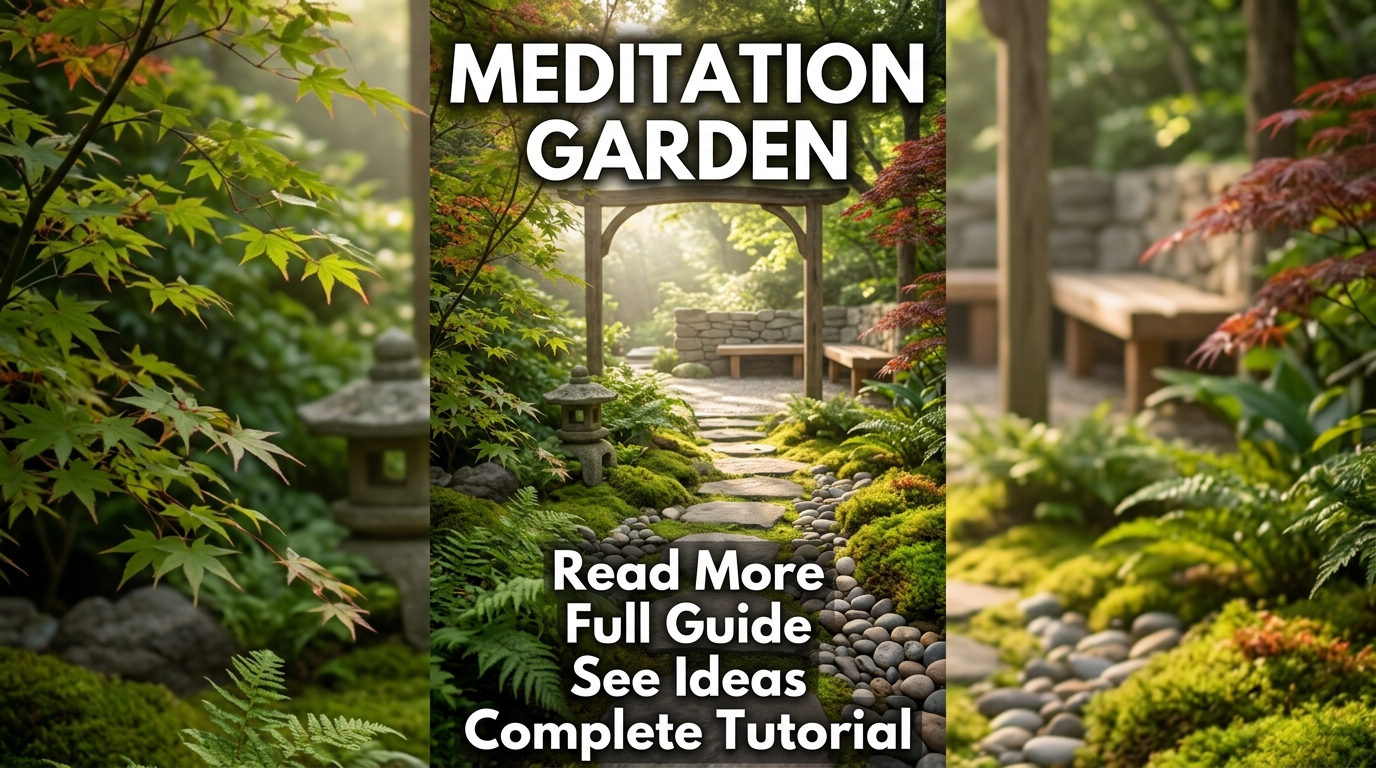
A meditation garden is a specially designed outdoor space that promotes calmness, mindfulness, and relaxation. It is a place where you can disconnect from daily stress, reduce mental clutter, and reconnect with nature. Unlike regular gardens that focus mainly on beauty or productivity, a meditation garden is centered around peace, simplicity, and emotional well-being.
In today’s fast-paced lifestyle, having a dedicated space for meditation has become increasingly important. A well-designed meditation garden helps reduce stress, improve focus, and create a sense of inner balance. Whether you have a large backyard, a small courtyard, or even a balcony, you can design a peaceful meditation space with thoughtful planning.
This guide will explore everything about meditation gardens, including design ideas, essential elements, plants, layouts, materials, and maintenance tips.
What is a Meditation Garden?
A meditation garden is a quiet outdoor space designed to support relaxation, mindfulness, and spiritual reflection. It often includes natural elements such as plants, water features, stones, seating areas, and soft lighting.
The main purpose of a meditation garden is not decoration but emotional wellness. Every element is chosen carefully to create harmony, simplicity, and peace.
These gardens are inspired by Zen, Japanese, and natural landscape design principles, which focus on balance and minimalism.
Benefits of a Meditation Garden
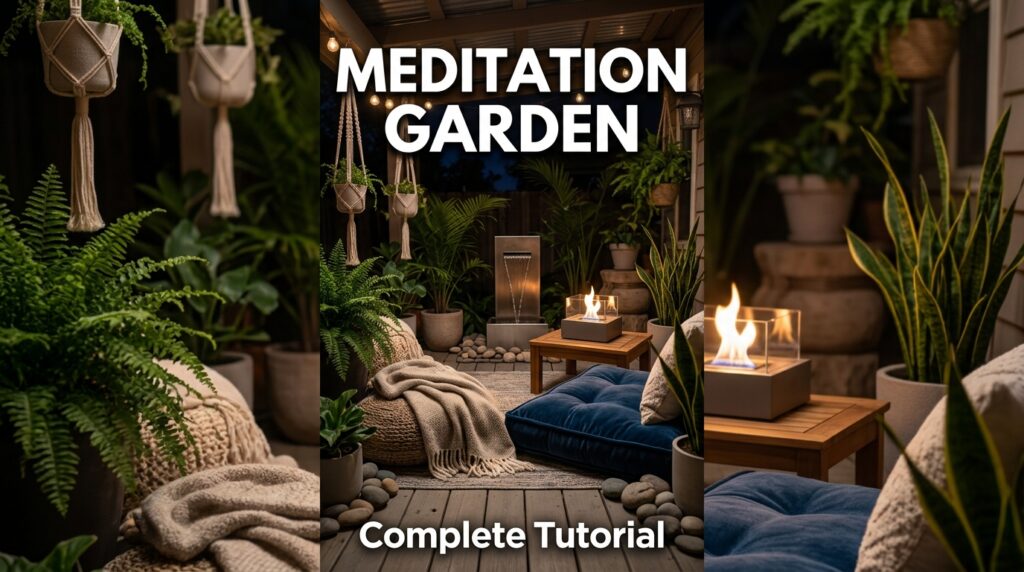
A meditation garden provides several physical, mental, and emotional benefits.
One of the biggest benefits is stress reduction. Being surrounded by greenery and natural sounds helps calm the nervous system and lowers anxiety levels.
It also improves focus and mental clarity. A quiet environment allows the mind to reset and improves concentration during meditation or reflection.
Meditation gardens support emotional balance by creating a peaceful escape from digital overload and daily pressure.
They also improve sleep quality when used regularly in the evening or early morning.
In addition, they strengthen your connection with nature, which promotes overall well-being and mindfulness.
Best Location for a Meditation Garden
Choosing the right location is essential for creating a peaceful atmosphere.
A quiet corner of the backyard is ideal because it provides privacy and reduces distractions.
Areas with natural shade or partial sunlight work best, as they create a comfortable environment throughout the day.
Avoid placing the meditation garden near noisy areas such as roads, generators, or busy outdoor zones.
Even a small balcony or rooftop can be transformed into a meditation space with the right design approach.
Essential Elements of a Meditation Garden
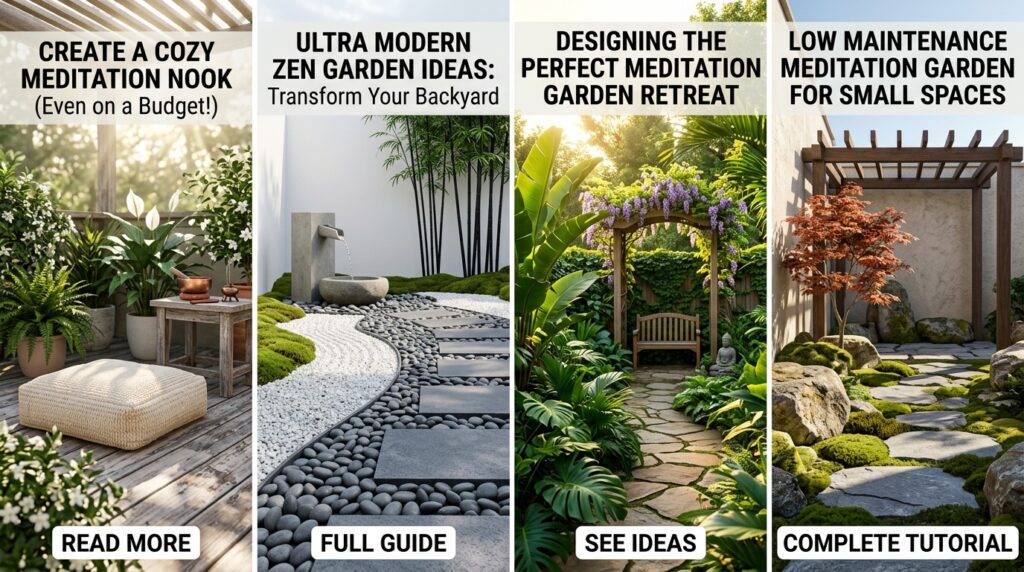
A successful meditation garden includes simple, natural, and calming elements.
Seating Area
A comfortable seating area is essential. This can include wooden benches, stone seats, floor cushions, or even a simple mat placed on a wooden deck.
Greenery
Plants are the heart of any meditation garden. Green tones create a calming effect and improve air quality.
Water Features
Water elements such as small fountains, ponds, or waterfalls add soothing sounds that enhance relaxation.
Natural Materials
Stone, wood, bamboo, and gravel are commonly used to maintain a natural and grounded feel.
Open Space
A meditation garden should never feel overcrowded. Open space allows the mind to feel free and relaxed.
Zen-Inspired Meditation Garden
Zen gardens are one of the most popular styles for meditation spaces.
They focus on simplicity, balance, and minimal design. Common features include raked gravel, carefully placed stones, bamboo plants, and clean open layouts.
Zen gardens often avoid bright colors and instead use neutral tones to create a calm environment.
This style is ideal for people who prefer quiet, structured, and minimalist spaces.
Japanese-Style Meditation Garden
Japanese meditation gardens are inspired by traditional landscape design principles.
They often include koi ponds, stone lanterns, wooden bridges, and carefully pruned trees.
Every element is placed intentionally to reflect harmony and natural flow.
These gardens are designed for slow walking, reflection, and mindful observation.
Natural Forest Meditation Garden
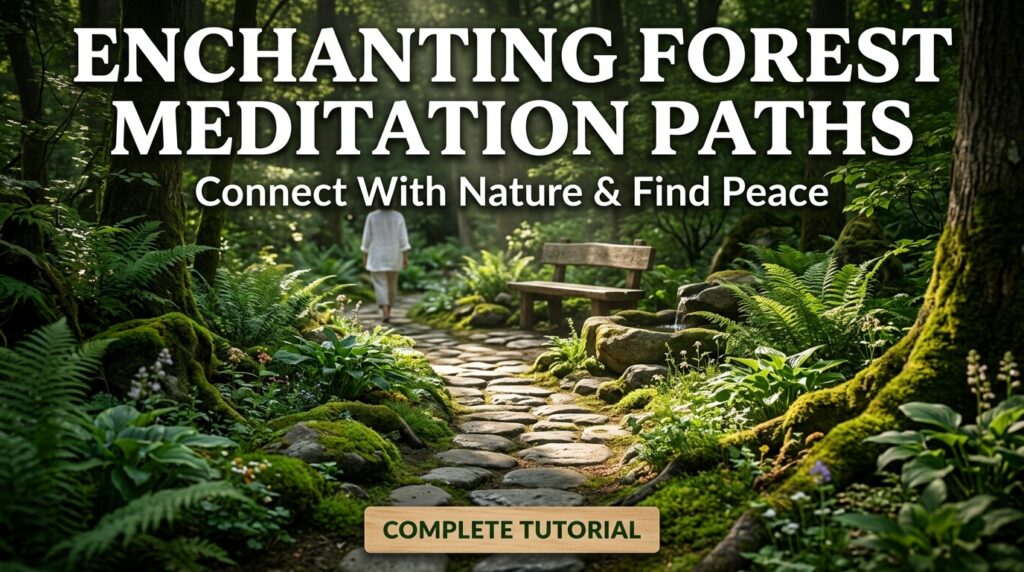
A forest-style meditation garden mimics the feeling of being in a natural woodland.
It includes dense greenery, tall trees, moss-covered stones, and shaded pathways.
This style is perfect for people who feel most relaxed in natural, untouched environments.
Birds, butterflies, and natural sounds enhance the meditative experience.
Minimalist Meditation Garden
A minimalist meditation garden focuses on simplicity and clean design.
It uses very few elements such as a seating bench, a single tree, or a small water feature.
Neutral colors and open space help reduce visual distractions.
This style is ideal for modern homes and small outdoor areas.
Best Plants for Meditation Gardens
Plants play a key role in creating a peaceful environment.
Lavender is widely used because of its calming fragrance.
Bamboo adds a natural, calming sound when it moves with the wind.
Jasmine provides a soothing scent that enhances relaxation.
Ferns and moss create a soft, green texture that feels natural and peaceful.
Snake plants and peace lilies improve air quality and require minimal maintenance.
Water Elements in Meditation Gardens
Water is a powerful element in meditation garden design.
The sound of flowing water helps calm the mind and reduce stress.
Small fountains are ideal for compact spaces.
Pond features with fish or aquatic plants create a deeper connection with nature.
Even a simple bowl of water with floating flowers can enhance the atmosphere.
Lighting for Meditation Gardens
Lighting should be soft, warm, and subtle.
Solar lanterns are a popular choice for eco-friendly illumination.
Fairy lights can be used to create a gentle glow in the evening.
Low-level pathway lighting improves safety without disturbing the calm environment.
Avoid bright or harsh lighting as it can disrupt the peaceful mood.
Meditation Garden Layout Ideas
A good layout is simple and balanced.
The seating area should be the focal point, placed in a quiet and shaded location.
Plants should be arranged in layers to create depth without overcrowding.
Water features can be placed nearby to enhance sound therapy.
Pathways should be minimal and natural, using stone or gravel.
The overall design should encourage slow movement and stillness.
DIY Meditation Garden Ideas
Creating a meditation garden does not require a large budget.
You can use recycled wood to build simple seating areas.
Natural stones collected from nearby areas can be used for decoration.
Small plants from local nurseries are enough to create greenery.
A DIY fountain using containers or pots can add a water element.
Even a corner of your balcony can be turned into a peaceful meditation space with minimal effort.
Maintenance Tips for Meditation Gardens
Meditation gardens are generally low-maintenance, but basic care is important.
Regularly trim plants to maintain a clean and organized look.
Remove fallen leaves and debris to keep the space tidy.
Check water features to ensure proper flow and cleanliness.
Avoid overcrowding plants as simplicity is key to maintaining peace.
Common Mistakes to Avoid
Avoid adding too many decorative elements, as clutter reduces the calming effect.
Do not use bright or aggressive colors that disturb visual balance.
Avoid placing the garden in noisy or high-traffic areas.
Overcomplicating the design can defeat the purpose of a meditation space.
Benefits of a Meditation Garden for Daily Life
A meditation garden supports mental clarity, emotional balance, and overall wellness.
Spending even a few minutes daily in such a space can reduce stress and improve mood.
It encourages mindfulness, helping you stay present and focused.
It also promotes a healthier lifestyle by encouraging outdoor time instead of screen use.
Final Thoughts
A meditation garden is more than just a landscaped area. It is a personal sanctuary designed to restore peace, balance, and mindfulness in everyday life. With simple design choices, natural materials, and thoughtful planning, you can create a space that supports relaxation and emotional well-being.
Whether you prefer a Zen-inspired layout, a lush forest style, or a minimalist design, the key is simplicity and harmony. A well-designed meditation garden becomes a place where you can pause, breathe, and reconnect with yourself.
In a busy world, having a dedicated meditation space is not a luxury—it is a necessity for mental and emotional health.