
 By John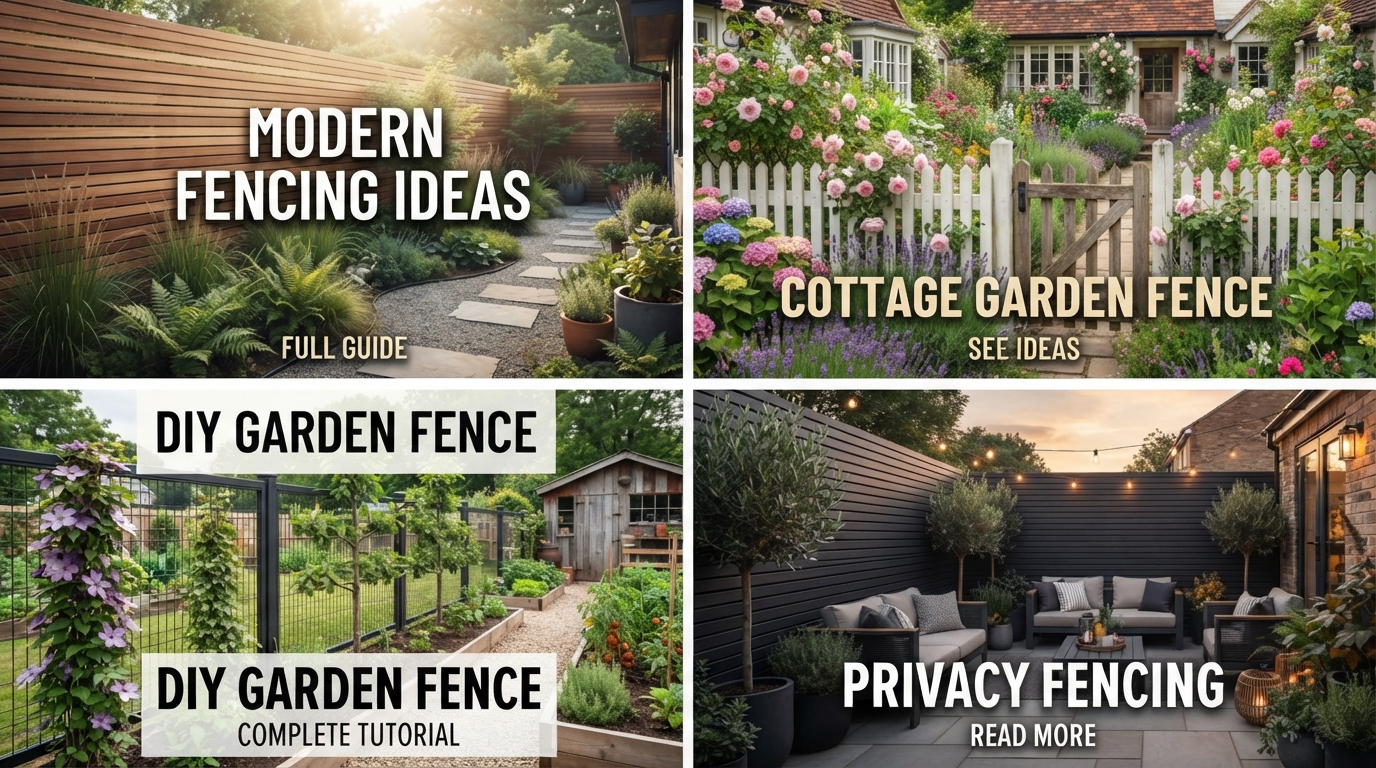
Garden fencing ideas can transform the look and function of an outdoor space. A well-designed fence can provide privacy, define boundaries, protect plants, create a beautiful backdrop, and give a garden a polished appearance.
From classic wooden picket fences to modern slatted screens, natural hedges, decorative metal panels, and budget-friendly DIY solutions, there are countless ways to choose fencing that suits your garden style.
The best garden fence should balance appearance, durability, privacy, maintenance, and the needs of the plants and people using the space.
Why Is Garden Fencing Important?
Garden fencing can serve several practical and decorative purposes.
It can:
- Define property boundaries
- Create privacy
- Protect plants
- Keep pets contained
- Add security
- Block unwanted views
- Provide support for climbing plants
- Create a backdrop for landscaping
- Divide a large garden into separate areas
A fence can also become an important architectural feature of the landscape.
1. Wooden Garden Fence
Wood is one of the most versatile fencing materials.
Popular styles include:
- Vertical boards
- Horizontal slats
- Picket fences
- Close-board fencing
- Panel fences
- Rustic timber fencing
Choose an outdoor-suitable timber and finish it according to the manufacturer’s recommendations.
2. Modern Garden Fence
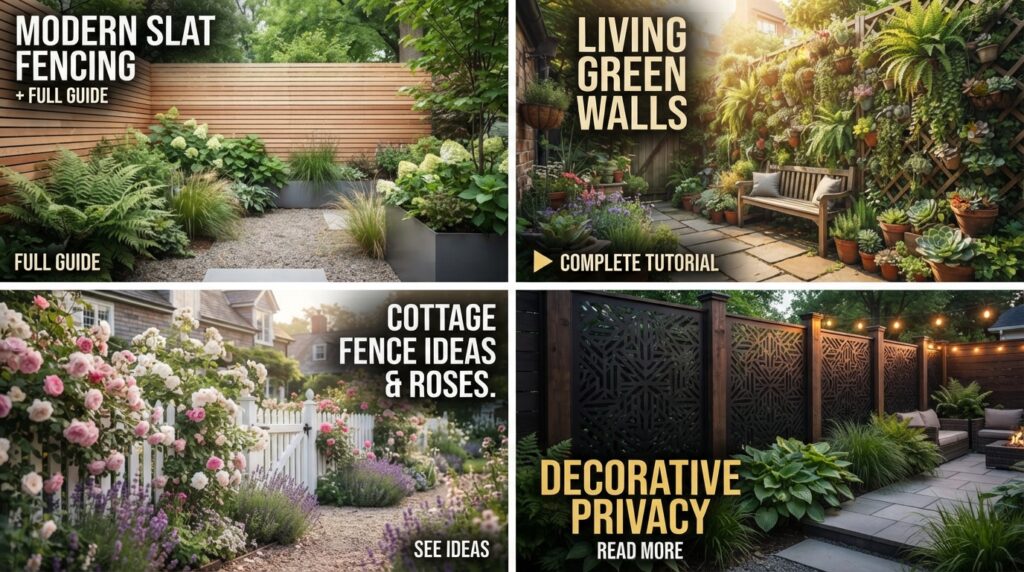
Modern gardens often look best with clean, simple fence designs.
Try:
- Horizontal timber slats
- Dark-colored panels
- Minimalist metal fencing
- Smooth rendered walls
- Composite fence panels
Keep the lines simple and repeat materials used elsewhere in the garden.
3. Garden Privacy Fence
A privacy fence can make a backyard feel more secluded.
Use:
- Tall timber panels
- Slatted screens
- Composite fencing
- Masonry walls
- Dense hedges
Check local regulations regarding fence height and property boundaries before installation.
4. Rustic Garden Fence
Rustic fencing works beautifully in informal landscapes.
Consider:
- Rough timber
- Split-rail fencing
- Natural branches
- Weathered boards
- Rustic posts
Pair the fence with wildflowers, grasses, stone pathways, and informal planting.
5. Cottage Garden Fence
A traditional picket fence can instantly create cottage-garden character.
Painted or natural timber fencing can be surrounded by:
- Roses
- Lavender
- Foxgloves
- Daisies
- Climbing plants
Keep the planting relaxed and abundant.
6. Garden Fence With Climbing Plants
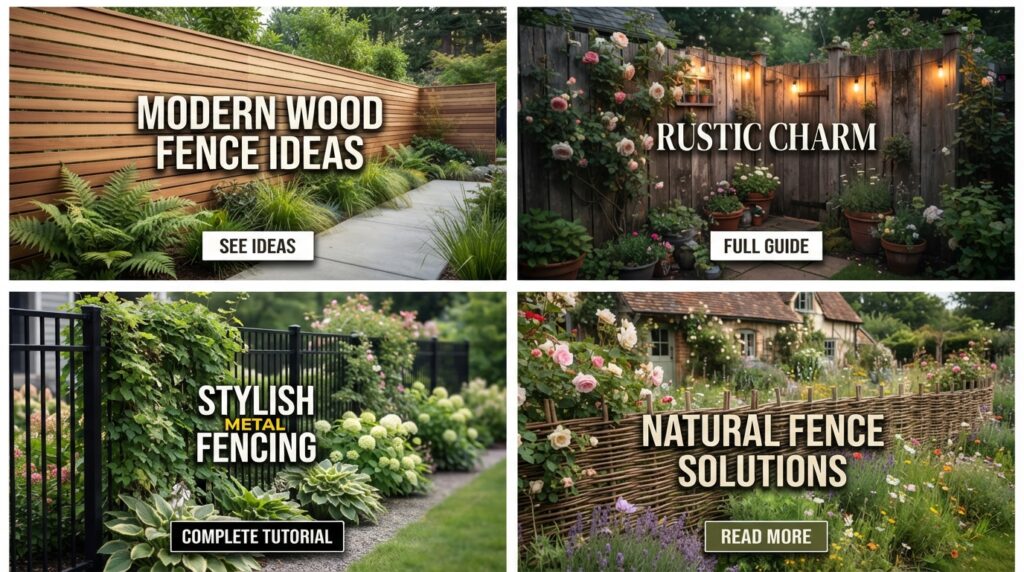
A fence can become a living wall when paired with climbing plants.
Consider suitable:
- Clematis
- Roses
- Jasmine
- Honeysuckle
- Vines
- Climbing hydrangea
Choose plants according to your climate, sunlight, soil, and the fence’s ability to support their mature weight.
7. Garden Trellis Fence
A trellis fence combines boundary definition with decorative planting.
Use it for:
- Climbing flowers
- Privacy
- Vegetable gardens
- Courtyards
- Patio boundaries
Trellis panels can also help make a small garden feel more open than a solid wall.
8. Horizontal Slat Garden Fence
Horizontal slats provide a contemporary appearance.
Use timber, composite, or suitable metal materials.
The gaps between slats can be adjusted to provide different levels of:
- Privacy
- Airflow
- Light
- Visual openness
9. Vertical Slat Fence
Vertical fencing creates a strong sense of height.
It works particularly well in:
- Modern gardens
- Narrow yards
- Courtyards
- Patio areas
Use consistent spacing for a clean architectural effect.
10. Garden Fence With Metal
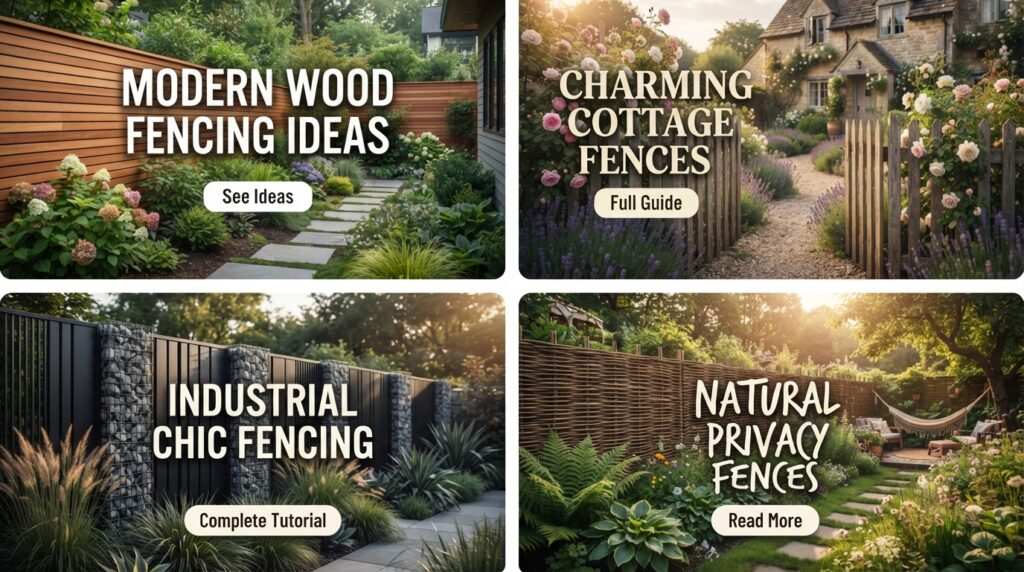
Metal fencing can create a modern, elegant, or traditional look.
Options include:
- Steel panels
- Wrought-iron-style fencing
- Aluminum fencing
- Decorative metal screens
Choose appropriately treated outdoor materials to reduce corrosion and maintenance.
11. Decorative Garden Fence
Decorative fencing can be used to enhance planting beds without creating a full privacy barrier.
Try:
- Ornamental metal panels
- Small picket fencing
- Decorative arches
- Laser-cut screens
- Decorative timber panels
Use decorative fencing as an accent rather than allowing it to dominate the landscape.
12. Garden Fence With Stone
Stone walls provide a durable and timeless boundary.
Combine stone with:
- Timber gates
- Metal fencing
- Climbing plants
- Gravel
- Flower beds
Natural stone can blend beautifully with informal landscapes, while cut stone can create a more formal appearance.
13. Garden Fence With Brick
Brick fencing works especially well with traditional and cottage-style properties.
Use brick for:
- Low boundary walls
- Pillars
- Raised garden beds
- Courtyard walls
Add timber or metal sections for variation.
14. Garden Fence With Bamboo
Bamboo screening can create a natural-looking privacy barrier.
It can be used:
- Along patios
- Around seating areas
- Against existing fences
- Around garden rooms
Choose durable outdoor bamboo products and secure them properly.
15. Living Garden Fence
A hedge can provide a natural alternative to hard fencing.
Suitable plants depend on your climate and desired height.
A living boundary can offer:
- Privacy
- Wildlife habitat
- Greenery
- Seasonal interest
- Noise reduction
Hedges require regular pruning and care.
16. Garden Fence for a Small Yard
Small gardens benefit from fencing that doesn’t make the space feel enclosed.
Try:
- Open slatted fences
- Light-colored fencing
- Trellis panels
- Low borders
- Green living screens
Vertical planting can add privacy without consuming much ground space.
17. Garden Fence for a Front Yard
Front-yard fencing should balance privacy with an inviting entrance.
Consider:
- Low picket fences
- Decorative metal fencing
- Short timber panels
- Low masonry walls
- Hedges
Use a gate that coordinates with the fence and home’s architecture.
18. Vegetable Garden Fence
Fencing is particularly useful around vegetable gardens.
It can help protect crops from:
- Pets
- Some garden pests
- Accidental foot traffic
Use mesh, wire, timber, or other suitable materials depending on the animals and pests you’re trying to exclude.
19. Garden Fence for Pets
A pet-friendly fence should be designed around the animal’s size, behavior, and ability to dig or climb.
Check for:
- Gaps
- Sharp edges
- Loose boards
- Climbable sections
- Digging opportunities
Choose appropriate fence heights and secure gates.
20. Garden Fence for Privacy and Shade
A solid fence can provide privacy and reduce some direct sunlight, but it can also affect airflow and plant growth.
Place shade-sensitive plants away from areas where the fence significantly reduces available light.
21. Garden Fence With a Gate
A garden gate can become a focal point.
Styles include:
- Wooden gates
- Metal gates
- Arched gates
- Picket gates
- Modern slatted gates
Frame the entrance with plants or lighting for additional impact.
22. Garden Fence With Planters
Attach or place planters near fencing to create a layered landscape.
Try:
- Hanging planters
- Wall-mounted pots
- Raised planters
- Window boxes
- Vertical gardens
Make sure the fence is strong enough to support any added weight.
23. Garden Fence With Lighting
Lighting can highlight a fence after dark.
Use:
- Wall-mounted lights
- Downlights
- Ground lights
- Solar fixtures
- Pathway lights
Keep lighting subtle and avoid creating glare for neighbors.
24. DIY Garden Fence Ideas
Simple fencing projects can be suitable for DIY installation when local rules and site conditions allow.
Ideas include:
- Simple timber panels
- Picket fences
- Small trellis sections
- Decorative edging
- Reclaimed-material accents
For structural boundaries, gates, retaining walls, or complex installations, professional construction may be preferable.
25. Cheap Garden Fence Ideas
A limited budget doesn’t mean you need to sacrifice style.
Consider:
- Simple timber panels
- Wire mesh
- Trellis
- Locally sourced materials
- Existing fence improvements
- Hedge planting
Use a combination of solid and open sections to reduce material costs while maintaining visual interest.
26. Reclaimed Wood Garden Fence
Reclaimed timber can create a rustic appearance.
Use suitable reclaimed wood for:
- Fence panels
- Gates
- Decorative screens
- Small garden boundaries
Inspect old timber carefully and avoid materials with unknown hazardous treatments.
27. Garden Fence for a Sloping Yard
Sloping gardens require careful fence planning.
Options include:
- Stepped fencing
- Raked fencing
- Retaining-wall combinations
- Living hedges
- Terraced boundaries
Choose the approach based on the slope, drainage, property boundaries, and desired appearance.
28. Garden Fence With a Pergola
A fence and pergola can work together to create an outdoor room.
Add:
- Climbing plants
- Seating
- Outdoor lighting
- Containers
- Decorative screens
This works particularly well for patios and entertaining areas.
29. Japanese-Inspired Garden Fence
Japanese-inspired fencing often uses natural materials and simple lines.
Consider:
- Timber screens
- Bamboo
- Natural stone
- Simple gates
- Vertical slats
Pair the fence with gravel, rocks, evergreen plants, and carefully placed trees.
30. Garden Fence as a Feature Wall
Instead of treating fencing as a background element, make it the centerpiece.
Use:
- Bold timber patterns
- Decorative metal screens
- Vertical planting
- Contrasting paint
- Built-in planters
Keep the surrounding planting relatively simple so the feature wall remains visible.
How to Choose the Right Garden Fence
Consider Your Main Goal
Decide whether you need:
- Privacy
- Security
- Pet containment
- Decorative appeal
- Wind protection
- Plant support
- Boundary definition
Match Your Home
The fence should complement the architectural style of your property.
Consider Maintenance
Some materials require regular painting, staining, cleaning, or treatment.
Think About Sunlight
A tall solid fence can cast substantial shade. Consider this before planting near it.
Check Local Rules
Fence heights, property boundaries, permits, and materials may be regulated locally.
Garden Fence Color Ideas
The right color can influence the entire landscape.
Popular options include:
- Natural wood
- White
- Black
- Charcoal
- Gray
- Green
- Brown
Dark fencing can make green foliage stand out, while lighter fencing can create a softer traditional appearance.
Garden Fence Maintenance
Maintenance depends on the material.
Wood
Inspect for rot, moisture damage, loose boards, and finish deterioration.
Metal
Check for corrosion, damaged coatings, and loose fixings.
Hedges
Prune regularly and monitor for pests and disease.
Bamboo
Check for weathering, splitting, and loose sections.
Regular maintenance helps fencing remain attractive and functional for longer.
Common Garden Fencing Mistakes
Choosing the Wrong Height
A fence should meet your privacy and boundary needs without overwhelming the garden.
Blocking Too Much Light
Tall solid fencing can create excessive shade.
Ignoring Drainage
Water should not become trapped around fence posts or structures.
Using Incompatible Materials
A fence should complement the house and landscape.
Forgetting the Gate
The gate is an important part of the overall design and should match the fence.
Overcrowding With Decorations
Too many accessories can make a fence look cluttered.
Frequently Asked Questions
What is the best fencing for a garden?
The best fence depends on your goals, budget, climate, maintenance preferences, and garden style. Timber, metal, composite, masonry, and living hedges can all be effective options.
What is the best fence for privacy?
Tall solid panels, closely spaced slats, masonry walls, and dense hedges can provide privacy, subject to local height and boundary regulations.
How can I make a garden fence look attractive?
Add climbing plants, planters, lighting, decorative panels, or a coordinated gate. Repeating materials from the rest of the landscape can also create a cohesive look.
What is the cheapest garden fencing?
Simple wire mesh, basic timber, trellis, and locally available materials can be budget-friendly choices depending on installation requirements.
Can I install a garden fence myself?
Simple fencing may be suitable for DIY installation, but complicated boundaries, gates, retaining structures, uneven ground, and large installations may require professional help.
Conclusion
Garden fencing can do much more than mark a boundary. The right design can provide privacy, protect plants, support climbing greenery, frame a beautiful landscape, and give your garden a finished appearance.
Whether you prefer modern slatted timber, rustic fencing, cottage pickets, decorative metal, natural hedges, bamboo screens, or budget-friendly DIY designs, choose a fence that works with your home’s architecture and the practical needs of your garden.
Start by identifying your main purpose, then consider height, materials, maintenance, sunlight, drainage, and local regulations. With thoughtful planning, your garden fence can become an attractive architectural feature rather than simply a boundary.