
 By John
Desert Garden Design, Drought-Tolerant Plants, Xeriscaping Ideas, Succulent Landscaping, and Low Maintenance Outdoor Spaces
A desert garden is a stunning and sustainable landscaping choice that celebrates the beauty of arid environments while minimizing water use and maintenance. With dramatic succulents, sculptural cacti, decorative rocks, gravel pathways, and drought-tolerant plants, desert gardens offer year-round interest and unique visual appeal.
Modern desert landscaping has become increasingly popular because it combines environmental responsibility with striking design. Whether you live in a dry climate or simply want a low-maintenance outdoor space, a desert garden can transform your yard into a beautiful oasis filled with texture, color, and architectural beauty.
This complete guide explores desert garden ideas, plant selections, design principles, landscaping materials, and maintenance tips to help you create an impressive desert-inspired landscape.
What Is a Desert Garden?
A desert garden is a landscape designed around plants and materials that thrive in dry conditions.
Common features include:
- Cacti
- Succulents
- Gravel
- Decorative stones
- Drought-tolerant shrubs
- Native plants
- Minimal lawn areas
- Water-efficient irrigation
The goal is to create a visually appealing garden that requires less water and maintenance than traditional landscapes.
Benefits of a Desert Garden
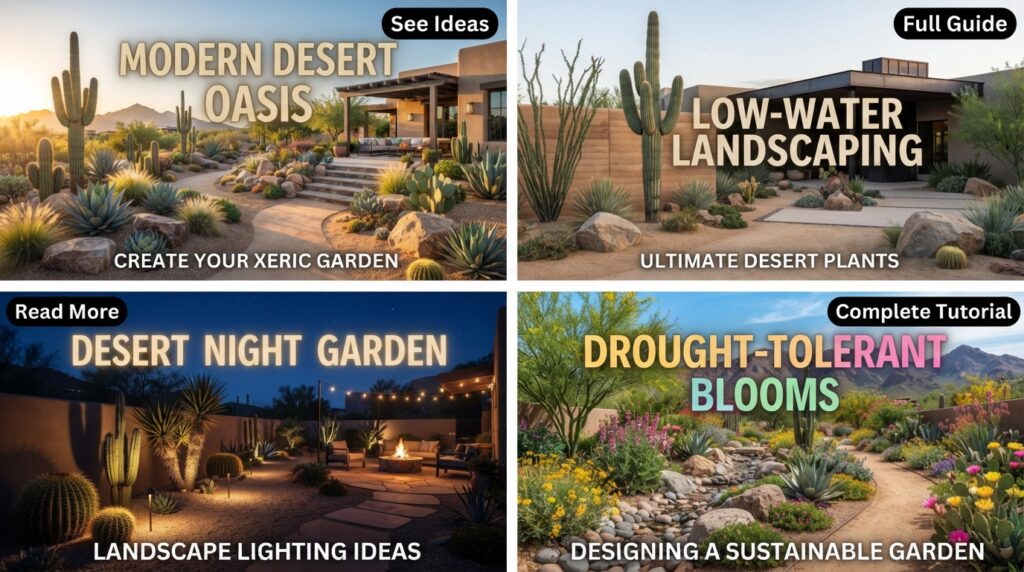
Desert gardens provide numerous advantages.
Water Conservation
One of the most significant benefits is reduced water consumption.
Low Maintenance
Most desert plants require minimal care once established.
Unique Appearance
Desert landscapes feature striking shapes and textures.
Year-Round Beauty
Many desert plants remain attractive throughout the seasons.
Environmental Sustainability
Desert gardens support responsible landscaping practices.
Principles of Desert Garden Design
Successful desert landscapes follow several key principles.
Simplicity
Avoid overcrowding the garden.
Texture
Use plants and materials with contrasting forms.
Balance
Distribute visual weight evenly throughout the landscape.
Repetition
Repeat plant varieties and materials for cohesion.
Functionality
Design pathways and seating areas for practical use.
Best Plants for a Desert Garden
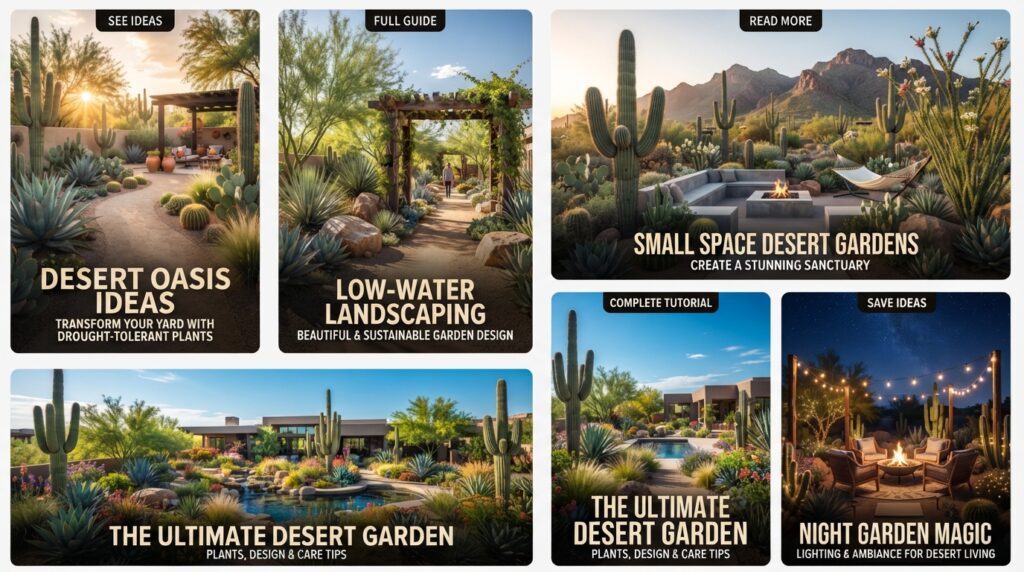
Plant selection is essential for long-term success.
Agave
Agave provides dramatic architectural form.
Benefits include:
- Drought tolerance
- Sculptural appearance
- Minimal maintenance
Aloe
Known for attractive foliage and colorful flowers.
Yucca
Adds height and strong vertical structure.
Prickly Pear Cactus
One of the most recognizable desert plants.
Features:
- Distinctive pads
- Colorful flowers
- Drought resistance
Barrel Cactus
Provides unique texture and visual interest.
Desert Spoon
A striking plant with dramatic foliage.
Red Yucca
Produces colorful flower spikes that attract pollinators.
Succulent Garden Ideas
Succulents are a cornerstone of desert landscaping.
Popular choices include:
- Echeveria
- Sedum
- Aeonium
- Haworthia
- Crassula
Group succulents together to create attractive displays.
Use Decorative Gravel
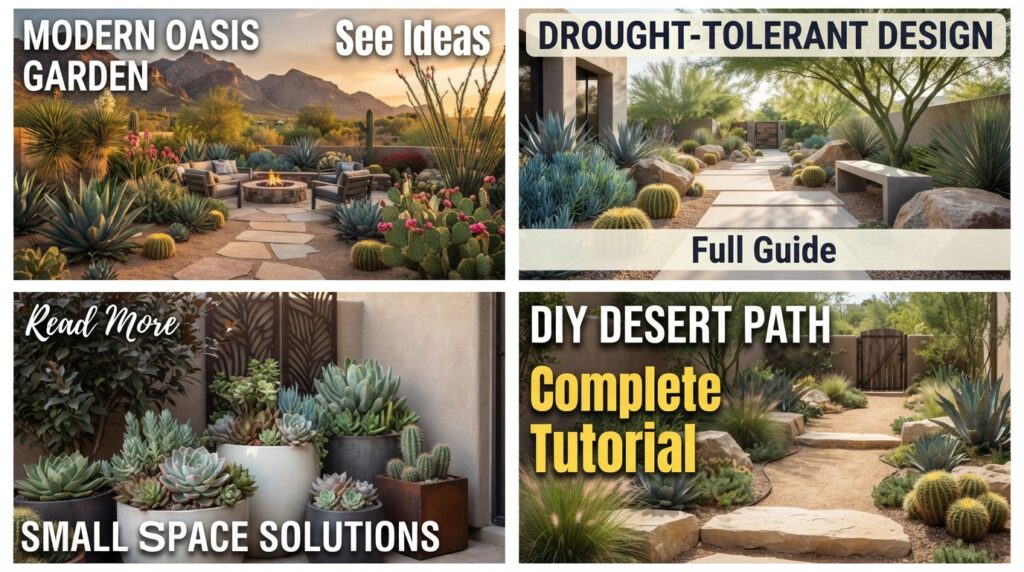
Gravel is one of the most important materials in a desert garden.
Benefits include:
- Weed suppression
- Improved drainage
- Water conservation
- Attractive appearance
Popular colors include tan, gray, red, and white.
Incorporate Natural Stone
Natural stone adds structure and authenticity.
Ideas include:
- Boulder groupings
- Stone pathways
- Rock borders
- Retaining walls
Large rocks help create a natural desert aesthetic.
Create a Dry River Bed
Dry creek beds mimic natural desert landscapes.
Benefits include:
- Improved drainage
- Visual movement
- Low maintenance
Use river rocks and boulders for a realistic appearance.
Desert Garden Pathway Ideas
Pathways improve accessibility and design flow.
Popular materials include:
- Gravel
- Flagstone
- Decomposed granite
- Stepping stones
Curved pathways create a more natural appearance.
Modern Desert Garden Design
Modern desert landscapes combine simplicity and elegance.
Features include:
- Clean lines
- Geometric layouts
- Minimalist planting
- Decorative gravel
- Architectural plants
The result is sophisticated and contemporary.
Desert Courtyard Gardens
Courtyards are ideal for desert-inspired design.
Include:
- Decorative pots
- Sculptural plants
- Comfortable seating
- Water features
Courtyards create intimate outdoor retreats.
Desert Garden Around a Pool
Desert plants work beautifully around swimming pools.
Suitable choices include:
- Agave
- Aloe
- Ornamental grasses
- Yucca
Avoid plants with excessive litter near pool areas.
Add Outdoor Seating Areas
Comfortable seating encourages enjoyment of the landscape.
Ideas include:
- Stone benches
- Modern lounge furniture
- Fire pit seating
- Pergola-covered patios
Outdoor living spaces enhance functionality.
Desert Garden Lighting Ideas
Lighting highlights textures and shapes after dark.
Popular options include:
- Spotlights
- Path lights
- Uplighting
- Solar lighting
Architectural plants look particularly dramatic at night.
Water Features in Desert Gardens
Small water features create contrast and tranquility.
Ideas include:
- Bubbling fountains
- Reflecting bowls
- Modern water walls
Use water features sparingly to maintain the desert aesthetic.
Wildlife-Friendly Desert Gardens
Many desert plants attract beneficial wildlife.
To encourage biodiversity:
- Plant flowering species
- Provide water sources
- Include sheltering plants
Birds and pollinators add life to the garden.
Desert Garden for Small Spaces
Even compact yards can benefit from desert landscaping.
Ideas include:
- Container succulents
- Gravel courtyards
- Vertical succulent gardens
- Small rock gardens
Simple designs often work best in limited spaces.
Sustainable Xeriscaping Principles
Xeriscaping is a landscaping approach focused on water conservation.
Key practices include:
- Efficient irrigation
- Drought-tolerant plants
- Mulching
- Soil improvement
- Reduced lawn areas
Desert gardens are a perfect example of xeriscaping.
Seasonal Interest in Desert Gardens
Desert landscapes can remain attractive throughout the year.
Spring
- Flowering cacti
- Blooming succulents
Summer
- Strong architectural foliage
- Vibrant desert flowers
Autumn
- Ornamental grasses
- Warm landscape tones
Winter
- Evergreen succulents
- Sculptural silhouettes
Careful plant selection ensures year-round beauty.
Common Desert Garden Design Mistakes
Avoid these common issues:
- Overwatering plants
- Using too many plant varieties
- Poor drainage
- Ignoring mature plant size
- Overcrowding the landscape
Simplicity often creates the strongest visual impact.
Maintenance Tips
Desert gardens require relatively little maintenance.
Water Properly
Deep, infrequent watering is generally best.
Remove Weeds
Prevent weeds from competing with desirable plants.
Inspect Irrigation Systems
Ensure efficient water use.
Prune Occasionally
Remove damaged growth as needed.
Routine care helps maintain the garden’s appearance.
Frequently Asked Questions
What is a desert garden?
A desert garden is a landscape featuring drought-tolerant plants, decorative gravel, stones, and water-efficient design principles.
What plants grow best in a desert garden?
Agave, aloe, yucca, cacti, succulents, desert spoon, and red yucca are popular choices.
Are desert gardens low maintenance?
Yes. Once established, most desert plants require minimal watering and upkeep.
Do desert gardens need irrigation?
Some irrigation is helpful during establishment, but mature plants typically require less water than traditional gardens.
Can a desert garden work in a small yard?
Absolutely. Small desert gardens can be highly attractive and easy to maintain.
Conclusion
A desert garden combines beauty, sustainability, and practicality in a way that few other landscape styles can match. With sculptural plants, decorative stone, gravel pathways, and drought-tolerant planting, desert gardens create visually stunning outdoor spaces while conserving water and reducing maintenance.
Whether you prefer a modern xeriscape, a cactus-filled retreat, or a Mediterranean-inspired courtyard, desert landscaping offers endless opportunities for creativity. By selecting the right plants and materials, you can create a resilient and beautiful garden that thrives year-round and brings lasting enjoyment to your outdoor space.