
 By John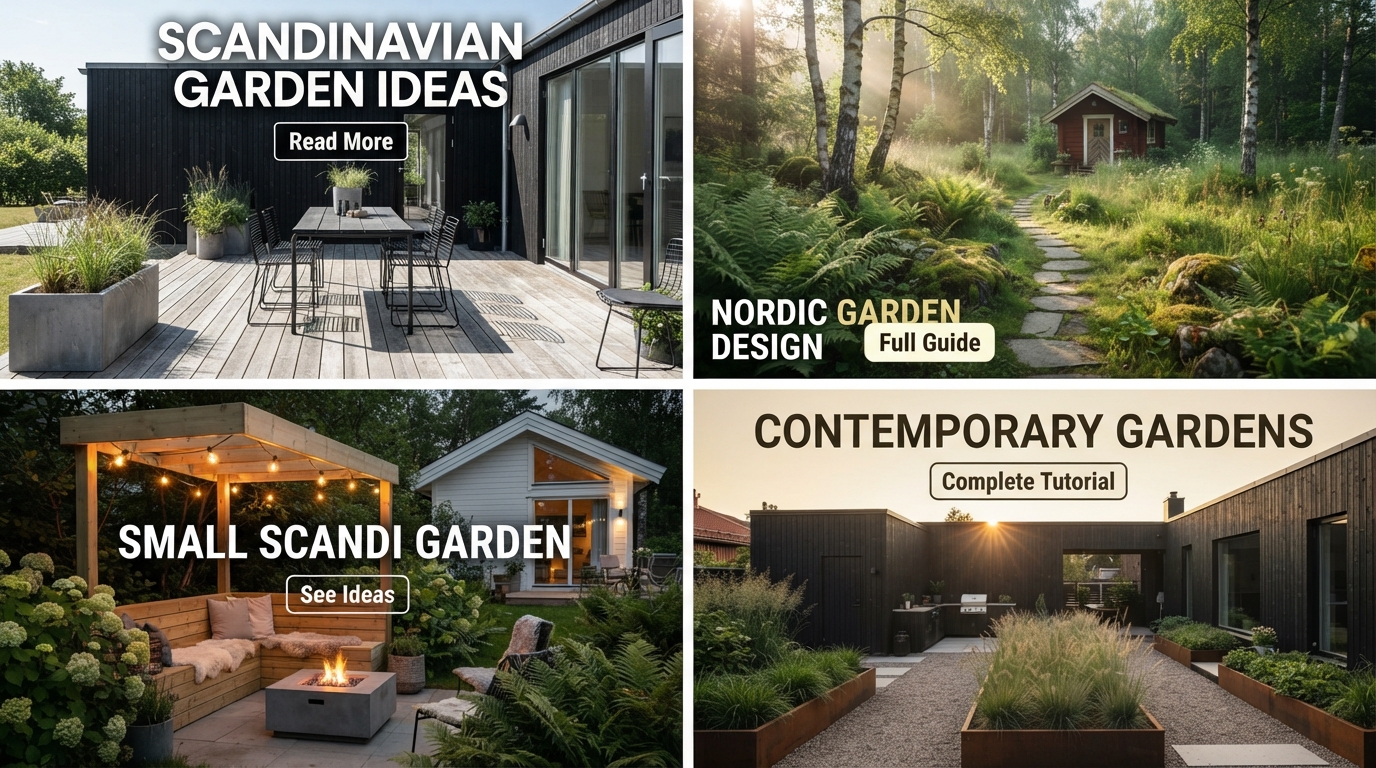
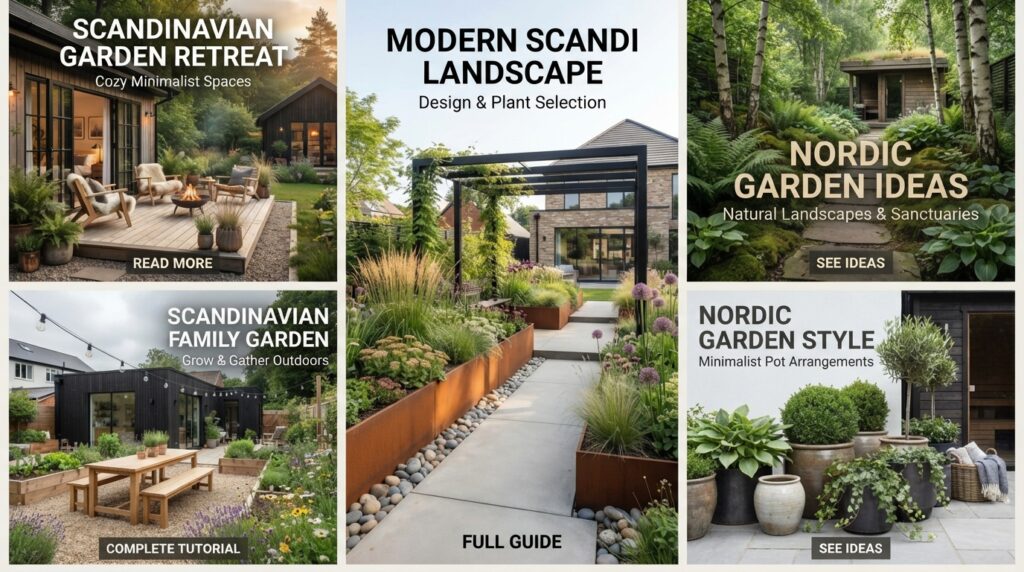
A Scandinavian garden combines simplicity, natural materials, functional design, and relaxed planting to create a peaceful outdoor space. Inspired by Nordic landscapes and modern Scandinavian interiors, this garden style often uses clean lines, neutral colors, timber, stone, grasses, and carefully selected greenery.
Whether you have a small courtyard, urban backyard, patio, or spacious landscape, Scandinavian garden design can create an outdoor environment that feels calm, practical, and inviting.
What Is a Scandinavian Garden?
A Scandinavian garden is a Nordic-inspired landscape that emphasizes simplicity, functionality, natural textures, and connection with nature.
Typical elements include:
- Natural wood
- Stone
- Gravel
- Simple paving
- Ornamental grasses
- Evergreen plants
- Native or climate-appropriate flowers
- Minimalist furniture
- Fire features
- Outdoor lighting
- Simple containers
The design usually avoids excessive decoration and focuses on creating a balanced, comfortable outdoor environment.
Benefits of a Scandinavian Garden
Simple and Elegant
Clean lines and restrained planting create a timeless appearance.
Natural Appearance
Wood, stone, plants, and gravel help connect the garden with nature.
Functional
Every feature can serve a practical purpose.
Cozy
Comfortable seating, warm lighting, and fire features can create a welcoming atmosphere.
Works in Small Spaces
Minimalist design principles are particularly useful for compact gardens.
Easy to Personalize
You can combine Scandinavian elements with modern, cottage, coastal, or naturalistic planting.
1. Minimalist Scandinavian Garden
Keep the landscape simple with a small number of plants and materials.
Use clean paving, gravel, timber, and green foliage to create an uncluttered composition.
2. Modern Scandinavian Garden
Combine contemporary architecture with Nordic-inspired planting.
Consider:
- Geometric paving
- Timber screens
- Black outdoor furniture
- Concrete planters
- Ornamental grasses
- Evergreen shrubs
3. Small Scandinavian Garden
Use multifunctional furniture and vertical planting to maximize space.
Choose a limited palette of materials and repeat the same plants throughout the garden.
4. Scandinavian Courtyard Garden
Create a cozy courtyard with timber furniture, gravel, potted plants, and simple lighting.
A vertical wooden screen can add privacy without making the space feel closed.
5. Scandinavian Patio Garden
Combine neutral paving with simple planters and comfortable outdoor seating.
Use soft textiles to introduce warmth.
6. Scandinavian Balcony Garden
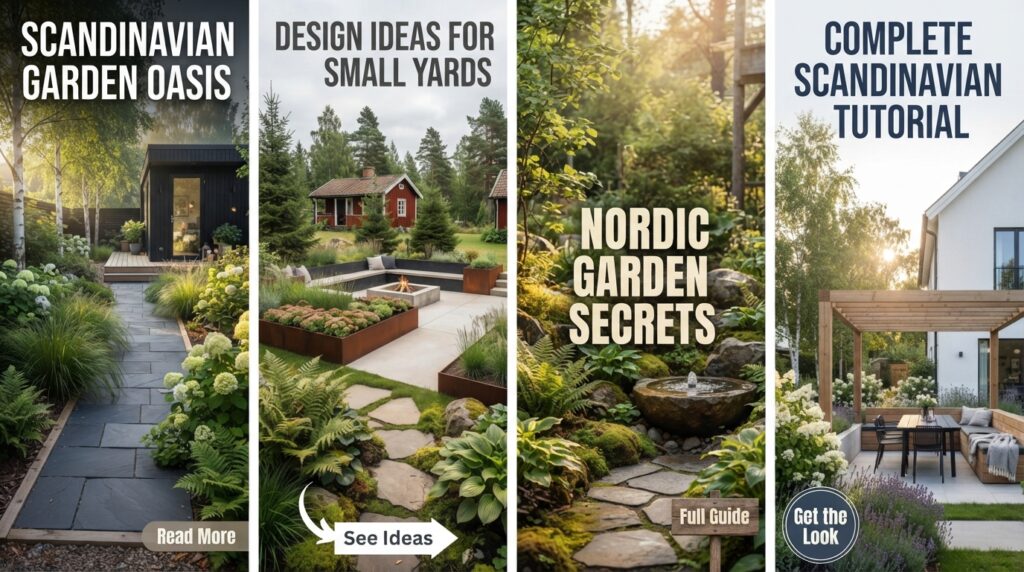
Use lightweight containers, compact plants, herbs, grasses, and small evergreen species suited to your climate.
Keep furniture minimal and practical.
7. Scandinavian Backyard Garden
Divide the backyard into functional areas for:
- Dining
- Relaxing
- Gardening
- Entertaining
- Fire features
Connect the zones with simple pathways.
8. Scandinavian Garden With Gravel
Gravel provides a natural, low-visual-weight surface.
Use larger stones as accents and create defined planting areas around the edges.
9. Scandinavian Garden With Stone
Natural stone can provide texture and structure.
Use it for pathways, edging, retaining walls, seating, or decorative features.
10. Scandinavian Garden With Wood
Timber is one of the most useful materials for creating Nordic character.
Use it for:
- Decking
- Fences
- Planters
- Benches
- Pergolas
- Privacy screens
Choose exterior-grade materials appropriate for your climate.
11. Scandinavian Garden With Ornamental Grasses
Grasses add movement and soft texture.
Combine them with stone, timber, and evergreen plants for a natural Nordic appearance.
12. Scandinavian Garden With Evergreen Plants
Evergreens provide year-round structure.
Use them to create simple borders or privacy screens.
13. Scandinavian Garden With Wildflowers
Naturalistic flower planting can soften a minimalist landscape.
Choose locally suitable wildflowers and allow them to create seasonal color.
14. Scandinavian Garden With Native Plants
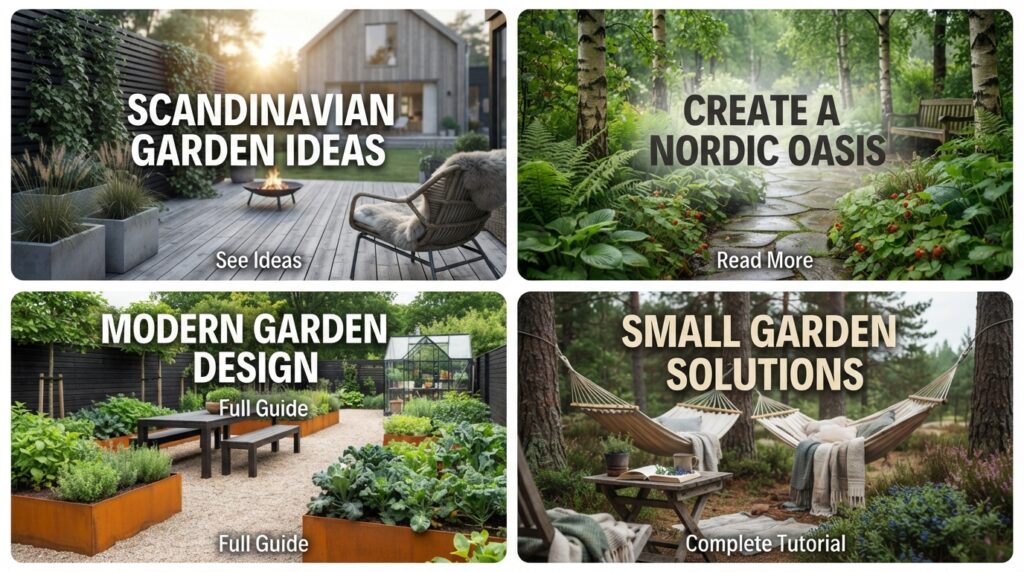
Using locally adapted plants can reduce maintenance and support local biodiversity.
Choose species suited to your soil, climate, and available sunlight.
15. Scandinavian Garden With Birch Trees
Birch can create a light, airy woodland-inspired appearance in suitable climates.
Use trees according to mature size and available space.
16. Scandinavian Garden With Pine Trees
Pines can provide evergreen structure and a connection to Nordic woodland landscapes.
Select varieties appropriate for the available garden space.
17. Scandinavian Garden With Small Trees
A compact tree can become a strong focal point.
Choose a species with a mature size appropriate for the garden.
18. Scandinavian Garden With Fire Pit
A fire pit can create a cozy gathering area.
Position it on a suitable non-combustible surface and follow local fire-safety requirements.
19. Scandinavian Garden With Outdoor Fireplace
An outdoor fireplace can become the centerpiece of a larger garden.
Combine it with comfortable seating and warm lighting.
20. Scandinavian Garden With Sauna
Where appropriate, a small outdoor sauna can create a distinctive Nordic-inspired garden retreat.
Surround it with timber, gravel, evergreen planting, and a simple pathway.
21. Scandinavian Garden With Wooden Deck
A timber deck can create a warm outdoor living area.
Keep furniture simple and use plants to soften the edges.
22. Scandinavian Garden With Outdoor Dining
Use a simple timber or modern table with comfortable chairs.
Keep the surrounding planting restrained so the dining area remains functional.
23. Scandinavian Garden With Lounge Area
Create a comfortable outdoor room with minimalist seating, cushions, blankets, and a low table.
Use weather-resistant materials suitable for outdoor conditions.
24. Scandinavian Garden With Privacy Screen
Use vertical timber slats, evergreen hedges, or simple fencing.
Leave some visual gaps where possible to preserve a sense of openness.
25. Scandinavian Garden With Pergola
A simple timber pergola can define an outdoor seating area.
Use climbing plants sparingly to maintain the minimalist appearance.
26. Scandinavian Garden With Raised Beds
Raised beds can provide organized spaces for vegetables, herbs, and flowers.
Use timber or stone that complements the rest of the landscape.
27. Scandinavian Kitchen Garden
Create a practical vegetable and herb garden using clean rectangular beds.
Combine edible plants with flowers to make the area attractive as well as productive.
28. Scandinavian Herb Garden
Grow useful herbs in simple containers or raised beds.
Potential choices include:
- Thyme
- Sage
- Chives
- Parsley
- Rosemary where climate permits
- Mint in containers
29. Scandinavian Vegetable Garden
Use simple raised beds and gravel pathways.
Select vegetables according to the local growing season and climate.
30. Scandinavian Garden With Water Feature
A simple pond, basin, or minimalist fountain can add movement.
Avoid overly ornate water features.
31. Scandinavian Garden With Pond
Use natural stone, grasses, and restrained planting around a small pond.
Plan carefully for maintenance, drainage, wildlife, and safety.
32. Scandinavian Garden With Rock Features
Use large natural stones as sculptural elements.
Group stones thoughtfully rather than scattering them randomly.
33. Scandinavian Rock Garden
Create a minimalist rock garden using gravel, boulders, grasses, and drought-tolerant plants where suitable.
34. Scandinavian Garden With Concrete
Concrete can create a modern Nordic appearance.
Use it for paving, planters, retaining walls, or seating while balancing its hardness with greenery and timber.
35. Scandinavian Garden With Black Accents
Black furniture, fencing, containers, or architectural details can provide contrast against green plants and pale wood.
36. Scandinavian Garden With White Accents
White can create a bright, clean appearance.
Use it through furniture, gravel, flowers, or painted architectural elements.
37. Scandinavian Garden With Warm Lighting
Lighting is important for creating a cozy atmosphere.
Use:
- Lanterns
- Wall lights
- Pathway lighting
- String lights
- Low-level garden lights
Choose outdoor-rated fixtures and avoid excessive glare.
38. Scandinavian Garden With Outdoor Rugs
An outdoor rug can visually define a seating area.
Choose weather-resistant materials and ensure the rug does not create a slipping or drainage problem.
39. Scandinavian Garden With Cozy Textiles
Add cushions, blankets, and outdoor fabrics to make seating more comfortable.
Store textiles appropriately when weather conditions are unsuitable.
40. Scandinavian Garden With Sustainable Design
Use durable materials, locally suitable plants, efficient irrigation, composting, rainwater management, and long-lasting furniture where practical.
Design for longevity rather than constantly replacing decorative items.
Best Plants for a Scandinavian Garden
Plant choices should match your local climate rather than simply copying plants from northern Europe.
Potential choices include:
Trees
- Birch
- Pine
- Maple
- Serviceberry
- Other locally adapted small trees
Shrubs
- Juniper
- Hydrangea
- Viburnum
- Dogwood
- Evergreen shrubs suited to the region
Grasses
- Feather reed grass
- Blue fescue
- Japanese forest grass where suitable
- Other locally adapted ornamental grasses
Flowers
- Lavender where climate permits
- Coneflowers
- Yarrow
- Salvia
- Daisies
- Locally native flowering plants
Scandinavian Garden Color Palette
Green and White
Clean and timeless.
Gray and Green
Modern and understated.
Black and Green
Bold and sophisticated.
Natural Wood and Green
Warm and organic.
Soft Blue and Gray
Calm and relaxing.
Earth Tones
Natural and cozy.
How to Create a Scandinavian Garden
Step 1: Simplify the Layout
Remove unnecessary features and establish clear zones.
Step 2: Choose a Neutral Palette
Use natural wood, gray stone, green plants, and restrained accent colors.
Step 3: Select Climate-Appropriate Plants
Choose plants that naturally suit your local growing conditions.
Step 4: Add Natural Materials
Use timber, stone, gravel, and other durable outdoor materials.
Step 5: Create Functional Zones
Design dedicated areas for dining, seating, gardening, and relaxation.
Step 6: Add Texture
Combine grasses, shrubs, trees, gravel, wood, and stone.
Step 7: Introduce Privacy
Use screens, hedges, or vertical planting where necessary.
Step 8: Add Cozy Details
Use outdoor lighting, cushions, blankets, and comfortable seating to make the garden inviting.
Common Scandinavian Garden Mistakes
Using Too Many Decorations
The Scandinavian style works best when the design remains restrained.
Choosing Plants Only for Appearance
Always consider climate, soil, sunlight, and mature size.
Overusing Hardscape
Balance concrete and paving with enough planting.
Creating Excessive Symmetry
A naturalistic planting arrangement can feel more relaxed.
Ignoring Maintenance
Even minimalist gardens require pruning, cleaning, watering, and seasonal care.
Using Unsuitable Outdoor Materials
Choose materials designed to withstand your local weather.
Frequently Asked Questions
What makes a garden Scandinavian?
Natural materials, simple forms, restrained planting, functional furniture, neutral colors, greenery, timber, stone, and cozy outdoor details are common features.
What colors work best in a Scandinavian garden?
Green, gray, white, black, natural wood, beige, and muted seasonal colors work particularly well.
Can I create a Scandinavian garden in a warm climate?
Yes. Focus on Scandinavian design principles rather than copying the exact plants. Use locally adapted trees, shrubs, grasses, and flowers while maintaining a simple Nordic-inspired palette.
Is a Scandinavian garden low maintenance?
It can be relatively low maintenance when designed with durable materials and climate-appropriate plants, but regular garden care is still necessary.
Can a small garden have Scandinavian style?
Absolutely. Minimalist layouts, multifunctional furniture, vertical planting, and a limited material palette work especially well in small gardens.
Conclusion
A Scandinavian garden combines natural materials, simple landscaping, functional spaces, and cozy details to create a peaceful outdoor environment. Timber, stone, gravel, grasses, evergreen plants, warm lighting, and comfortable seating can work together to create a distinctly Nordic-inspired atmosphere.
The most important principle is simplicity. Choose fewer, better-quality elements, select plants suited to your climate, and leave enough open space for the garden to feel calm and functional.