
 By John
A flower garden painting can bring the beauty of a blooming landscape indoors through color, texture, and artistic expression. Whether you enjoy watercolor, acrylic, oil painting, gouache, or digital art, a flower garden provides endless inspiration for creating colorful and peaceful artwork.
From simple beginner paintings to detailed realistic landscapes, flower garden artwork can feature roses, wildflowers, cottage gardens, pathways, trees, fountains, butterflies, and charming garden corners.
What Is a Flower Garden Painting?
A flower garden painting is artwork that depicts a garden filled with flowering plants and natural landscape elements.
Popular subjects include:
- Cottage gardens
- Rose gardens
- Wildflower meadows
- English gardens
- Botanical gardens
- Colorful flower borders
- Garden pathways
- Flower-covered arches
- Garden ponds
- Secret gardens
The scene can be realistic, impressionistic, abstract, whimsical, or highly stylized.
1. Simple Flower Garden Painting

Beginners can start with a simple landscape.
Paint:
- Blue sky
- Green grass
- A few flower beds
- Simple trees
- A garden path
Focus on basic shapes before adding details.
2. Colorful Flower Garden Painting
Create a vibrant scene using multiple flower colors.
Combine:
- Pink
- Yellow
- Purple
- Orange
- Red
- White
Balance bright colors with plenty of green foliage.
3. Cottage Garden Painting
A cottage garden makes an excellent painting subject.
Include:
- Roses
- Lavender
- Delicate perennials
- Rustic fencing
- A winding path
- An old garden gate
Use loose brushwork for a relaxed, romantic appearance.
4. Rose Garden Painting
Create a romantic composition centered around roses.
Paint roses in different stages of bloom and surround them with rich green foliage.
Add a stone pathway or garden bench for additional depth.
5. English Garden Painting
An English-inspired garden can feature layered flower borders, clipped shrubs, pathways, and traditional garden structures.
Use soft colors and detailed foliage to create a classic landscape.
6. Wildflower Garden Painting
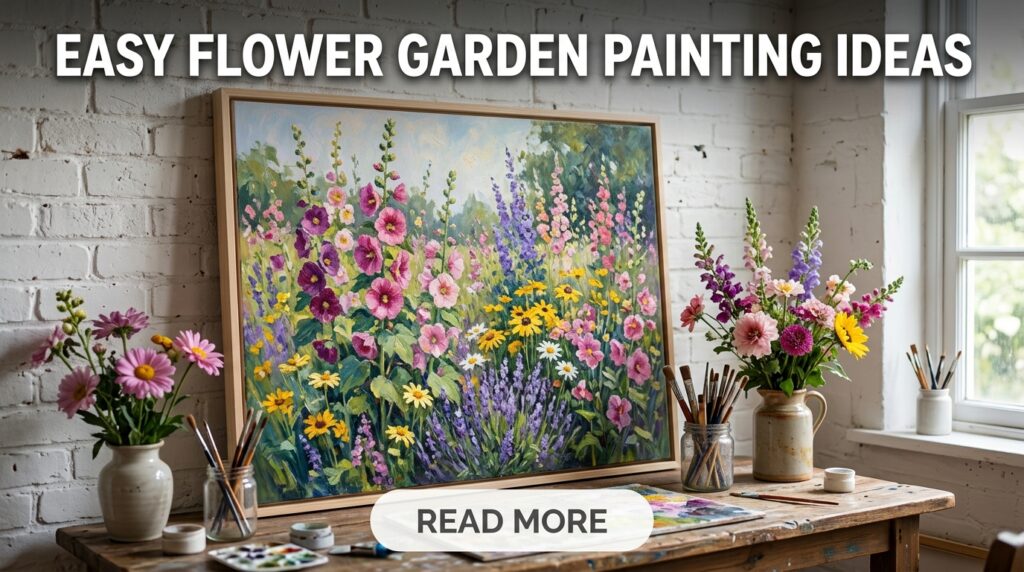
Paint a meadow filled with loosely scattered flowers.
Use varied heights and colors rather than arranging every flower evenly.
This style works especially well with watercolor or impressionistic techniques.
7. Watercolor Flower Garden
Watercolor is ideal for creating soft, airy garden scenes.
Try:
- Wet-on-wet backgrounds
- Loose floral shapes
- Transparent layers
- Soft green foliage
- Light sky washes
Allow some white paper to remain visible for highlights.
8. Acrylic Flower Garden Painting
Acrylics allow you to build layers quickly.
Start with the background and gradually add:
- Sky
- Trees
- Grass
- Flower beds
- Individual flowers
- Highlights
Use thicker paint for foreground flowers.
9. Oil Flower Garden Painting
Oil paint can create rich colors and smooth transitions.
Use it for detailed garden landscapes with dramatic light, deep shadows, and textured flowers.
Allow sufficient drying time between layers.
10. Impressionist Flower Garden Painting
Focus on the overall impression rather than painting every individual flower.
Use visible brushstrokes and small dabs of color to suggest flowers.
11. Abstract Flower Garden Painting
An abstract garden can focus on color, shape, rhythm, and movement.
Use exaggerated flower forms and simplified landscapes rather than realistic details.
12. Modern Flower Garden Painting
Create a contemporary composition using simplified shapes and a controlled color palette.
Try geometric garden beds, modern architecture, and large blocks of floral color.
13. Flower Garden Landscape Painting
Create a wide garden scene with multiple layers.
Use:
- Foreground flowers
- Middle-ground planting
- Background trees
- Sky
- Pathways
Vary the size and detail of objects to create depth.
14. Flower Garden With a Path
A pathway can lead the viewer’s eye through the painting.
Create a curved path that becomes narrower as it moves toward the background.
Add flowers along both sides.
15. Flower Garden With a Cottage
Paint a charming cottage surrounded by flowers.
Include:
- Window boxes
- Climbing roses
- Garden paths
- Shrubs
- Flower borders
Use atmospheric perspective to make distant areas softer.
16. Flower Garden With a Bench
A garden bench can become a focal point.
Place it beneath a tree, beside flowers, or at the end of a pathway.
17. Flower Garden With a Fountain
A fountain adds a strong architectural element.
Surround it with flower beds and use reflections or highlights to suggest water.
18. Flower Garden With a Pond
Paint a pond surrounded by flowers and greenery.
Include reflections of plants and sky on the water surface.
Keep reflections softer and less detailed than foreground objects.
19. Flower Garden With a Bridge
A small bridge can create a storybook garden composition.
Paint it over a pond or stream and surround it with flowering plants.
20. Secret Garden Painting
A hidden garden can feature an old gate, dense flowers, winding paths, and secluded seating.
Use darker foliage around the edges to frame the brighter garden interior.
21. Fairy Flower Garden Painting
Create a whimsical scene with miniature houses, glowing lights, flowers, and tiny pathways.
Use imaginative colors and exaggerated proportions.
22. Sunflower Garden Painting
Sunflowers make excellent painting subjects because of their bold shapes and bright color.
Create depth by placing large sunflowers in the foreground and smaller flowers farther away.
23. Lavender Garden Painting
Lavender fields can create beautiful purple-and-green compositions.
Use rows or sweeping groups of lavender leading toward distant trees or mountains.
24. Tulip Garden Painting
Tulips provide strong opportunities for color studies.
Paint repeated rows of red, pink, yellow, purple, or white flowers.
25. Peony Garden Painting
Peonies are excellent subjects for detailed floral artwork.
Focus on their layered petals and soft rounded shapes.
26. Daisy Garden Painting
Daisies can create a cheerful and simple garden scene.
Use white petals against green grass with a soft blue or warm background.
27. Wild Rose Garden Painting
Use loosely painted roses mixed with grasses and smaller flowers.
This creates a natural meadow-like composition.
28. Night Flower Garden Painting
A nighttime garden can create a dramatic atmosphere.
Use:
- Deep blue skies
- Moonlight
- Silvery foliage
- Pale flowers
- Warm lanterns
Keep the brightest highlights near the focal point.
29. Sunset Flower Garden Painting
A sunset can provide a beautiful background.
Use warm oranges, pinks, purples, and golds in the sky while keeping foreground flowers slightly darker.
30. Spring Flower Garden Painting
Paint a fresh spring landscape filled with new foliage and colorful blooms.
Use soft greens and pastel flowers for a gentle seasonal appearance.
31. Summer Flower Garden Painting
Create a lush summer scene with dense flowers, bright foliage, and strong sunlight.
Use deeper greens and vibrant flower colors.
32. Autumn Flower Garden Painting
Combine late-season flowers with warm foliage.
Add:
- Orange leaves
- Golden grasses
- Burgundy flowers
- Warm sunlight
33. Winter Flower Garden Painting
A winter garden can focus on structure rather than blooms.
Paint:
- Bare branches
- Evergreen plants
- Frost
- Garden structures
- Snow
Use subtle color variations to avoid a flat appearance.
34. Flower Garden From a Bird’s-Eye View
Paint the garden from above to emphasize patterns and planting layouts.
This is useful for creating decorative artwork inspired by formal garden designs.
35. Flower Garden Painting for Beginners
Start with a few simple elements:
- Sky
- Lawn
- Trees
- Flower clusters
- Path
Don’t try to paint every individual flower.
36. Easy Flower Garden Painting
Use simple brush shapes to represent flowers.
For example:
- Small dots for distant flowers
- Short strokes for grasses
- Larger petals for foreground flowers
Layering creates depth without requiring complicated detail.
37. Flower Garden Painting on Canvas
Choose a canvas size based on your composition.
A vertical canvas works well for a garden path leading toward a house, while a horizontal canvas is useful for broad landscape scenes.
38. Flower Garden Painting on Wood
Wood panels can create a rustic decorative artwork.
Prepare the surface properly and use paints suitable for the material.
Seal finished artwork if it will be displayed in an environment exposed to moisture.
39. Flower Garden Wall Art
Turn a painted garden landscape into decorative wall art.
Use colors that complement the room where the artwork will be displayed.
Large floral paintings can become statement pieces above sofas, beds, or dining areas.
40. DIY Flower Garden Painting
Create your own flower garden painting with a simple process.
Materials
You may need:
- Canvas or watercolor paper
- Acrylic, watercolor, or oil paints
- Brushes
- Palette
- Water container
- Pencil
- Cloth or paper towel
Steps
- Lightly sketch the garden composition.
- Paint the sky and distant background.
- Add trees and large background shapes.
- Paint the lawn and garden beds.
- Establish the main flower colors.
- Add larger foreground flowers.
- Add foliage and small details.
- Apply highlights and shadows.
- Let the painting dry completely.
How to Create Depth in a Flower Garden Painting
Foreground
Use larger flowers, stronger colors, and more detail.
Middle Ground
Use medium-sized plants and slightly softer colors.
Background
Use smaller shapes, lighter values, and less detail.
This simple layering technique helps make a garden landscape feel deeper and more realistic.
Best Colors for Flower Garden Paintings
Popular palettes include:
Pastel Garden
Soft pink, lavender, pale yellow, cream, and light green.
Bright Garden
Red, orange, yellow, pink, purple, and vivid green.
Romantic Garden
Blush pink, burgundy, lavender, cream, and deep green.
Moody Garden
Deep purple, burgundy, dark green, gray, and muted blue.
Natural Garden
Olive green, earthy brown, soft yellow, white, and muted pink.
Common Flower Garden Painting Mistakes
Painting Every Flower Individually
Suggest distant flowers with simple shapes instead.
Using the Same Detail Everywhere
Reserve the strongest detail for the focal area.
Forgetting Perspective
Paths and garden borders should generally narrow as they move into the distance.
Using Only One Green
Mix different greens and adjust their brightness and temperature.
Making Everything Equally Bright
Use contrast strategically to direct attention.
Frequently Asked Questions
What is the easiest flower garden painting for beginners?
A simple landscape with a sky, lawn, trees, a curved path, and colorful flower clusters is a great starting point.
Which paint is best for flower garden paintings?
Watercolor is excellent for soft landscapes, acrylic is versatile and beginner-friendly, and oil is useful for rich color and detailed blending.
How do you paint flowers in a garden?
Use simple shapes for distant flowers and progressively larger, more detailed forms in the foreground.
How do you make a garden painting look realistic?
Focus on perspective, light, color variation, overlapping plants, atmospheric depth, and differences in detail between foreground and background.
Can flower garden paintings be abstract?
Absolutely. An abstract garden can emphasize color, shape, texture, and movement rather than realistic botanical details.
Conclusion
Flower garden paintings offer endless creative possibilities, from simple beginner landscapes and colorful cottage gardens to realistic botanical scenes and atmospheric secret gardens. Start with the overall composition, establish depth through layers, and gradually add flowers and foliage.
The most successful garden paintings don’t need every flower to be perfectly detailed. Instead, use color, texture, light, and composition to capture the feeling of being surrounded by a beautiful blooming garden.