 By John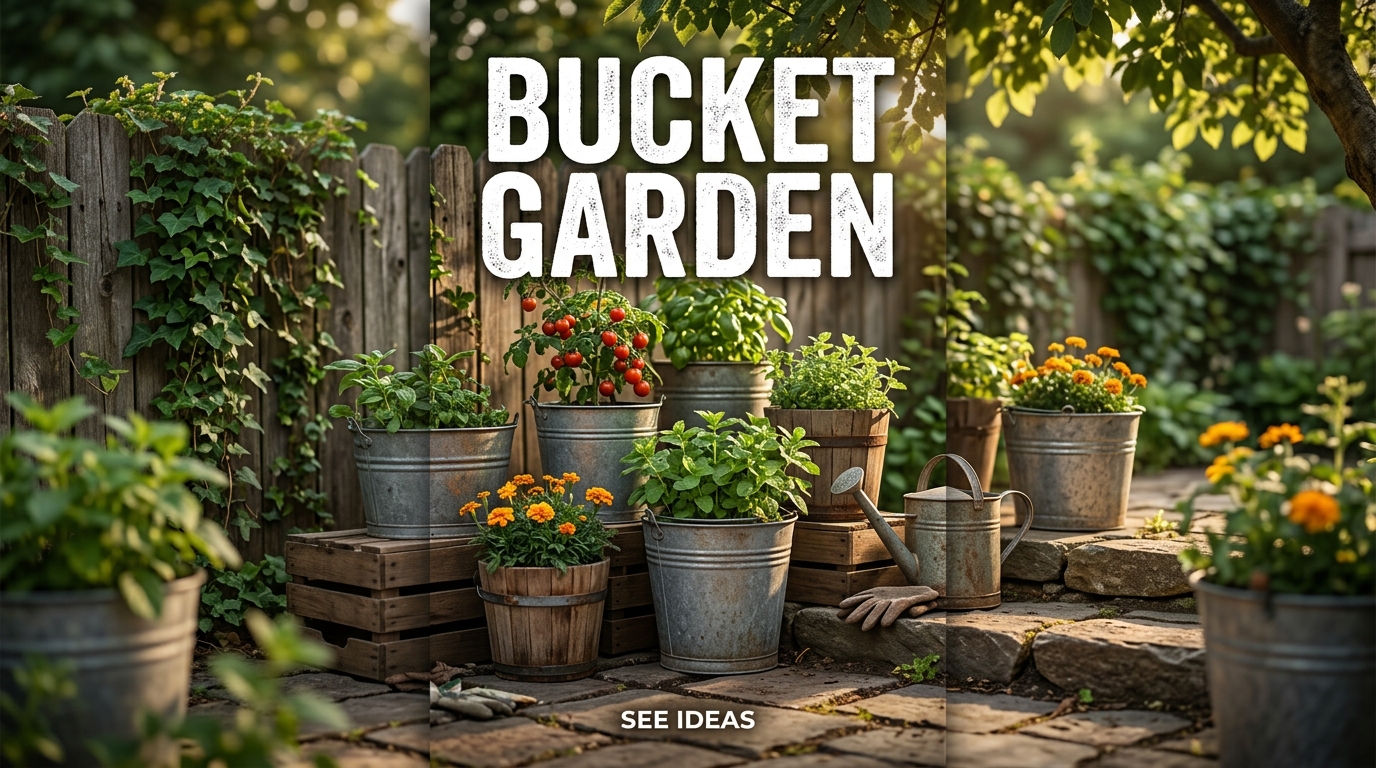
A bucket garden is a simple and affordable way to grow plants when you don’t have traditional garden beds. Whether you’re working with a balcony, patio, backyard, rooftop, porch, or small courtyard, buckets can become practical containers for vegetables, herbs, flowers, and even compact fruit plants.
Bucket gardening is especially useful for renters, beginners, and gardeners who want flexible growing spaces. With the right bucket, drainage, growing medium, sunlight, and plant selection, you can create a productive garden almost anywhere.
What Is a Bucket Garden?
A bucket garden is a container garden that uses buckets or similar containers to grow plants.
Buckets can be used for:
- Vegetables
- Herbs
- Flowers
- Strawberries
- Compact fruit plants
- Ornamental foliage
- Salad greens
The main advantage is flexibility. Containers can be moved, rearranged, and adapted to different growing conditions.
Benefits of a Bucket Garden
Bucket gardening offers several advantages:
- Low startup cost
- Easy setup
- Suitable for small spaces
- Portable growing containers
- Simple plant separation
- Flexible garden layouts
- Good option for beginners
- Useful for renters
It can also make gardening accessible when the ground is unsuitable for planting.
1. DIY Bucket Garden
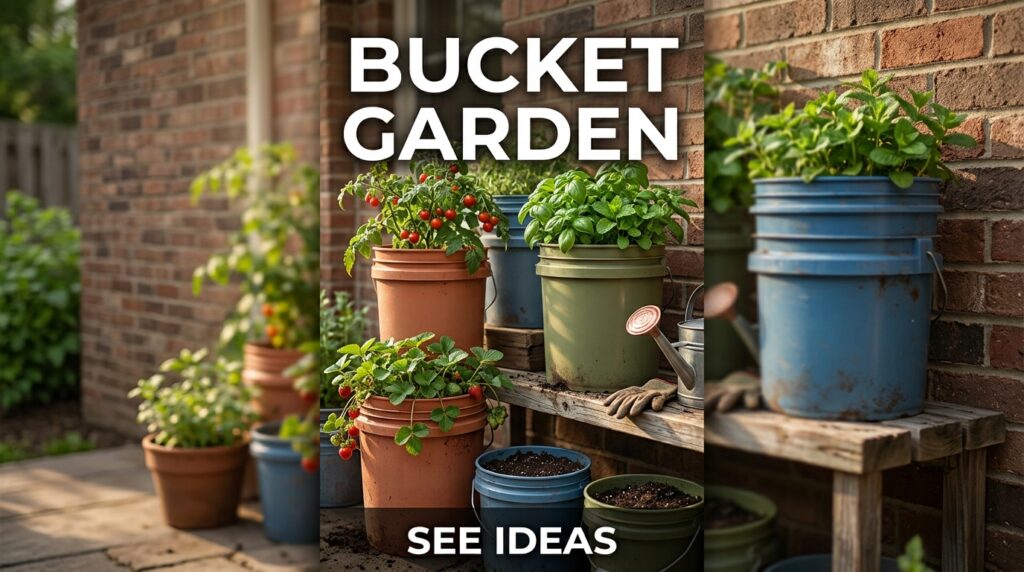
Creating a bucket garden is straightforward.
You’ll generally need:
- Food-safe or garden-appropriate buckets
- Suitable growing medium
- Plants or seeds
- Water
- A sunny location where appropriate
Make sure containers are clean and have adequate drainage before planting.
2. Vegetable Bucket Garden
Many vegetables can grow successfully in containers when provided with enough space and suitable conditions.
Try:
- Tomatoes
- Peppers
- Lettuce
- Radishes
- Spinach
- Bush beans
- Carrots
- Green onions
Choose varieties described as compact or container-friendly when available.
3. Bucket Tomato Garden
Tomatoes are a popular choice for bucket gardening.
Choose an appropriately sized container and provide:
- Strong sunlight
- Good drainage
- Nutrient-rich growing medium
- Consistent moisture
- Support for plants that need it
Determinate or compact varieties can be easier to manage in containers.
4. Bucket Herb Garden
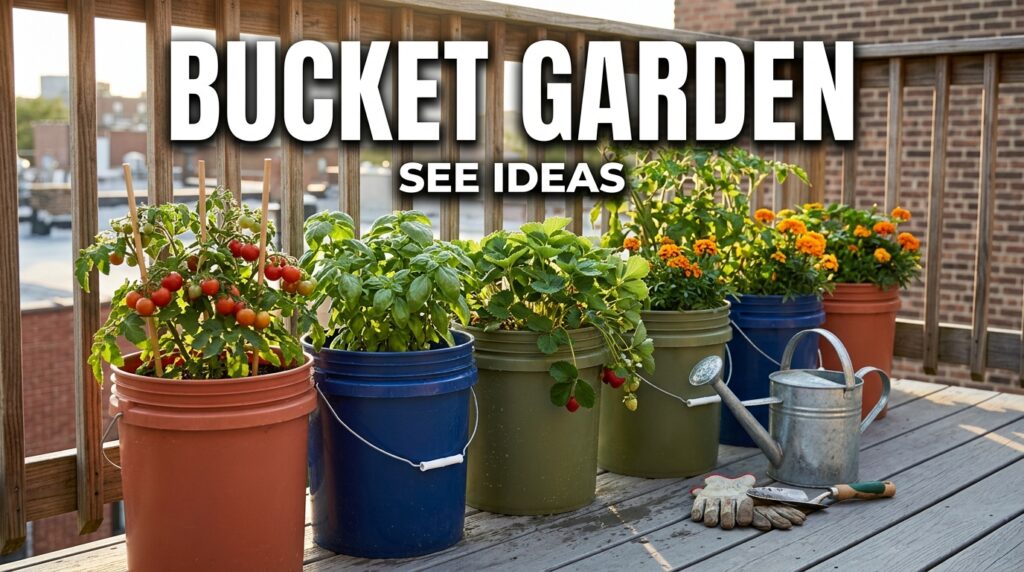
Herbs are excellent for small bucket gardens.
Grow:
- Basil
- Mint
- Parsley
- Cilantro
- Chives
- Oregano
- Thyme
- Rosemary
Mint is vigorous, so growing it separately can help prevent it from taking over other plants.
5. Bucket Flower Garden
Buckets can also create beautiful decorative displays.
Try growing:
- Marigolds
- Petunias
- Zinnias
- Geraniums
- Nasturtiums
- Pansies
Choose flowers according to your local growing season and sunlight conditions.
6. Bucket Garden for Small Spaces
A bucket garden is particularly useful when garden space is limited.
Place containers on:
- Patios
- Balconies
- Porches
- Rooftops
- Courtyards
- Small backyards
Avoid overcrowding. Plants need enough air circulation and light.
7. Bucket Garden on a Balcony
Balcony gardening requires extra planning.
Before adding several buckets, consider:
- Weight limits
- Wind
- Drainage
- Sun exposure
- Water runoff
Use lightweight containers and growing media where appropriate, and follow building rules.
8. Bucket Garden on a Patio

Arrange buckets in groups to create a productive patio garden.
Use different heights to add visual interest.
For example:
Tall plants → Medium herbs → Low flowers
Keep walkways clear and place containers where plants receive the light they require.
9. Bucket Garden for a Backyard
Buckets can supplement an existing garden.
Use them for:
- Extra vegetables
- Seasonal flowers
- Tender plants
- Herbs
- Plants with different soil requirements
They can also be moved around as sunlight changes.
10. Bucket Garden for Beginners
Start with easy plants.
Good beginner choices can include:
- Lettuce
- Radishes
- Green onions
- Basil
- Marigolds
- Bush beans
Starting with a few containers makes it easier to learn watering and plant-care routines.
11. Bucket Garden With Recycled Containers
Reusing containers can reduce costs, but not every bucket is suitable for growing food.
For edible crops, choose containers intended for food use or otherwise confirmed to be suitable for gardening. Avoid containers that previously held hazardous chemicals or unknown substances.
Clean containers thoroughly before use.
12. Bucket Garden Vertical Display
Buckets can be arranged vertically to save floor space, but make sure the structure is stable.
Options include:
- Sturdy shelving
- Tiered plant stands
- Wall-supported systems
- Freestanding racks
Keep heavier containers lower and secure elevated containers properly.
13. Bucket Garden With Trellis
Climbing plants can make excellent use of vertical space.
Add suitable support for:
- Beans
- Cucumbers
- Small climbing flowers
- Compact vines
Make sure the trellis is stable and doesn’t create a tipping hazard.
14. Bucket Garden for Herbs and Vegetables
Create a practical kitchen garden by combining edible plants.
A simple setup might include:
- Basil
- Parsley
- Chives
- Lettuce
- Peppers
- Tomatoes
Group plants according to similar sunlight and watering needs.
15. Bucket Garden With Strawberries
Strawberries can be grown in containers when the variety and container conditions are suitable.
Use:
- Containers with drainage
- Good-quality growing medium
- Adequate sunlight
- Regular watering
- Appropriate fertilizer
Keep fruit off wet surfaces where possible.
16. Bucket Garden With Potatoes
Potatoes can be grown in appropriately sized containers.
Use a suitable container and growing medium, and ensure excess water can drain freely.
Container potatoes can be a fun option for gardeners with limited ground space.
17. Bucket Garden for Lettuce
Lettuce can work well in containers because it doesn’t require deep root space compared with many larger crops.
Grow several plants in succession to maintain a steady harvest.
Provide adequate light and keep the growing medium consistently moist without leaving it waterlogged.
18. Bucket Garden for Peppers
Peppers can perform well in containers with sufficient sunlight and root space.
Choose compact varieties when possible and support plants if they become top-heavy.
19. Bucket Garden With Companion Planting
Companion planting can be used in containers, but don’t overcrowd the bucket.
Instead of placing many plants together, consider grouping compatible containers.
For example:
- Tomato bucket
- Basil bucket
- Marigold bucket
This creates a productive and decorative arrangement without forcing plants to compete for limited root space.
20. Bucket Garden Design Ideas
Bucket gardens don’t have to look purely functional.
Improve the appearance by using:
- Matching containers
- Painted exterior surfaces
- Wooden stands
- Gravel around containers
- Decorative plant labels
- Repeated colors
Only use paints and finishes appropriate for outdoor containers, and keep potentially harmful coatings away from edible growing surfaces.
21. Colorful Bucket Garden
Use flowering plants to create colorful displays.
Combine complementary shades such as:
- Yellow and purple
- Pink and white
- Orange and blue
- Red and yellow
Repeat colors throughout the container arrangement for a coordinated appearance.
22. Rustic Bucket Garden
Create a rustic look with:
- Galvanized-style containers
- Wooden crates
- Timber stands
- Natural textures
- Simple plant labels
Pair containers with herbs, flowers, and vegetables for a casual garden atmosphere.
23. Modern Bucket Garden
For a contemporary appearance, use:
- Matching containers
- Clean lines
- Neutral colors
- Geometric arrangements
- Simple plant varieties
Group containers in deliberate rows or clusters.
24. Bucket Garden on a Budget
Bucket gardening can be inexpensive.
Save money by:
- Starting plants from seeds
- Reusing suitable containers
- Propagating herbs where appropriate
- Building simple stands
- Growing seasonal crops
- Buying supplies in larger quantities when practical
Don’t sacrifice container safety or drainage simply to reduce costs.
25. Bucket Garden for Kids
Bucket gardening can be an engaging way to introduce children to growing plants.
Let children help with:
- Planting seeds
- Watering
- Labeling
- Observing growth
- Harvesting appropriate crops
Use child-safe tools and supervise children around fertilizers, sharp tools, and other garden products.
How to Start a Bucket Garden
Step 1: Choose the Location
Identify an area with suitable sunlight and easy access to water.
Step 2: Select Suitable Buckets
Choose containers large enough for the plants you want to grow.
Step 3: Add Drainage
Containers need drainage holes so excess water can escape.
Step 4: Choose Growing Medium
Use a quality container-growing medium appropriate for the plants.
Step 5: Plant
Follow spacing and planting-depth recommendations for each crop.
Step 6: Water Carefully
Container plants can dry out faster than plants in the ground, especially during hot weather.
Step 7: Feed as Needed
Container plants may need supplemental nutrients depending on the growing medium and crop.
Step 8: Monitor Plants
Watch for pests, diseases, nutrient deficiencies, and excessive moisture.
Best Bucket Size for Plants
There isn’t one ideal bucket size for every crop.
Generally:
- Small herbs need less root space.
- Leafy greens can grow in relatively shallow containers.
- Tomatoes and peppers need more root volume.
- Large plants and fruiting crops may require substantially larger containers.
Always check the recommended container size for the specific variety.
Bucket Garden Watering Tips
Container plants often require more frequent watering than plants in garden beds.
Check the growing medium regularly.
Water when needed and allow excess moisture to drain. Avoid leaving containers sitting in standing water unless the plant specifically requires those conditions.
During hot weather, containers may dry out faster, so monitor them more frequently.
Bucket Garden Fertilizing Tips
Nutrients can gradually be depleted from containers because watering can wash soluble nutrients away.
Use a fertilizer appropriate for the crop and follow the product label.
Avoid excessive fertilizer, which can damage roots and cause nutrient imbalances.
Common Bucket Garden Mistakes
Using Containers Without Drainage
Poor drainage can lead to root problems.
Choosing Containers That Are Too Small
Limited root space can restrict plant growth.
Overcrowding Plants
Too many plants compete for water, nutrients, light, and air circulation.
Placing Buckets in Poor Light
Vegetables and flowers have different light requirements.
Overwatering
More water isn’t always better. Check the growing medium first.
Using Unsafe Recycled Containers
Avoid buckets that contained hazardous chemicals or unknown substances, especially for edible crops.
Frequently Asked Questions
What vegetables grow well in buckets?
Tomatoes, peppers, lettuce, radishes, spinach, bush beans, carrots, and green onions can be suitable for container gardening when the container size and growing conditions are appropriate.
Can I grow a garden entirely in buckets?
Yes. Many vegetables, herbs, flowers, and compact fruiting plants can be grown in containers.
Do bucket gardens need drainage holes?
Yes, most container-grown plants need adequate drainage to prevent excess water from accumulating around their roots.
How often should I water a bucket garden?
There is no universal schedule. Check the growing medium regularly because container plants can dry out quickly, particularly during hot or windy weather.
Are plastic buckets safe for growing vegetables?
Use containers intended for food or gardening purposes, or those confirmed by the manufacturer to be suitable for growing food. Avoid containers with unknown previous contents or a history of hazardous chemical storage.
Conclusion
A bucket garden is an easy, flexible, and affordable way to grow plants without traditional garden beds. With suitable containers, good drainage, quality growing medium, proper sunlight, and regular care, you can grow vegetables, herbs, flowers, and other plants in surprisingly small spaces.
Whether you’re creating a balcony vegetable garden, patio herb collection, backyard container garden, or colorful flower display, buckets provide a practical foundation for experimenting with container gardening.
Start with a few easy-to-grow plants, learn how your containers respond to sunlight and watering, and expand your garden as your confidence grows.