
 By John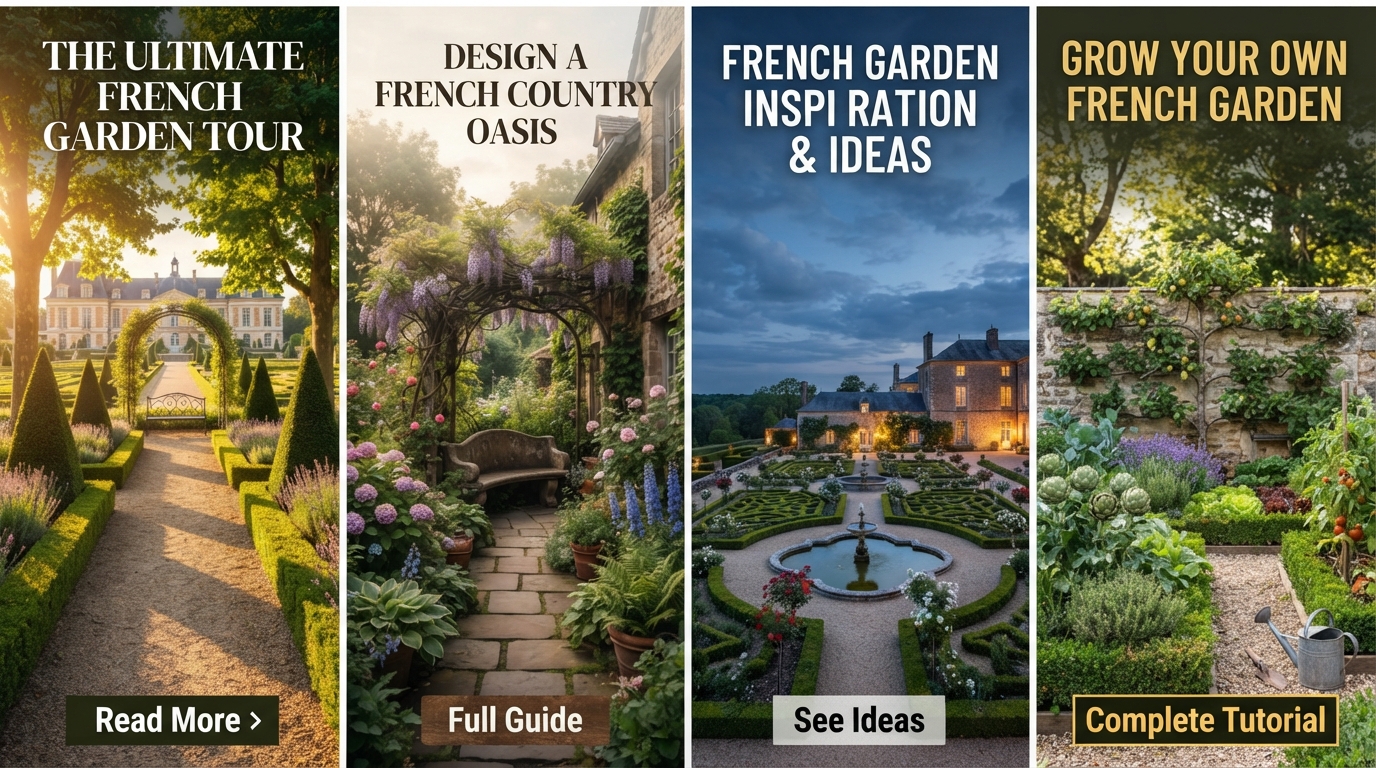
A French style garden combines elegance, symmetry, structure, and carefully planned landscaping to create an outdoor space that feels refined and timeless. Inspired by classic French formal gardens as well as relaxed French countryside landscapes, this style can range from highly geometric parterres to romantic gardens filled with roses, lavender, herbs, and gravel paths.
The defining feature of a French-inspired garden is intentional design. Straight pathways, clipped hedges, symmetrical planting, fountains, stone features, and carefully framed views can give even an ordinary backyard a sophisticated appearance.
What Is a French Style Garden?
A French style garden is a landscape design influenced by traditional French gardening principles.
Common features include:
- Symmetrical layouts
- Geometric planting beds
- Clipped hedges
- Gravel pathways
- Stone paving
- Fountains
- Formal trees
- Roses and lavender
- Decorative planters
- Garden benches
French gardens can be highly formal or softer and more relaxed, depending on the look you want.
Key Features of a French Garden
Symmetry
Symmetry creates the structured appearance associated with formal French gardens.
Repeat:
- Plants
- Trees
- Planters
- Pathways
- Hedges
- Decorative features
A central axis can help organize the entire garden.
Geometric Garden Beds
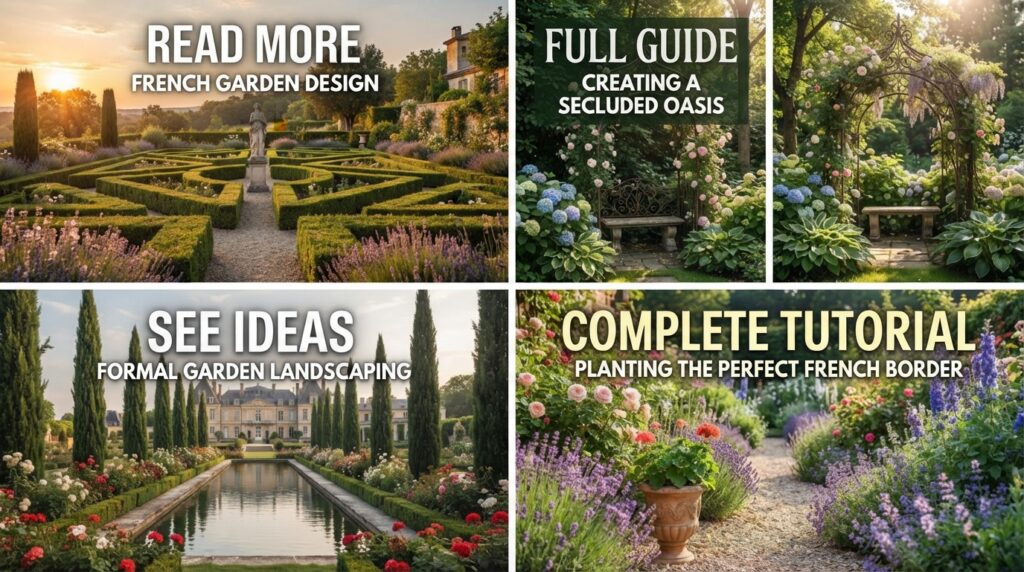
Create clearly defined planting shapes using:
- Squares
- Rectangles
- Circles
- Diamonds
- Formal parterres
Use low hedges or edging to separate planting areas.
Clipped Hedges
Hedges provide structure and definition.
Suitable plants depend on your climate and can include:
- Boxwood
- Yew
- Privet
- Holly
- Other suitable evergreen shrubs
Keep hedges neatly trimmed for a formal appearance.
French Parterre Garden
A parterre is one of the most recognizable formal French garden features.
Create decorative patterns using:
- Low hedges
- Flowers
- Gravel
- Groundcovers
- Repeated plant forms
Keep the design symmetrical and visible from above or from a raised viewpoint when possible.
French Country Garden
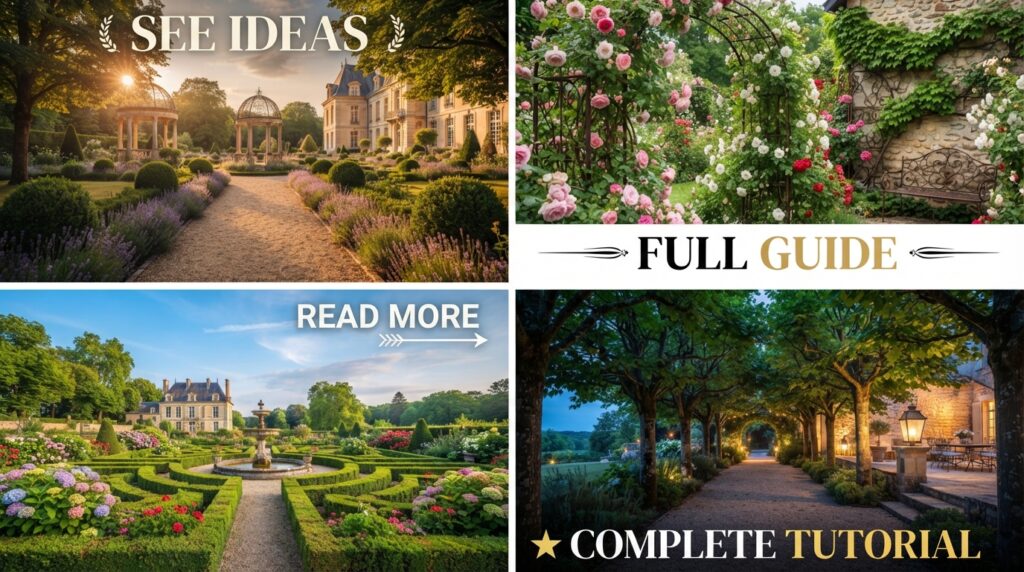
For a more relaxed interpretation, choose a French countryside aesthetic.
Combine:
- Lavender
- Roses
- Herbs
- Fruit trees
- Gravel paths
- Terracotta containers
- Natural stone
The result should feel elegant but less rigid than a formal château-inspired garden.
French Garden Color Palette
French gardens often benefit from restrained color combinations.
Consider:
- Soft green
- Lavender purple
- White
- Cream
- Pale pink
- Blue
- Terracotta
Use repeated colors throughout the garden for a cohesive appearance.
Add a French Garden Pathway
Pathways are important structural elements.
Popular materials include:
- Gravel
- Limestone
- Brick
- Natural stone
- Pavers
Straight paths work especially well in formal layouts, while gently curved paths can suit French country gardens.
Gravel Paths for French Gardens
Gravel provides an authentic-looking surface while visually connecting different garden areas.
Use gravel around:
- Flower beds
- Seating areas
- Trees
- Formal planting beds
Choose an appropriate aggregate and provide suitable edging to keep gravel contained.
French Garden Fountain
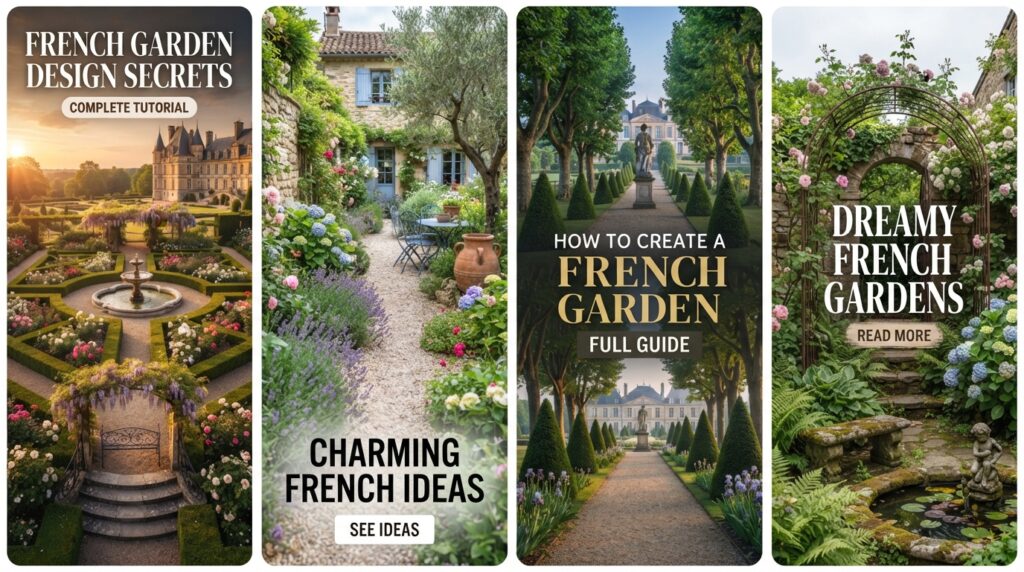
Water features can become a major focal point.
Consider:
- Stone fountains
- Wall fountains
- Small formal pools
- Reflecting basins
Place a fountain along a central axis or at a key intersection where it can be appreciated from multiple viewpoints.
French Garden With Roses
Roses add romance and fragrance.
Use them:
- Along pathways
- Around entrances
- Against walls
- Near seating
- Within formal borders
Combine roses with clipped hedges and gravel for a classic appearance.
French Garden With Lavender
Lavender is a natural choice for a French-inspired landscape.
Plant it:
- Along pathways
- Around terraces
- In repeated groups
- Near seating areas
- Beside gravel beds
Choose varieties suitable for your climate and soil drainage.
Add Fruit Trees
French country gardens often incorporate productive plants into ornamental landscapes.
Consider suitable:
- Apple trees
- Pear trees
- Plum trees
- Fig trees
Select varieties appropriate for your climate and available space.
French Herb Garden
A formal herb garden can be both practical and beautiful.
Grow suitable herbs such as:
- Rosemary
- Thyme
- Sage
- Basil
- Oregano
- Parsley
Organize herbs into geometric beds with defined paths.
French Garden Containers
Terracotta pots and stone planters complement the style beautifully.
Use them for:
- Herbs
- Lavender
- Roses
- Small shrubs
- Seasonal flowers
Group containers symmetrically for a formal effect.
French Garden With a Central Axis
A central axis can make a garden feel larger and more organized.
Create a visual line from:
Entrance → Path → Focal Point → Garden Feature
The focal point might be a fountain, statue, tree, gate, or seating area.
French Garden Seating
Add an elegant seating area where you can enjoy the landscape.
Consider:
- Wrought-iron chairs
- Stone benches
- Wooden garden benches
- Bistro tables
- Decorative metal furniture
Place seating where it overlooks a focal point or attractive planting area.
French Garden Walls and Hedges
Walls and hedges can define individual garden rooms.
Use them to separate:
- Herb gardens
- Flower borders
- Seating areas
- Vegetable beds
- Formal lawns
This creates structure while making the garden feel like a series of connected outdoor spaces.
French Style Garden for Small Spaces
You don’t need a large estate to create a French-inspired landscape.
Use:
- Symmetrical containers
- Small clipped shrubs
- Gravel
- A narrow central path
- Lavender
- Terracotta pots
- A small fountain
Focus on a few strong elements rather than attempting to recreate a large formal garden.
Modern French Garden
For a contemporary interpretation, combine classic French structure with modern materials.
Try:
- Minimalist paving
- Simple geometric beds
- Dark metal furniture
- Repeated ornamental grasses
- Clean-lined planters
- Restrained color schemes
Keep the traditional symmetry while simplifying decorative details.
French Garden on a Budget
You can achieve the style without expensive landscaping.
Try:
- Using gravel instead of costly paving
- Growing plants from young specimens
- Making simple geometric beds
- Reusing terracotta containers
- Propagating suitable herbs
- Building DIY garden edging
- Adding one focal feature at a time
Structure and repetition often create more impact than expensive accessories.
How to Design a French Style Garden
Step 1: Draw the Layout
Mark the entrance, central axis, paths, beds, and focal points.
Step 2: Establish Symmetry
Repeat major features on either side of the central line.
Step 3: Create Geometric Beds
Use edging or low hedges to define planting shapes.
Step 4: Add Structural Plants
Choose suitable evergreen shrubs and trees for year-round form.
Step 5: Add Flowers and Herbs
Introduce roses, lavender, herbs, and seasonal flowers.
Step 6: Install Hardscape
Add gravel, stone, paving, walls, or decorative containers.
Step 7: Choose a Focal Point
Use a fountain, sculpture, tree, or seating area to anchor the design.
Common French Garden Mistakes
Ignoring Symmetry
A formal design can lose its character when major features are randomly placed.
Using Too Many Colors
A restrained palette usually looks more sophisticated.
Overcrowding the Beds
Leave enough space for each plant to mature.
Choosing Plants Without Considering Climate
Select plants that can thrive in your local growing conditions.
Making Everything Too Formal
A French country garden can be softer and more natural than a strict formal design.
Frequently Asked Questions
What makes a garden French style?
Symmetry, geometric beds, clipped hedges, gravel pathways, formal trees, fountains, stone features, and a restrained planting palette are common characteristics.
What plants are popular in French gardens?
Lavender, roses, herbs, suitable evergreen hedges, fruit trees, and seasonal flowers can all work well.
Can I create a French garden in a small backyard?
Yes. Use symmetry, gravel, geometric containers, compact hedges, and a central focal point to capture the style without needing a large property.
Is a French garden high maintenance?
Highly formal gardens can require regular hedge trimming, pruning, weeding, and path maintenance. A French country style can be designed with a more relaxed maintenance approach.
What is the best pathway material for a French garden?
Gravel, natural stone, limestone, brick, and suitable pavers can all complement French-inspired landscaping.
Conclusion
A French style garden combines structure, elegance, and timeless landscaping principles. From formal parterres and clipped hedges to lavender borders, rose gardens, gravel pathways, fountains, and terracotta containers, there are many ways to bring French-inspired character into your outdoor space.
Start with a clear layout and establish the main structure before adding decorative details. Use repetition, symmetry, restrained colors, and suitable plants to create visual harmony. Whether you prefer a grand formal garden or a relaxed French country retreat, thoughtful planning can turn your landscape into a sophisticated and welcoming outdoor space.