
 By John
An orchard garden is a wonderful way to combine natural beauty with productive gardening. Growing fruit trees in your backyard can provide fresh seasonal harvests while adding shade, flowers, wildlife habitat, and year-round visual interest to your landscape.
You don’t need a huge farm to create an orchard. A few carefully selected dwarf or compact fruit trees can turn a small backyard, side garden, or courtyard into a productive mini orchard. With the right layout, soil preparation, sunlight, and maintenance, an orchard garden can become one of the most rewarding features of your outdoor space.
What Is an Orchard Garden?
An orchard garden is a landscape designed around fruit-producing trees and plants.
Traditional orchards may contain rows of trees, while backyard orchard gardens can use a more informal arrangement.
Common fruit trees include:
- Apple
- Pear
- Peach
- Plum
- Cherry
- Apricot
- Fig
- Citrus
The best choices depend on your climate, soil, available space, and the specific varieties suited to your area.
Benefits of an Orchard Garden
Growing fruit trees offers several advantages.
An orchard can:
- Provide fresh fruit
- Add shade
- Improve garden biodiversity
- Attract pollinators
- Create seasonal interest
- Increase the beauty of your landscape
- Provide opportunities for preserving and sharing produce
Fruit trees can also become attractive focal points even outside their harvest season.
Choosing the Right Location
Most fruit trees need plenty of sunlight.
Choose a location with:
- Good sunlight exposure
- Well-drained soil
- Adequate airflow
- Enough room for mature trees
- Convenient access to water
Avoid low areas where cold air or water may collect.
Small Orchard Garden Ideas
A small backyard can support an orchard when compact varieties and appropriate spacing are used.
Consider:
- Dwarf fruit trees
- Columnar trees
- Espalier-trained trees
- Container-grown fruit trees
- Multi-grafted trees where suitable
Columnar trees can be particularly useful where horizontal space is limited.
Backyard Orchard Layout
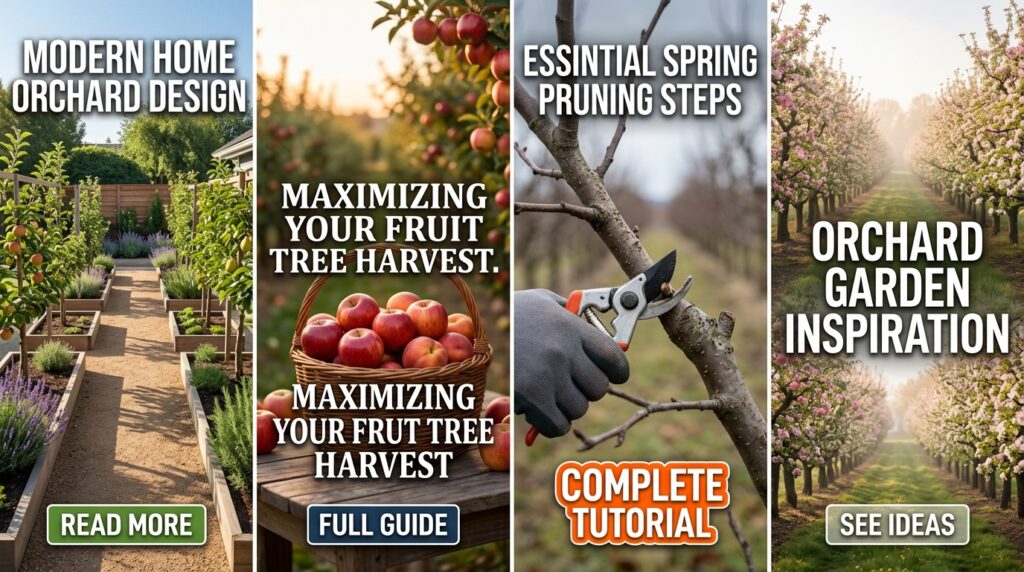
A simple backyard orchard can be organized in several ways.
Row Orchard
Plant trees in straight rows with grass or mulch between them.
This works well for larger spaces.
Informal Orchard
Scatter trees naturally throughout the landscape.
This creates a softer appearance and can integrate fruit trees with ornamental planting.
Orchard Border
Plant fruit trees along the edge of a property.
This can create a productive boundary while leaving the central garden open.
Courtyard Orchard
Use dwarf fruit trees in containers or small planting beds around a patio or courtyard.
Best Fruit Trees for an Orchard Garden
Apple Trees
Apples are popular because many varieties are available for different climates and garden sizes.
Pear Trees
Pear trees can provide beautiful spring blossoms and attractive fruit.
Peach Trees
Peaches offer attractive flowers and delicious summer harvests in suitable climates.
Plum Trees
Plums are useful for smaller orchard spaces because many varieties have manageable growth habits.
Fig Trees
Figs can be excellent choices in warm climates and can also work in containers.
Citrus Trees
In appropriate climates, oranges, lemons, limes, and mandarins can create productive evergreen planting.
Always research local suitability and chill requirements before purchasing fruit trees.
Orchard Garden Companion Plants

The ground beneath fruit trees can be used thoughtfully.
Consider suitable:
- Herbs
- Groundcovers
- Native flowers
- Pollinator plants
- Spring bulbs
Avoid plants that compete excessively with young fruit trees for water and nutrients.
Keep vegetation away from the trunk to reduce moisture and pest problems.
Add a Vegetable Garden
An orchard can be combined with vegetable beds.
Create separate growing areas for:
- Leafy greens
- Root vegetables
- Herbs
- Beans
- Peppers
Keep tall vegetable structures from shading fruit trees excessively.
Add Flowers for Pollinators
Flowering plants can make an orchard more attractive and support pollinators.
Consider:
- Lavender
- Marigolds
- Cosmos
- Sunflowers
- Native wildflowers
Choose flowers that are appropriate for your local environment.
Orchard Garden Pathways
Paths make harvesting and maintenance easier.
Options include:
- Grass
- Gravel
- Wood chips
- Stone
- Brick
Keep paths wide enough for the equipment you need to use.
Orchard Garden Seating Area
A small seating area can make the orchard more enjoyable.
Place a:
- Wooden bench
- Picnic table
- Bistro set
- Hammock
under or near suitable trees, while avoiding areas where falling fruit could create a hazard or mess.
Orchard Garden Fence Ideas
A fence can protect young fruit trees and crops from animals.
Options include:
- Wire fencing
- Wooden fencing
- Picket fencing
- Hedge boundaries
Choose fencing based on the animals present and the level of protection needed.
Orchard Garden Design for Wildlife
An orchard can become a valuable habitat.
Add:
- Native flowering plants
- Birdhouses
- Birdbaths
- Berry-producing shrubs
- Insect-friendly planting
Allowing some natural habitat around the orchard can increase biodiversity.
How to Plant Fruit Trees
Proper planting is essential for long-term tree health.
Step 1: Choose Healthy Trees
Buy trees from a reputable nursery and select varieties suited to your climate.
Step 2: Prepare the Site
Remove competing weeds and ensure the soil drains well.
Step 3: Dig the Planting Hole
Create a hole wide enough for the root system without making it unnecessarily deep.
Step 4: Position the Tree
Place the tree so its root flare is at an appropriate level according to planting recommendations.
Step 5: Backfill
Use suitable soil and avoid heavily compacting it around the roots.
Step 6: Water Thoroughly
Give the newly planted tree adequate water to settle the soil.
Step 7: Mulch
Apply a suitable mulch layer around the root zone while keeping mulch away from the trunk.
Orchard Garden Maintenance
Fruit trees require regular care.
Important tasks include:
- Watering during dry periods
- Pruning when appropriate
- Mulching
- Monitoring pests
- Removing damaged fruit
- Fertilizing when soil and plant needs indicate it
- Managing weeds
Follow species-specific pruning and fertilization recommendations.
Pruning Orchard Trees
Pruning helps shape trees and can improve light penetration and airflow.
Remove:
- Dead branches
- Damaged branches
- Crossing branches
- Weak growth
The ideal pruning season varies by fruit tree and climate, so research each species before making major cuts.
Organic Orchard Garden Ideas
Gardeners interested in lower-input methods can focus on:
- Compost
- Mulch
- Healthy soil
- Diverse planting
- Beneficial insects
- Appropriate disease-resistant varieties
Choose pest-control methods that suit your gardening goals and local regulations.
Orchard Garden Ideas on a Budget
You can build an orchard gradually.
Save money by:
- Starting with a few trees
- Choosing bare-root trees when available
- Growing from suitable cuttings where practical
- Making compost
- Using inexpensive mulch
- Reusing existing pathways
Invest in healthy, climate-appropriate trees rather than planting too many at once.
Common Orchard Garden Mistakes
Planting Trees Too Close Together
Always consider the mature size of each variety.
Choosing the Wrong Variety
Climate compatibility is essential.
Ignoring Pollination
Some fruit trees need a compatible pollination partner, while others are self-fertile to varying degrees.
Poor Drainage
Many fruit trees perform poorly in persistently waterlogged soil.
Neglecting Early Training
Young trees benefit from proper structural training.
Forgetting Wildlife Pressure
Birds and mammals can damage fruit and young trees, so plan appropriate protection.
Frequently Asked Questions
Can I create an orchard in a small backyard?
Yes. Dwarf, columnar, espalier-trained, and appropriately sized fruit trees can make small orchards possible.
How many trees do I need for an orchard?
There is no fixed number. Even two or three productive fruit trees can create a small backyard orchard.
What is the easiest fruit tree to grow?
The easiest choice depends heavily on your climate, soil, and variety. Choose a fruit tree specifically suited to your local conditions.
Do fruit trees need full sun?
Most fruit trees produce best with plenty of sunlight, although exact requirements vary by species.
How long does it take for an orchard to produce fruit?
The timeline depends on tree species, rootstock, variety, age at planting, climate, and growing conditions. Dwarf trees may fruit earlier than some larger trees.
Conclusion
An orchard garden combines the beauty of landscape design with the reward of growing your own fruit. Whether you have a large property or a compact backyard, carefully selected fruit trees can provide blossoms, shade, wildlife habitat, and delicious seasonal harvests.
Begin with a few varieties suited to your climate and available space. Plan mature tree sizes, sunlight, pollination needs, pathways, and watering before planting. With consistent care and thoughtful design, your orchard garden can become a productive and beautiful part of your landscape for many years.