 By John
Raised Beds Garden Ideas, Vegetable Gardening, DIY Garden Beds, Soil Improvement, and Backyard Growing Tips
A raised beds garden is one of the most effective and popular ways to grow vegetables, herbs, flowers, and ornamental plants. By elevating the growing area above ground level, raised garden beds provide better soil control, improved drainage, easier maintenance, and higher yields compared to traditional in-ground gardening.
Whether you have a small backyard, large landscape, patio, or urban garden, raised beds can help you maximize growing space while creating a neat and attractive garden design. From simple wooden beds to modern metal planters and decorative stone structures, raised gardens offer endless possibilities for gardeners of all skill levels.
This complete guide covers everything you need to know about raised beds gardening, including design ideas, materials, soil preparation, planting strategies, maintenance tips, and common mistakes to avoid.
What Is a Raised Beds Garden?
A raised beds garden consists of planting areas built above the surrounding ground.
Typically, raised beds are enclosed by materials such as:
- Wood
- Metal
- Stone
- Brick
- Concrete blocks
- Composite boards
The beds are then filled with high-quality soil specifically prepared for growing plants.
Benefits of Raised Beds Gardening
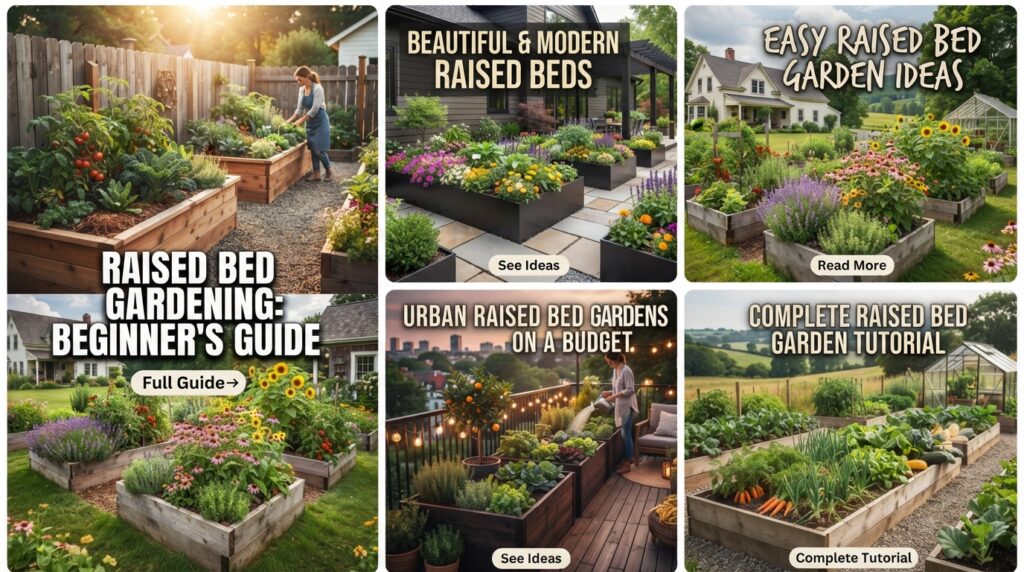
Raised beds offer numerous advantages.
Better Soil Quality
You control the soil composition from the start.
Improved Drainage
Excess water drains more effectively than in traditional gardens.
Reduced Weeds
Raised beds help minimize weed growth.
Easier Maintenance
Less bending and kneeling compared to ground-level gardening.
Longer Growing Season
Soil warms more quickly in spring.
Higher Productivity
Plants often grow faster and healthier.
Choosing the Right Location
Location is critical for success.
Look for an area that offers:
- At least 6–8 hours of sunlight daily
- Good accessibility
- Convenient watering access
- Proper air circulation
Most vegetables thrive in full sun.
Best Materials for Raised Garden Beds
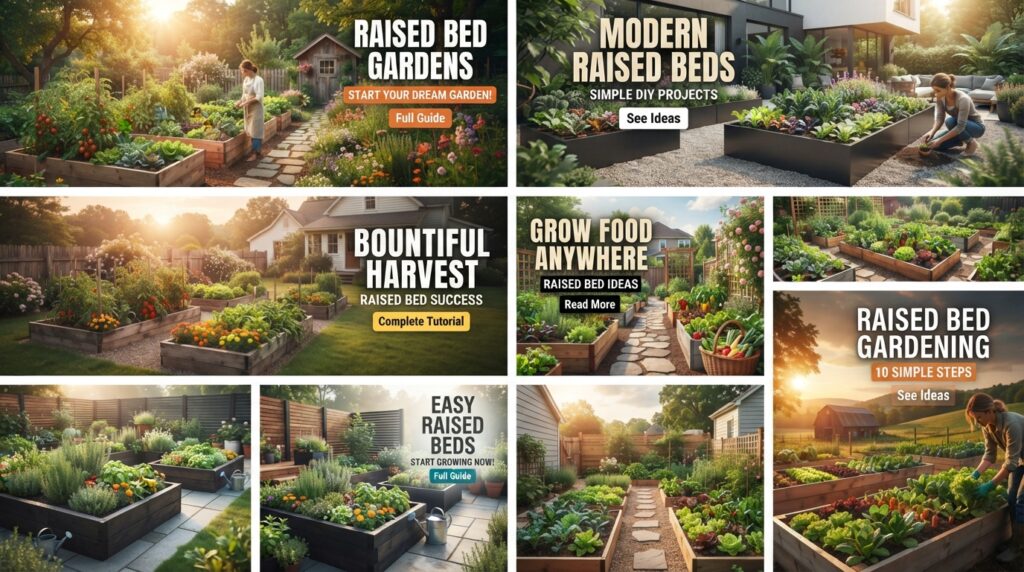
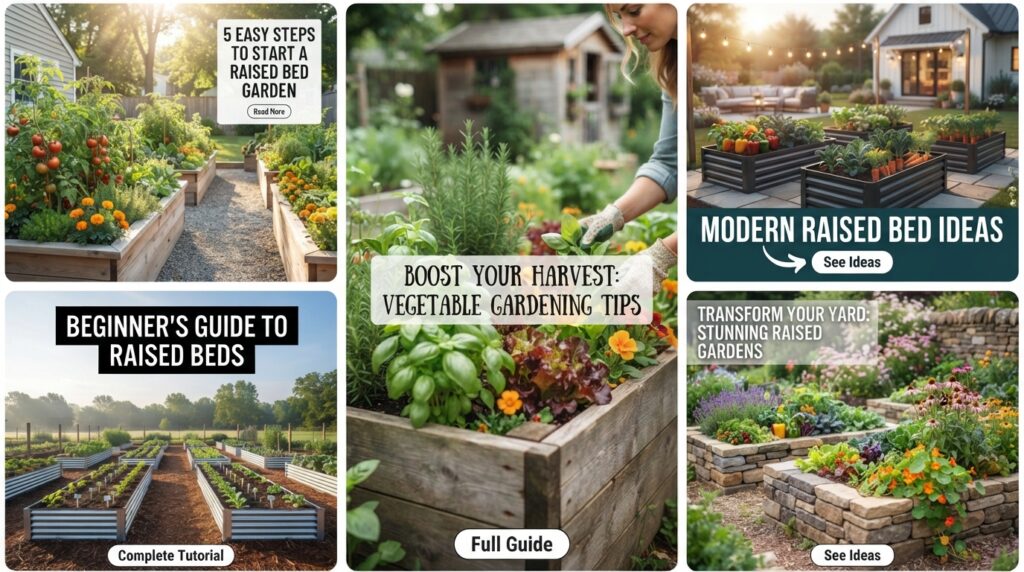
Wooden Raised Beds
One of the most popular choices.
Benefits include:
- Affordable
- Easy to build
- Natural appearance
Cedar and redwood are particularly durable.
Metal Raised Beds
Modern and long-lasting.
Advantages:
- Sleek design
- Weather resistance
- Minimal maintenance
Stone Raised Beds
Perfect for permanent garden structures.
Benefits include:
- Exceptional durability
- Natural beauty
- Excellent stability
Brick Raised Beds
Classic and elegant.
Brick works especially well in formal garden designs.
Ideal Raised Bed Dimensions
Most gardeners find these dimensions effective:
Width
- 3 to 4 feet wide
This allows easy access from both sides.
Length
- 6 to 12 feet long
Length can be adjusted to fit available space.
Height
- 12 to 24 inches deep
Deeper beds provide more room for root growth.
Best Soil Mix for Raised Beds
Healthy soil is the foundation of a successful garden.
A common mix includes:
- 40% topsoil
- 40% compost
- 20% aeration materials
Examples of aeration materials:
- Perlite
- Coarse sand
- Pine bark
Rich, loose soil promotes strong root development.
Raised Bed Vegetable Garden Ideas
Raised beds are ideal for growing vegetables.
Popular choices include:
Tomatoes
Highly productive in raised beds.
Lettuce
Easy to grow and harvest.
Peppers
Thrive in warm, well-drained soil.
Cucumbers
Perfect with vertical supports.
Carrots
Benefit from loose soil.
Beans
Easy to maintain and productive.
Herb Garden Raised Beds
Herbs perform exceptionally well in raised beds.
Popular herbs include:
- Basil
- Rosemary
- Thyme
- Oregano
- Mint
- Parsley
Dedicated herb beds create attractive and practical gardens.
Raised Flower Bed Ideas
Raised beds aren’t just for vegetables.
Popular flowers include:
- Roses
- Lavender
- Coneflowers
- Zinnias
- Marigolds
- Petunias
Flower beds add color and attract pollinators.
Companion Planting in Raised Beds
Companion planting improves garden health.
Examples include:
Tomatoes and Basil
A classic pairing.
Carrots and Onions
Help deter pests.
Lettuce and Radishes
Efficient use of space.
Strategic planting improves productivity.
Square Foot Gardening
Raised beds are perfect for square foot gardening.
Benefits include:
- Efficient spacing
- High yields
- Easy organization
- Reduced waste
This method works especially well in small spaces.
Vertical Gardening in Raised Beds
Maximize growing space with vertical structures.
Ideas include:
- Trellises
- Arches
- Obelisks
- Garden netting
Ideal for:
- Cucumbers
- Beans
- Peas
- Tomatoes
Vertical gardening increases productivity.
Raised Beds for Small Gardens
Even tiny spaces can support raised beds.
Ideas include:
- Compact vegetable gardens
- Balcony raised planters
- Courtyard gardens
- Patio herb beds
Raised beds make efficient use of limited space.
Decorative Raised Garden Designs
Enhance visual appeal with:
- Stone edging
- Decorative pathways
- Metal accents
- Garden lighting
- Archways
Beautiful design can turn a productive garden into a landscape feature.
Watering Raised Beds
Raised beds often dry out faster than ground gardens.
Best practices include:
Drip Irrigation
Efficient and water-saving.
Soaker Hoses
Provide even moisture.
Mulching
Reduces evaporation and conserves water.
Consistent watering supports healthy growth.
Seasonal Planting Ideas
Spring
- Lettuce
- Spinach
- Peas
- Radishes
Summer
- Tomatoes
- Peppers
- Cucumbers
- Beans
Autumn
- Kale
- Broccoli
- Carrots
- Beets
Seasonal planning extends harvest periods.
Common Raised Bed Garden Mistakes
Avoid these common errors:
Poor Soil Quality
Invest in quality soil from the beginning.
Overcrowding Plants
Follow recommended spacing guidelines.
Insufficient Sunlight
Choose a sunny location.
Neglecting Watering
Raised beds require consistent moisture.
Building Beds Too Wide
Ensure easy access for maintenance.
Maintenance Tips
Keep your raised beds productive with regular care.
Add Compost Annually
Replenishes nutrients.
Rotate Crops
Reduces pest and disease issues.
Mulch Regularly
Suppresses weeds and conserves moisture.
Inspect for Pests
Monitor plants frequently.
Routine maintenance keeps gardens healthy and productive.
Frequently Asked Questions
What are the benefits of raised beds?
Raised beds improve soil quality, drainage, accessibility, productivity, and weed control.
What is the best wood for raised beds?
Cedar and redwood are among the most durable choices.
How deep should a raised garden bed be?
Most raised beds should be at least 12 inches deep, though 18–24 inches is ideal for many crops.
What vegetables grow best in raised beds?
Tomatoes, peppers, lettuce, carrots, cucumbers, beans, and herbs all perform exceptionally well.
Do raised beds need special soil?
Yes. A nutrient-rich mix of topsoil, compost, and aeration materials provides the best results.
Conclusion
A raised beds garden offers one of the easiest and most rewarding ways to grow vegetables, herbs, flowers, and ornamental plants. With improved drainage, better soil control, easier maintenance, and attractive design possibilities, raised beds have become a favorite choice for gardeners around the world.
Whether you’re creating a small herb garden, a productive vegetable plot, or a beautifully landscaped backyard, raised beds provide flexibility, efficiency, and long-term gardening success. By choosing quality materials, preparing rich soil, and following smart planting practices, you can enjoy healthy plants and abundant harvests season after season.