
 By John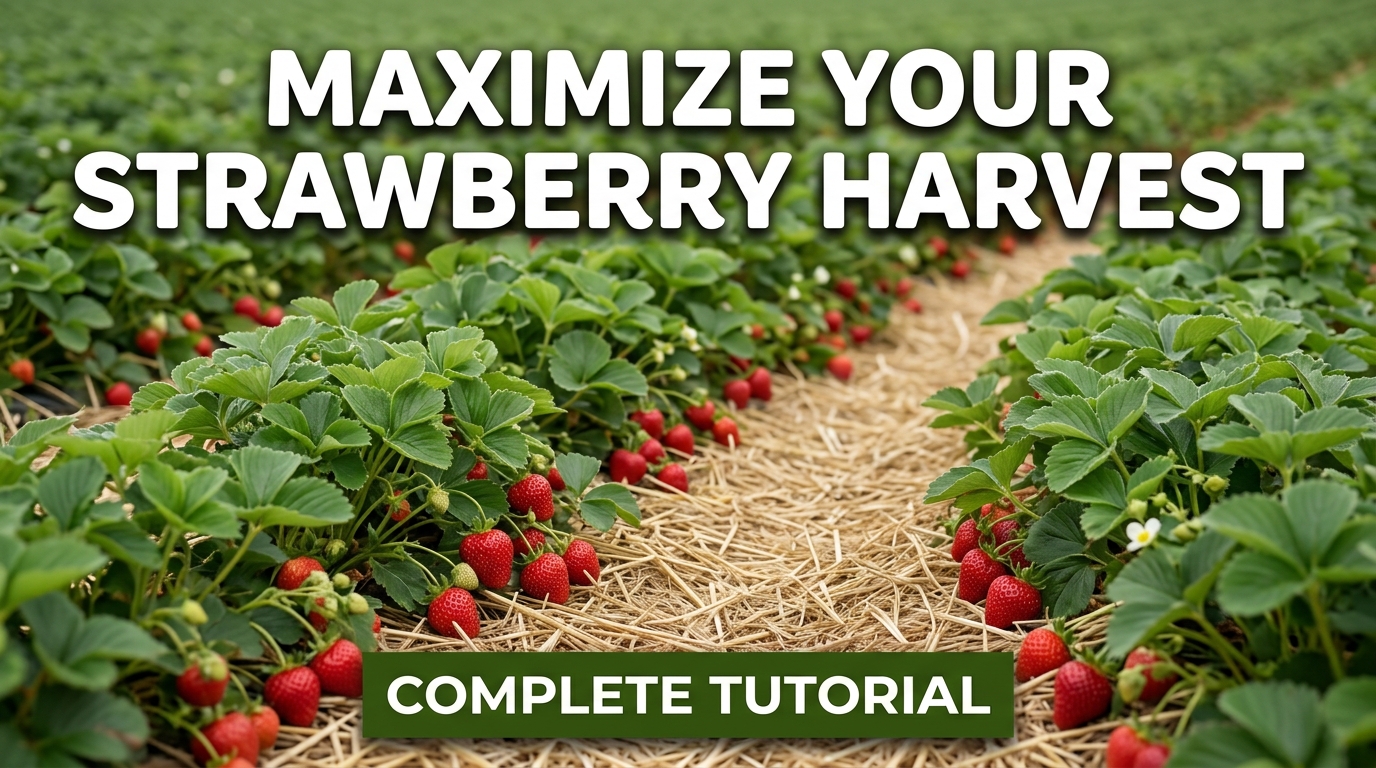
Strawberry Garden Ideas: Creative Designs for Beautiful and Productive Berry Gardens
Growing strawberries at home is one of the most rewarding gardening projects for beginners and experienced gardeners alike. With their sweet flavor, vibrant red color, fragrant blossoms, and compact growth habit, strawberries are perfect for gardens of every size. Whether you have a large backyard, a small patio, or even a balcony, there are countless strawberry garden ideas that can help you maximize space while creating an attractive and productive landscape.
Modern strawberry gardens combine beauty with functionality by using raised beds, vertical planters, hanging baskets, containers, and companion plants to create a garden that is both visually appealing and highly productive. With thoughtful planning and proper care, you can enjoy fresh strawberries from spring through summer while enhancing your outdoor living space.
This comprehensive guide explores everything you need to know about strawberry garden ideas, including layouts, planting methods, companion plants, maintenance, and harvesting tips.
Why Grow Strawberries at Home?
Strawberries are among the easiest and most rewarding fruits to grow.
Benefits include:
- Fresh, flavorful berries
- High nutritional value
- Compact growing habit
- Suitable for small spaces
- Beautiful spring flowers
- Attractive ground cover
- Pollinator-friendly plants
- Cost-effective home harvests
Homegrown strawberries often taste sweeter than store-bought varieties because they can ripen fully on the plant.
Planning Your Strawberry Garden
Before planting, evaluate your outdoor space.
Consider:
- Available sunlight
- Soil quality
- Drainage
- Water access
- Climate
- Garden size
- Maintenance time
- Wildlife protection
Strawberries perform best with six to eight hours of direct sunlight each day.
Choosing the Best Location
An ideal location provides:
- Full sun
- Well-drained soil
- Good air circulation
- Easy access for harvesting
- Protection from strong winds
Avoid areas where water collects after heavy rain.
Raised Bed Strawberry Garden
Raised beds are one of the most popular ways to grow strawberries.
Advantages include:
- Better drainage
- Healthier roots
- Easier maintenance
- Reduced weeds
- Improved soil quality
- Comfortable harvesting
Raised beds also warm up faster in spring, encouraging earlier growth.
Vertical Strawberry Garden
Vertical gardening saves space while creating an eye-catching display.
Ideas include:
- Wall planters
- Pocket planters
- Stacked pots
- PVC towers
- Wooden pallets
- Trellis systems
Vertical gardens improve airflow, helping reduce fungal diseases.
Hanging Basket Garden
Hanging baskets are ideal for patios and balconies.
Benefits include:
- Space-saving design
- Attractive appearance
- Reduced pest problems
- Easy harvesting
- Improved drainage
Trailing strawberry varieties work especially well in baskets.
Container Strawberry Garden
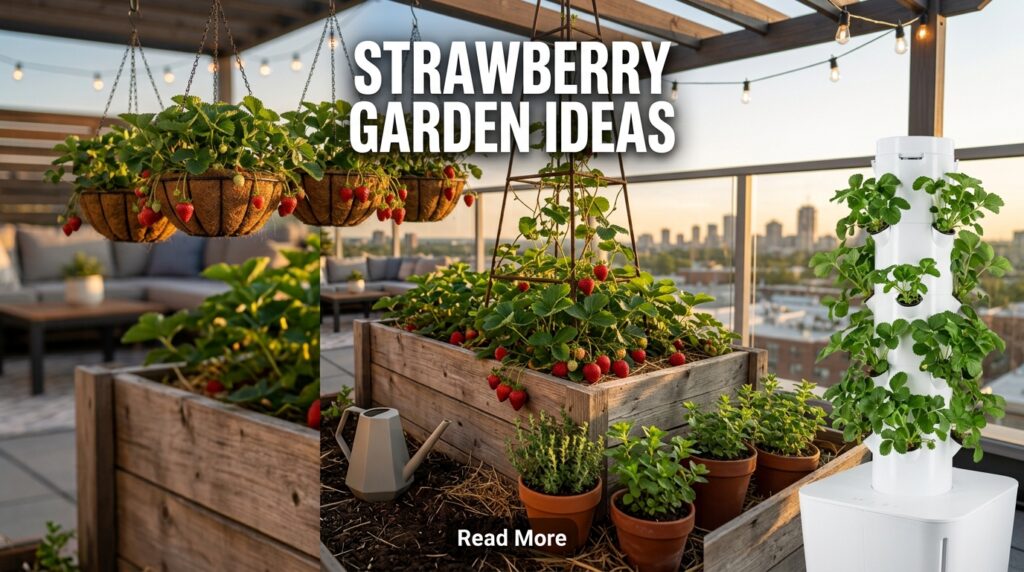
Containers offer flexibility and portability.
Suitable containers include:
- Terracotta pots
- Ceramic planters
- Wooden barrels
- Fabric grow bags
- Window boxes
- Metal tubs with drainage holes
Choose containers at least 8 to 12 inches deep for healthy root development.
Strawberry Tower Ideas
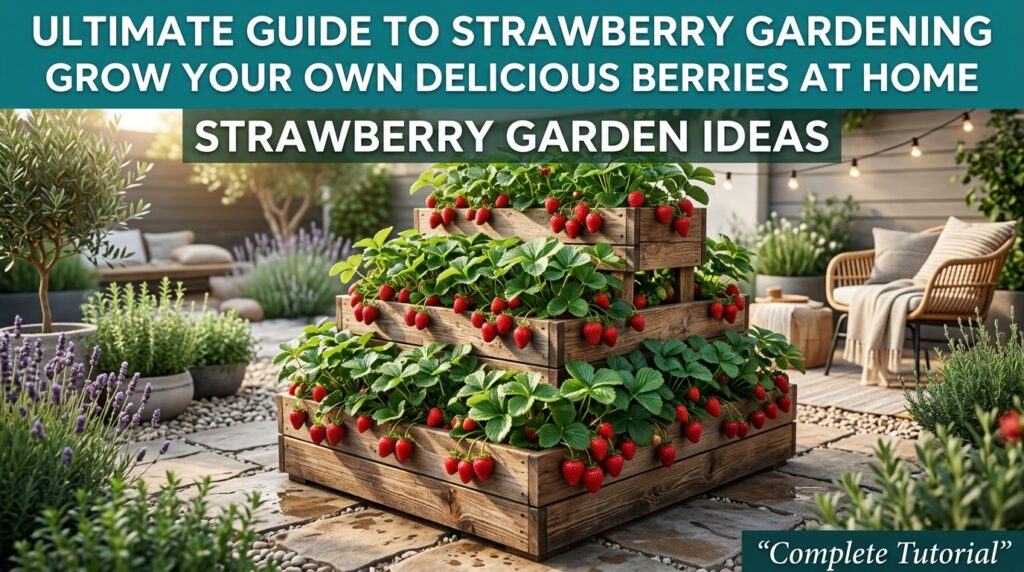
Stacked planters maximize production in small areas.
Popular designs include:
- Tiered wooden planters
- Clay pot towers
- PVC pipe towers
- Ready-made vertical systems
These structures make watering and harvesting convenient.
Ground Cover Strawberry Garden
Strawberries naturally spread through runners, making them excellent ground cover plants.
Benefits include:
- Weed suppression
- Attractive foliage
- Easy maintenance
- Soil protection
- Decorative landscape feature
Ground cover plantings work well beneath fruit trees and along pathways.
Best Strawberry Varieties
Selecting the right variety improves harvest success.
June-Bearing Strawberries
Produce one large crop each year with excellent flavor.
Everbearing Strawberries
Offer multiple harvests throughout the growing season.
Day-Neutral Strawberries
Continue producing berries whenever temperatures remain favorable.
Growing several varieties extends the harvest season.
Companion Plants
Companion planting supports healthier strawberries.
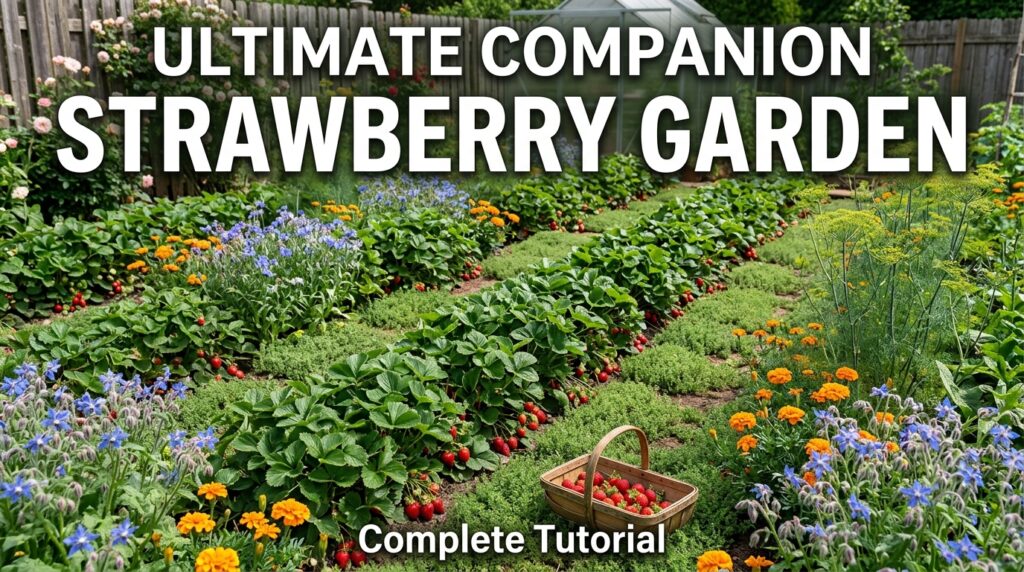
Excellent companions include:
- Chives
- Garlic
- Lettuce
- Spinach
- Thyme
- Borage
- Marigolds
- Nasturtiums
These plants help attract pollinators and may discourage certain pests.
Plants to Avoid Nearby
Avoid planting strawberries near:
- Potatoes
- Tomatoes
- Eggplants
- Peppers
These crops can share diseases that affect strawberry plants.
Soil Preparation
Healthy soil leads to healthier plants.
Ideal soil should be:
- Rich in organic matter
- Well-draining
- Slightly acidic
- Loose and fertile
Adding compost before planting improves soil structure and fertility.
Mulching
Mulch protects both plants and fruit.
Benefits include:
- Moisture retention
- Weed control
- Cleaner berries
- Reduced soil erosion
- Temperature regulation
Common mulch materials include:
- Straw
- Pine needles
- Wood chips
- Leaf mulch
Straw mulch is a traditional and highly effective choice.
Watering Tips
Consistent moisture is essential.
Guidelines include:
- Water deeply
- Avoid wetting leaves
- Water early in the day
- Use drip irrigation whenever possible
Even watering encourages larger, sweeter berries.
Fertilizing
Feed plants throughout the growing season.
Good options include:
- Compost
- Organic berry fertilizer
- Fish emulsion
- Balanced slow-release fertilizer
Avoid excessive nitrogen, which promotes leaves instead of fruit.
Pollinator-Friendly Garden
Encourage bees and butterflies by planting:
- Lavender
- Salvia
- Bee balm
- Coneflowers
- Borage
Healthy pollinator populations improve berry production.
Garden Pathways
Well-designed pathways improve access.
Popular materials include:
- Gravel
- Brick
- Stepping stones
- Wood chips
- Mulch
Wide paths make harvesting comfortable.
Decorative Features
Enhance your strawberry garden with:
- Rustic signs
- Wooden trellises
- Decorative pots
- Garden benches
- Birdbaths
- Solar lighting
Simple accessories create a charming cottage-style garden.
Seasonal Care
Spring
- Remove winter mulch
- Fertilize plants
- Inspect for pests
- Water consistently
Summer
- Harvest regularly
- Remove weeds
- Trim excess runners
- Maintain mulch
Autumn
- Remove damaged leaves
- Add compost
- Prepare for winter
Winter
- Apply protective mulch
- Cover plants in colder climates
- Reduce watering as needed
Seasonal care ensures long-term productivity.
Small Strawberry Garden Ideas
Limited space doesn’t prevent growing delicious berries.
Ideas include:
- Balcony containers
- Window boxes
- Hanging baskets
- Vertical towers
- Patio planters
- Tiered shelves
Compact designs make strawberries accessible almost anywhere.
Common Growing Mistakes
Avoid these common problems:
- Overwatering
- Poor drainage
- Crowded plants
- Insufficient sunlight
- Ignoring runners
- Skipping mulch
- Harvesting too late
Healthy growing conditions produce sweeter fruit.
Maintenance Tips
Keep your strawberry garden productive by:
- Watering regularly
- Removing old leaves
- Trimming runners
- Fertilizing seasonally
- Replacing aging plants every few years
- Monitoring pests
- Harvesting frequently
Routine care improves both yield and fruit quality.
Frequently Asked Questions
Where do strawberries grow best?
Strawberries thrive in full sun with fertile, well-drained soil and consistent moisture.
Can strawberries grow in containers?
Yes. Containers are one of the easiest and most effective ways to grow strawberries, especially in small spaces.
How often should strawberries be watered?
Water deeply whenever the top inch of soil becomes dry, while avoiding soggy conditions.
What is the best mulch for strawberries?
Clean straw is the traditional choice because it keeps berries clean, reduces weeds, and conserves moisture.
How long do strawberry plants produce fruit?
Most plants remain productive for three to five years, although replacing older plants regularly helps maintain high yields.
Conclusion
Strawberry garden ideas offer endless possibilities for creating a productive, beautiful, and enjoyable outdoor space. Whether you choose raised beds, hanging baskets, vertical towers, containers, or traditional garden rows, strawberries adapt well to a variety of growing conditions and garden styles.
By selecting the right varieties, preparing fertile soil, using mulch, providing consistent watering, and practicing regular maintenance, you can enjoy abundant harvests of sweet, homegrown berries year after year. With thoughtful planning and creative design, your strawberry garden will become a colorful, delicious, and rewarding feature that enhances your landscape while providing fresh fruit for the whole family.