
 By John
Persian Garden: Discover the Beauty, Symbolism, and Elegant Design of a Historic Landscape
A Persian garden is one of the world’s oldest and most influential landscape designs, admired for its balance, symmetry, water features, lush greenery, and peaceful atmosphere. Dating back thousands of years, Persian gardens were created as enclosed sanctuaries that represented paradise on earth. Their thoughtful layouts, flowing water, shaded walkways, fragrant flowers, and geometric patterns continue to inspire modern landscape architects and homeowners alike.
Whether you want to recreate the elegance of a traditional Persian courtyard or incorporate its timeless principles into a contemporary backyard, a Persian garden offers the perfect combination of beauty, tranquility, and functionality. With carefully planned pathways, cooling fountains, colorful flowers, ornamental trees, and relaxing seating areas, you can create an outdoor retreat that feels luxurious and serene.
This comprehensive guide explores everything you need to know about Persian gardens, including their history, design principles, plant selection, water features, architectural elements, and maintenance tips.
What Is a Persian Garden?
A Persian garden is a formal landscape style that originated in ancient Persia, present-day Iran. Designed as a symbol of paradise, these gardens combine nature, architecture, and water to create peaceful spaces that offer shade, beauty, and relaxation.
Traditional Persian gardens often include:
- Symmetrical layouts
- Central water channels
- Reflecting pools
- Stone pathways
- Fruit trees
- Flower beds
- Shaded seating areas
- Decorative pavilions
- Enclosed walls
- Geometric planting patterns
The design emphasizes harmony between people and nature while creating a cool, inviting environment.
History of Persian Gardens
Persian gardens have a history spanning more than 2,500 years. Ancient rulers and architects designed these gardens to provide refuge from the surrounding desert climate while symbolizing abundance and paradise.
Over time, Persian garden principles influenced landscape design throughout the Middle East, Central Asia, India, and Europe. Many famous palace gardens and historic estates incorporate features inspired by traditional Persian landscapes, particularly the use of symmetry, flowing water, and enclosed spaces.
Today, Persian garden concepts continue to inspire modern residential landscapes around the world.
Key Principles of Persian Garden Design
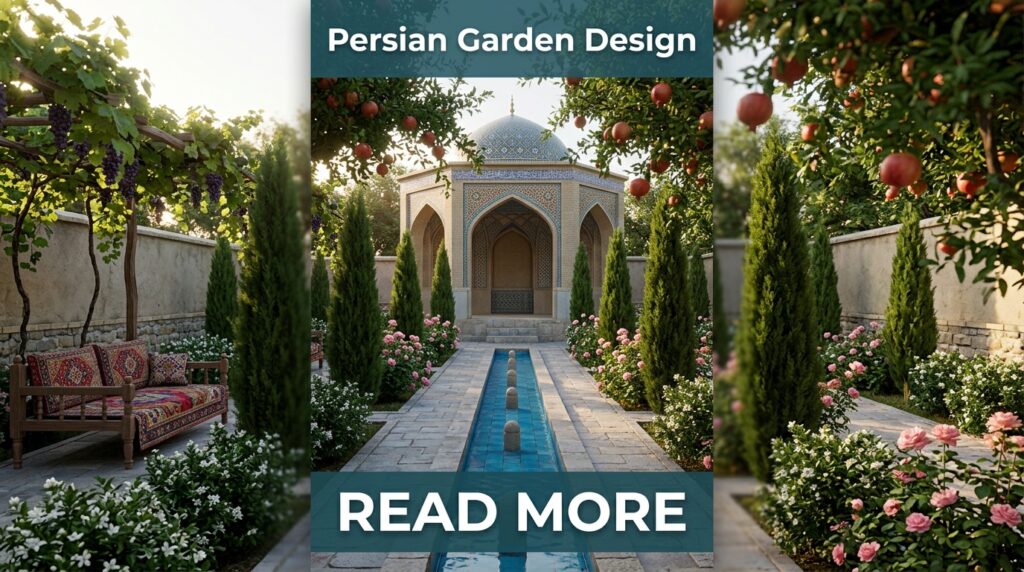
Every Persian garden is built around several timeless design principles.
Symmetry
Balanced layouts create visual harmony and a sense of order.
Water
Flowing water represents life, purity, and renewal while cooling the surrounding environment.
Shade
Trees and covered structures provide relief from sunlight and encourage relaxation.
Geometry
Straight pathways and geometric planting beds create an organized appearance.
Enclosure
Walls or hedges define the garden as a private sanctuary separated from the outside world.
The Four-Part Garden Layout
One of the most recognizable features of Persian gardens is the four-part layout.
This design divides the garden into four equal sections using water channels or pathways that intersect at a central focal point.
The center often contains:
- Fountain
- Reflecting pool
- Pavilion
- Decorative basin
- Sculpture
This balanced arrangement creates harmony and encourages movement throughout the landscape.
Water Features
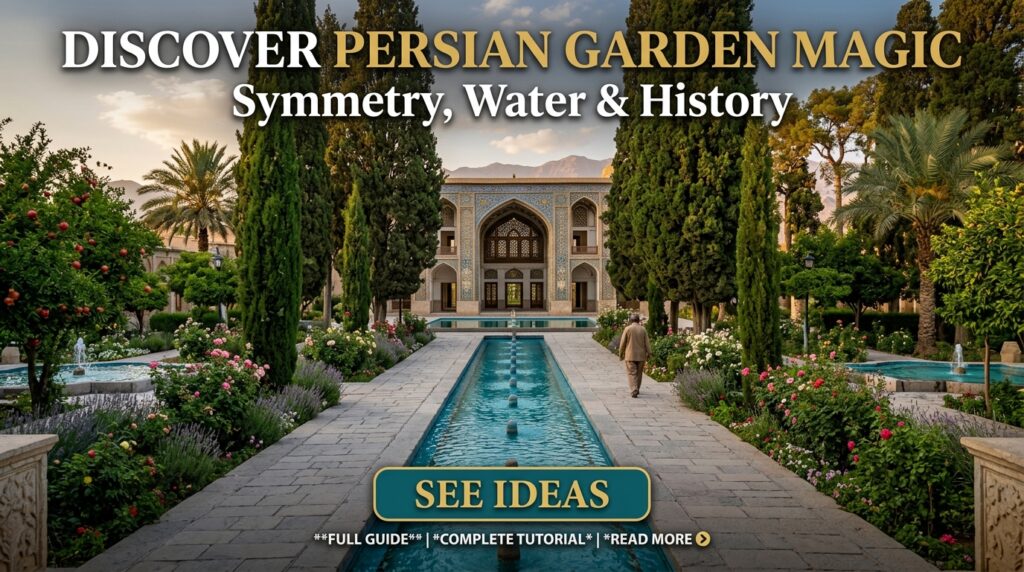
Water is the heart of every Persian garden.
Popular features include:
- Reflecting pools
- Long water channels
- Stone fountains
- Cascading waterfalls
- Decorative basins
- Small ponds
Moving water cools the air while adding soothing sounds that enhance relaxation.
Garden Pathways
Straight pathways reinforce the garden’s geometric structure.
Suitable materials include:
- Natural stone
- Brick
- Limestone
- Gravel
- Marble pavers
Border pathways with flowers, herbs, or neatly clipped shrubs for added elegance.
Courtyard Design
Many Persian gardens are enclosed within courtyard walls.
A courtyard garden often includes:
- Central fountain
- Stone seating
- Decorative tiles
- Fruit trees
- Fragrant flowers
- Climbing vines
This design creates a peaceful and private outdoor living space.
Best Trees for a Persian Garden
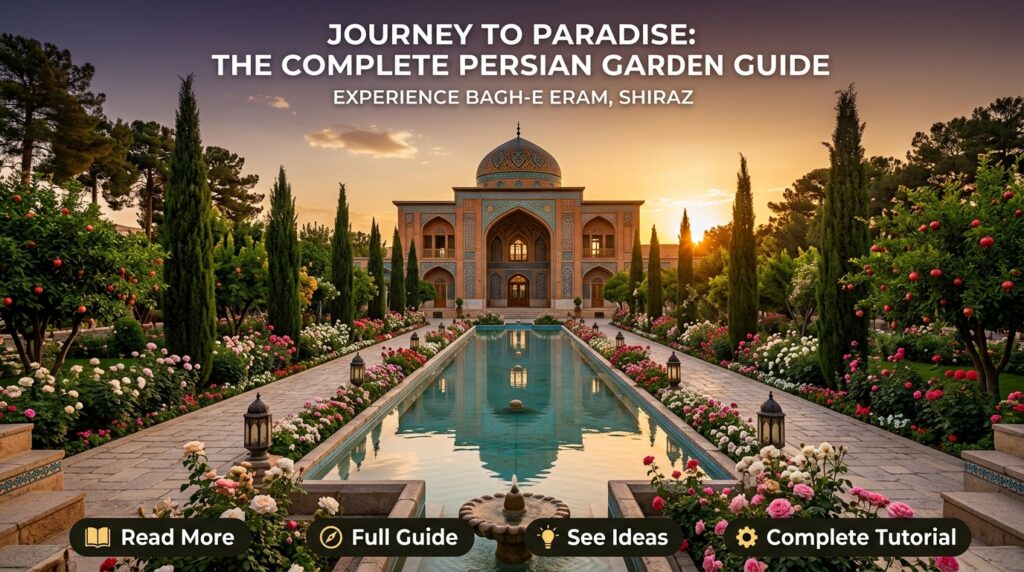
Trees provide shade, structure, and seasonal beauty.
Popular choices include:
- Cypress
- Pomegranate
- Olive
- Citrus
- Fig
- Mulberry
- Plane tree
Fruit-bearing trees combine beauty with productivity.
Beautiful Flowers
Flowers bring fragrance and vibrant color to the landscape.
Excellent choices include:
Roses
Classic roses symbolize beauty and remain central to Persian-inspired gardens.
Jasmine
Fragrant white flowers perfume the garden during warm evenings.
Lavender
Lavender attracts pollinators while adding calming color.
Iris
Elegant blooms contribute texture and seasonal interest.
Tulips
Spring tulips introduce brilliant color to formal planting beds.
Lilies
Graceful flowers complement water features and shaded areas.
Fragrant Herbs
Herbs contribute both beauty and practicality.
Popular selections include:
- Mint
- Basil
- Rosemary
- Thyme
- Sage
- Oregano
Plant herbs near pathways for easy harvesting and fragrance.
Decorative Tiles
Traditional Persian gardens often feature colorful decorative tilework.
Use tiles on:
- Fountains
- Courtyard walls
- Benches
- Stair risers
- Water basins
Intricate patterns add artistic detail to the landscape.
Pergolas and Pavilions
Shaded structures encourage outdoor relaxation.
Ideas include:
- Wooden pergolas
- Open-air pavilions
- Vine-covered arbors
- Stone gazebos
Climbing jasmine or grapevines create cool, shaded retreats.
Garden Seating
Comfortable seating invites visitors to enjoy the peaceful surroundings.
Options include:
- Stone benches
- Wooden benches
- Decorative chairs
- Outdoor dining tables
- Cushioned seating
Position seating near water features or beneath shade trees.
Garden Walls
Enclosed gardens create privacy and emphasize the sanctuary-like atmosphere.
Suitable materials include:
- Stone
- Brick
- Stucco
- Decorative plaster
Climbing plants soften hard surfaces while adding greenery.
Lighting Ideas
Subtle lighting enhances the garden after sunset.
Include:
- Lanterns
- Path lights
- Fountain lighting
- Wall sconces
- Candle-style fixtures
Warm lighting creates a calm and welcoming atmosphere.
Sustainable Persian Garden Design
Traditional Persian gardens were designed with water conservation in mind.
Modern sustainable ideas include:
- Drip irrigation
- Rainwater harvesting
- Native drought-tolerant plants
- Organic compost
- Mulching
- Solar lighting
These methods reduce maintenance while preserving natural resources.
Color Palette
Persian gardens typically feature rich yet balanced colors.
Popular combinations include:
- Green and blue
- White and lavender
- Red and cream
- Purple and silver
- Terracotta and emerald
Natural stone complements vibrant flowers beautifully.
Small Persian Garden Ideas
Even compact spaces can capture the elegance of Persian design.
Ideas include:
- Courtyard fountain
- Decorative tiles
- Container citrus trees
- Symmetrical planters
- Gravel pathways
- Raised flower beds
A small garden can still feel luxurious through thoughtful planning.
Seasonal Beauty
Plan for year-round interest.
Spring
Plant:
- Tulips
- Irises
- Roses
Summer
Enjoy:
- Jasmine
- Lavender
- Citrus blossoms
Autumn
Highlight:
- Pomegranates
- Ornamental grasses
- Colorful foliage
Winter
Maintain structure with:
- Evergreen cypress
- Stone architecture
- Decorative containers
Seasonal diversity keeps the garden attractive throughout the year.
Maintenance Tips
Keep your Persian garden beautiful with regular care.
Routine tasks include:
- Watering deeply
- Pruning trees
- Trimming shrubs
- Cleaning fountains
- Removing weeds
- Fertilizing seasonally
- Refreshing mulch
Proper maintenance preserves both beauty and functionality.
Common Design Mistakes
Avoid these common landscaping errors:
- Poor symmetry
- Lack of shade
- Overcrowded planting
- Ignoring water conservation
- Weak focal points
- Excessive decoration
- Poor pathway planning
Careful design ensures a balanced and relaxing garden.
Why Persian Gardens Remain Popular
Homeowners continue to admire Persian gardens because they offer:
- Timeless elegance
- Peaceful outdoor spaces
- Beautiful water features
- Fragrant flowers
- Functional shade
- Architectural beauty
- Sustainable landscaping principles
Their combination of nature and geometry creates a landscape that feels both luxurious and calming.
Frequently Asked Questions
What is a Persian garden?
A Persian garden is a formal landscape featuring symmetry, water channels, shade trees, geometric layouts, and enclosed spaces designed to symbolize paradise.
What plants belong in a Persian garden?
Popular plants include roses, jasmine, lavender, cypress, olive trees, pomegranate trees, citrus trees, and fragrant herbs.
Why is water important in Persian gardens?
Water represents life and renewal while helping cool the surrounding environment. Reflecting pools and fountains also serve as central design features.
Can I create a Persian garden in a small backyard?
Yes. A compact courtyard with symmetrical planting, decorative tiles, a fountain, and fragrant plants can successfully capture the essence of a Persian garden.
Are Persian gardens difficult to maintain?
With proper planning, efficient irrigation, regular pruning, and seasonal care, Persian gardens can be both beautiful and manageable.
Conclusion
A Persian garden is a timeless expression of beauty, balance, and tranquility. By combining symmetrical layouts, flowing water, fragrant flowers, shaded seating, and elegant architectural details, you can transform any outdoor space into a peaceful retreat inspired by one of history’s most celebrated garden traditions.
Whether you are designing a spacious backyard or a small courtyard, the principles of Persian garden design—harmony, geometry, water, and nature—offer endless inspiration. With thoughtful planning, sustainable practices, and regular maintenance, your Persian-inspired landscape will provide a serene and luxurious environment that can be enjoyed throughout every season.