
 By John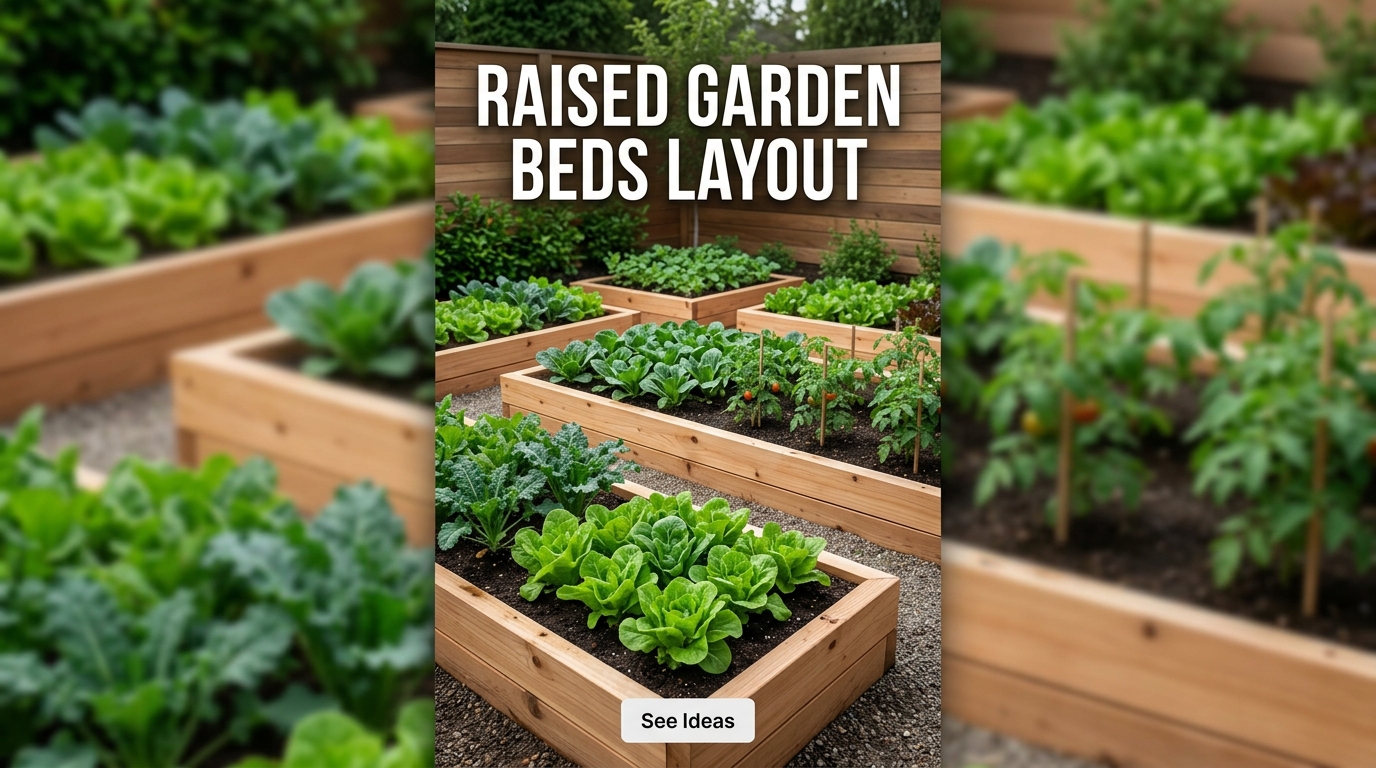
A well-designed raised garden beds layout can maximize growing space, improve plant health, simplify maintenance, and create an organized, attractive garden. Whether you’re growing vegetables, herbs, flowers, or a combination of all three, the right layout helps you make the most of your available space while ensuring easy access and efficient harvesting.
Raised beds are especially popular because they provide better drainage, improved soil quality, fewer weeds, and easier gardening compared to traditional in-ground beds.
Why Choose Raised Garden Beds?
Raised garden beds offer several advantages:
- Better soil control
- Improved drainage
- Reduced soil compaction
- Easier weed management
- Improved accessibility
- Higher productivity
- Cleaner harvests
They are suitable for small urban gardens, large backyards, patios, and even rooftop gardens.
Key Principles of Raised Garden Bed Layout Design
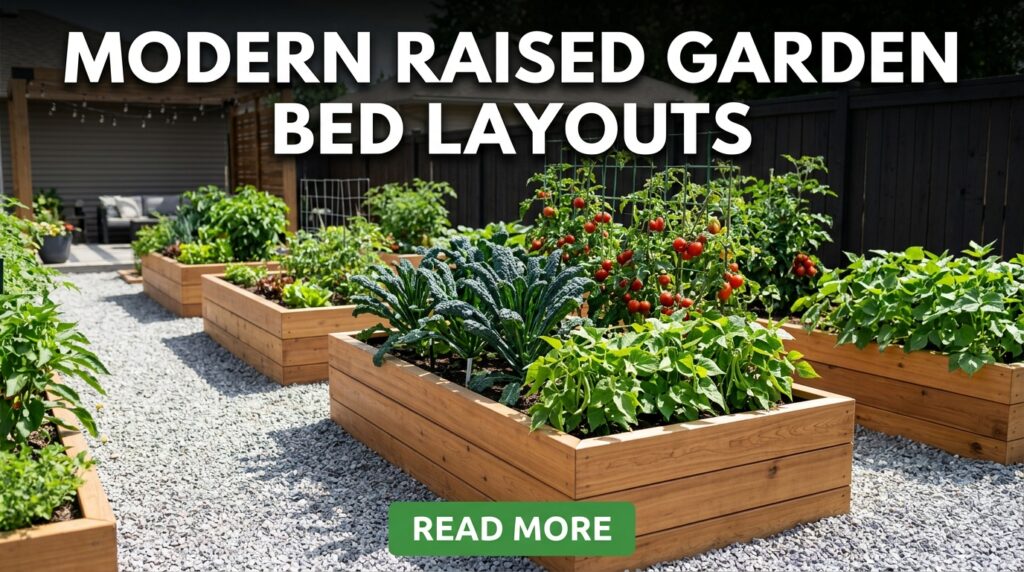
Maximize Sunlight
Most vegetables require at least 6–8 hours of direct sunlight daily.
Tips:
- Place taller crops on the north side (Northern Hemisphere).
- Avoid shading smaller plants.
- Observe sun patterns before building beds.
Create Easy Access
You should be able to reach the center of each bed without stepping on the soil.
Recommended Width:
- 3–4 feet (90–120 cm)
Recommended Length:
- 6–12 feet (1.8–3.6 m)
Allow Comfortable Pathways
Paths should provide easy movement and maintenance.
Ideal Path Width:
- 18–36 inches (45–90 cm)
Wider paths are useful for wheelbarrows and garden carts.
Popular Raised Garden Bed Layouts
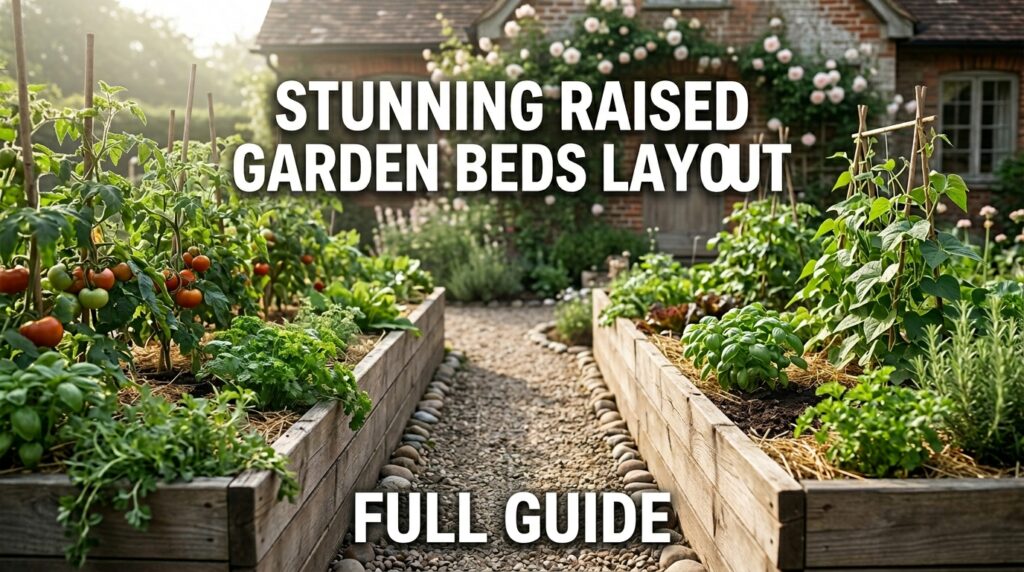
1. Classic Parallel Layout
One of the most common designs.
Features:
- Multiple rectangular beds
- Straight pathways
- Efficient use of space
Best For:
- Vegetable gardens
- Large backyards
- Beginner gardeners
Example:
Bed | Path | Bed | Path | Bed
This layout provides easy access and excellent organization.
2. Four-Bed Square Layout
Ideal for medium-sized gardens.
Features:
- Four raised beds
- Central pathway intersection
- Easy crop rotation
Benefits:
- Organized appearance
- Convenient maintenance
3. U-Shaped Raised Bed Layout
Designed for accessibility.
Advantages:
- Easy reach from all sides
- Excellent for small spaces
- Ideal for seniors and mobility-friendly gardening
4. L-Shaped Layout
Works well in corners and compact gardens.
Perfect For:
- Small yards
- Patio gardens
- Urban spaces
Raised Garden Beds Layout for Vegetables
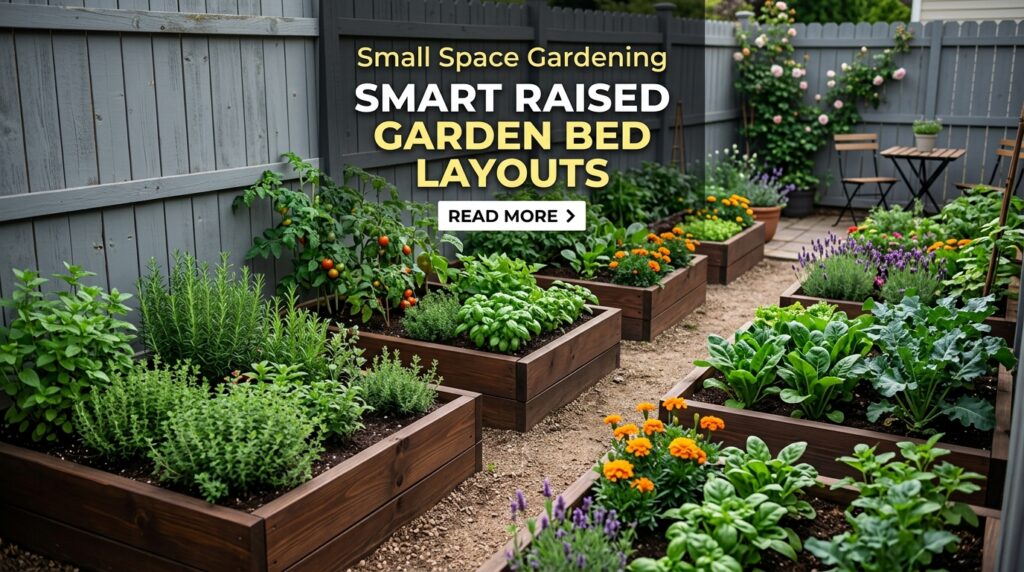
Organizing crops correctly improves productivity.
Bed 1: Leafy Greens
Grow:
- Lettuce
- Spinach
- Kale
- Arugula
Bed 2: Root Vegetables
Grow:
- Carrots
- Beets
- Radishes
- Turnips
Bed 3: Fruiting Crops
Grow:
- Tomatoes
- Peppers
- Eggplants
Bed 4: Legumes
Grow:
- Beans
- Peas
This layout supports crop rotation and healthier soil.
Small Raised Garden Bed Layout Ideas
Single Raised Bed
Perfect for beginners.
Ideal Size:
4 ft × 8 ft
Suitable for:
- Herbs
- Lettuce
- Tomatoes
- Peppers
Two-Bed Layout
Separates vegetables and herbs.
Benefits:
- Better organization
- Easier maintenance
Compact Square Foot Garden
Maximizes production in limited space.
Square Foot Raised Bed Layout
Square foot gardening divides beds into 1-foot squares.
Advantages:
- Efficient planting
- Easy planning
- High yields
Example:
| Lettuce | Carrots | Radishes | Basil |
|---|---|---|---|
| Spinach | Beets | Onions | Parsley |
| Peppers | Beans | Kale | Chard |
| Tomatoes | Cucumbers | Marigolds | Dill |
This system is ideal for small gardens.
Raised Garden Beds Layout for Herbs
Herbs thrive in dedicated raised beds.
Group Together:
- Basil
- Parsley
- Cilantro
- Dill
Separate Aggressive Growers:
- Mint
- Lemon balm
Keeping invasive herbs contained prevents overcrowding.
Companion Planting Layout Ideas
Companion planting improves growth and pest resistance.
Tomatoes + Basil
Enhances flavor and attracts beneficial insects.
Carrots + Onions
Helps deter pests.
Lettuce + Radishes
Efficient use of space.
Beans + Cucumbers
Excellent growth partnership.
Raised Garden Bed Layout for Backyard Gardens
Example Layout:
- Central pathway
- Four large raised beds
- Herb bed near kitchen
- Compost station at the rear
- Seating area nearby
This creates both productivity and visual appeal.
Raised Garden Bed Layout for Beginners
Start with:
2–4 Raised Beds
Easy to manage and maintain.
Grow Simple Crops
Examples:
- Lettuce
- Tomatoes
- Radishes
- Basil
Leave Space for Expansion
You can always add more beds later.
Best Orientation for Raised Beds
North-South Orientation
Often provides the most even sunlight exposure.
Benefits:
- Better air circulation
- Improved crop growth
- Reduced shading
Materials for Raised Garden Beds
Wood
Popular and attractive.
Metal
Modern and durable.
Brick
Permanent and elegant.
Stone
Natural and long-lasting.
Common Raised Garden Bed Layout Mistakes
Beds Too Wide
Makes harvesting difficult.
Narrow Pathways
Reduces accessibility.
Ignoring Sunlight
Can limit crop productivity.
Overcrowding Plants
Increases disease risk and reduces yields.
Raised Garden Bed Maintenance Tips
Add Compost Annually
Improves soil fertility.
Rotate Crops
Reduces pest and disease problems.
Mulch Regularly
Conserves moisture and suppresses weeds.
Inspect Irrigation Systems
Ensure consistent watering.
Conclusion
A thoughtfully planned raised garden beds layout can significantly improve the productivity, beauty, and ease of your garden. Whether you choose a simple backyard design, a square-foot gardening system, or a multi-bed vegetable garden, proper spacing, sunlight exposure, and crop organization are essential for success.
With well-designed raised beds, quality soil, and smart planting strategies, you can create a productive garden that delivers healthy harvests and enjoyable gardening experiences throughout the growing season.