 By John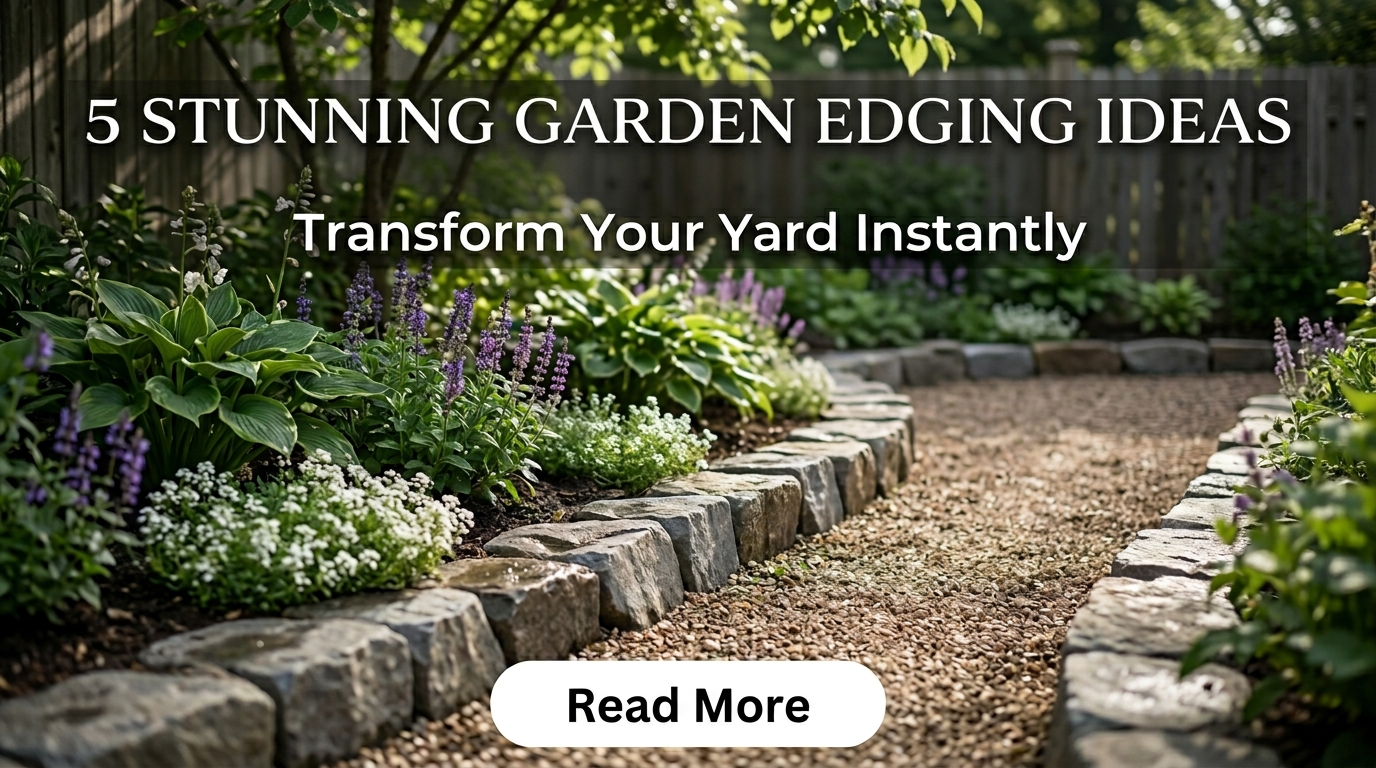
Garden edging is one of the simplest and most effective ways to give your outdoor space a polished, organized, and professional appearance. By creating clear boundaries between lawns, flower beds, pathways, and other landscape features, garden edging adds structure while enhancing the overall beauty of your garden.
Whether you prefer a modern minimalist design, a rustic cottage garden, or a formal landscape, the right edging can dramatically improve both functionality and curb appeal.
What Is Garden Edging?
Garden edging is a landscaping technique used to create a distinct border between different areas of a garden. It helps separate lawns from flower beds, pathways from planting areas, and decorative features from surrounding spaces.
Common uses include:
- Defining flower beds
- Separating lawns and pathways
- Preventing grass invasion
- Improving landscape organization
- Creating decorative borders
Benefits of Garden Edging
Creates Clean Boundaries
Edging provides clear separation between garden zones.
Improves Curb Appeal
Well-defined borders make gardens appear professionally designed.
Reduces Maintenance
Helps prevent grass and weeds from spreading into flower beds.
Enhances Landscape Structure
Creates order and visual balance throughout the garden.
Protects Plants
Prevents accidental damage from lawn equipment.
Popular Garden Edging Materials
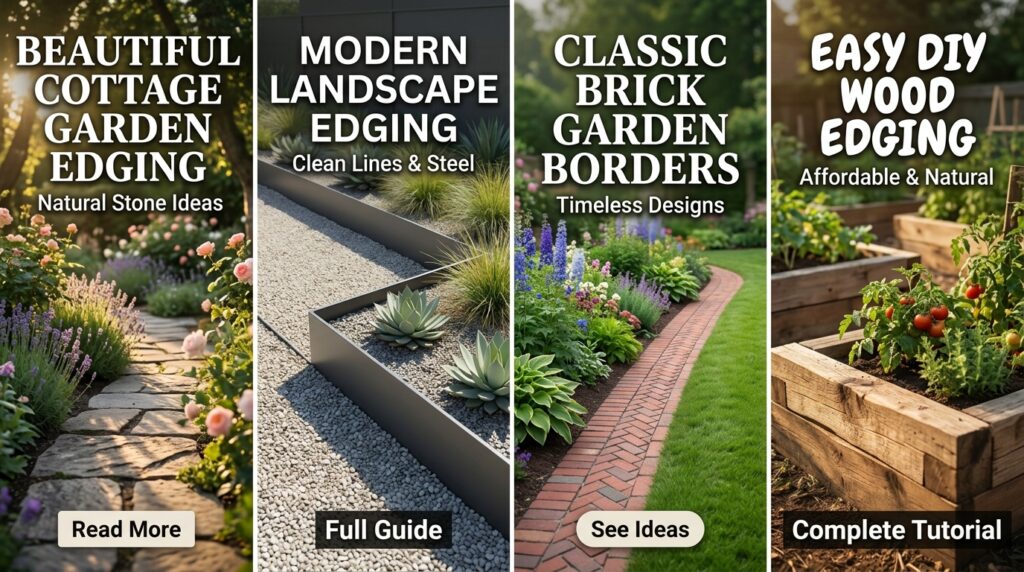
Stone Garden Edging
One of the most timeless options.
Benefits:
- Durable
- Natural appearance
- Suitable for most garden styles
Stone edging works beautifully in cottage, rustic, and traditional landscapes.
Brick Garden Edging
Classic and elegant.
Advantages:
- Long-lasting
- Easy to install
- Creates formal structure
Brick borders are ideal for pathways and flower beds.
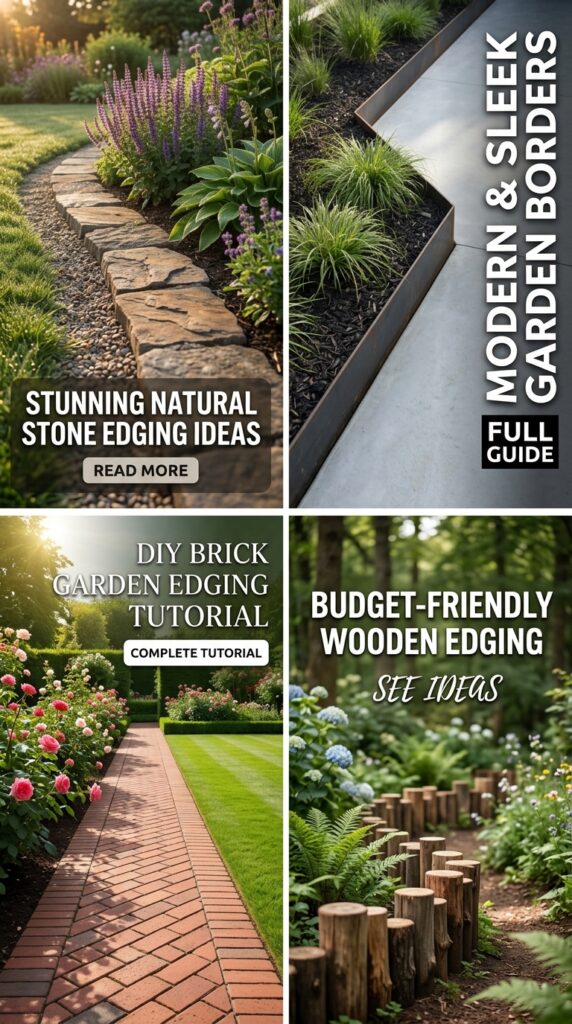
Metal Garden Edging
Modern and minimalist.
Features:
- Clean lines
- Slim profile
- Highly durable
Popular in contemporary garden designs.
Wooden Garden Edging
Warm and natural.
Great For:
- Cottage gardens
- Vegetable gardens
- Rustic landscapes
Pressure-treated wood lasts longer outdoors.
Concrete Garden Edging
Strong and versatile.
Benefits:
- Custom shapes
- Modern appearance
- Long lifespan
Garden Edging Ideas for Flower Beds
Flower beds benefit greatly from defined borders.
Curved Stone Borders
Create a soft and natural appearance.
Raised Brick Edging
Adds depth and visual interest.
Decorative Gravel Edges
Complements colorful plantings.
Metal Borders
Ideal for modern flower gardens.
Modern Garden Edging Ideas
Modern landscapes focus on simplicity and clean lines.
Popular Options:
- Black metal edging
- Concrete borders
- Geometric layouts
- Gravel transitions
These materials create a sleek and organized look.
Cottage Garden Edging Ideas
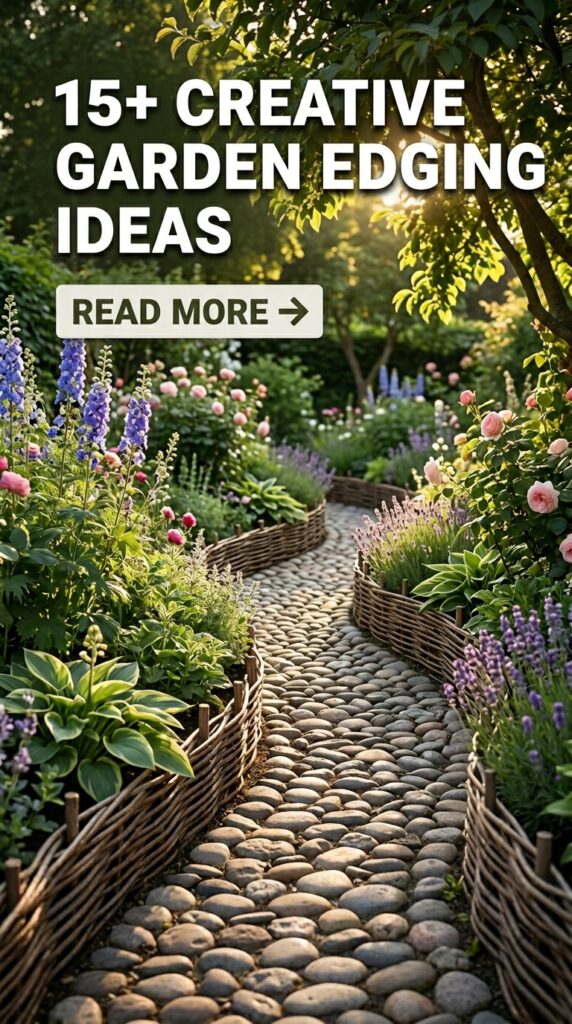
Cottage gardens often feature softer, more romantic borders.
Include:
- Natural stone edging
- Weathered wood
- Flower-lined borders
- Curved pathways
The goal is a relaxed and inviting atmosphere.
Garden Edging for Pathways
Path edging improves both appearance and functionality.
Brick Path Borders
Traditional and durable.
Stone Path Edging
Natural and elegant.
Gravel Edge Definition
Easy and budget-friendly.
Metal Path Borders
Modern and clean.
Vegetable Garden Edging Ideas
Edging helps organize growing areas.
Great Choices:
- Wooden boards
- Raised bed borders
- Brick edges
- Recycled materials
Defined beds make maintenance easier and improve aesthetics.
DIY Garden Edging Ideas
Creating your own garden edging can be affordable and rewarding.
Recycled Brick Borders
Repurpose old construction materials.
Wooden Log Edging
Natural woodland appearance.
River Rock Borders
Simple and attractive.
Pallet Wood Edging
Budget-friendly and sustainable.
Decorative Garden Edging Ideas
Edging can become a design feature itself.
Mosaic Borders
Add color and artistic appeal.
Pebble Edging
Creates texture and contrast.
Decorative Concrete Designs
Custom shapes and patterns.
Lighting-Integrated Borders
Enhance nighttime beauty.
Small Garden Edging Ideas
Even compact gardens benefit from edging.
Best Options:
- Thin metal borders
- Compact stone edging
- Gravel lines
- Mini brick borders
Simple edging can make small spaces appear larger and more organized.
Garden Edging Around Trees
Tree borders create attractive focal points.
Ideas:
- Circular stone edging
- Mulch rings
- Decorative gravel
- Low brick walls
Avoid piling soil directly against tree trunks.
Low-Maintenance Garden Edging Options
If you want minimal upkeep, consider:
- Metal edging
- Concrete borders
- Natural stone
- Composite materials
These options are durable and resistant to weather damage.
Common Garden Edging Mistakes
Choosing the Wrong Material
Match edging to your garden style and climate.
Installing Uneven Borders
Take time to create smooth, consistent lines.
Ignoring Drainage
Ensure water can move naturally through the landscape.
Overcomplicating the Design
Simple edging often creates the most elegant result.
Garden Edging Trends
Popular garden edging trends include:
- Modern steel borders
- Natural stone designs
- Sustainable recycled materials
- Mixed-material landscapes
- Integrated garden lighting
These trends combine beauty, durability, and practicality.
How to Install Garden Edging
Step 1: Plan the Border
Mark the desired edge using string or landscape paint.
Step 2: Dig a Trench
Create a shallow trench for the edging material.
Step 3: Position the Edging
Place stones, bricks, metal, or wood securely.
Step 4: Check Alignment
Ensure the border is level and evenly spaced.
Step 5: Backfill and Finish
Secure the edging and tidy the surrounding area.
Conclusion
Beautiful garden edging is one of the easiest ways to elevate your landscape and create a more organized outdoor space. Whether you choose stone, brick, wood, metal, or concrete, the right edging enhances both the appearance and functionality of your garden.
By selecting materials that complement your design style and installing them thoughtfully, you can create clean borders that highlight flower beds, pathways, vegetable gardens, and other landscape features while adding lasting value and beauty to your outdoor environment.