
 By John
Japanese garden design is one of the most elegant and calming landscaping styles in the world. Rooted in centuries of tradition, Japanese gardens are designed to create harmony between nature, architecture, and human experience. Every element—from stones and water to plants and pathways—has a purpose and contributes to a sense of balance, tranquility, and beauty.
Whether you have a large backyard, a small courtyard, or a compact urban space, Japanese garden principles can help you create a peaceful retreat that feels timeless and inspiring.
What Is Japanese Garden Design?
Japanese garden design is a landscaping style that emphasizes simplicity, natural beauty, and thoughtful composition. Rather than focusing on bright colors and abundant flowers, Japanese gardens rely on texture, shape, space, and symbolism.
Traditional Japanese gardens often include:
- Natural stone
- Water features
- Gravel and sand
- Moss
- Carefully pruned trees
- Bamboo elements
- Wooden bridges
- Stone lanterns
The goal is to create a landscape that encourages reflection and appreciation of nature.
Principles of Japanese Garden Design

Simplicity
Japanese gardens avoid clutter and unnecessary decoration.
Balance
Elements are arranged to create visual harmony rather than strict symmetry.
Naturalness
Materials and plants are selected to appear organic and timeless.
Tranquility
Every feature contributes to a calm and peaceful atmosphere.
Symbolism
Many garden elements represent mountains, rivers, islands, or natural landscapes.
Types of Japanese Gardens
Zen Garden (Karesansui)
One of the most recognizable styles.
Features:
- Gravel or sand
- Carefully placed rocks
- Minimal planting
Zen gardens are designed for meditation and contemplation.
Tea Garden
Traditionally created around a tea house.
Includes:
- Stone pathways
- Lanterns
- Water basins
- Shade-loving plants
Stroll Garden
Designed to be experienced through movement.
Features:
- Winding paths
- Scenic viewpoints
- Ponds
- Bridges
Courtyard Garden
Ideal for small spaces.
Focus:
- Simplicity
- Balance
- Compact planting
Essential Elements of Japanese Garden Design
Natural Stone
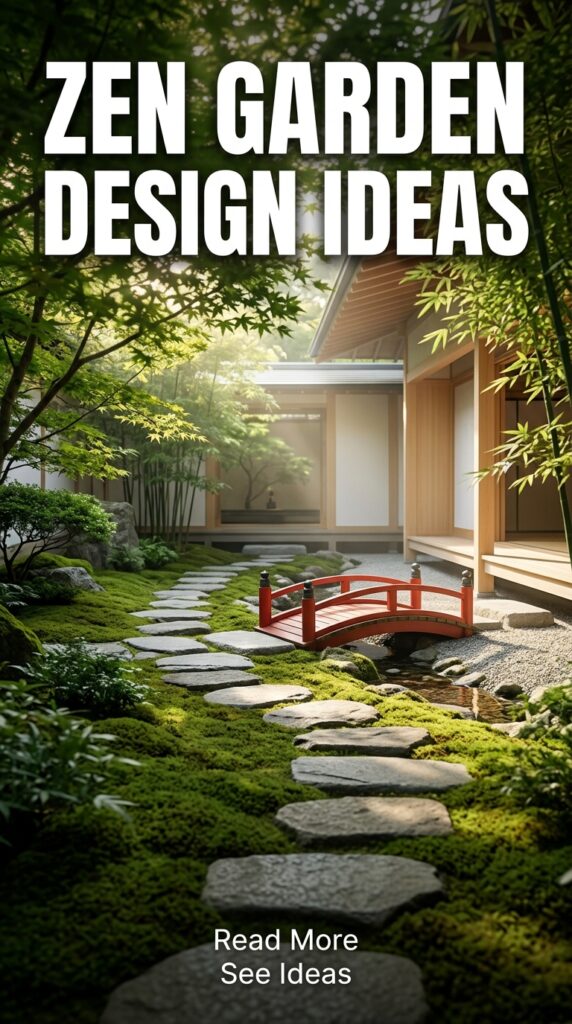
Stone is one of the most important materials in Japanese gardens.
Uses:
- Pathways
- Stepping stones
- Focal points
- Dry riverbeds
Large stones often symbolize mountains or islands.
Water Features
Water represents life, movement, and renewal.
Popular Options:
- Koi ponds
- Streams
- Waterfalls
- Stone basins
Even small water features can create a calming effect.
Gravel and Sand
Used in Zen gardens to symbolize water.
Raked patterns create movement and visual interest.
Bridges
Bridges symbolize transition and journey.
Materials:
- Wood
- Stone
- Bamboo
Stone Lanterns
Traditional lanterns add character and authenticity.
Best Plants for a Japanese Garden
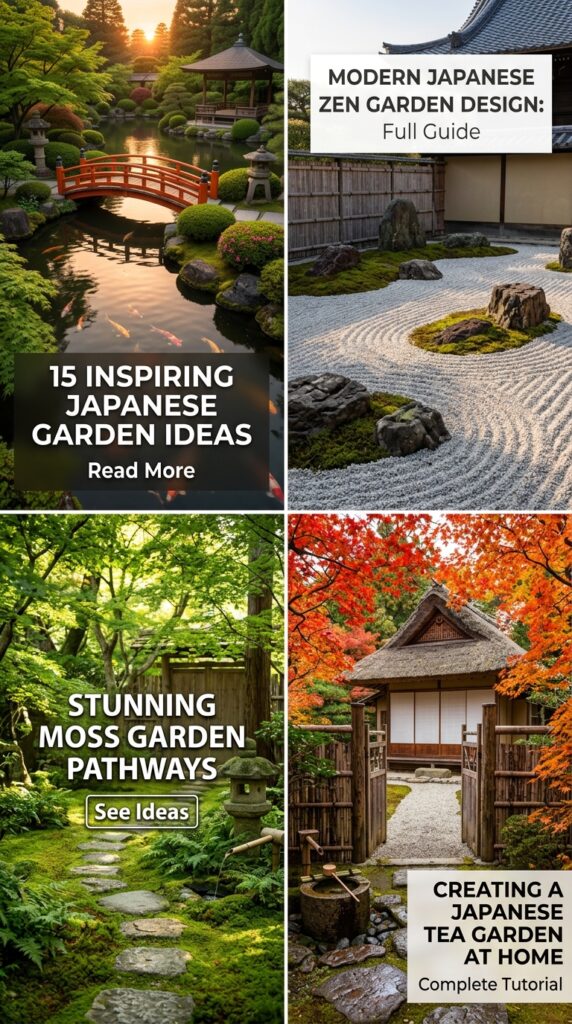
Plant selection focuses on form, texture, and seasonal beauty.
Japanese Maple
One of the most iconic choices.
Benefits:
- Elegant structure
- Stunning autumn color
Bamboo
Adds height, privacy, and movement.
Pine Trees
Symbolize longevity and strength.
Azaleas
Provide seasonal flowers without overwhelming the design.
Moss
Creates a soft, aged appearance.
Ferns
Perfect for shaded areas.
Japanese Garden Layout Ideas
Central Focal Point Design
Use a pond, stone arrangement, or tree as the centerpiece.
Layered Landscape Design
Arrange plants at different heights to create depth.
Winding Path Layout
Encourages slow exploration of the garden.
Small Courtyard Design
Perfect for compact urban spaces.
Japanese Garden Pathway Ideas
Pathways play a key role in guiding visitors.
Stepping Stones
Traditional and natural.
Gravel Paths
Simple and elegant.
Stone Walkways
Durable and timeless.
Curved Paths
Create a sense of discovery.
Japanese Garden Decor Ideas
Decor should remain subtle and meaningful.
Stone Lanterns
Classic Japanese feature.
Bamboo Fences
Provide privacy and structure.
Water Basins
Used for decorative and symbolic purposes.
Wooden Gates
Create a welcoming entrance.
Small Japanese Garden Ideas
Even small spaces can capture the essence of Japanese design.
Mini Zen Garden
Use gravel, rocks, and a few carefully chosen plants.
Courtyard Retreat
Focus on balance and simplicity.
Container Japanese Garden
Grow Japanese maples and ornamental plants in pots.
Balcony Japanese Garden
Use bamboo screens, stones, and compact plants.
Japanese Garden Color Palette
Japanese gardens typically feature natural, calming colors.
Common Tones:
- Green
- Gray
- Brown
- White
- Soft red accents
The emphasis is on subtle beauty rather than bold color displays.
Seasonal Interest in Japanese Gardens
Spring
Cherry blossoms and fresh foliage.
Summer
Lush greenery and tranquil shade.
Autumn
Spectacular colors from Japanese maples.
Winter
Structural beauty of stones, pines, and bare branches.
Low-Maintenance Japanese Garden Tips
For easier upkeep:
- Use evergreen plants
- Apply gravel mulch
- Choose slow-growing species
- Limit lawn areas
- Focus on natural materials
These choices help maintain a clean and timeless appearance.
Common Mistakes to Avoid
Overcrowding the Garden
Japanese gardens value open space and simplicity.
Using Too Many Decorations
Every element should have a purpose.
Ignoring Scale
Choose features appropriate to the garden size.
Relying on Bright Colors
Focus on texture, shape, and natural tones.
Why Japanese Garden Design Is Popular
Japanese gardens continue to inspire homeowners because they offer:
- Peaceful outdoor environments
- Timeless beauty
- Strong connection to nature
- Elegant simplicity
- Year-round interest
They provide a welcome escape from the fast pace of modern life.
Conclusion
A beautifully designed Japanese garden combines natural materials, thoughtful layouts, water features, and carefully selected plants to create a serene and harmonious landscape. Whether you choose a Zen garden, a tea garden, or a small courtyard retreat, Japanese design principles can help transform any outdoor space into a place of peace and reflection.
By focusing on simplicity, balance, and natural beauty, you can create a Japanese garden that remains elegant, calming, and inspiring throughout every season.