
 By John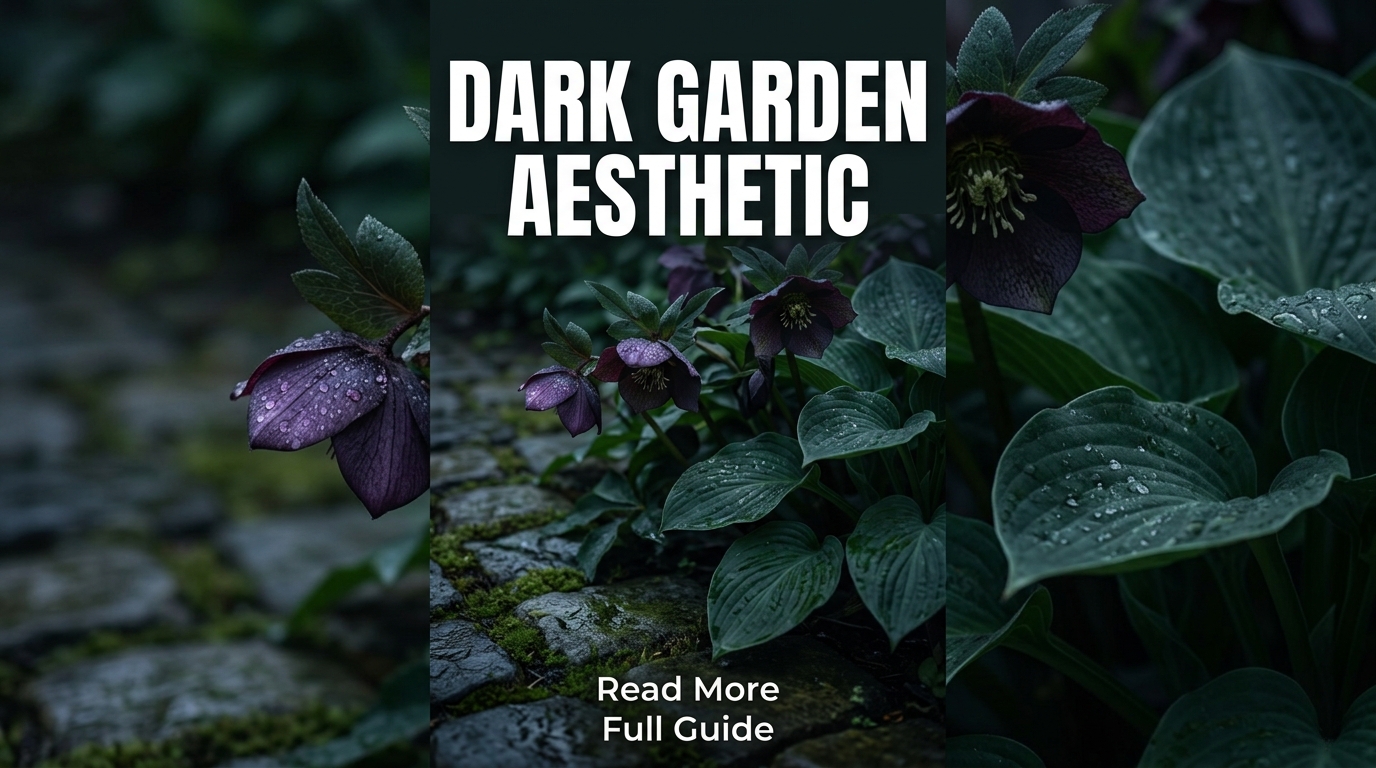
A dark garden aesthetic creates a dramatic and atmospheric outdoor space using deep foliage, moody colors, natural stone, dark structures, textured plants, and subtle lighting. Unlike bright traditional gardens, this style embraces mystery, contrast, and rich visual depth.
A dark garden can be gothic and dramatic, modern and sophisticated, or simply peaceful and moody. With the right combination of plants, materials, and decorative features, even a small backyard or courtyard can develop a distinctive dark garden atmosphere.
What Is a Dark Garden Aesthetic?
A dark garden aesthetic is a landscape style centered around deep colors, dramatic textures, shadows, and atmospheric details.
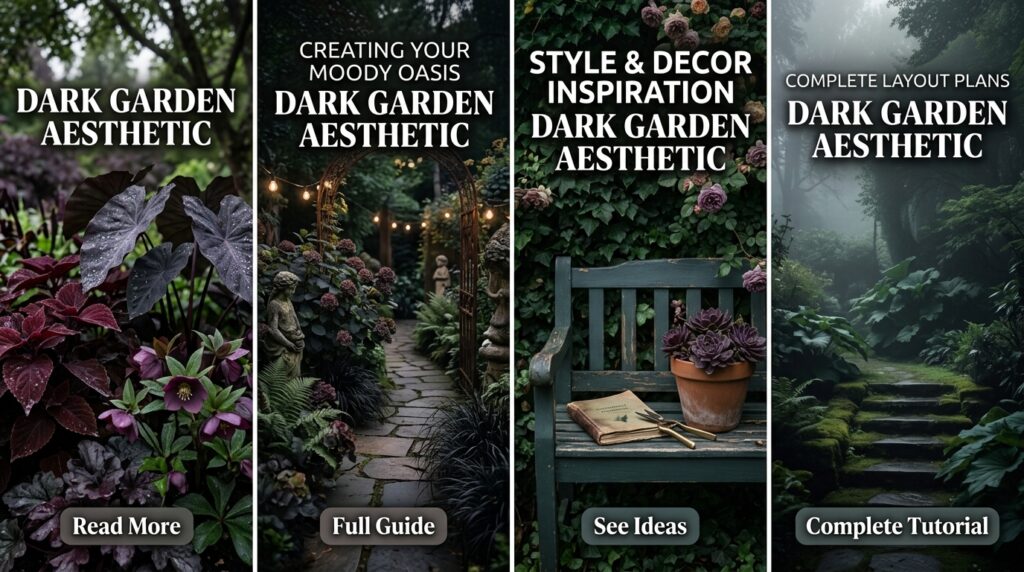
Common features include:
- Dark green foliage
- Purple and burgundy plants
- Black containers
- Dark fences
- Weathered stone
- Gothic-inspired features
- Moody lighting
- Water features
- Sculptures
- Arched gateways
- Dark timber
- Dramatic flowering plants
The goal is to create visual depth rather than simply making every element black.
Benefits of a Dark Garden Aesthetic
Dramatic Appearance
Deep foliage and rich colors can make a garden feel visually striking.
Sophisticated Style
Black, charcoal, stone, and deep green can create a refined modern appearance.
Strong Contrast
Dark foliage makes lighter flowers and architectural elements stand out.
Atmospheric Ambiance
Carefully placed lighting can create a magical evening atmosphere.
Works With Multiple Styles
Dark garden ideas can complement gothic, modern, cottage, woodland, and contemporary landscapes.
1. Gothic Dark Garden
Create a dramatic garden with stone pathways, dark foliage, arched structures, statues, and vintage-inspired details.
Use decorative elements sparingly to keep the space elegant rather than cluttered.
2. Moody Cottage Garden
Combine informal flowers with dark foliage and weathered materials.
Deep purple, burgundy, plum, and dark green plants can create a romantic cottage atmosphere.
3. Modern Dark Garden
Use clean lines, charcoal paving, black planters, architectural plants, and minimalist furniture.
Keep the planting palette restrained.
4. Dark Woodland Garden
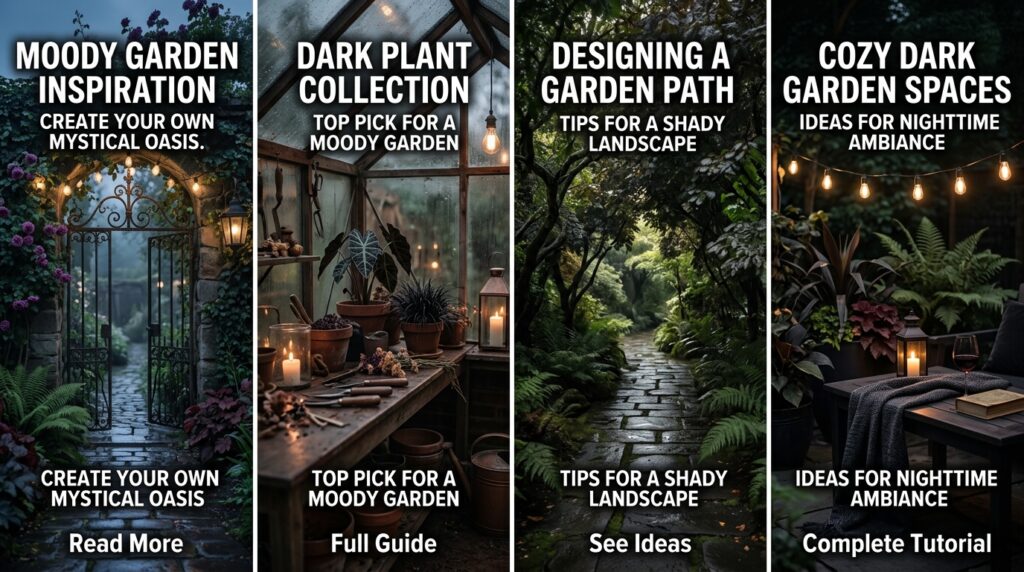
Use trees, ferns, moss where suitable, logs, stones, and shade-tolerant plants to create a mysterious woodland feeling.
5. Black Garden Design
Introduce black through fences, planters, furniture, gates, and architectural features.
Balance black elements with greenery and natural stone.
6. Dark Green Garden
Make deep green foliage the primary color.
Layer evergreen shrubs, ferns, grasses, and other suitable plants to create texture.
7. Purple Garden
Use flowers and foliage in shades of violet, plum, lavender, and deep purple.
Combine them with green and charcoal elements for contrast.
8. Burgundy Garden
Burgundy foliage can create rich visual depth.
Use it as an accent rather than filling every planting bed with dark colors.
9. Black Flower Garden
Choose naturally dark or deep-colored flowering plants where suitable.
Combine them with silver, green, or white foliage to prevent the design from becoming visually flat.
10. Dark Rose Garden
Deep red, burgundy, and purple roses can create a romantic atmosphere.
Pair them with dark foliage, stone, and simple garden structures.
11. Dark Garden With Black Fence
A black or charcoal fence can provide a dramatic background for plants.
Green and silver foliage stand out particularly well against dark boundaries.
12. Dark Garden With Stone Wall
Weathered stone can give the garden an ancient and mysterious character.
Use moss or suitable trailing plants to soften the wall where the climate allows.
13. Dark Garden With Gravel
Dark gravel can create a contemporary foundation for planting beds.
Use contrasting stones or lighter foliage to create visual variation.
14. Dark Garden With Water Feature
A dark pond, fountain, or water bowl can reflect surrounding foliage and create a peaceful focal point.
Add subtle lighting for evening interest.
15. Dark Garden With Pond
A pond surrounded by deep green plants and natural stone can create a mysterious woodland atmosphere.
Include safe access and appropriate water management.
16. Dark Garden With Waterfall
A stone waterfall can introduce sound and movement.
Surround it with shade-tolerant plants where suitable.
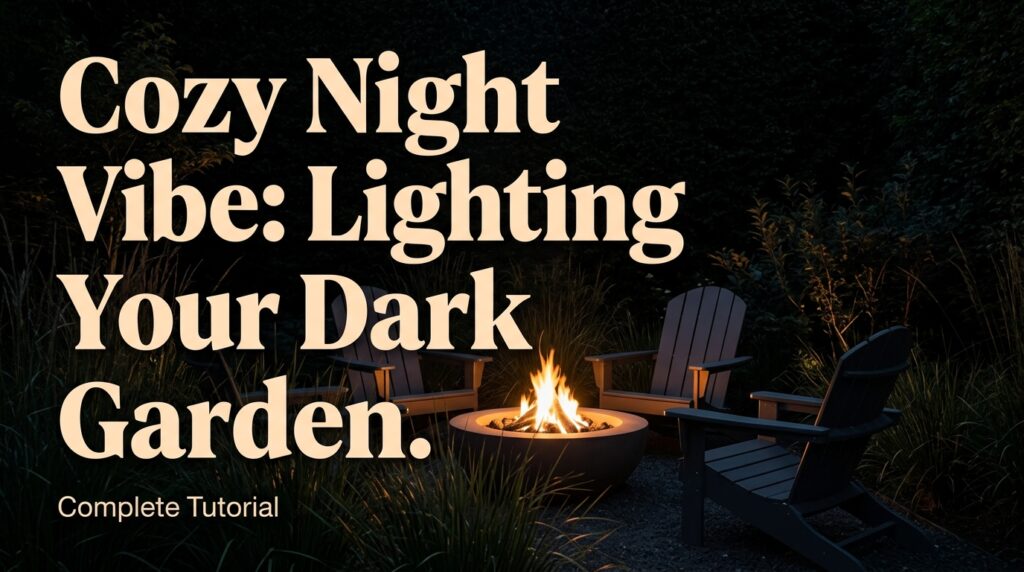
17. Dark Garden With Fire Feature
A fire feature can create a striking contrast against dark surroundings.
Maintain appropriate clearance from plants, structures, furniture, and other combustible materials.
18. Dark Garden With Lanterns
Lanterns can add warm points of light without illuminating the entire garden.
Place them along pathways or near focal features.
19. Dark Garden With String Lights
Warm outdoor string lighting can soften a dark garden.
Use outdoor-rated products and install electrical components safely.
20. Dark Garden With Candlelight
Protected outdoor lanterns or candle holders can create an intimate atmosphere.
Keep flames away from dry vegetation and combustible materials.
21. Dark Garden With Pergola
A dark timber or metal pergola can define an outdoor seating area.
Train suitable climbing plants around the structure to soften its appearance.
22. Dark Garden With Archway
A black or weathered arch can create a dramatic entrance.
Climbing roses, ivy where appropriate, or other suitable plants can frame the structure.
23. Dark Garden With Gate
A dark wooden or metal gate can create a mysterious transition into the garden.
Pair it with stone, hedges, or climbing plants.
24. Dark Secret Garden
Create a secluded retreat behind hedges, fences, walls, or dense planting.
Add a bench, fountain, or pathway to create a destination.
25. Dark Fairy Garden
Use miniature structures, moss-like groundcovers where suitable, tiny pathways, stones, and subtle lighting.
Choose weather-resistant decorations for outdoor use.
26. Dark Witch Garden Aesthetic
Create an atmospheric planting scheme using herbs, deep foliage, unusual textures, weathered containers, and natural stone.
Avoid plants that are poisonous or hazardous if children or pets use the space.
27. Dark Garden With Sculptures
A stone or metal sculpture can become a dramatic focal point.
Use one or two strong pieces rather than overcrowding the landscape.
28. Dark Garden With Statue
A weathered statue can complement a gothic or classical garden.
Position it where planting naturally frames the feature.
29. Dark Garden With Mirror
A weather-resistant outdoor mirror can reflect plants and light while visually expanding a small garden.
Position it carefully to avoid unwanted glare and bird collisions.
30. Dark Garden With Black Planters
Black containers provide a simple way to introduce the aesthetic without redesigning the entire garden.
Fill them with contrasting green, silver, or deep-colored plants.
31. Dark Garden With Silver Foliage
Silver plants can create beautiful contrast against dark backgrounds.
Use them selectively to brighten the planting scheme while maintaining a moody atmosphere.
32. Dark Garden With White Flowers
White flowers can glow visually against deep foliage.
This is an effective way to create contrast without introducing a large range of bright colors.
33. Dark Garden With Ornamental Grasses
Grasses add movement and texture.
Choose dark, green, bronze, or burgundy-toned varieties suited to your climate.
34. Dark Garden With Ferns
Ferns can create a lush, shadowy appearance in suitable shaded environments.
Combine different fern textures for a layered effect.
35. Dark Garden With Moss
Moss can create an aged woodland aesthetic in naturally cool, damp, shaded environments.
Where moss is unsuitable, use locally appropriate shade-tolerant groundcovers.
36. Dark Garden With Trees
Trees can create natural shade and establish a strong vertical structure.
Consider mature size, roots, and proximity to structures before planting.
37. Dark Garden With Evergreen Plants
Evergreen shrubs and trees can maintain the dark green foundation throughout the year.
Use repetition to create cohesion.
38. Dark Garden Seating Area
Use dark timber, black metal, stone, or weather-resistant furniture.
Position seating near a focal point such as a fire feature, fountain, or flowering border.
39. Small Dark Garden
A small courtyard can achieve the aesthetic with a dark wall or fence, one statement plant, a compact water feature, and subtle lighting.
Keep the number of elements limited.
40. Dark Garden Nightscape
Design the garden specifically for evening viewing.
Use low-level lighting to highlight trees, paths, sculptures, water, and architectural details while leaving some areas in shadow.
Best Plants for a Dark Garden Aesthetic
Plant selection should depend on your local climate, soil, sunlight, and water availability.
Dark Foliage Plants
- Heuchera varieties with deep foliage
- Purple-leaved coral bells
- Dark-leaved ornamental plants
- Burgundy foliage shrubs
Flowering Plants
- Deep-colored roses
- Purple salvias
- Dark dahlias
- Zinnias in deep shades
- Burgundy or purple flowering plants suited to your climate
Structural Plants
- Evergreen shrubs
- Ferns
- Ornamental grasses
- Suitable conifers
- Japanese maple varieties where appropriate
Dark Garden Color Palette
Black and Green
Modern and sophisticated.
Burgundy and Purple
Rich and romantic.
Charcoal and Silver
Elegant and contemporary.
Deep Green and White
Dramatic with strong contrast.
Brown, Bronze, and Green
Natural and woodland-inspired.
How to Create a Dark Garden Aesthetic
Step 1: Choose a Dark Base
Start with a dark fence, wall, paving, or containers.
Step 2: Select a Limited Color Palette
Focus on deep green, purple, burgundy, charcoal, bronze, and selected light accents.
Step 3: Add Layered Planting
Combine trees, shrubs, grasses, groundcovers, and flowers to create depth.
Step 4: Introduce Natural Materials
Use stone, timber, gravel, and weathered materials to prevent the garden from feeling artificial.
Step 5: Add a Focal Point
Choose a sculpture, tree, fountain, pond, arch, or seating area.
Step 6: Create Pathways
Use stone, gravel, brick, or timber to guide movement through the space.
Step 7: Add Privacy
Use fences, hedges, screens, or layered planting to create a secluded feeling.
Step 8: Add Subtle Lighting
Highlight important features while allowing some areas to remain naturally dark.
Step 9: Add Decorative Details
Use lanterns, containers, statues, or architectural elements sparingly.
Step 10: Maintain the Mood
Keep the garden visually cohesive by limiting overly bright or unrelated decorative elements.
Common Dark Garden Mistakes
Making Everything Black
Too much black can make a garden feel flat. Balance dark features with natural greens, silver foliage, stone, and lighter accents.
Using Too Many Decorations
Gothic or mysterious gardens can quickly become cluttered.
Ignoring Lighting
A dark garden should still have safe, practical pathways and carefully considered nighttime illumination.
Choosing Plants Only for Color
Consider sunlight, soil, climate, mature size, water needs, and maintenance requirements.
Creating Excessive Shade
Dense planting can reduce airflow and make some plants unhealthy.
Forgetting Seasonal Interest
Combine evergreen structure with seasonal foliage and flowers to keep the garden attractive throughout the year.
Frequently Asked Questions
What colors work best for a dark garden?
Deep green, burgundy, purple, bronze, charcoal, black, silver, and carefully selected white accents work especially well.
How do I make a garden look gothic?
Use dark foliage, stone, arches, weathered materials, dramatic plants, vintage-inspired features, and subtle nighttime lighting.
Can a small garden have a dark aesthetic?
Yes. A dark fence, compact planting scheme, black containers, stone, and one strong focal feature can create the look without requiring much space.
What plants are good for a dark garden?
Deep-leaved heucheras, burgundy foliage plants, suitable Japanese maples, ferns, evergreen shrubs, ornamental grasses, and dark flowering varieties can work well depending on local conditions.
How do I make a dark garden feel welcoming?
Balance dark materials with greenery, comfortable seating, natural stone, warm lighting, and a few lighter-colored flowers or foliage plants.
Conclusion
A dark garden aesthetic offers an opportunity to create an outdoor space that feels mysterious, sophisticated, romantic, and deeply atmospheric. Dark foliage, rich flowers, stone, timber, water, architectural features, and carefully positioned lighting can work together to create a memorable landscape.
Start with a restrained palette of deep greens, charcoal, burgundy, and purple. Then introduce natural textures, layered planting, and a few dramatic focal points. With thoughtful design, even a small backyard or courtyard can become a beautiful dark garden retreat.