
 By John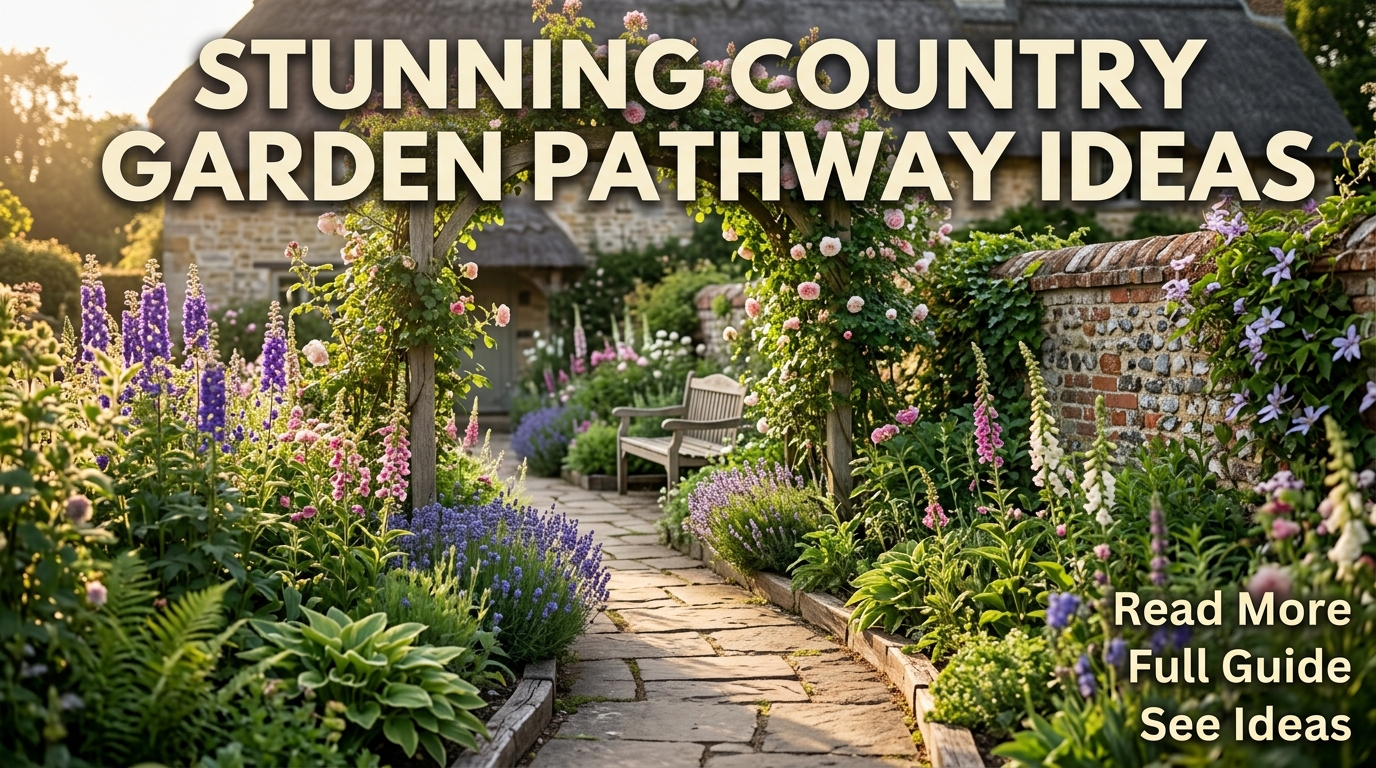
Country garden ideas are perfect for creating a relaxed outdoor space filled with natural textures, colorful flowers, rustic features, and timeless charm. Inspired by rural landscapes, country gardens often combine informal planting with practical elements such as vegetable beds, fruit trees, gravel paths, fences, and cozy seating areas.
Whether you have a large backyard, small cottage garden, farmhouse property, or suburban outdoor space, country-style landscaping can make your garden feel welcoming, natural, and full of character.
What Is a Country Garden?
A country garden is an informal landscape that emphasizes natural beauty, practical gardening, and a relaxed rural atmosphere.
Common features include:
- Flower borders
- Cottage-style planting
- Wooden fences
- Stone walls
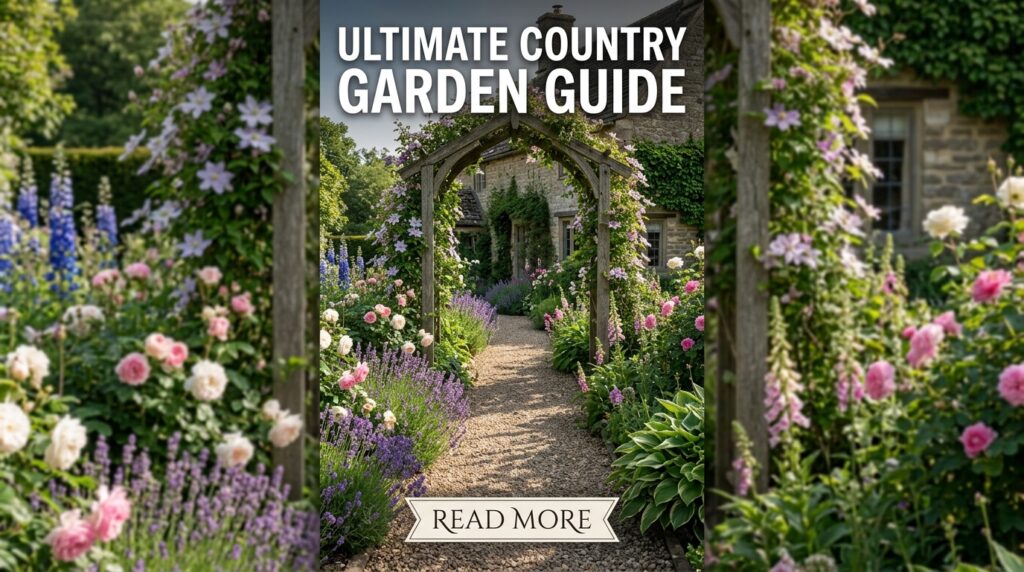
- Gravel paths
- Vegetable gardens
- Fruit trees
- Herb gardens
- Rustic furniture
- Arches and trellises
- Birdhouses
- Water features
- Wildflower areas
The goal is usually to create a garden that feels established rather than overly polished.
Benefits of a Country Garden
Natural Appearance
Informal planting and natural materials create a relaxed landscape.
Timeless Style
Country gardens can work with traditional cottages, farmhouses, and modern homes.
Wildlife Friendly
Flowers, shrubs, trees, and water features can provide habitat for beneficial wildlife.
Productive
Vegetables, herbs, berries, and fruit trees can become part of the design.
Cozy Atmosphere
Rustic furniture and informal planting create welcoming outdoor spaces.
1. Classic Country Garden
Combine flowering borders, lawn, gravel paths, shrubs, and rustic furniture.
Use repeated plant varieties to keep the informal design visually connected.
2. English Country Garden
Create abundant borders with roses, perennials, shrubs, hedges, and winding pathways.
A weathered bench or stone feature can provide a traditional focal point.
3. Country Cottage Garden
Plant flowers in relaxed combinations around paths, fences, and entrances.
Use climbing roses, lavender, daisies, foxgloves where suitable, and other cottage-style plants.
4. Rustic Country Garden
Use reclaimed wood, natural stone, galvanized containers, gravel, and simple handmade decorations.
Keep the materials looking natural rather than overly polished.
5. Small Country Garden
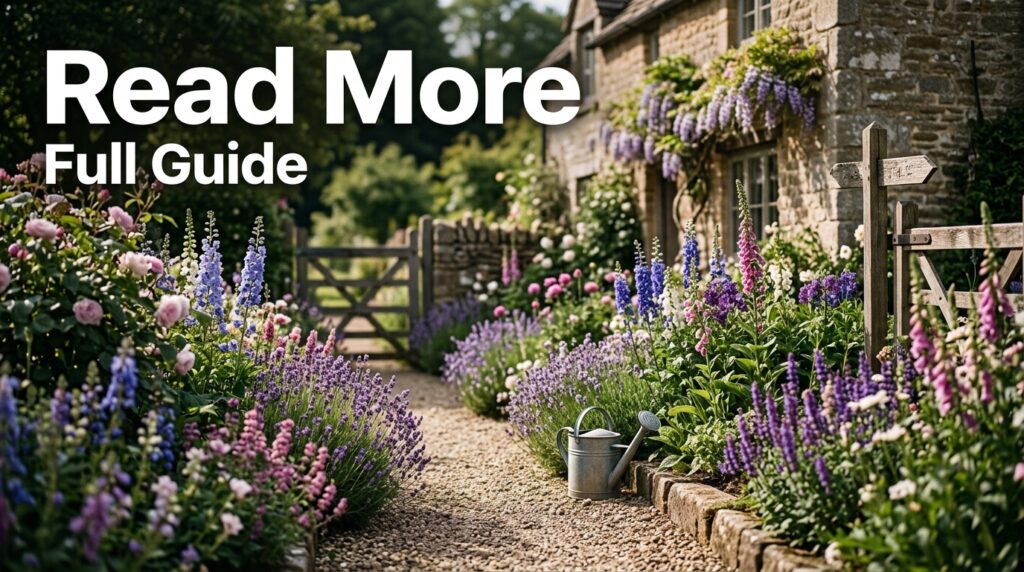
Use compact borders, containers, vertical planting, and a small seating area.
A simple wooden gate or rustic fence can instantly establish the country style.
6. Large Country Garden
Divide a larger property into connected garden rooms.
Include a lawn, orchard, vegetable garden, flower borders, seating areas, and informal pathways.
7. Country Garden With Wooden Fence
A picket or rustic timber fence can frame flower beds and establish a traditional rural appearance.
Allow climbing plants to soften sections of the fence.
8. Country Garden With Stone Wall
Natural stone walls can provide structure and character.
Use planting pockets or trailing plants to soften the wall.
9. Country Garden With Gravel Path
Gravel paths are practical and complement informal planting.
Use natural-looking edging to keep the gravel contained.
10. Country Garden With Brick Path
Brick can create a warm, traditional pathway.
Consider curved routes for a relaxed appearance.
11. Country Garden With Roses
Roses are classic choices for country-style landscapes.
Use shrub roses in borders and suitable climbing roses on arches, fences, or trellises.
12. Country Garden With Lavender
Lavender can add fragrance, texture, and soft purple color.
Plant it in sunny, well-drained locations where the climate is suitable.
13. Country Garden With Wildflowers
A wildflower area can make the landscape feel more natural.
Choose locally suitable species and manage the area according to the desired appearance.
14. Country Garden With Vegetable Beds
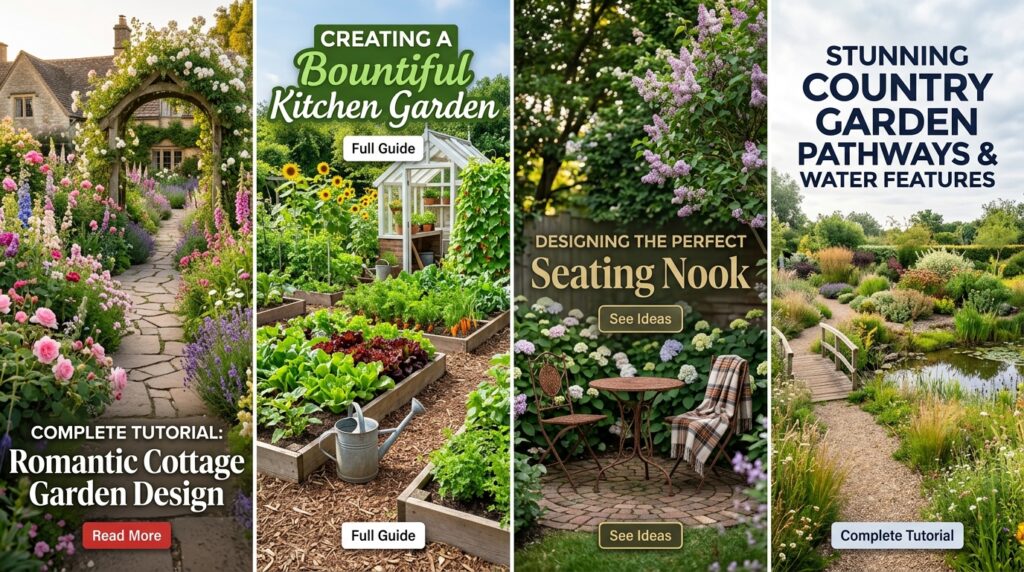
Create productive raised beds or traditional vegetable plots.
Combine vegetables with flowers to make the growing area attractive.
15. Country Herb Garden
Plant herbs close to the kitchen or outdoor dining area.
Suitable choices can include rosemary, thyme, sage, chives, parsley, and mint in containers.
16. Country Garden With Fruit Trees
Plant apple, pear, plum, citrus, fig, or other locally suitable fruit trees.
Select varieties according to climate, mature size, and pollination needs.
17. Country Orchard Garden
Create rows or informal groups of fruit trees.
Add mown pathways or meadow planting between the trees where appropriate.
18. Country Garden With Berry Plants
Use berry shrubs along borders or in dedicated edible gardens.
Choose varieties suitable for your growing conditions.
19. Country Garden With Greenhouse
A small greenhouse can support seedlings, herbs, vegetables, and seasonal growing.
Place it in a sunny, accessible location.
20. Country Garden With Potting Shed
Create a practical garden workspace with a rustic potting shed.
Add shelves, hooks, pots, and gardening tools for an authentic working-garden atmosphere.
21. Country Garden With Pergola
A timber pergola can create a comfortable outdoor room.
Train suitable climbing plants over the structure for additional shade and visual interest.
22. Country Garden With Garden Arch
A wooden or metal arch can frame a pathway or entrance.
Climbing roses, clematis, or other suitable climbers can add vertical interest.
23. Country Garden With Arbor
An arbor can create a charming transition between different garden zones.
Place seating beneath it to create a small destination.
24. Country Garden With Pond
An informal pond can become a natural focal point.
Use stones, grasses, marginal plants, and locally suitable vegetation around the edges.
25. Country Garden With Water Feature
A simple fountain, trough, or recirculating water feature can add sound and movement.
Choose a scale that suits the garden.
26. Country Garden With Bird Bath
A bird bath can provide a decorative focal point and potential water source for birds.
Keep it clean and position it where birds have suitable visibility and nearby cover.
27. Country Garden With Birdhouse
Add birdhouses to suitable locations to encourage garden wildlife.
Choose designs appropriate for the bird species you hope to support.
28. Country Garden With Wildlife Area
Create a habitat area using native plants, shrubs, logs, stones, and water.
Reduce unnecessary chemical use to make the space more wildlife friendly.
29. Country Garden With Seating
Add a wooden bench, metal bistro set, or rustic chairs beneath a tree or beside a flower border.
Position seating where you can enjoy the garden’s best views.
30. Country Garden With Fire Pit
Create a dedicated outdoor gathering area with a fire feature.
Use a safe, stable surface and maintain suitable clearances from buildings and vegetation.
31. Country Garden With Outdoor Dining
Create a dining area near the kitchen or house.
Use a wooden table, simple chairs, and potted plants to establish a relaxed country atmosphere.
32. Country Garden With Vegetable Patch
Keep vegetables organized in practical beds while using flowers around the edges.
This creates a productive garden that still feels decorative.
33. Country Garden With Raised Beds
Timber or stone raised beds can define growing areas.
Use them for vegetables, herbs, strawberries, or flowers.
34. Country Garden With Climbing Plants
Use fences, arches, pergolas, and trellises to support climbing plants.
Vertical planting can add height without requiring much ground space.
35. Country Garden With Wild Grass
Ornamental grasses can soften paths and borders.
Choose varieties suitable for your climate and soil.
36. Country Garden With Mature Trees
Large trees can provide shade, structure, and a sense of permanence.
Always consider mature size, roots, and distance from buildings before planting.
37. Country Garden With Hedges
Hedges can define boundaries and create separate garden rooms.
Use suitable species according to your climate and maintenance preferences.
38. Country Garden With Rustic Containers
Repurpose suitable containers, old pots, wooden boxes, or metal tubs as planters.
Make sure containers are safe for plants and have appropriate drainage.
39. Country Garden With Vintage Decor
Use selected vintage-inspired elements such as old watering cans, wheelbarrows, signs, or garden furniture.
Avoid overcrowding the garden with decorations.
40. Country Garden With Secret Garden Area
Create a hidden seating area behind a hedge, arch, gate, or planting border.
Add a bench, small table, fountain, or fragrant plants to make it feel like a private retreat.
Best Plants for a Country Garden
Plant choices should be based on local climate, soil, sunlight, and water availability.
Flowers
- Roses
- Lavender
- Daisies
- Delphiniums where suitable
- Hollyhocks where suitable
- Coneflowers
- Salvias
- Zinnias
Herbs
- Rosemary
- Thyme
- Sage
- Chives
- Parsley
- Mint in containers
Shrubs
- Hydrangeas
- Viburnum
- Lilac where suitable
- Flowering currants
- Locally adapted shrubs
Trees
- Apple
- Pear
- Plum
- Fig
- Citrus
- Birch
- Maple
Country Garden Color Ideas
Green and White
Fresh and classic.
Pink and Purple
Romantic and cottage-inspired.
Yellow and Blue
Cheerful and traditional.
Red and White
Bold yet timeless.
Soft Pastels
Gentle and relaxed.
Natural Green and Brown
Rustic and earthy.
How to Create a Country Garden
Step 1: Plan the Layout
Map the house, boundaries, existing trees, pathways, and functional areas.
Step 2: Create Informal Zones
Plan areas for flowers, vegetables, seating, wildlife, and relaxation.
Step 3: Add Structural Features
Install fences, hedges, paths, arches, and other permanent elements.
Step 4: Plant Trees and Shrubs
Start with larger plants that establish the garden’s structure.
Step 5: Add Flowering Plants
Layer flowers throughout borders for seasonal color.
Step 6: Introduce Edible Plants
Add herbs, vegetables, berries, and fruit trees where space allows.
Step 7: Add Rustic Details
Use a few carefully selected signs, containers, benches, or decorative pieces.
Step 8: Create a Focal Point
Use a tree, pond, arch, fountain, sculpture, or seating area.
Step 9: Add Wildlife Features
Include native plants, water, shelter, and bird-friendly elements where appropriate.
Step 10: Allow the Garden to Mature
Country gardens often become more attractive as plants establish and soften structures.
Common Country Garden Mistakes
Making Everything Too Perfect
Country gardens benefit from a relaxed appearance.
Using Too Many Decorations
A few authentic-looking features are more effective than excessive accessories.
Ignoring Plant Spacing
Allow plants enough room to reach their mature size.
Choosing Plants Unsuitable for the Climate
Select species adapted to local growing conditions.
Overcrowding Flower Beds
Leave sufficient space for plants to grow and maintain airflow.
Forgetting Practical Access
Paths should provide comfortable access for gardening and maintenance.
Frequently Asked Questions
What makes a garden look country style?
Natural materials, informal planting, flowers, vegetable beds, rustic furniture, gravel paths, fences, fruit trees, and relaxed garden structures create a classic country appearance.
What flowers are best for a country garden?
Roses, lavender, daisies, salvias, coneflowers, and other locally suitable flowering plants can work beautifully.
How do I make a small garden look country?
Use a rustic fence, cottage-style flowers, gravel, wooden furniture, containers, and a simple garden arch or trellis.
Can a country garden be low maintenance?
Yes. Use climate-appropriate plants, mulched beds, durable hardscape, efficient irrigation, and a manageable planting palette.
Can I grow vegetables in a country garden?
Absolutely. Vegetable beds, herbs, fruit trees, and berry plants fit naturally into country garden designs.
Conclusion
Country garden ideas are all about creating a relaxed, welcoming landscape that combines beauty with practical gardening. Flowers, vegetables, fruit trees, rustic fences, gravel paths, natural stone, cozy seating, and wildlife-friendly features can work together to create a timeless rural atmosphere.
Start with a simple layout and focus on natural materials and climate-appropriate plants. Add character gradually through planting, garden structures, and carefully selected rustic details, allowing the landscape to develop its own charm over time.