
 By John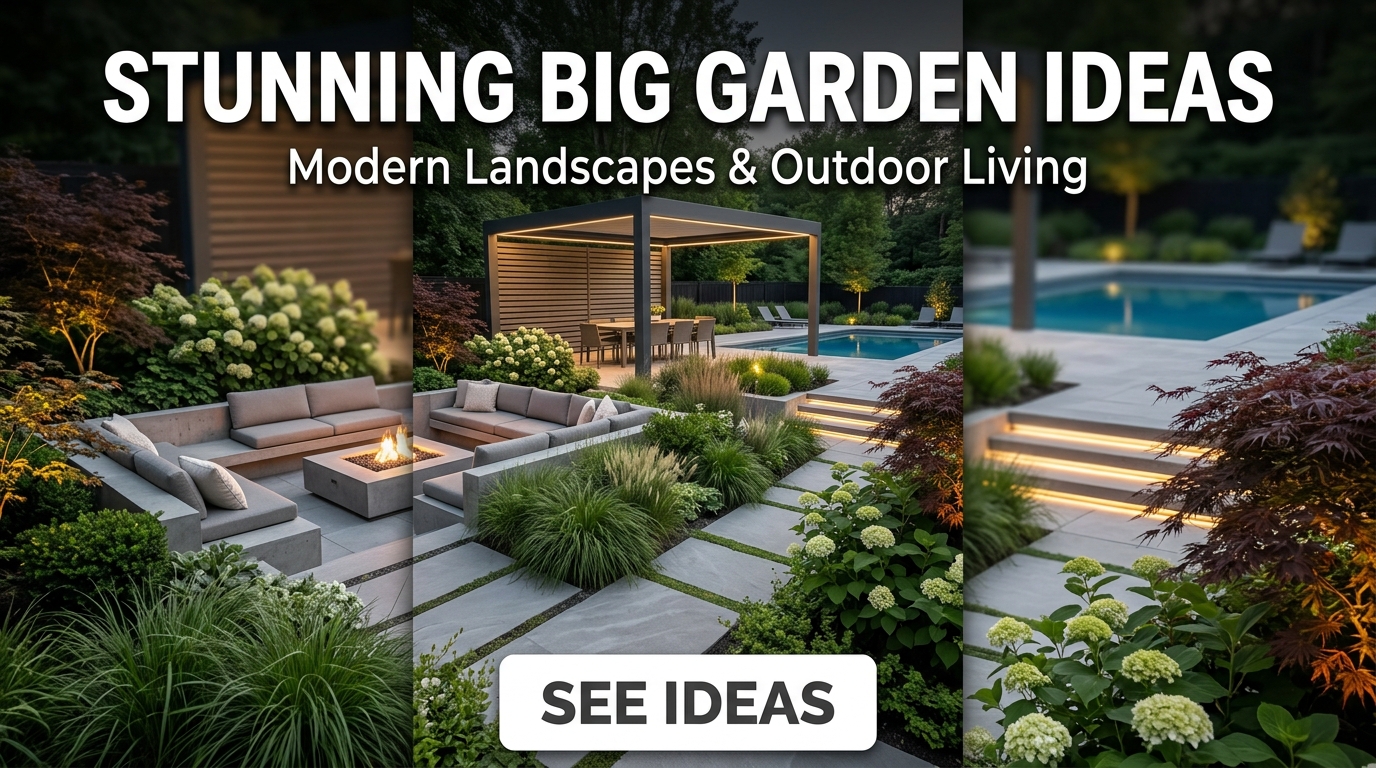
A big garden offers endless opportunities to create beautiful outdoor spaces for relaxing, entertaining, gardening, and enjoying nature. With enough room, you can combine lawns, flower borders, trees, patios, water features, vegetable gardens, pathways, seating areas, and dedicated outdoor rooms.
The key to designing a large garden is creating structure. Instead of filling the entire space with plants and decorations, divide the landscape into functional zones connected by attractive pathways and repeated planting themes.
What Is a Big Garden?
A big garden is a spacious outdoor landscape that provides enough room for multiple garden features and functional areas.
Large gardens can include:
- Expansive lawns
- Flower borders
- Trees and shrubs
- Vegetable gardens
- Orchards
- Patios
- Pergolas
- Garden rooms
- Water features
- Outdoor kitchens
- Seating areas
- Garden paths
- Play areas
- Greenhouses
A successful large garden should feel connected rather than like a collection of unrelated spaces.
Benefits of a Big Garden
More Design Possibilities
Large spaces allow you to combine several garden styles and features.
Multiple Outdoor Rooms
You can create separate areas for dining, relaxing, gardening, and entertaining.
Room for Trees
Large gardens provide opportunities for mature shade trees, ornamental trees, and fruit trees.
Better Privacy
Trees, hedges, fences, and layered planting can create secluded areas.
Space for Food Growing
You can dedicate part of the garden to vegetables, herbs, berries, or fruit trees.
Great for Entertaining
Large patios, lawns, outdoor kitchens, and seating areas can accommodate guests.
1. Large Backyard Garden
Divide a large backyard into clear zones.
Create one area for entertaining, another for planting, and another for relaxing or recreation.
2. Big Modern Garden
Use clean lines, geometric planting beds, large-format paving, ornamental grasses, and contemporary furniture.
Keep the overall design simple and coordinated.
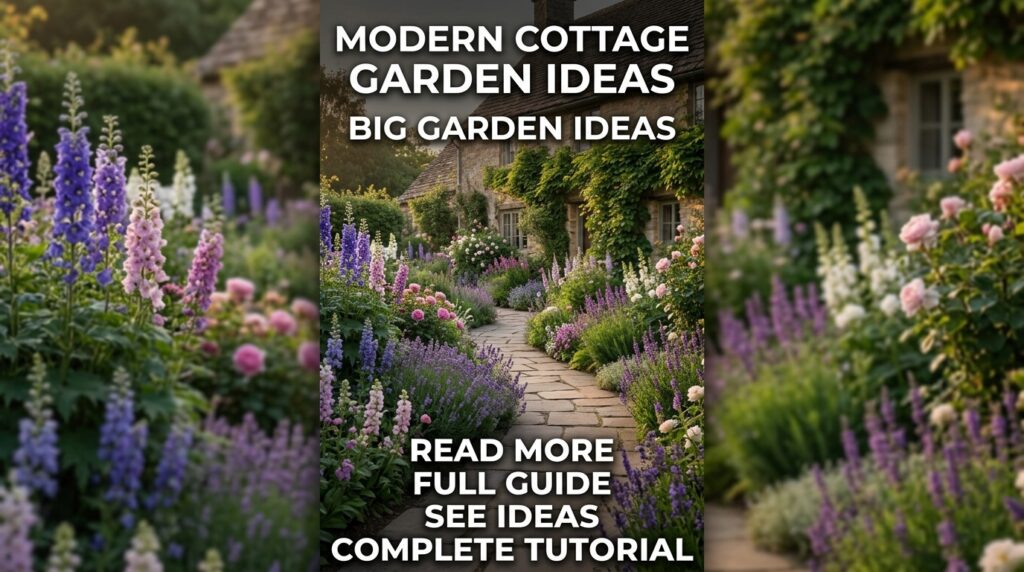
3. Large Cottage Garden
Create abundant borders filled with flowering plants, shrubs, climbing plants, and informal pathways.
Use repetition to prevent the garden from feeling chaotic.
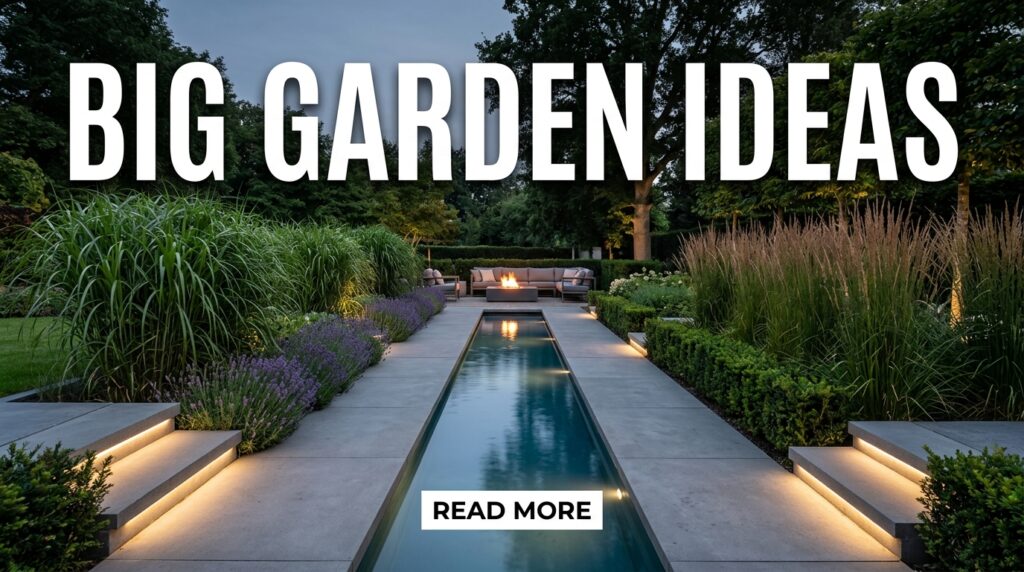
4. Big Formal Garden
Use symmetry, geometric beds, clipped hedges, straight pathways, and strong focal points.
A central axis can help organize a large landscape.
5. Big English Garden
Combine lawns, flower borders, mature trees, hedges, roses, and winding pathways.
Use layered planting to create a timeless appearance.
6. Large Japanese Garden
Create a peaceful landscape with carefully positioned rocks, water, bridges, trees, gravel, and restrained planting.
Allow open space to become part of the design.
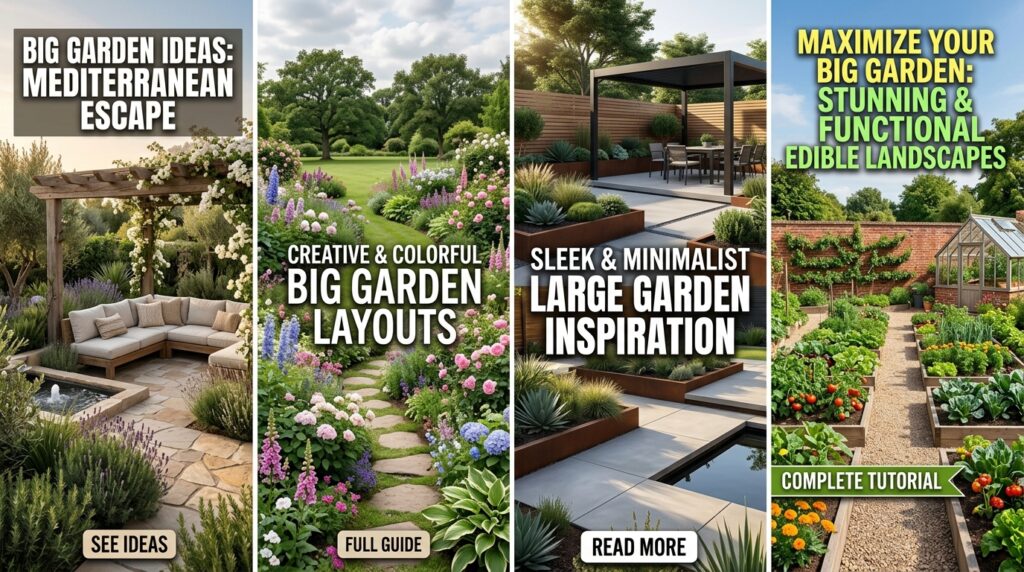
7. Big Mediterranean Garden
Use stone, gravel, terracotta, drought-tolerant plants, herbs, and suitable fruit trees.
Add shaded seating areas for outdoor relaxation.
8. Large Tropical Garden
In suitable climates, use palms, large-leaved plants, flowering shrubs, ferns, and layered vegetation.
Create pathways through the planting to make the landscape immersive.
9. Big Vegetable Garden
Dedicate a large section to raised beds for vegetables, herbs, and edible flowers.
Organize beds with pathways to make planting and harvesting easier.
10. Large Orchard Garden
Plant fruit trees in organized rows or natural groupings.
Leave adequate spacing for mature canopies and equipment access.
11. Big Flower Garden
Create expansive flower borders around lawns, pathways, patios, or fences.
Repeat favorite colors and plant varieties to create visual continuity.
12. Large Lawn Garden
A large lawn can provide an open area for recreation and gatherings.
Surround it with trees, shrubs, flower beds, or hedges to create structure.
13. Big Garden With Pool
A large garden provides space for a pool surrounded by paving, planting, seating, and outdoor dining.
Keep planting far enough from the pool to simplify maintenance.
14. Big Garden With Patio
Create a generous patio for outdoor dining and entertaining.
Connect it to the house with a clear pathway or consistent paving.
15. Big Garden With Outdoor Kitchen
Use a large garden to create a complete outdoor cooking area.
Consider incorporating:
- Grill
- Countertops
- Storage
- Dining table
- Sink where practical
- Herb planters
Plan utilities and ventilation carefully.
16. Big Garden With Pergola
A large pergola can define a dedicated outdoor room.
Use it for dining, lounging, shade, or supporting suitable climbing plants.
17. Big Garden With Garden Room
Create a separate garden room for:
- Home office
- Studio
- Reading space
- Hobby room
- Entertainment
- Relaxation
Position it where it complements the rest of the landscape.
18. Big Garden With Pond
A pond can become a major focal point in a large landscape.
Surround it with paths, rocks, aquatic plants, grasses, and seating.
19. Big Garden With Waterfall
A larger garden can accommodate a dramatic waterfall connected to a pond or stream.
Use natural stone to integrate the feature with the landscape.
20. Big Garden With Fountain
A large fountain can create a formal centerpiece.
Place it on a central axis, at the end of a pathway, or within a geometric planting bed.
21. Big Garden With Garden Bridge
A bridge can become an architectural focal point over a pond, stream, or dry landscape feature.
Choose a design that matches the garden’s overall style.
22. Big Garden With Long Pathway
Create a journey through the landscape using a winding or straight pathway.
Use changes in planting and focal points to maintain interest along the route.
23. Big Garden With Trees
Use trees to establish structure, shade, privacy, and seasonal interest.
Consider mature height, canopy width, roots, and proximity to buildings before planting.
24. Big Garden With Privacy Trees
Layer trees with shrubs and hedges to create natural screening.
Avoid planting trees too close together simply to achieve immediate privacy.
25. Big Garden With Hedges
Hedges can divide a large garden into separate rooms.
Use them around patios, lawns, vegetable gardens, or private seating areas.
26. Big Garden With Gravel Paths
Gravel is a practical option for long pathways.
Use appropriate edging to keep gravel contained and maintain a clean route.
27. Big Garden With Stone Paths
Stone pathways can create a more permanent and architectural appearance.
Use consistent materials to visually connect different zones.
28. Big Garden With Fire Pit
Create a dedicated fire pit area away from buildings and combustible materials.
Surround it with appropriate seating and use a safe, stable surface.
29. Big Garden With Outdoor Seating
Create several seating areas rather than relying on one large furniture arrangement.
A quiet bench, dining area, and lounge space can give different parts of the garden a purpose.
30. Big Garden With Playground
Families can dedicate one garden zone to children’s activities.
Keep play equipment on a safe surface and maintain clear visibility from the house where appropriate.
31. Big Garden With Greenhouse
A greenhouse can support year-round growing and seed starting.
Position it where it receives appropriate sunlight and has convenient access to water.
32. Big Garden With Potting Shed
A potting shed can provide storage and workspace.
Place it near vegetable beds, greenhouse areas, or planting zones for convenience.
33. Big Garden With Herb Garden
Create a dedicated herb garden near the kitchen or outdoor dining area.
Use raised beds, borders, or containers to organize different herbs.
34. Big Garden With Berry Garden
Plant suitable berry-producing shrubs along paths, borders, or dedicated food-growing areas.
Consider mature size, sunlight, soil, and local climate.
35. Big Garden With Fruit Trees
Use a dedicated orchard area or scatter fruit trees throughout the landscape.
Choose varieties adapted to local conditions and check pollination requirements.
36. Big Garden With Wildflower Meadow
Convert part of the lawn into a wildflower or naturalistic planting area where appropriate.
Choose locally suitable species and maintain paths through the meadow for access.
37. Big Garden With Wildlife Area
Create a habitat zone using native or locally appropriate plants, water, shelter, and natural materials.
Limit unnecessary pesticide use to support biodiversity.
38. Big Garden With Secret Garden
Use hedges, walls, gates, arches, and winding paths to create a hidden garden room.
Place a bench, fountain, or sculpture at the center as a surprise focal point.
39. Big Garden With Multiple Zones
Divide the garden into several connected spaces:
- Dining area
- Lounge
- Lawn
- Flower garden
- Vegetable garden
- Orchard
- Wildlife area
- Water feature
Use pathways and repeated materials to connect them.
40. Big Garden With Central Focal Point
Create a strong centerpiece such as a tree, sculpture, fountain, pond, pergola, or seating area.
Arrange surrounding pathways and planting to draw attention toward it.
Best Plants for a Big Garden
Large gardens provide space for layered planting.
Trees
- Maples
- Oaks
- Birches
- Fruit trees
- Flowering trees
- Evergreens
Shrubs
- Hydrangeas
- Roses
- Viburnum
- Boxwood where appropriate
- Juniper
- Other locally adapted shrubs
Perennials
- Salvia
- Coneflowers
- Daylilies
- Yarrow
- Hostas where suitable
- Daisies
Grasses
- Feather reed grass
- Fountain grass where appropriate
- Blue fescue
- Other climate-appropriate ornamental grasses
Always select plants according to your local climate, soil, sunlight, water availability, and mature size.
How to Design a Big Garden
Step 1: Measure the Property
Create a basic plan showing the house, boundaries, existing trees, structures, and utilities.
Step 2: Identify the Main Views
Determine which areas should be focal points when viewed from the house, patio, or garden entrance.
Step 3: Create Zones
Divide the landscape according to how you want to use it.
Step 4: Establish Pathways
Connect each zone with practical and visually appealing routes.
Step 5: Plant Large Structural Features
Start with trees, hedges, and major shrubs.
Step 6: Add Garden Rooms
Introduce patios, pergolas, seating areas, vegetable beds, or other functional spaces.
Step 7: Add Smaller Planting
Use flowers, grasses, herbs, and groundcovers to fill and soften the design.
Step 8: Add Focal Points
Use fountains, sculptures, trees, ponds, arches, or garden structures.
Step 9: Plan Lighting
Illuminate pathways, seating areas, steps, trees, and key features safely.
Step 10: Plan Long-Term Maintenance
Consider irrigation, pruning, mowing, leaf cleanup, seasonal planting, and access before completing the design.
Big Garden Color Ideas
Green and White
Elegant and timeless.
Green and Purple
Rich and dramatic.
Pink and White
Soft and romantic.
Blue and Green
Cool and peaceful.
Red and Orange
Warm and energetic.
Natural Green and Earth Tones
Relaxed and organic.
Common Big Garden Design Mistakes
Filling Every Space
Large gardens need open areas to create visual breathing room.
Planting Too Many Varieties
Too much variety can make the landscape feel disconnected.
Ignoring Mature Plant Size
Always design around the eventual size of trees and shrubs.
Creating Long Paths Without Focal Points
Add views, seating, plants, sculptures, or structures along longer routes.
Poor Zoning
Make sure each area has a clear purpose.
Choosing High-Maintenance Features
Consider the time and resources required to maintain lawns, ponds, hedges, and extensive flower beds.
Forgetting Irrigation
Large planted areas may require careful irrigation planning.
Ignoring Drainage
Plan how rainwater moves through the property before installing patios, walls, ponds, or planting beds.
Frequently Asked Questions
How do I make a big garden look less empty?
Create garden rooms, pathways, planting layers, focal points, seating areas, and groups of trees or shrubs rather than filling the entire space with individual plants.
What should I put in a large backyard?
Consider combining a patio, lawn, flower borders, trees, vegetable beds, seating areas, pathways, and one or two major focal points.
How do I design a large garden on a budget?
Build the garden in phases. Start with the basic layout, paths, major trees, and essential functional areas, then add additional planting and decorative features over time.
What is the best layout for a large garden?
There is no single best layout. A successful plan usually divides the garden into connected zones while maintaining clear views and practical access.
How can I make a large garden low maintenance?
Choose climate-appropriate plants, efficient irrigation, durable hardscape, mulched planting beds, and lawns or groundcovers suited to your conditions.
Conclusion
A big garden gives you the freedom to create a complete outdoor landscape with multiple functions and experiences. The most successful designs balance open space with structured planting, pathways, outdoor rooms, trees, and focal points.
Start with a clear master plan and build the garden in stages. By choosing plants according to mature size and local conditions and connecting every area with a cohesive design, you can turn a large backyard into a beautiful, functional, and inviting garden retreat.