
 By John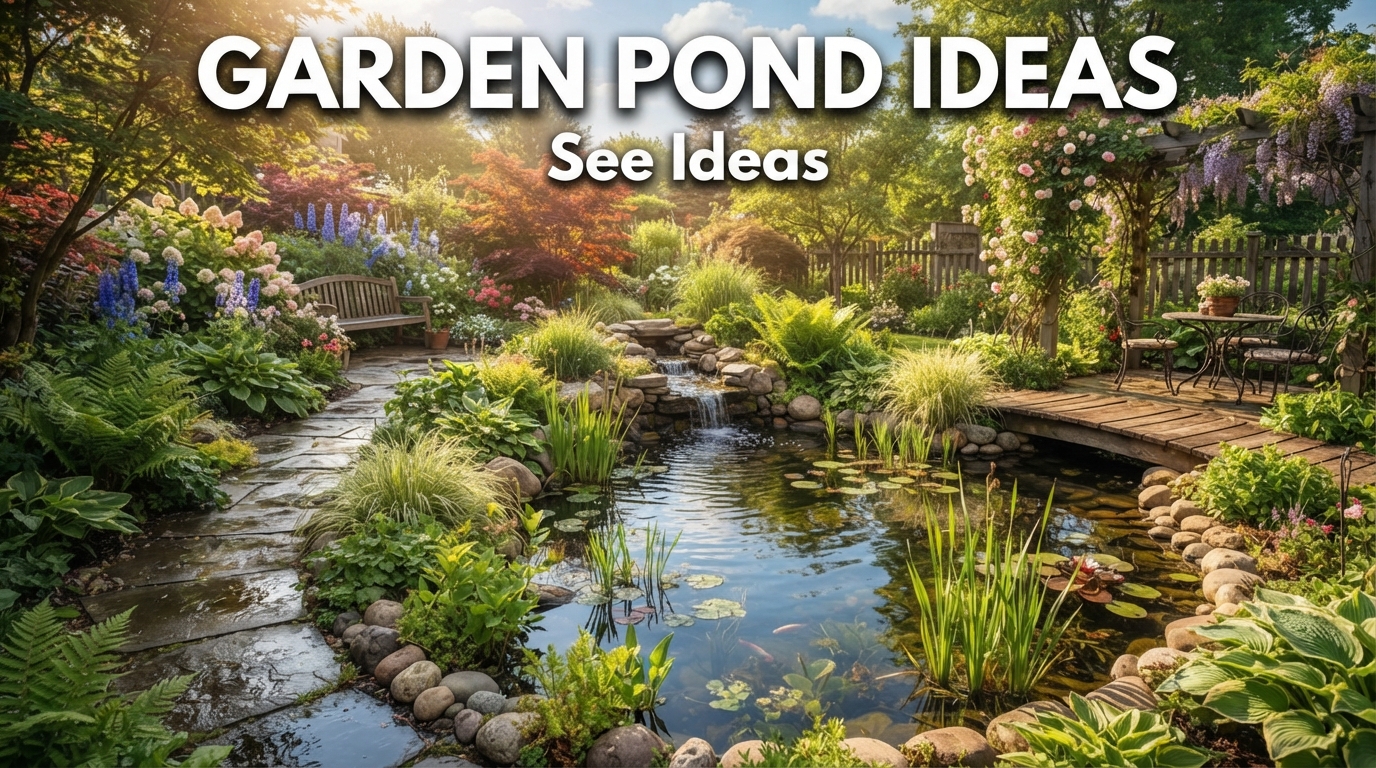
A garden pond can transform an ordinary outdoor space into a peaceful focal point filled with movement, reflections, plants, and wildlife. Whether you want a tiny container pond, a natural wildlife pond, a modern water feature, or a larger ornamental pond, there are many ways to incorporate water into your landscape.
What Is a Garden Pond?
A garden pond is a designed water feature that can be used for decoration, wildlife habitat, aquatic plants, or fish.
Garden ponds can include:
- Natural ponds
- Wildlife ponds
- Ornamental ponds
- Koi ponds
- Small ponds
- Raised ponds
- Container ponds
- Formal ponds
- Water gardens
- Modern ponds
The right design depends on your available space, climate, maintenance preferences, and intended use.
Benefits of a Garden Pond
Adds a Focal Point
Water naturally draws attention and can anchor a garden design.
Creates Movement
Waterfalls, fountains, and flowing water add visual movement and sound.
Supports Wildlife
A thoughtfully designed wildlife pond can provide habitat for insects, amphibians, birds, and other organisms.
Adds Relaxing Sounds
Moving water can create a soothing background sound.
Enhances Planting
Aquatic and waterside plants add new textures and colors to the landscape.
Creates Reflections
Water can reflect trees, flowers, architecture, and sky.
1. Small Garden Pond
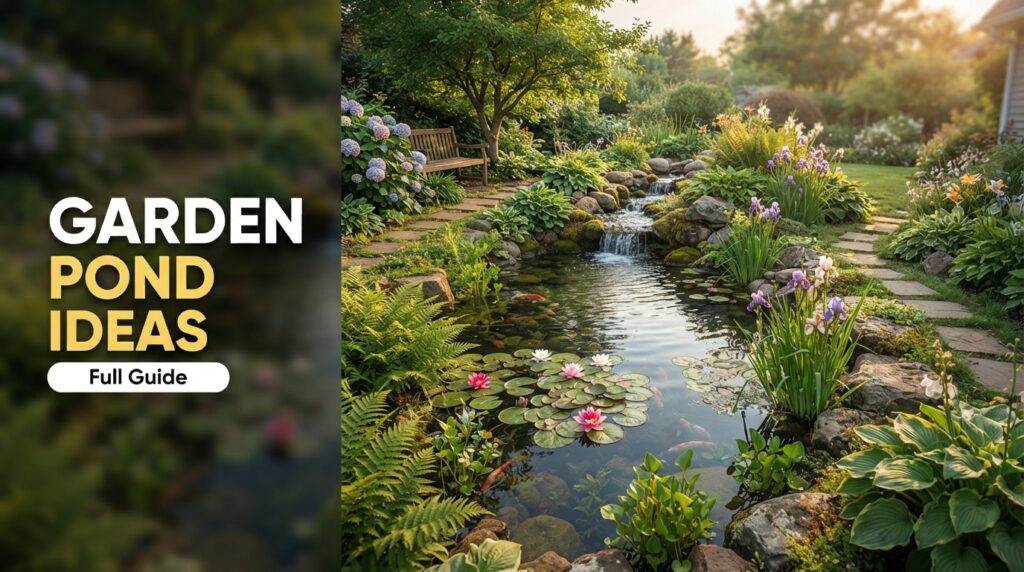
A small pond can fit into a compact backyard, courtyard, or patio.
Use a simple shape, a few aquatic plants, and natural stones to avoid overcrowding.
2. Tiny Pond Garden
For extremely small spaces, use a large waterproof container or purpose-built mini pond.
Place it where it receives appropriate light and can be safely maintained.
3. Backyard Garden Pond
A backyard pond can become the centerpiece of a larger landscape.
Surround it with planting, seating, paths, and natural materials.
4. Modern Garden Pond
Use clean lines, simple geometry, dark stone, concrete, or timber.
Keep planting controlled and architectural for a contemporary appearance.
5. Natural Garden Pond
Create an informal pond with irregular edges, rocks, aquatic plants, and native or locally suitable vegetation.
A naturalistic design can blend more easily into a wildlife-friendly garden.
6. Wildlife Garden Pond
A wildlife pond can provide valuable habitat.
Include shallow edges, suitable native plants, and escape routes for small animals where appropriate.
Avoid introducing fish if the goal is to maximize amphibian and aquatic-invertebrate habitat.
7. Koi Pond Garden
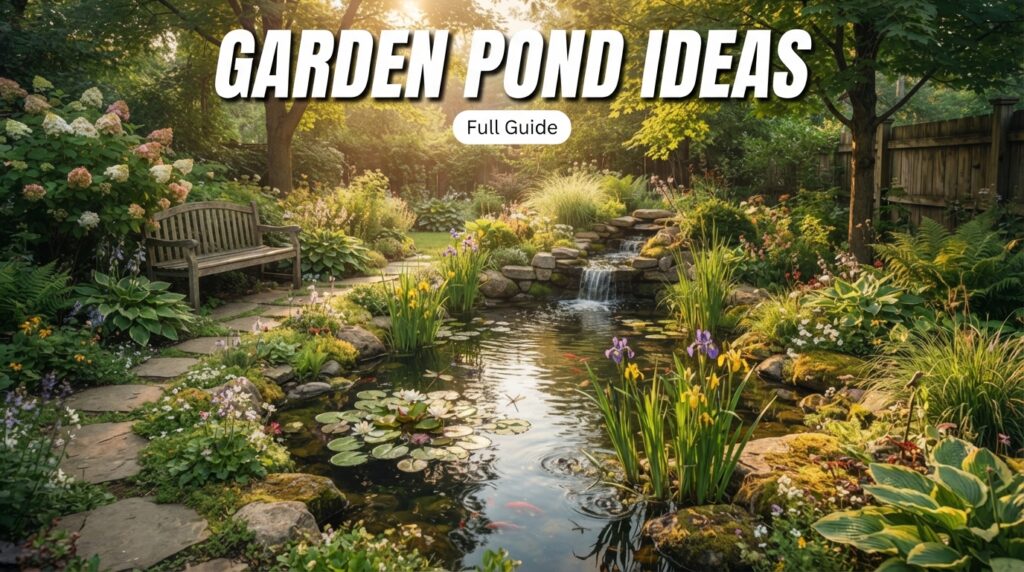
Koi ponds require specialized filtration, adequate depth, water quality management, and regular maintenance.
Plan the pond size and filtration system around the number and mature size of fish.
8. Raised Garden Pond
A raised pond can work well in modern gardens and can reduce the need for deep excavation.
Use strong, waterproof construction and make sure the structure can support the weight of the water.
9. Formal Garden Pond
Create a symmetrical pond using rectangular, square, or geometric shapes.
Add clipped hedges, paving, and simple architectural planting for a formal appearance.
10. Japanese Garden Pond
Combine water with stones, timber, carefully selected plants, and simple pathways.
Keep the composition restrained and natural-looking.
11. Zen Garden Pond
Use simple water, rocks, gravel, and greenery.
Avoid excessive ornaments and let open space become part of the design.
12. Cottage Garden Pond
Create a relaxed pond surrounded by flowers, grasses, shrubs, and natural stone.
Allow planting to soften the edges without completely hiding the water.
13. Tropical Garden Pond
In suitable warm climates, surround the pond with tropical foliage, palms, ferns, and aquatic plants.
Choose species that can tolerate local temperatures and humidity.
14. Pond With Waterfall
A waterfall adds sound and movement.
Use natural-looking rocks and create stable transitions between water levels.
15. Pond With Fountain
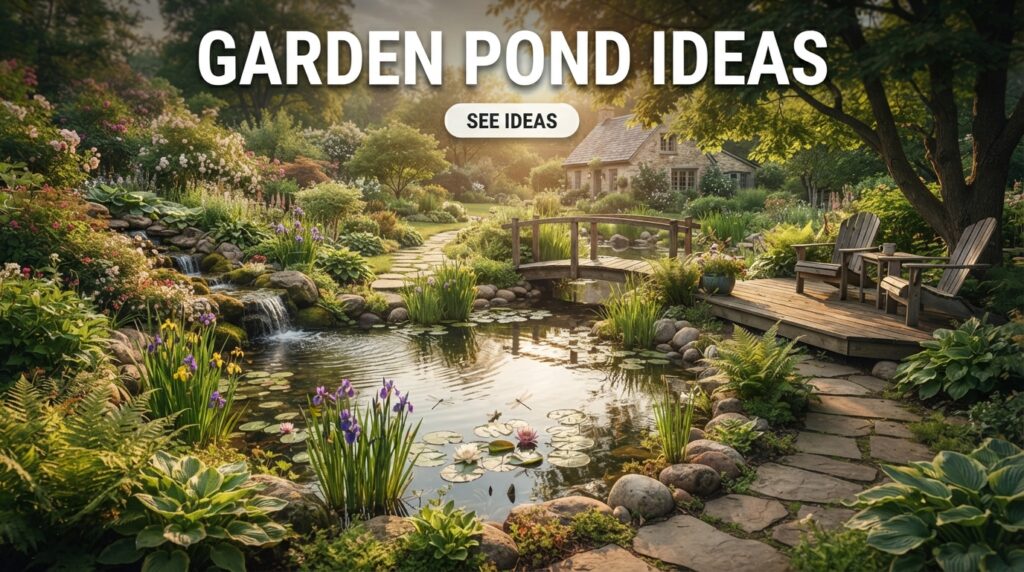
A fountain can provide aeration and movement while becoming a visual focal point.
Choose a pump and fountain size appropriate for the pond.
16. Pond With Stream
Connect the pond to a small stream or cascading watercourse.
This can create the appearance of a natural landscape and increase the sound of moving water.
17. Pond With Bridge
A small bridge can create a strong focal point and provide a transition across a pond.
Make sure it is structurally sound and has appropriate slip resistance.
18. Pond With Stepping Stones
Place stable stepping stones across or beside a shallow water feature.
Ensure stones are level and safe to walk across.
19. Pond With Stone Edging
Natural stones can soften the edge of a pond.
Use a mixture of sizes and shapes for a more organic appearance.
20. Pond With Gravel
Gravel can create a clean transition between water and surrounding planting.
Use appropriate edging to prevent soil and gravel from entering the pond.
21. Pond With Water Plants
Aquatic plants can add color, texture, and ecological value.
Potential categories include:
- Floating plants
- Marginal plants
- Submerged plants
- Oxygenating plants
Choose species suited to your climate and avoid invasive plants.
22. Pond With Water Lilies
Water lilies can create beautiful floating leaves and flowers.
Choose varieties appropriate for the pond’s depth and available sunlight.
23. Pond With Lotus
Lotus can create dramatic foliage and flowers in suitable warm climates.
They require adequate space and appropriate water depth.
24. Pond With Grasses
Grasses around a pond can create movement and soften hard edges.
Choose moisture-tolerant varieties for consistently damp areas.
25. Pond With Ferns
Ferns can create a lush woodland appearance around shaded or partially shaded ponds.
Select species suited to the moisture and light conditions.
26. Pond With Iris
Water-loving iris varieties can provide attractive vertical foliage and seasonal flowers.
Choose varieties according to water depth and local climate.
27. Pond With Fish
Ornamental fish can add movement and interest.
Before adding fish, consider pond size, filtration, oxygen levels, water temperature, predators, and local environmental regulations.
28. Pond With Outdoor Seating
Place a bench or chairs where you can comfortably see the water.
Keep furniture on a stable surface and maintain safe access around the pond.
29. Pond With Patio
A patio beside a pond creates an attractive outdoor relaxation area.
Leave sufficient space for circulation and pond maintenance.
30. Pond With Pergola
A pergola can create a shaded viewing or seating area beside the water.
Use simple materials that complement the pond’s design.
31. Pond With Garden Path
A pathway around the pond allows you to experience the feature from different viewpoints.
Use stone, gravel, brick, or another suitable outdoor surface.
32. Pond Under Trees
A pond beneath trees can look beautiful, but falling leaves may increase maintenance.
Choose the location carefully and consider root systems before excavation.
33. Pond Beside a Fence
A narrow pond along a boundary can make use of otherwise underused space.
Add vertical planting or a trellis to soften the fence behind it.
34. Pond in a Courtyard
A compact courtyard pond can create a peaceful centerpiece.
Use reflective surfaces, simple stone, and a limited number of plants to prevent the space from feeling crowded.
35. Container Pond
A waterproof pot, tub, or purpose-built container can become a mini water garden.
Add a few suitable aquatic plants and maintain water quality regularly.
36. Pondless Water Feature
A recirculating waterfall or stream can provide the sound and appearance of moving water without a traditional open pond.
This can be useful where maintenance or safety considerations make an open pond less suitable.
37. Eco-Friendly Garden Pond
Use locally appropriate plants, efficient pumps, natural materials, and responsible water management.
Avoid introducing invasive aquatic species.
38. Low-Maintenance Garden Pond
Keep the design simple and select plants carefully.
A well-balanced pond can require less intervention than a heavily stocked ornamental pond, but all ponds still need monitoring and maintenance.
39. Garden Pond With Lighting
Subtle underwater or surrounding lighting can highlight water, stones, plants, and waterfalls after dark.
Use properly rated outdoor equipment and install electrical components safely.
40. Garden Pond With Wildlife Border
Surround the pond with native or locally suitable plants that provide food and shelter.
Create shallow areas where appropriate to increase habitat diversity.
Best Plants for Garden Ponds
Plant selection depends on your climate, pond depth, sunlight, and water conditions.
Potential choices include:
Floating Plants
- Water lilies
- Suitable locally adapted floating species
Marginal Plants
- Water iris
- Rushes
- Sedges
- Suitable moisture-loving grasses
Submerged Plants
- Suitable oxygenating aquatic plants
Always check whether an aquatic plant is invasive before introducing it.
How to Design a Garden Pond
Step 1: Choose the Location
Select an area with appropriate sunlight and access to water and electricity if required.
Avoid locations where excessive runoff, chemicals, or debris will enter the pond.
Step 2: Decide the Purpose
Choose whether your pond will be:
- Wildlife-focused
- Ornamental
- Fish-focused
- A water garden
- A decorative feature
Step 3: Plan the Shape
Natural ponds can have irregular curves, while modern ponds often use geometric shapes.
Step 4: Plan the Depth
Depth requirements vary according to climate, plants, fish, and pond design.
Step 5: Create Safe Edges
Include suitable shallow zones, stable edging, and safe access.
Step 6: Add Filtration if Needed
Fish ponds and heavily stocked ponds may require appropriate filtration and circulation.
Step 7: Add Plants
Choose aquatic and surrounding plants suited to the environment.
Step 8: Add Hardscape
Use stones, gravel, paving, bridges, or timber to integrate the pond into the garden.
Step 9: Add Lighting
Use safe outdoor-rated lighting if nighttime viewing is important.
Step 10: Plan Maintenance
Consider cleaning, plant management, pump care, water quality, and seasonal maintenance before construction.
Garden Pond Color Ideas
Green and Stone Gray
Natural and calming.
Green and Blue
Fresh and peaceful.
Dark Stone and Green
Modern and dramatic.
Pink Flowers and Green Foliage
Soft and romantic.
White Flowers and Green
Clean and elegant.
Common Garden Pond Mistakes
Making the Pond Too Small for Fish
Fish require adequate space, depth, oxygen, and filtration.
Choosing an Unsuitable Location
Too much shade, excessive debris, or poor access can make maintenance difficult.
Overcrowding With Plants
Too many plants can cover the water surface and affect water balance.
Introducing Invasive Plants
Always check local restrictions and invasive-species information.
Ignoring Water Quality
Monitor water conditions when necessary, particularly in ponds containing fish.
Poor Electrical Installation
Pumps and lighting should be installed safely using suitable outdoor equipment and professional electrical work where required.
Forgetting Safety
Open water can pose risks to children and pets. Use appropriate barriers, shallow zones, supervision, or other safety measures based on the situation.
Frequently Asked Questions
What is the easiest garden pond to maintain?
A simple, well-balanced pond with appropriate plants and minimal stocking can be easier to maintain than a heavily stocked fish pond.
How small can a garden pond be?
A pond can be very small, including a container water garden, but its suitability depends on the plants, animals, and purpose.
Do garden ponds need a pump?
Not every pond requires a pump. Requirements depend on size, design, water movement, filtration, fish stocking, and desired circulation.
Can I have fish in a small pond?
Fish need adequate space, oxygen, water quality, and suitable temperatures. Very small ponds are generally better suited to plants and wildlife than fish.
What plants are best around a pond?
Choose moisture-tolerant plants that suit the available sunlight and local climate. Native or locally appropriate species are often excellent choices.
Conclusion
A garden pond can become one of the most beautiful features in an outdoor landscape. From tiny container ponds and modern water features to natural wildlife ponds and larger ornamental designs, water can add sound, movement, reflections, wildlife habitat, and seasonal interest.
Start by deciding the pond’s purpose, then select an appropriate location, size, depth, planting scheme, and filtration system. Integrate the pond with paths, stones, seating, and surrounding plants to create a peaceful garden feature that feels like a natural part of the landscape.