
 By John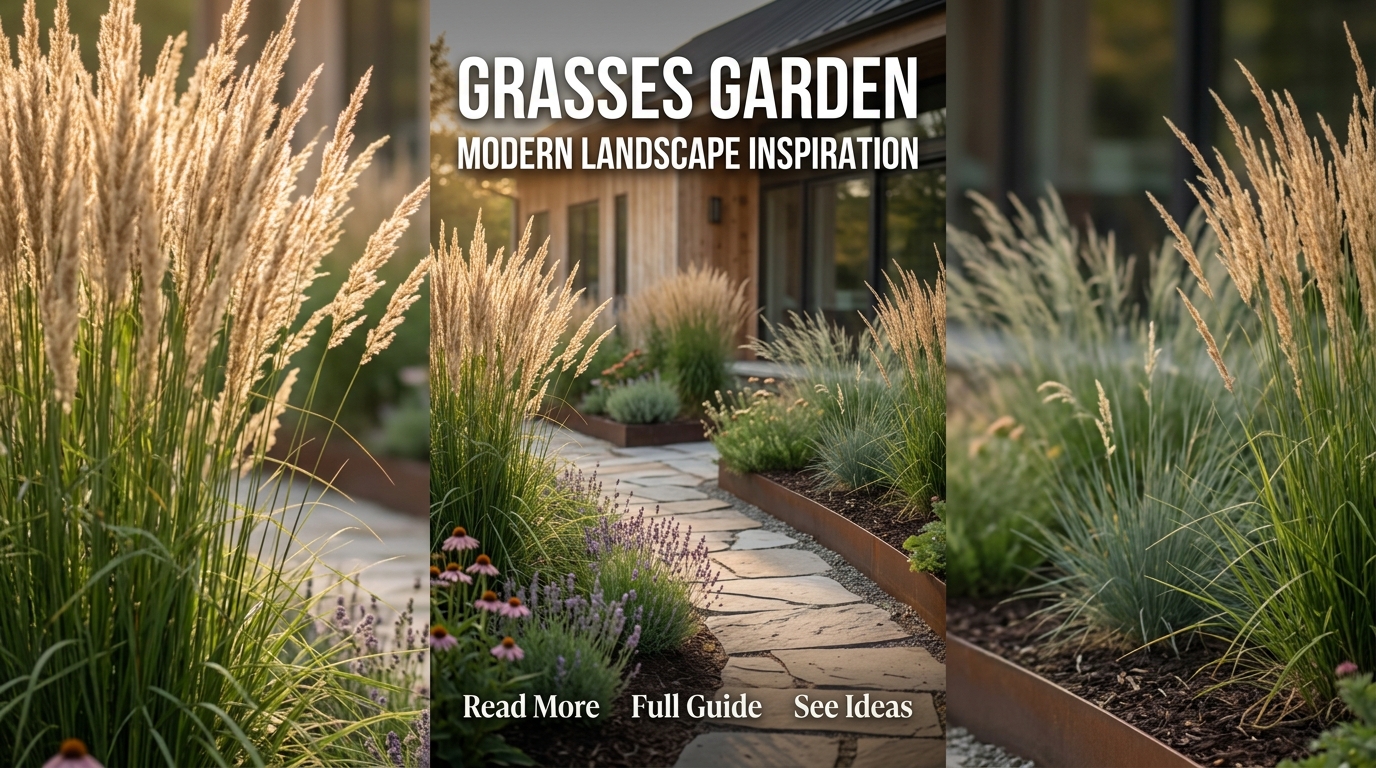
A grasses garden can bring movement, texture, height, and natural beauty to an outdoor space. Ornamental grasses are especially useful for modern, cottage, prairie, Mediterranean, and low-maintenance landscapes because their flowing foliage and delicate seed heads create visual interest throughout much of the year.
Whether you want a small grass border, a modern backyard, a prairie-inspired landscape, or a dramatic ornamental grass garden, there are many ways to incorporate grasses into your garden design.
What Is a Grasses Garden?
A grasses garden is a landscape that uses ornamental grasses as major planting features.
Depending on the species, grasses can provide:
- Fine-textured foliage
- Tall architectural forms
- Flower plumes
- Movement in the breeze
- Seasonal color
- Privacy
- Groundcover
- Soft garden borders
Some grasses prefer full sun, while others tolerate partial shade, so always select varieties according to your growing conditions.
Benefits of a Grasses Garden
Adds Movement
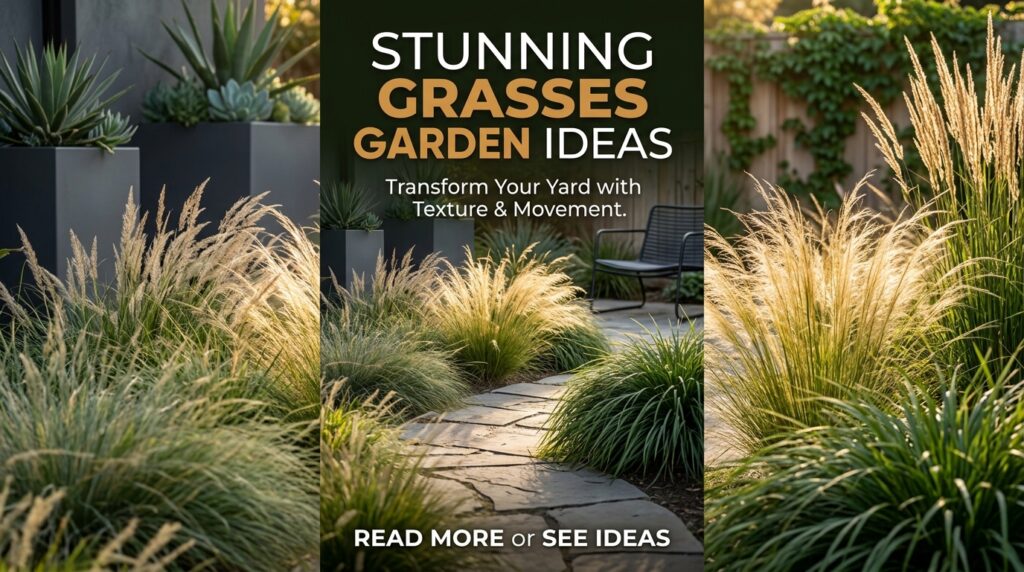
Grass foliage moves naturally with wind, creating a dynamic landscape.
Provides Texture
Fine blades contrast beautifully with broad-leaved plants, flowers, and stone.
Creates Structure
Tall grasses can provide strong vertical forms.
Supports Wildlife
Some ornamental grasses provide habitat or seed resources for wildlife, depending on species and local ecology.
Offers Seasonal Interest
Many grasses retain attractive seed heads and foliage into autumn and winter.
Works With Many Styles
Grasses can suit modern, rustic, cottage, prairie, coastal, and naturalistic landscapes.
1. Ornamental Grass Garden
Create a dedicated border using several ornamental grass varieties.
Combine different heights, colors, and textures for a layered appearance.
2. Small Grasses Garden
A small garden can use a few carefully selected grass clumps.
Place taller grasses toward the back and shorter varieties along pathways or borders.
3. Modern Grasses Garden
Use architectural grasses with clean paving and minimalist planting.
Try combining:
- Ornamental grasses
- Gravel
- Concrete
- Stone
- Simple shrubs
Keep the color palette restrained.
4. Backyard Grass Garden

Use grasses to create structure around lawns, patios, and seating areas.
Tall varieties can help frame an outdoor room.
5. Front Yard Grass Garden
Replace sections of traditional lawn with ornamental grasses for a contemporary, naturalistic appearance.
Combine grasses with low shrubs and stone pathways.
6. Prairie Grass Garden
Create a prairie-inspired landscape with grasses and flowering perennials.
Plant in generous groups rather than scattering individual specimens.
7. Cottage Grass Garden
Soften a cottage garden with airy grasses planted between flowering perennials.
Their movement can balance the abundance of colorful flowers.
8. Japanese-Inspired Grass Garden
Use graceful grasses with stones, moss, gravel, and carefully placed shrubs.
Keep the arrangement simple and avoid excessive plant variety.
9. Zen Grass Garden
Combine ornamental grasses with gravel and natural stones.
Use only a few varieties for a minimalist composition.
10. Tall Grass Garden
Tall grasses can create a dramatic backdrop.
Depending on the species and climate, possibilities include:
- Switchgrass
- Miscanthus
- Feather reed grass
- Fountain grass
- Muhly grass
Always check local suitability and mature height.
11. Short Grass Garden
Low-growing grasses can work well around pathways and garden borders.
Use compact varieties to create soft edging.
12. Grass Border Garden
Plant grasses along the edge of a lawn, patio, pathway, or flower bed.
Repeat the same varieties to create visual continuity.
13. Grasses and Flowers Garden
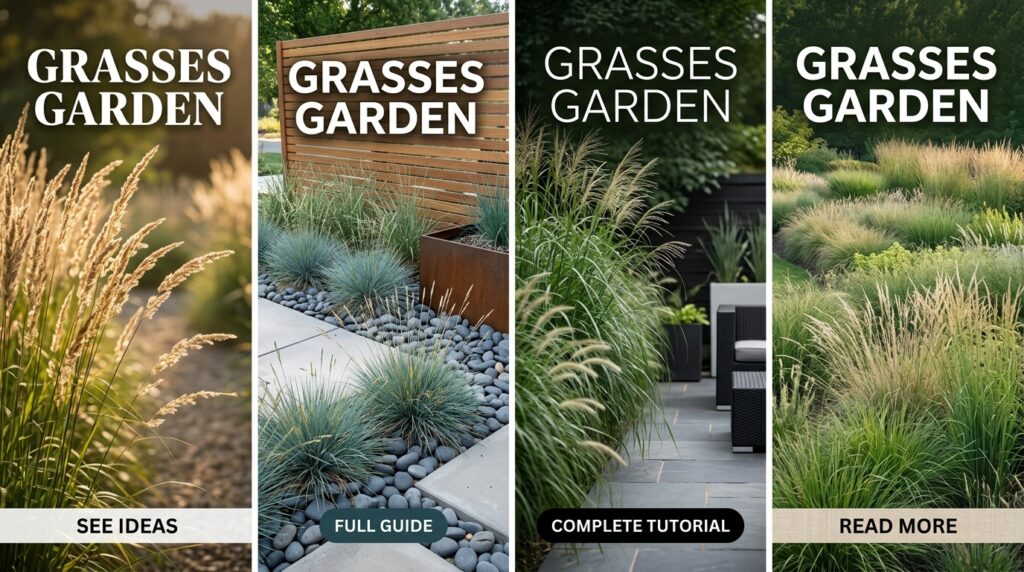
Combine ornamental grasses with flowering plants for contrast.
The grasses provide fine texture while flowers add seasonal color.
14. Grasses and Lavender Garden
Lavender and ornamental grasses can create a beautiful Mediterranean-inspired combination in sunny, well-drained locations.
Use plants with similar water requirements.
15. Grasses and Roses Garden
Use soft grasses around roses to create contrast between fine foliage and larger flowers.
Keep enough space for airflow and rose maintenance.
16. Grasses and Hydrangeas Garden
The fine texture of grasses can balance the large flower heads of hydrangeas.
Choose grasses according to the light and moisture conditions.
17. Grasses and Succulents Garden
Create a drought-tolerant-inspired composition using suitable grasses, succulents, gravel, and rocks.
Choose plants that share similar growing requirements.
18. Grasses and Rocks Garden
Natural stones provide a strong contrast to flowing grass foliage.
Place rocks in irregular groups for a natural appearance.
19. Grasses With Gravel
Gravel creates a clean background for ornamental grasses.
This combination works especially well in contemporary and drought-conscious landscapes.
20. Grass Garden With Pathway
Create a path through tall grasses for an immersive garden experience.
Keep plants away from the walking surface to maintain clear access.
21. Grass Garden With Seating
Place a bench or outdoor chair among ornamental grasses.
Choose a location where the movement of the plants can be enjoyed from the seating area.
22. Grass Garden Privacy Screen
Tall grasses can provide seasonal privacy.
Choose clumping varieties and consider their mature height and width before planting.
23. Grass Garden Along a Fence
Use grasses to soften a fence line.
Repeat several plants in groups rather than using a random mixture.
24. Grass Garden Around a Patio
Plant grasses around the perimeter of a patio to soften hard surfaces.
Use shorter varieties near seating and taller plants farther away.
25. Grass Garden Around a Pool
Ornamental grasses can add movement around a pool landscape.
Choose varieties that are not excessively messy or invasive and keep planting away from required pool access areas.
26. Grass Garden With Water Feature
Grasses can soften the edge of a pond, fountain, or stream-inspired feature.
Select moisture-tolerant varieties for consistently damp locations.
27. Grass Garden With Pond
Create a natural transition around a pond using grasses and compatible moisture-loving plants.
Keep aggressive spreading species controlled.
28. Grass Garden Under Trees
Some grasses tolerate partial shade, but many ornamental grasses require significant sunlight.
Choose shade-tolerant species rather than assuming all grasses will perform beneath trees.
29. Shade Grass Garden
For partial-shade areas, consider appropriate shade-tolerant grasses and grass-like plants.
Check the specific light requirements of each variety.
30. Tropical Grass Garden
In warm climates, ornamental grasses can complement tropical foliage plants.
Combine grasses with palms, large-leaved plants, and natural stone.
31. Blue Grass Garden
Blue-toned foliage can create a cool, modern appearance.
Choose species with naturally blue or blue-green leaves that suit your climate.
32. Purple Grass Garden
Some ornamental grasses develop purple or burgundy foliage or flower plumes.
Use them as accents among green and silver plants.
33. Pink Grass Garden
Certain grasses produce pink-toned flower heads.
They can add softness to modern and romantic garden designs.
34. Silver Grass Garden
Silver foliage can create a sophisticated monochromatic garden.
Combine silver grasses with gray stone, white flowers, and muted green shrubs.
35. Golden Grass Garden
Golden foliage can brighten darker areas of the landscape where the selected grass variety is suitable.
Use bright grasses as accents rather than overwhelming the entire garden.
36. Low-Maintenance Grass Garden
Choose grasses adapted to your climate and soil.
Group plants according to water requirements and provide sufficient space for mature growth.
Many ornamental grasses can be cut back seasonally, depending on species.
37. Drought-Tolerant Grass Garden
Select grasses adapted to dry conditions.
Combine them with gravel, stone, and other suitable drought-tolerant plants.
Establish plants with adequate water before gradually reducing irrigation as appropriate.
38. Coastal Grass Garden
Grasses can work beautifully in coastal-inspired landscapes.
Choose varieties that tolerate wind, salt exposure, and sandy conditions where applicable.
39. Wild Grass Garden
Create a naturalistic landscape by combining grasses with native flowering plants.
Allow the planting to feel loose and organic while maintaining paths and clear garden edges.
40. Container Grass Garden
Ornamental grasses can also be grown in containers.
Choose compact varieties and provide containers with good drainage.
Large pots can create dramatic focal points on patios and balconies.
Best Ornamental Grasses for Gardens
Potential choices include:
Switchgrass
Useful for upright structure and seasonal color.
Miscanthus
Known for tall foliage and attractive plumes.
Fountain Grass
Provides graceful arching foliage and bottlebrush-like flower heads.
Feather Reed Grass
Creates strong vertical lines and works well in structured borders.
Muhly Grass
Known for attractive flowering displays in suitable climates.
Blue Fescue
A compact grass with blue-gray foliage.
Japanese Forest Grass
A useful option for partially shaded landscapes where conditions are appropriate.
Always check whether a grass is invasive or poorly suited to your region before planting.
How to Design a Grasses Garden
Step 1: Study the Site
Check sunlight, soil, drainage, wind, and available space.
Step 2: Choose a Garden Style
Decide whether you want modern, prairie, cottage, Japanese-inspired, tropical, or naturalistic landscaping.
Step 3: Select Grass Heights
Combine low, medium, and tall grasses to create layers.
Step 4: Repeat Plants
Use repeated groups of the same grass to create cohesion.
Step 5: Add Companion Plants
Introduce flowers, shrubs, groundcovers, or trees that share similar conditions.
Step 6: Create Pathways
Paths help divide larger grass plantings and provide access.
Step 7: Add Hardscape
Use stone, gravel, timber, or concrete to contrast with the soft foliage.
Step 8: Plan Seasonal Interest
Choose grasses with foliage or seed heads that remain attractive beyond the flowering season.
Grasses Garden Color Ideas
Green and Silver
Fresh and sophisticated.
Green and Purple
Bold and dramatic.
Blue and Gray
Cool and modern.
Pink and Green
Soft and romantic.
Gold and Green
Bright and cheerful.
Common Grasses Garden Mistakes
Planting the Wrong Grass for the Climate
Not every ornamental grass is suitable for every region.
Ignoring Mature Size
A small grass can become a large clump over time.
Planting Too Closely
Crowded grasses can have poor airflow and become difficult to maintain.
Using Invasive Species
Research local invasive-plant lists before planting.
Overwatering
Many ornamental grasses prefer well-drained soil.
Cutting Everything Too Early
Some grasses provide winter structure and habitat when left standing until the appropriate seasonal maintenance period.
Frequently Asked Questions
What are the best grasses for a garden?
Popular ornamental choices include switchgrass, miscanthus, fountain grass, feather reed grass, muhly grass, and blue fescue, depending on climate and site conditions.
Can ornamental grasses grow in shade?
Some can tolerate partial shade, but many perform best in full sun. Check the requirements of the specific species.
Are grasses low maintenance?
Many ornamental grasses are relatively low maintenance once established, but they still require appropriate watering, pruning, division, and pest or disease monitoring when necessary.
Can grasses provide privacy?
Tall clumping grasses can provide seasonal screening, particularly around patios and boundaries.
Can I grow ornamental grasses in pots?
Yes. Compact varieties can grow well in containers with sufficient drainage, soil volume, and water.
Conclusion
A grasses garden offers an elegant way to introduce movement, texture, height, and seasonal interest into almost any landscape. From minimalist modern borders to wild prairie-style planting, ornamental grasses can create a strong visual foundation while complementing flowers, shrubs, trees, stone, and water features.
Choose varieties according to your climate, sunlight, soil, mature size, and maintenance preferences. With repeated planting groups, contrasting textures, and thoughtful spacing, grasses can turn an ordinary garden into a dynamic and beautiful outdoor landscape.