
 By John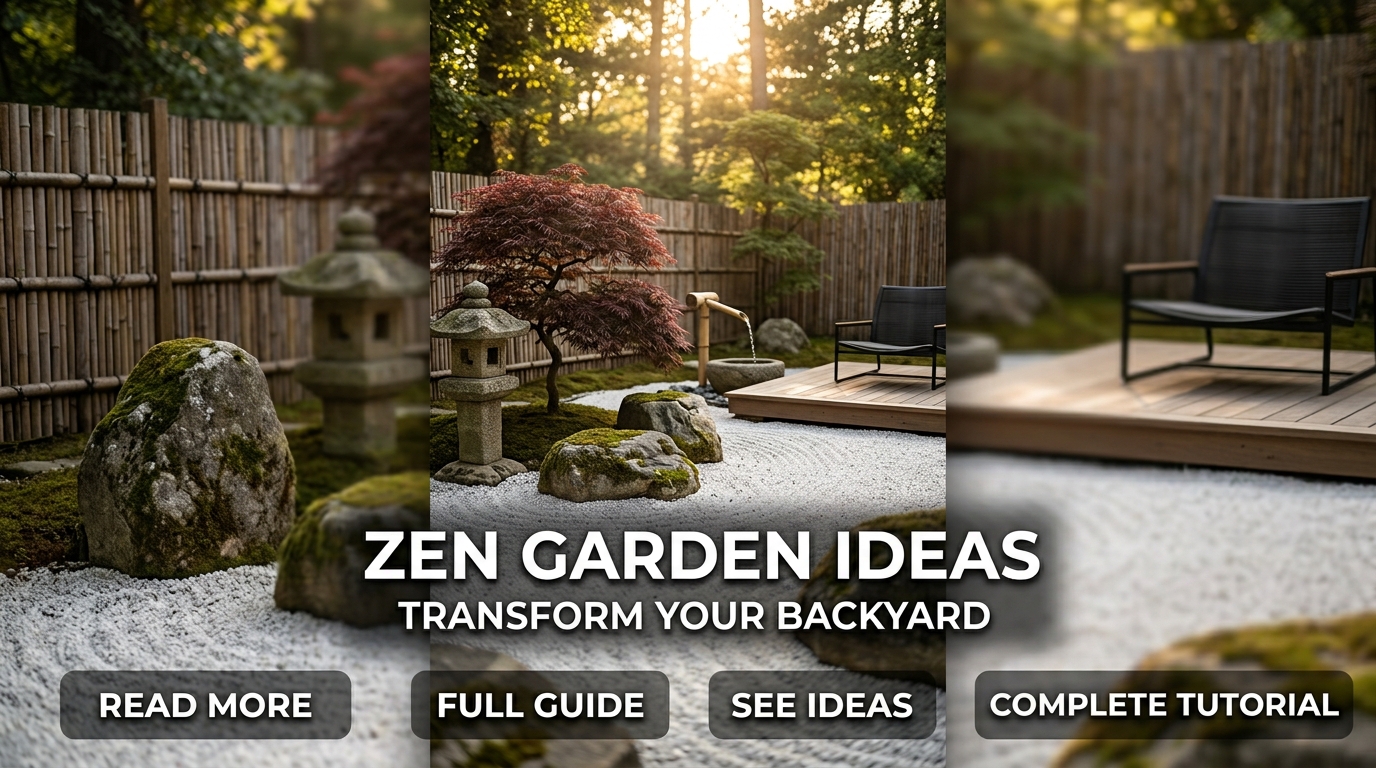
A zen garden backyard can transform an ordinary outdoor area into a peaceful retreat designed for relaxation, reflection, and connection with nature. Inspired by Japanese landscape principles, zen gardens often combine rocks, gravel, carefully shaped plants, water, pathways, and simple architectural features.
Whether you have a large backyard or a tiny courtyard, you can create a calming zen-inspired space with thoughtful placement and a restrained natural palette.
What Is a Zen Garden Backyard?
A zen garden backyard is an outdoor landscape designed around simplicity, balance, natural textures, and peaceful visual composition.
Common elements include:
- Gravel or sand
- Natural stones
- Moss
- Carefully pruned shrubs
- Japanese-inspired plants
- Wooden features
- Water elements
- Stepping stones
- Simple seating
- Minimal decoration
Traditional Japanese dry gardens may use carefully raked gravel or sand to represent water, while rocks and plants provide visual structure.
Benefits of a Zen Garden Backyard
A zen-inspired backyard can:
- Create a peaceful outdoor retreat
- Reduce visual clutter
- Add natural texture
- Provide a relaxing place to sit
- Make a small garden feel intentional
- Encourage thoughtful landscape design
- Complement modern architecture
1. Small Zen Garden Backyard
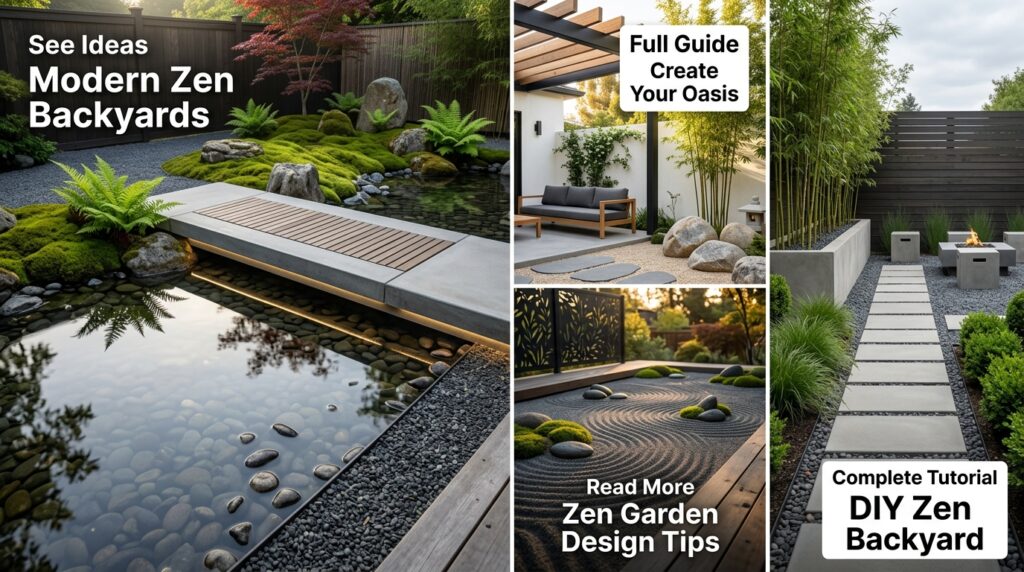
A small backyard can become a beautiful zen retreat with a simple layout.
Use a compact gravel area, several carefully positioned rocks, a few evergreen plants, and a small bench.
Avoid filling every corner.
2. Modern Zen Garden Backyard
Combine minimalist architecture with natural materials.
Try:
- Dark stone
- Pale gravel
- Concrete
- Timber
- Sculptural plants
- Simple outdoor furniture
Keep colors and decorative elements restrained.
3. Japanese Zen Garden Backyard
Create a Japanese-inspired landscape with stones, gravel, moss, stepping stones, shrubs, and carefully selected trees.
Use asymmetrical arrangements rather than making everything perfectly symmetrical.
4. Zen Garden With Gravel
Gravel can become the foundation of a dry zen-inspired landscape.
Choose an appropriate aggregate and use a rake to create simple patterns.
Maintain the surface regularly to keep the design crisp.
5. Zen Garden With Rocks
Rocks can act as the main structural elements.
Use groups of stones with different sizes and shapes rather than scattering individual rocks randomly.
Position them securely and naturally.
6. Zen Garden With Raked Sand
A small raked area can represent flowing water.
Create simple curved or linear patterns around rocks.
Rake the surface periodically to refresh the design.
7. Zen Garden With Moss
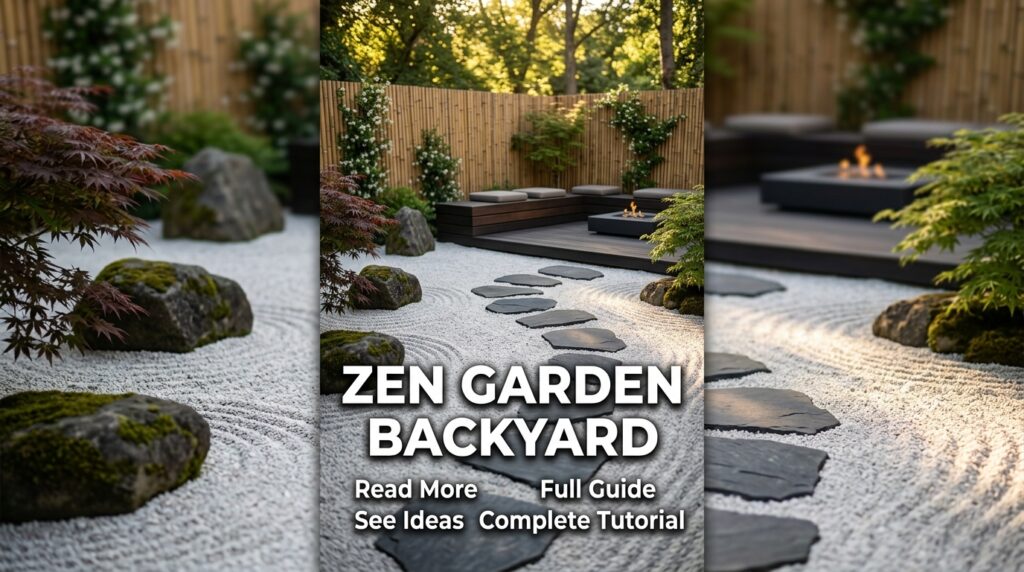
Moss can add softness and rich green color to shaded, humid locations where it naturally thrives.
Combine it with stones and pathways for a woodland-inspired appearance.
8. Zen Garden With Water Feature
A small pond, basin, or fountain can introduce the sound and movement of water.
Place the feature where it can become a visual focal point without overwhelming the garden.
9. Zen Garden With Bamboo
Bamboo can provide vertical structure and privacy in suitable climates.
Choose non-invasive clumping varieties where appropriate and control their spread.
10. Zen Garden With Japanese Maple
A Japanese maple can become a dramatic focal tree where climate conditions are suitable.
Its seasonal foliage can provide changing color and texture.
11. Zen Garden With Stepping Stones
Stepping stones can guide visitors through the garden.
Leave comfortable spacing and ensure stones are level and stable.
12. Zen Garden Pathway
Create a simple pathway using stone, gravel, or stepping stones.
A gently curved path can make the garden feel more natural and encourage slower movement.
13. Zen Garden With Wooden Bridge
A small wooden bridge can become a beautiful focal point over a dry river bed or water feature.
Use weather-resistant materials and ensure the structure is safely installed.
14. Zen Garden With Lantern
A traditional-inspired garden lantern can provide a decorative focal point.
Use one or two carefully placed pieces rather than excessive ornamentation.
15. Zen Garden With Bench
Place a simple wooden or stone bench where the garden can be viewed comfortably.
The best location is often beside a path or facing a key landscape feature.
16. Zen Garden Seating Area
Create a quiet sitting area with:
- Wooden benches
- Low chairs
- Natural stone seating
- Simple outdoor cushions
Keep furniture visually understated.
17. Zen Garden With Privacy Screen
Use bamboo screening, timber slats, trellises, or plants to create privacy.
Choose a design that complements the minimalist garden style.
18. Zen Garden With Pergola
A simple timber pergola can define a seating or meditation area.
Use restrained climbing plants if appropriate.
19. Zen Garden Courtyard
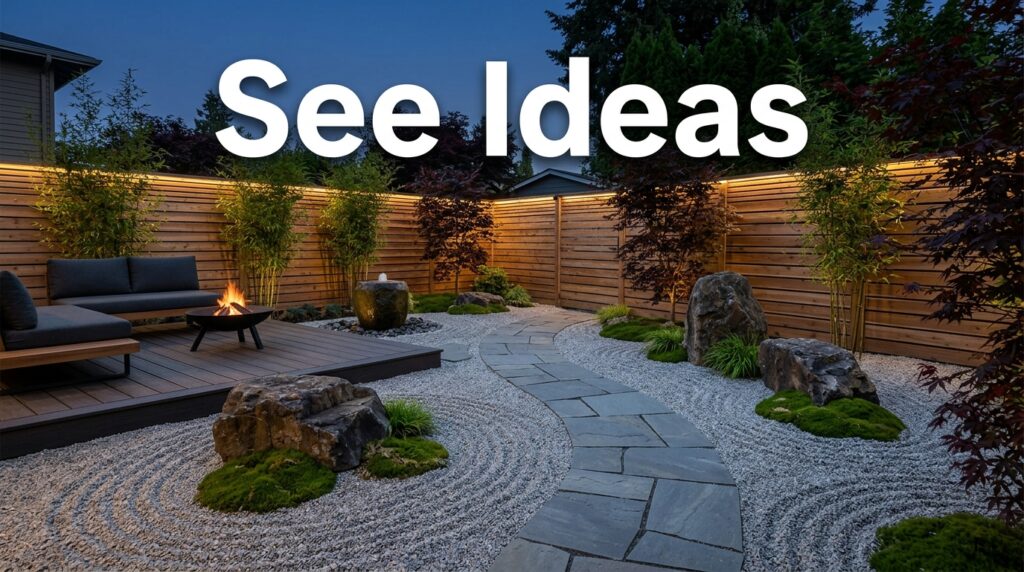
Courtyards are excellent spaces for zen-inspired landscaping.
Combine gravel, stone, moss, containers, and a simple water feature to create a compact retreat.
20. Tiny Zen Garden Backyard
Even a very small space can use zen principles.
Choose three or four major elements:
- Gravel
- Stones
- One focal plant
- Simple seating
The limited palette helps maintain a calm atmosphere.
21. Zen Garden Under Trees
Use the natural shade of established trees as the foundation for a woodland-style zen garden.
Add moss, shade-tolerant plants, stones, and a simple pathway.
Avoid excessive digging around established tree roots.
22. Zen Garden With Ferns
Ferns can soften stone and gravel areas in shaded, moist environments.
Use different textures and heights for a layered appearance.
23. Zen Garden With Ornamental Grasses
Some ornamental grasses can add movement while maintaining a minimalist appearance.
Choose varieties suitable for your light and climate conditions.
24. Zen Garden With Evergreen Shrubs
Evergreens provide year-round structure.
Carefully pruned shrubs can create clean shapes while still maintaining a natural appearance.
25. Zen Garden With Stone Wall
A low stone wall can define the garden boundary.
Use natural stone and keep the construction visually simple.
26. Zen Garden With Dry Creek
Create the appearance of a dry stream using gravel and larger stones.
Curve the “stream” gently through the landscape and use different stone sizes to create depth.
27. Zen Garden With Pond
A pond can introduce reflections, movement, and wildlife.
Keep the surrounding planting restrained so the water remains the main focal point.
28. Zen Garden With Water Basin
A simple stone or ceramic basin can provide a subtle water feature.
Position it near a pathway or seating area.
29. Zen Garden With Fire Pit
A minimalist fire feature can create an outdoor gathering point.
Use a properly designed outdoor fire feature, keep combustible materials away, and follow local fire-safety requirements.
30. Zen Garden With Outdoor Lighting
Use subtle lighting to highlight paths, stones, trees, and water.
Avoid excessive illumination that disrupts the peaceful nighttime atmosphere.
31. Zen Garden With Large Stones
Large rocks can anchor the composition.
Use a few substantial stones rather than many small decorative pieces.
32. Zen Garden With Gravel and Stone
This classic combination creates a simple dry landscape.
Use contrasting textures and carefully arranged stone groups to create visual interest.
33. Zen Garden With Potted Plants
Containers allow you to introduce greenery without permanent planting.
Choose simple ceramic, stone, or natural-looking containers.
34. Zen Garden With Succulents
In suitable climates, drought-tolerant succulents can be incorporated into a modern zen-inspired landscape.
Use them selectively and choose species suited to the available light.
35. Zen Garden With Cactus
A modern desert interpretation can combine gravel, rocks, architectural plants, and suitable cacti.
Use caution around spines and keep them away from high-traffic areas.
36. Zen Garden With Water and Rocks
Combine a small water feature with natural stones for a balanced composition.
Use rocks to create a visual transition between planting and water.
37. Zen Garden With Minimalist Fence
A simple wood or bamboo-style fence can establish a clean boundary.
Avoid overly decorative patterns.
38. DIY Zen Garden Backyard
You can create a simple zen-inspired backyard with a manageable weekend project.
Materials
You may need:
- Gravel
- Natural stones
- Landscape edging
- Suitable plants
- Stepping stones
- Rake
- Wooden bench
- Optional water feature
Steps
- Choose a quiet section of the backyard.
- Remove weeds and unwanted vegetation.
- Plan the major focal points.
- Install edging where needed.
- Add and level the gravel.
- Position the largest stones first.
- Add smaller stones and plants.
- Install stepping stones or a pathway.
- Add simple seating.
- Finish with subtle lighting or a small water feature.
Zen Garden Backyard Color Palette
Green and Gray
A classic natural combination using foliage and stone.
Beige and Green
Warm gravel paired with soft planting.
Black and Green
A dramatic modern interpretation.
White and Green
Bright and minimalist.
Brown, Gray, and Green
Natural and understated.
Best Plants for a Zen Garden Backyard
Potential choices depend on your climate and growing conditions.
Consider:
- Japanese maple
- Bamboo
- Ferns
- Moss
- Evergreen shrubs
- Ornamental grasses
- Pine trees
- Azaleas
- Japanese forest grass
- Shade-tolerant groundcovers
Always choose species appropriate for your local environment.
How to Design a Zen Garden Backyard
Step 1: Simplify the Space
Remove unnecessary decorations and clutter.
Step 2: Establish a Focal Point
Choose a large stone, tree, water feature, or seating area.
Step 3: Create Balance
Use asymmetrical arrangements and varied heights.
Step 4: Add Natural Materials
Introduce stone, gravel, wood, and plants.
Step 5: Create Movement
Use pathways, dry streams, or raked gravel patterns.
Step 6: Add Greenery
Choose a limited selection of plants that complement one another.
Step 7: Create a Quiet Seating Area
Place seating where the garden can be viewed comfortably.
Step 8: Maintain the Simplicity
Regularly remove clutter, weeds, and overgrown vegetation.
Common Zen Garden Mistakes
Using Too Many Decorations
A zen garden depends on simplicity.
Making Everything Symmetrical
Natural asymmetry often creates a more authentic landscape feeling.
Overcrowding Plants
Leave open areas for gravel and stone.
Choosing Plants Without Checking Climate
Japanese-inspired plants may not thrive everywhere.
Ignoring Maintenance
Gravel patterns, pruning, moss, and water features require ongoing care.
Using Unstable Stones
Large landscape rocks should be positioned securely.
Frequently Asked Questions
How do I make my backyard look like a zen garden?
Start by simplifying the space, then introduce gravel, natural stones, carefully selected plants, a simple pathway, and one main focal point.
What is the best gravel for a zen garden?
Choose a fine or medium aggregate that is suitable for raking if you want traditional dry-garden patterns. The exact material depends on availability, drainage, and local conditions.
What plants are best for a backyard zen garden?
Japanese maple, bamboo, moss, ferns, evergreen shrubs, ornamental grasses, and other suitable plants can work depending on the climate and sunlight.
Can I create a zen garden in a small backyard?
Yes. Small spaces can be especially effective when the design is simple and uses only a few carefully chosen elements.
Does a zen garden need water?
No. A dry zen garden can use gravel or sand to symbolize water, so an actual pond or fountain is optional.
Conclusion
A zen garden backyard is less about filling a space with specific decorations and more about creating balance, simplicity, natural texture, and a sense of calm. Gravel, stones, plants, pathways, water, and seating can work together to create a peaceful landscape.
Begin with a simple layout, choose materials that suit your home and climate, and focus on a few strong elements rather than excessive decoration. With thoughtful placement and regular maintenance, even a small backyard can become a tranquil zen-inspired retreat.