
 By John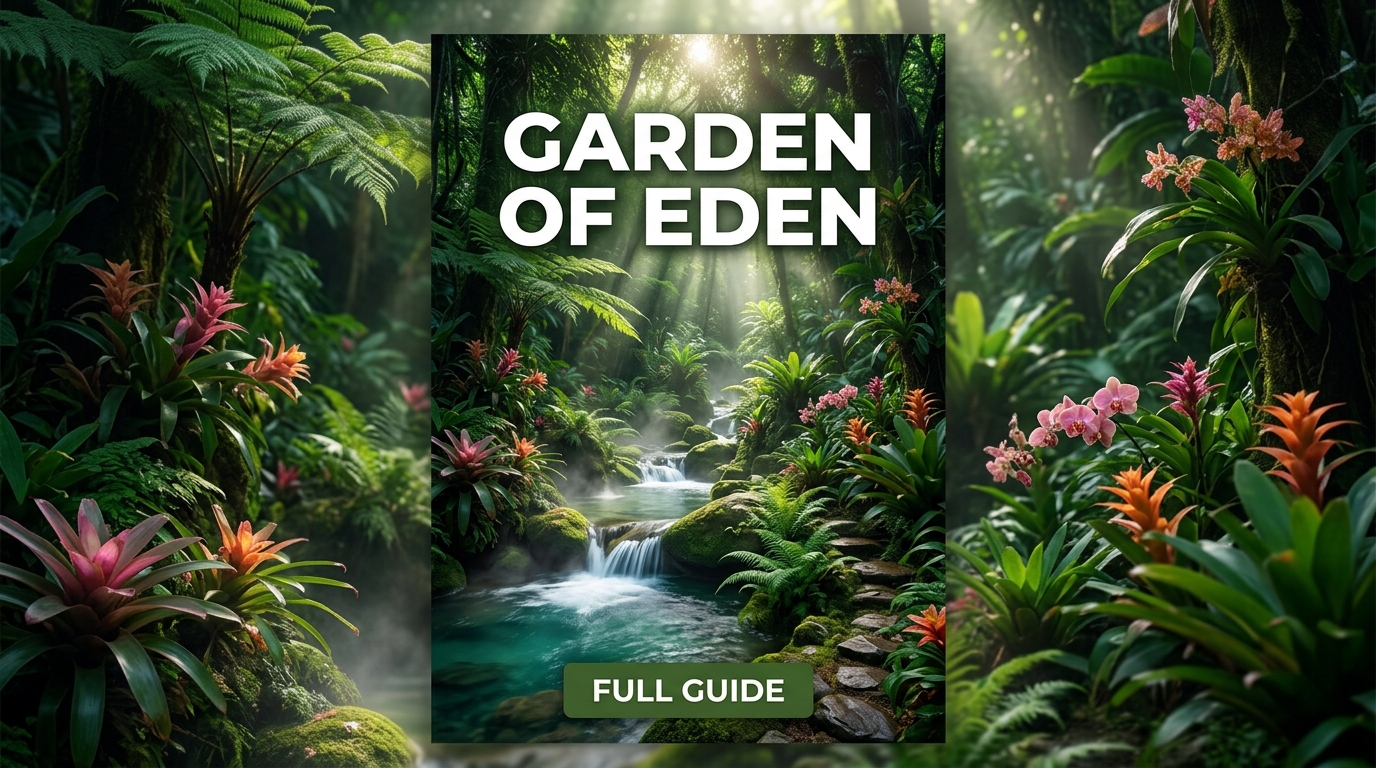
The Garden of Eden is one of the most famous gardens in religious and cultural history. Described in the Book of Genesis, Eden represents a beautiful paradise associated with creation, innocence, abundance, and humanity’s early relationship with God and nature.
The story of Eden has inspired centuries of art, literature, architecture, landscape design, and garden imagery. Today, the phrase “Garden of Eden” is often used to describe an exceptionally lush, peaceful, and beautiful garden filled with plants, trees, water, and natural abundance.
What Is the Garden of Eden?
The Garden of Eden is described in Genesis as the place where God placed the first humans, Adam and Eve, after creating them.
The garden is presented as a place of abundance and beauty. It contains trees that are pleasant to look at and good for food, including the Tree of Life and the Tree of the Knowledge of Good and Evil.
The story also describes a river flowing from Eden that divides into four branches.
Because of these descriptions, Eden has become a powerful image of an ideal paradise.
Where Was the Garden of Eden?
The exact historical location of the Garden of Eden is unknown.
Genesis mentions four rivers associated with the garden:
- Pishon
- Gihon
- Tigris
- Euphrates
The identification of the Tigris and Euphrates has led to many theories connecting Eden with regions of the ancient Near East. However, there is no universally accepted location for the biblical garden.
Different religious traditions and scholars have interpreted its geography in different ways.
The Story of the Garden of Eden
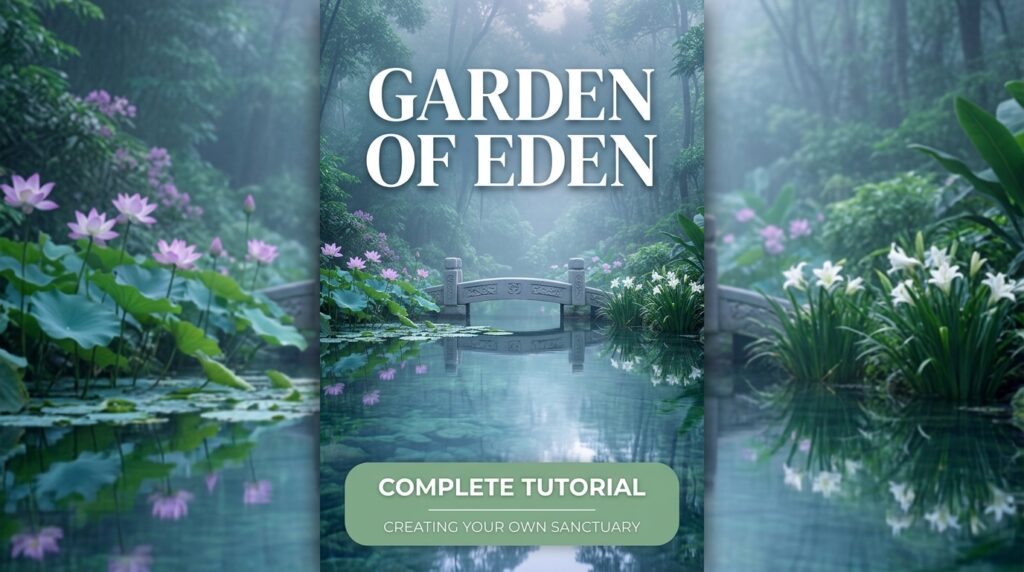
According to Genesis, God creates the first human and places him in Eden to cultivate and care for the garden.
Adam is later joined by Eve.
They are permitted to eat from the trees of the garden except for the Tree of the Knowledge of Good and Evil.
The serpent eventually persuades Eve to eat from the forbidden tree. She gives the fruit to Adam, who also eats.
Afterward, Adam and Eve recognize their nakedness and hide from God.
The disobedience results in their expulsion from Eden.
The Garden of Eden and Creation
Eden is closely connected with the biblical creation narrative.
The garden represents a world in which:
- Nature is abundant
- Humans live in close relationship with creation
- Food is readily available
- The environment is beautiful
- Humanity has a responsibility to cultivate and care for the garden
This connection has made Eden an enduring symbol of harmony between people and nature.
The Tree of Life
The Tree of Life is one of the most important elements associated with Eden.
Genesis describes the Tree of Life as being located in the midst of the garden.
It has traditionally been interpreted in different ways, including as a symbol of:
- Eternal life
- Divine provision
- Immortality
- Spiritual connection
- God’s gift of life
The Tree of Life has also become a recurring image in religious art and garden-inspired design.
The Tree of the Knowledge of Good and Evil
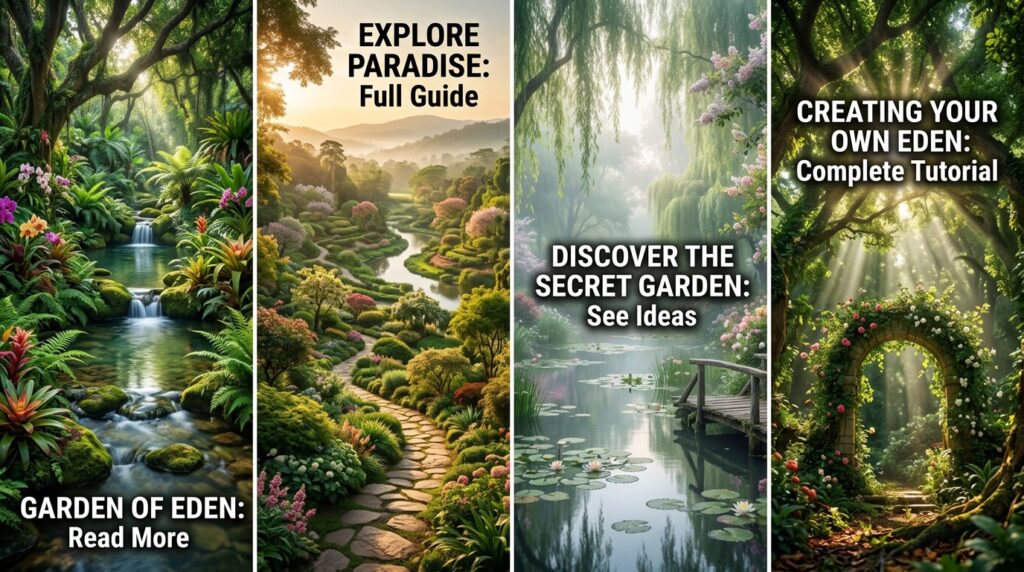
The Tree of the Knowledge of Good and Evil is another central feature of the Eden story.
God commands Adam not to eat from this particular tree.
Its fruit becomes central to the story of temptation, disobedience, knowledge, and the consequences that follow.
The tree is therefore one of the most recognizable symbols connected to Eden.
The River of Eden
Water is another major feature in the biblical description.
Genesis describes a river flowing out of Eden and dividing into four branches.
This imagery has contributed to the idea of Eden as a lush paradise supported by abundant water.
For garden design inspiration, flowing water can represent:
- Life
- Renewal
- Abundance
- Peace
- Fertility
Garden of Eden Symbolism
The Garden of Eden has many layers of symbolism.
Paradise
Eden is commonly associated with an ideal place of beauty and peace.
Innocence
Before the disobedience, Adam and Eve are portrayed as living without shame.
Abundance
The garden provides trees and plants that are pleasant and suitable for food.
Temptation
The forbidden fruit becomes associated with the temptation to disobey.
Knowledge
The Tree of the Knowledge of Good and Evil is central to themes of moral awareness and human understanding.
Loss
The expulsion from Eden has made the garden a symbol of a paradise that has been lost.
Hope
The imagery of a perfect garden has also inspired ideas about restoration and returning to an ideal state.
Garden of Eden Plants
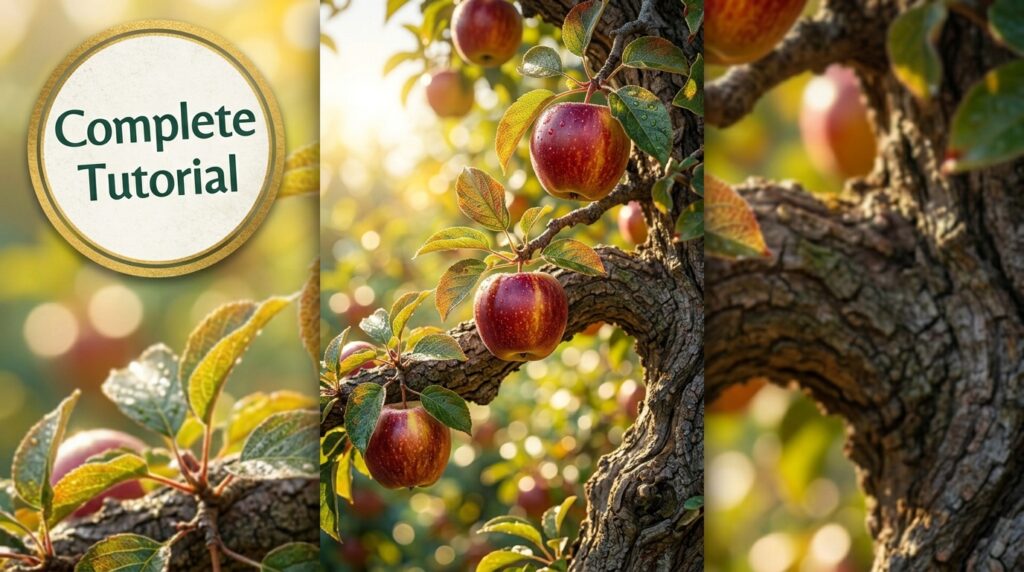
The biblical account does not provide a complete botanical inventory of Eden.
Instead, it describes trees and plants broadly, including trees that are beautiful and provide food.
Because the exact location and botanical identity of Eden are uncertain, modern “Garden of Eden” plantings are often based on regional traditions, artistic interpretations, and plants associated with biblical landscapes.
Possible inspiration includes:
- Fruit trees
- Date palms
- Fig trees
- Olive trees
- Vines
- Herbs
- Flowering plants
- Lush groundcovers
Choose species based on your climate rather than assuming every historically associated plant will thrive in your garden.
Garden of Eden Garden Design
An Eden-inspired garden can emphasize abundance, natural beauty, water, and layered planting.
Consider including:
- Fruit trees
- Flowering plants
- Dense greenery
- Natural stone
- Water features
- Curved pathways
- Shaded seating
- Garden arches
- Vines
The goal is to create a garden that feels immersive and abundant rather than overly formal.
Garden of Eden Landscape Ideas
Use naturalistic landscaping to create a paradise-inspired environment.
Try combining:
Tall trees → Shrubs → Flowers → Groundcovers
This layered approach gives the landscape depth and creates the feeling of a naturally abundant garden.
Garden of Eden With Water
Water can become the centerpiece of an Eden-inspired landscape.
Consider:
- Small streams
- Ponds
- Fountains
- Reflecting pools
- Bubbling water features
Surround water with suitable moisture-loving plants and natural stones.
Garden of Eden With Fruit Trees
Fruit trees are a natural choice for a paradise-inspired garden.
Depending on your climate, consider:
- Fig
- Pomegranate
- Citrus
- Olive
- Date palm
- Apple
- Pear
Select varieties suitable for your region and available growing space.
Garden of Eden With Vines
Vines can create an immersive, ancient-garden atmosphere.
Use suitable climbing plants around:
- Pergolas
- Trellises
- Garden arches
- Fences
- Walls
Make sure vigorous vines don’t damage structures or overwhelm other plants.
Garden of Eden Courtyard
A courtyard can become a small interpretation of paradise.
Create a central focal point using:
- A fountain
- A tree
- A planter
- A small pond
Surround it with symmetrical or naturalistic planting depending on your preferred aesthetic.
Small Garden of Eden
Even a small garden can capture the feeling of Eden.
Focus on:
- One small tree
- Abundant foliage
- Flowering plants
- A water feature
- Natural stone
- A curved pathway
Use vertical space to make the garden feel deeper.
Garden of Eden Garden Path
Curved pathways can make the garden feel mysterious and immersive.
Use:
- Natural stone
- Gravel
- Stepping stones
- Brick
- Earth-toned pavers
Allow planting to soften the edges of the path.
Garden of Eden With Pergola
A pergola can create a shaded retreat surrounded by greenery.
Cover it with suitable vines and place seating underneath.
This creates a peaceful destination within the garden.
Garden of Eden Color Palette
A natural palette can help recreate a paradise-inspired atmosphere.
Consider:
- Deep green
- Soft green
- Earth brown
- Stone gray
- Cream
- White
- Soft gold
- Natural wood tones
Add brighter flowers as occasional accents.
Garden of Eden Art
The Eden story has inspired countless artistic interpretations.
Garden-inspired artwork may depict:
- Adam and Eve
- The serpent
- The Tree of Life
- The Tree of Knowledge
- Birds
- Fruit trees
- Rivers
- Lush vegetation
These themes can be used in paintings, murals, sculptures, illustrations, and decorative garden art.
Garden of Eden Sculpture
A sculpture can create a strong focal point.
Ideas include:
- Tree-inspired sculptures
- Animal figures
- Bird sculptures
- Serpent motifs
- Classical-style figures
Use one major sculpture rather than overcrowding the garden.
Garden of Eden Wedding Theme
The paradise imagery can inspire a romantic outdoor wedding.
Use:
- Abundant greenery
- Fruit trees
- Floral arches
- Natural stone
- Flowing water
- Soft lighting
Keep the design elegant and let the garden provide much of the visual backdrop.
Garden of Eden Party Theme
For a garden party, use nature-inspired décor.
Consider:
- Botanical table settings
- Fruit displays
- Greenery
- Floral arrangements
- Natural wood
- Warm outdoor lighting
A lush garden itself can serve as the main decoration.
Garden of Eden Aesthetic
The Garden of Eden aesthetic is often associated with:
- Lush greenery
- Abundant flowers
- Ancient trees
- Fruit
- Water
- Natural textures
- Soft sunlight
- Paradise-inspired imagery
It can be interpreted as rustic, romantic, mystical, tropical, biblical, or highly naturalistic.
How to Create a Garden of Eden-Inspired Garden
Step 1: Choose a Natural Setting
Select an area where plants can grow abundantly.
Step 2: Plant a Focal Tree
Choose a climate-appropriate tree that can become the garden’s central feature.
Step 3: Add Layers
Combine trees, shrubs, flowers, vines, and groundcovers.
Step 4: Introduce Water
Add a pond, fountain, stream, or other suitable water feature.
Step 5: Use Natural Materials
Choose stone, wood, gravel, and earthy finishes.
Step 6: Add Fruit and Flowers
Create a feeling of abundance through edible and ornamental planting.
Step 7: Create a Pathway
Lead visitors through the garden using a curved or natural-looking path.
Step 8: Add a Quiet Destination
Create a bench, pergola, or shaded seating area where visitors can relax.
Garden of Eden Ideas for Small Spaces
If you don’t have a large garden, focus on the most recognizable elements.
Use:
- One feature tree
- Container fruit plants
- Vertical vines
- Abundant foliage
- A small water bowl
- Natural stone
- Soft garden lighting
A carefully designed small space can capture the atmosphere without reproducing an entire landscape.
Garden of Eden Garden on a Budget
An Eden-inspired garden can be created gradually.
Save money by:
- Growing plants from seeds where practical
- Propagating suitable plants
- Using locally adapted species
- Reusing safe garden materials
- Building simple pathways
- Adding one feature at a time
- Using existing mature trees
Focus on creating abundance through planting rather than expensive decorations.
Common Garden of Eden Design Mistakes
Trying to Recreate an Exact Biblical Garden
The biblical description does not provide enough botanical and geographical information for an exact reconstruction.
Planting Too Many Species
Abundance should still have structure.
Ignoring Local Climate
Choose plants that can thrive in your actual growing conditions.
Overcrowding Water Features
Leave adequate space for maintenance and safe access.
Using Too Much Decoration
Natural planting, trees, water, and stone can communicate the theme without excessive props.
Frequently Asked Questions
What was the Garden of Eden?
In Genesis, the Garden of Eden is the paradise where God places Adam and Eve. It is described as a fertile garden with trees, food, and a river.
Where was the Garden of Eden located?
Its exact location is unknown. Genesis mentions four rivers, including the Tigris and Euphrates, but there is no universally accepted historical location.
What plants were in the Garden of Eden?
Genesis describes trees that were beautiful and provided food, and specifically mentions the Tree of Life and the Tree of the Knowledge of Good and Evil. It does not provide a complete list of plant species.
What does the Garden of Eden symbolize?
Eden can symbolize paradise, innocence, abundance, creation, temptation, loss, and humanity’s relationship with nature and God.
How can I create a Garden of Eden theme at home?
Use abundant greenery, fruit trees, flowering plants, vines, natural stone, flowing water, curved paths, and a peaceful seating area to create a paradise-inspired garden.
Conclusion
The Garden of Eden remains one of the world’s most enduring images of paradise. Its biblical description of abundant plants, trees, water, beauty, and creation has influenced religious thought, art, literature, and garden design for centuries.
While the exact historical location and botanical details of Eden remain uncertain, its symbolism provides endless inspiration for modern landscapes. By combining lush planting, fruit trees, natural stone, flowing water, curved paths, and peaceful garden spaces, you can create your own interpretation of an Eden-inspired outdoor retreat.