
 By John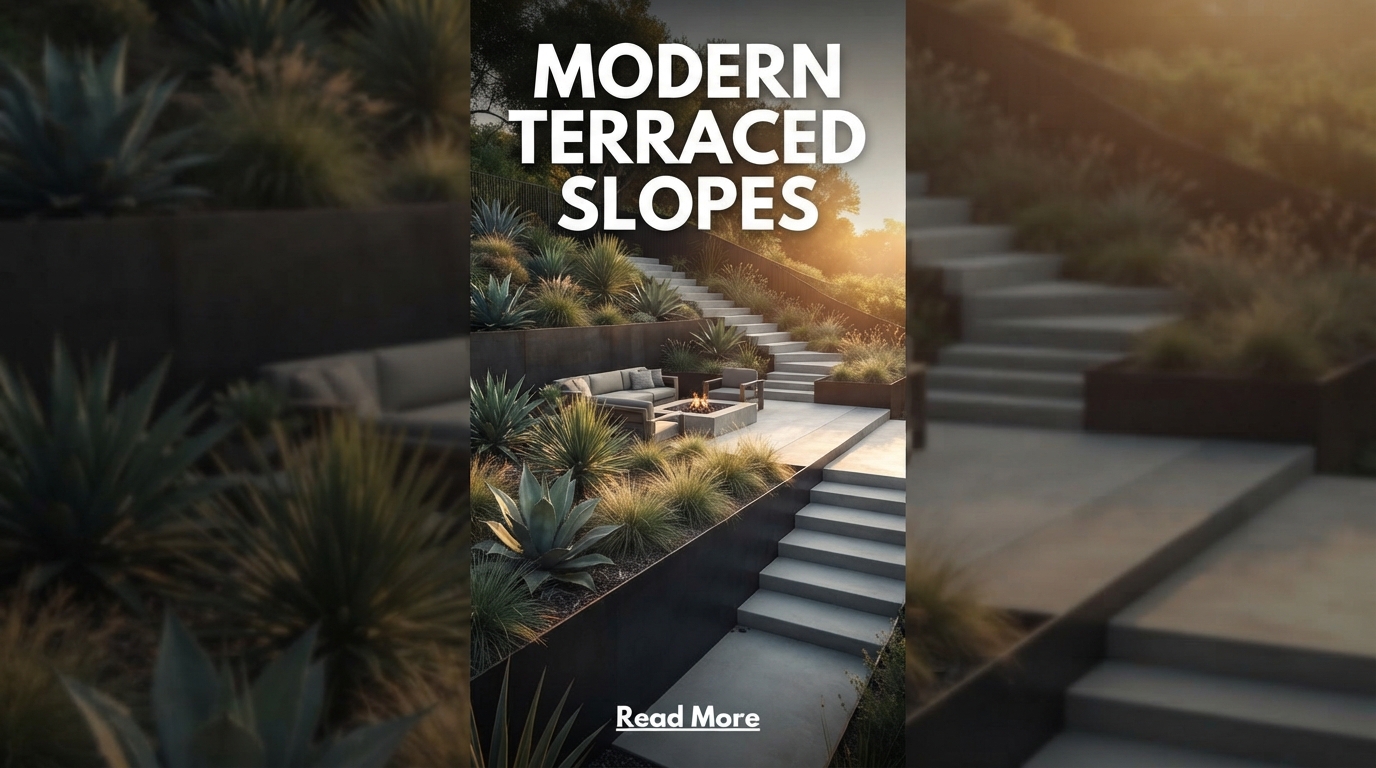
Sloping garden ideas can turn a challenging landscape into a beautiful, functional outdoor space. Instead of seeing a slope as a problem, you can use different levels, retaining walls, pathways, plants, terraces, and steps to create depth and character.
Whether you have a gently sloping backyard or a steep garden, the right design can improve drainage, make the space easier to use, and create attractive planting areas. A sloping garden can also offer opportunities for terraces, seating areas, rock gardens, water features, and dramatic views.
What Is a Sloping Garden?
A sloping garden is an outdoor space where the ground naturally rises or falls rather than remaining level.
Slopes can be:
- Gently inclined
- Moderately sloped
- Steep
- Terraced
- Irregular
- Naturally landscaped
The best solution depends on the gradient, soil, drainage, access, climate, and intended use.
Benefits of a Sloping Garden
A well-designed slope can:
- Add visual depth
- Improve garden views
- Create multiple planting levels
- Make small gardens feel more interesting
- Provide natural drainage
- Create distinct outdoor rooms
- Offer opportunities for terraces and steps
Instead of flattening the entire garden, you can incorporate the existing terrain into the design.
1. Terraced Sloping Garden
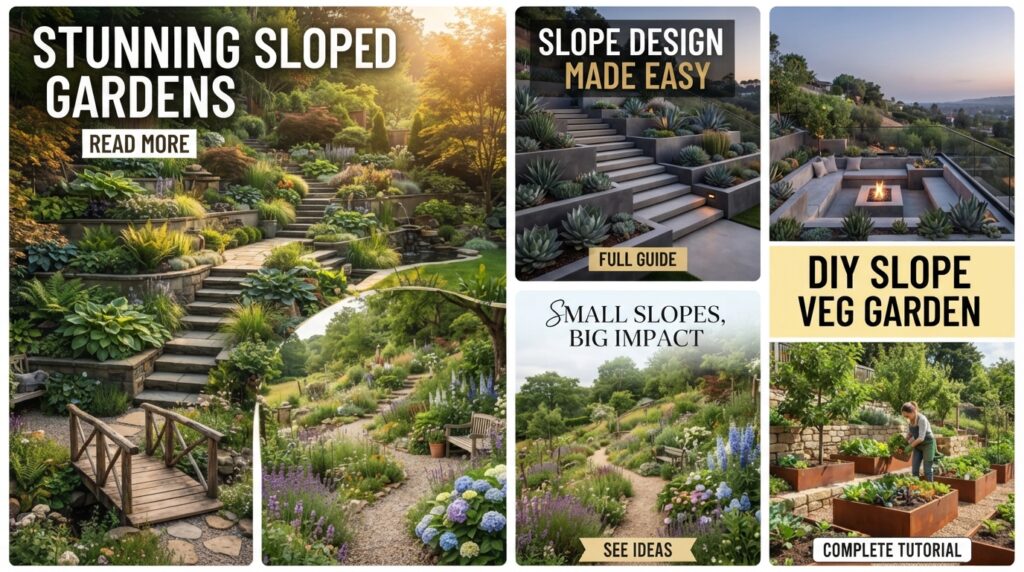
Terracing is one of the most effective solutions for a sloped landscape.
Create a series of relatively level platforms using properly engineered retaining structures.
Terraces can be used for:
- Flower beds
- Vegetable gardens
- Seating
- Lawn
- Dining areas
- Small trees
For significant slopes, retaining walls should be professionally designed to address soil pressure, drainage, and structural stability.
2. Sloping Garden With Retaining Walls
Retaining walls divide a slope into manageable levels.
Possible materials include:
- Natural stone
- Brick
- Concrete
- Timber suitable for ground contact
- Landscape blocks
Choose materials that complement your home and existing garden.
Make sure retaining walls have appropriate drainage and structural support.
3. Sloping Garden Steps
Steps make a steep garden easier to navigate.
Use:
- Stone steps
- Brick
- Concrete
- Timber
- Pavers
Create comfortable, consistent risers and treads, and include appropriate handrails where required.
Add planting along the sides to soften the hardscape.
4. Sloping Garden With a Pathway
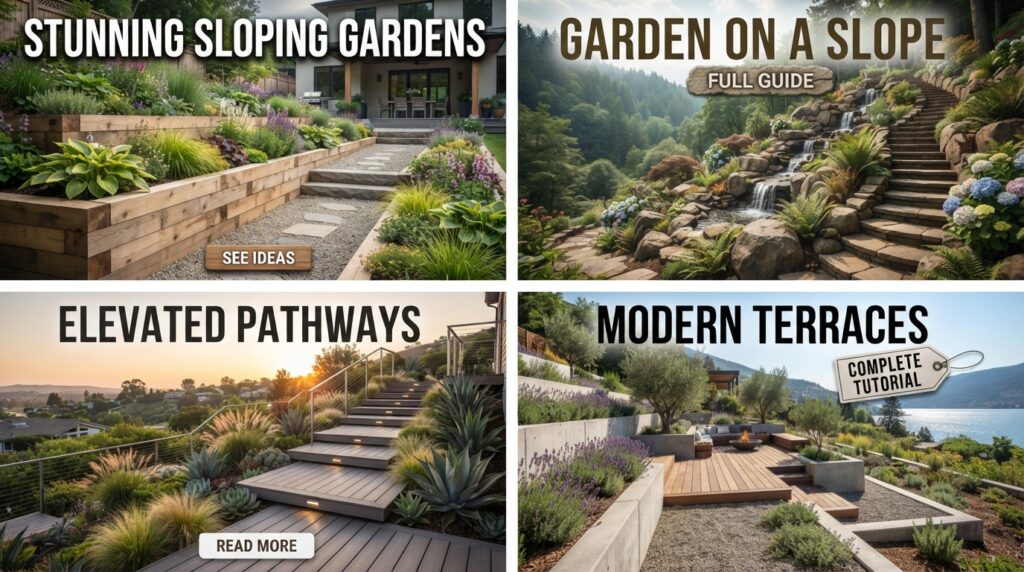
A winding pathway can make a slope feel more natural.
Instead of traveling directly uphill, create a gentle route with:
- Curves
- Landings
- Steps
- Groundcover
- Low retaining walls
Use stable, slip-resistant materials suitable for outdoor conditions.
5. Sloping Garden With Gravel
Gravel can work well on gently sloping areas when properly contained.
Use it for:
- Paths
- Terraces
- Dry garden areas
- Seating zones
- Decorative borders
Edging can help prevent gravel from migrating downhill.
6. Sloping Garden With Groundcovers
Groundcover plants can help visually soften a slope.
Depending on your climate and growing conditions, consider suitable:
- Creeping perennials
- Low shrubs
- Ornamental grasses
- Native groundcovers
Select plants with strong performance on slopes and appropriate water requirements.
7. Sloping Garden With Native Plants
Native and climate-adapted plants can be excellent choices for sloping landscapes.
They may provide:
- Habitat
- Seasonal interest
- Soil coverage
- Reduced irrigation needs
- Natural appearance
Choose species suited to your region, slope exposure, soil, and drainage.
8. Sloping Garden With Rock Garden
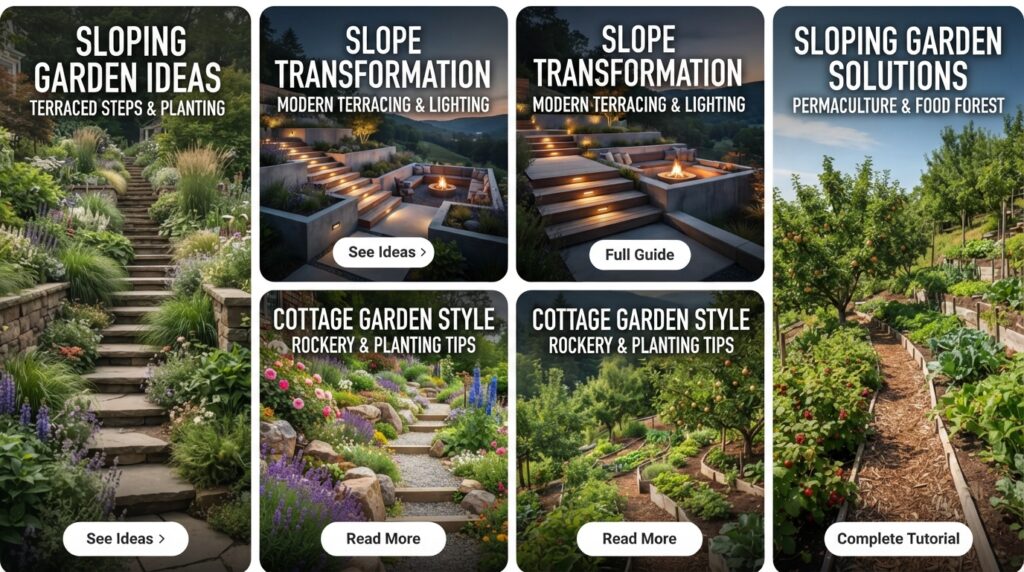
A slope can be an ideal location for a rock garden.
Combine:
- Large rocks
- Gravel
- Boulders
- Low-growing plants
- Ornamental grasses
Place larger rocks securely and use plants to soften the transition between stone and soil.
9. Sloping Garden With Lawn
A gentle slope can support lawn and create a large open area.
However, very steep slopes can be difficult and potentially hazardous to mow.
For steeper areas, consider replacing lawn with:
- Groundcovers
- Shrubs
- Terraces
- Meadow-style planting
10. Sloping Garden With Trees
Trees can add height and structure to a sloped garden.
Choose species based on:
- Mature size
- Root behavior
- Soil conditions
- Wind exposure
- Available space
Avoid placing large trees too close to retaining walls, foundations, underground utilities, or other structures.
11. Sloping Garden With Flower Beds
Create layered flower beds that follow the shape of the landscape.
Use combinations of:
- Perennials
- Flowering shrubs
- Ornamental grasses
- Groundcovers
- Seasonal plants
Repeat colors and plant varieties across different levels for a cohesive appearance.
12. Sloping Vegetable Garden
A sloping garden can become a productive vegetable-growing space.
Instead of planting directly into the slope, consider terraced raised beds.
Use them for:
- Tomatoes
- Peppers
- Lettuce
- Herbs
- Carrots
- Beans
- Seasonal vegetables
Ensure each level has adequate drainage and stable construction.
13. Sloping Herb Garden
Herbs can work particularly well in sunny terraces.
Grow suitable varieties of:
- Rosemary
- Thyme
- Sage
- Oregano
- Mint in controlled containers
- Parsley
Place herbs close to the house for convenient harvesting.
14. Sloping Garden With a Water Feature
A slope naturally creates opportunities for moving water.
Consider:
- Cascading streams
- Small waterfalls
- Rills
- Ponds
- Decorative fountains
Water features require careful engineering and drainage planning to prevent erosion and unwanted water movement.
15. Sloping Garden With a Pond
A pond can become a focal point on a landscaped slope.
Place it on a properly constructed level area and surround it with:
- Rocks
- Moisture-tolerant plants
- Groundcovers
- Ornamental grasses
Ensure the pond structure and surrounding soil are properly stabilized.
16. Sloping Garden With Seating Terrace
Create a level platform for outdoor relaxation.
Add:
- Bench seating
- Outdoor sofas
- Dining furniture
- Fire-safe features where appropriate
- Shade structures
A terrace can turn an unusable slope into one of the most valuable parts of the garden.
17. Sloping Garden With Deck
A deck can create a level outdoor living area above or within a slope.
Use it for:
- Dining
- Lounging
- Entertaining
- Container gardening
Professional design may be needed for elevated structures, foundations, railings, and drainage.
18. Modern Sloping Garden
Modern landscapes often use strong geometric forms to organize slopes.
Combine:
- Concrete retaining walls
- Large-format paving
- Timber
- Ornamental grasses
- Architectural plants
- Simple lighting
Use a restrained palette to create a clean appearance.
19. Cottage Sloping Garden
A cottage-style slope can be filled with abundant planting.
Use:
- Roses
- Lavender
- Foxgloves
- Daisies
- Salvia
- Flowering shrubs
Allow planting to feel informal while maintaining clear paths.
20. Sloping Garden With Privacy Plants
Use planting to create privacy between levels.
Consider suitable:
- Evergreen shrubs
- Hedges
- Small trees
- Ornamental grasses
Avoid planting large species too close to retaining structures or boundaries.
21. Small Sloping Garden
A small slope can be transformed without major earthworks.
Try:
- Two or three planting levels
- Compact retaining walls
- A short pathway
- Groundcovers
- Small terraces
- Raised beds
Use vertical height to make the garden feel more substantial.
22. Steep Sloping Garden
Steep gardens require more careful planning.
Potential solutions include:
- Terracing
- Retaining walls
- Engineered steps
- Groundcover planting
- Drainage systems
- Stabilization measures
For major slopes, consult qualified landscape, structural, or geotechnical professionals before construction.
23. Sloping Garden on a Budget
You can improve a slope gradually.
Start with:
- Groundcover planting
- Mulch
- Simple pathways
- Locally available stone
- Small planting terraces
- DIY garden edging where appropriate
Avoid cutting into a steep slope or building retaining structures without understanding the structural and drainage requirements.
24. Sloping Garden With a Fire-Safe Seating Area
A level terrace can create a dedicated outdoor gathering area.
If adding a fire feature, keep it well away from:
- Flammable plants
- Wooden structures
- Overhanging branches
- Fences
- Outdoor fabrics
Follow local fire-safety requirements and manufacturer instructions.
25. Sloping Garden Lighting
Lighting improves visibility and highlights different garden levels.
Use:
- Step lights
- Pathway lights
- Wall lights
- Low garden lights
- Tree uplighting
Prioritize illumination around steps, edges, landings, and changes in elevation.
Managing Drainage in a Sloping Garden
Drainage is one of the most important considerations.
Heavy rainfall can move soil and mulch downhill, causing erosion.
Possible strategies include:
- Terracing
- Swales
- Drainage channels
- Permeable surfaces
- Groundcover planting
- Properly designed retaining walls
Water should be directed safely away from buildings and neighboring properties.
How to Stop Soil Erosion on a Slope
Reduce exposed soil by using:
- Dense planting
- Groundcovers
- Mulch
- Terraces
- Retaining structures
- Appropriate drainage
Avoid leaving large areas of bare soil during heavy-rain seasons.
How to Design a Sloping Garden
Step 1: Measure the Slope
Understand the gradient, high points, low points, and existing drainage.
Step 2: Identify the Main Problem Areas
Look for erosion, poor access, water accumulation, or unstable soil.
Step 3: Decide Whether to Work With or Change the Slope
Gentle slopes can often remain natural, while steeper areas may benefit from terracing.
Step 4: Plan Circulation
Add paths, steps, or ramps where appropriate.
Step 5: Create Functional Zones
Consider terraces for seating, dining, planting, or gardening.
Step 6: Select Suitable Plants
Choose plants based on sunlight, soil, moisture, climate, and slope stability.
Step 7: Address Drainage
Plan where rainwater will go before installing hardscape or retaining structures.
Step 8: Add Finishing Features
Use lighting, seating, rocks, containers, and garden décor to complete the design.
Common Sloping Garden Mistakes
Ignoring Drainage
Poor water management can cause erosion and damage.
Building Retaining Walls Without Proper Design
Large retaining walls can fail if they lack appropriate foundations, drainage, or structural support.
Using Too Much Lawn
Steep lawns can be difficult and unsafe to maintain.
Planting Without Considering Mature Size
Large plants can interfere with paths, walls, and structures as they grow.
Making Steps Too Steep
Garden steps should be comfortable and safe to use.
Removing Too Much Soil
Major excavation can destabilize a slope.
Frequently Asked Questions
What is the best solution for a sloping garden?
For gentle slopes, planting, groundcovers, pathways, and simple landscaping may be enough. Steeper slopes often benefit from terracing, retaining structures, drainage, and professionally designed access.
Can I level a sloping garden?
Yes, but significant leveling can require excavation, retaining walls, drainage, and structural planning. Working with the existing slope is often simpler and more economical.
What plants are best for slopes?
Choose plants with strong root systems and good performance in your local conditions. Groundcovers, grasses, shrubs, and climate-adapted plants can all work well.
How do I prevent erosion in a sloping garden?
Use dense vegetation, appropriate groundcovers, mulch, terracing, and carefully designed drainage to reduce exposed soil and control water movement.
Can a sloping garden have a lawn?
Yes, if the slope is gentle enough to mow safely. Steeper areas may be better suited to planting, terraces, or groundcovers.
Conclusion
A sloping garden can become a beautiful and highly functional landscape when its natural elevation is incorporated into the design. Terraces, retaining walls, steps, pathways, groundcovers, rock gardens, planting beds, and seating areas can turn difficult terrain into a series of attractive garden spaces.
Start by understanding the slope, drainage, soil, and access requirements. Work with the natural terrain where possible, and seek professional advice for major earthworks, steep slopes, retaining structures, or drainage changes. With thoughtful planning, an uneven garden can become one of the most distinctive features of your outdoor space.