
 By John
A garden bridge can turn an ordinary landscape into a charming and memorable outdoor space. Whether it crosses a small pond, dry riverbed, garden pathway, or decorative planting area, a bridge adds architectural interest while creating a strong focal point.
Garden bridges are especially popular in Japanese-inspired landscapes, cottage gardens, woodland gardens, and whimsical outdoor spaces. From simple wooden footbridges to elegant arched designs, the right bridge can complement your garden style while improving the flow between different areas.
What Is a Garden Bridge?
A garden bridge is a decorative or functional walkway designed to cross a garden feature or create visual interest.
It can be used over:
- Garden ponds
- Streams
- Dry creek beds
- Gravel beds
- Flower borders
- Garden paths
- Low landscape features
Some bridges are fully functional walkways, while others are primarily decorative.
Benefits of Adding a Garden Bridge
A garden bridge can:
- Create a beautiful focal point
- Add height and structure
- Connect different garden zones
- Enhance a pond
- Improve a themed landscape
- Create attractive photography opportunities
- Add personality to a backyard
A bridge can also make a garden feel more immersive by giving visitors a destination to explore.
Japanese Garden Bridge
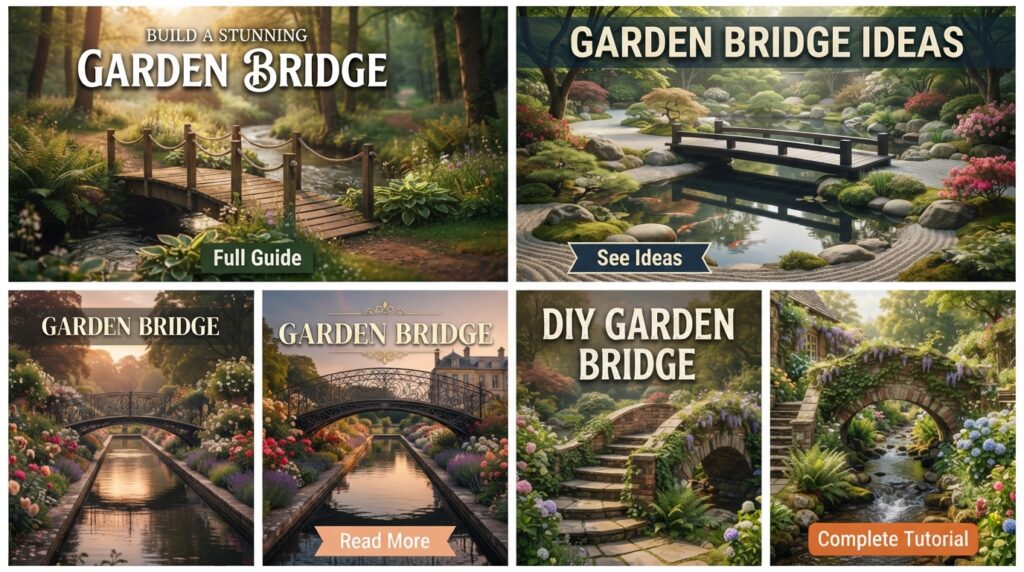
The Japanese garden bridge is one of the most recognizable garden bridge styles.
Traditional-inspired designs often feature:
- Natural wood
- Gentle arches
- Simple railings
- Red or dark finishes
- Stone surroundings
- Water features
- Carefully pruned plants
Pair a bridge with rocks, gravel, moss, shrubs, and water for a peaceful Japanese-inspired landscape.
Garden Bridge Over a Pond
A bridge spanning a pond can instantly become the centerpiece of the landscape.
Surround it with:
- Water plants
- Rocks
- Ornamental grasses
- Shrubs
- Small trees
- Groundcovers
Position the bridge where it provides a natural route through the garden while leaving enough room around the pond for maintenance.
Small Garden Bridge
You don’t need a large garden for a bridge.
Small bridges can cross:
- Narrow streams
- Dry creek beds
- Decorative gravel
- Small ponds
- Garden paths
Choose a proportionally sized design so the bridge complements rather than overwhelms the landscape.
Arched Garden Bridge

An arched bridge adds a romantic and decorative quality.
Use it in:
- Cottage gardens
- Japanese-inspired gardens
- Woodland landscapes
- Fairy gardens
- Pond gardens
A gentle arch can create a beautiful silhouette and draw attention toward the water or planting area.
Flat Garden Bridge
A simple flat bridge can create a modern or minimalist appearance.
Use:
- Straight timber
- Simple stone
- Composite decking
- Metal supports
This style works particularly well in contemporary gardens where clean lines are important.
Wooden Garden Bridge
Wood is one of the most popular garden bridge materials.
Common options include:
- Cedar
- Redwood
- Pressure-treated timber
- Other exterior-rated woods
Choose materials appropriate for outdoor exposure and maintain them according to the manufacturer’s recommendations.
Stone Garden Bridge
Stone bridges can create a permanent, natural appearance.
They work well with:
- Japanese gardens
- Mediterranean gardens
- Formal landscapes
- Cottage gardens
- Woodland gardens
Use appropriately engineered stone structures for functional crossings.
Metal Garden Bridge

Metal bridges can add an elegant or contemporary look.
Options include:
- Wrought iron-inspired designs
- Steel
- Aluminum
- Powder-coated metal
Metal works especially well with climbing plants, formal landscaping, and modern garden designs.
Garden Bridge With Railings
Railings can provide visual character and additional support.
Consider:
- Simple wooden rails
- Curved railings
- Decorative metalwork
- Minimalist horizontal rails
For any bridge intended for regular foot traffic, follow applicable building and safety requirements for dimensions, load capacity, railings, and slip resistance.
Garden Bridge Over a Dry Creek Bed
A dry creek bed is an excellent alternative to a real stream.
Create the effect with:
- River rocks
- Gravel
- Larger stones
- Drought-tolerant plants
- Ornamental grasses
Place a small bridge across the center to create a natural transition.
Garden Bridge With a Water Feature
A bridge can be combined with a pond, stream, or waterfall.
Create a layered composition with:
Bridge → Water → Rocks → Plants → Garden Background
The combination of different textures can make the landscape feel deeper and more dynamic.
Cottage Garden Bridge
For a romantic cottage aesthetic, use a weathered-looking wooden bridge surrounded by abundant planting.
Combine it with:
- Roses
- Lavender
- Foxgloves
- Daisies
- Climbing plants
- Natural stone
Allow plants to soften the edges without blocking the walking surface.
Fairy Garden Bridge
A miniature bridge can add charm to a fairy garden.
Use tiny bridges with:
- Moss
- Miniature plants
- Small stones
- Fairy houses
- Tiny pathways
Keep the design proportional to the miniature landscape.
Garden Bridge for a Large Backyard
A larger garden allows the bridge to become part of a more extensive landscape journey.
Connect:
- Pond areas
- Flower gardens
- Woodland zones
- Seating spaces
- Vegetable gardens
- Outdoor rooms
Use pathways to make the bridge part of the overall garden circulation.
Garden Bridge for a Small Backyard
For compact spaces, choose a narrow bridge with a simple design.
Use it as:
- A pond crossing
- A decorative focal point
- A pathway feature
- A transition between garden rooms
Avoid excessive railings or oversized structures if space is limited.
Garden Bridge and Garden Lighting
Lighting can make a bridge attractive after sunset while improving visibility.
Use:
- Low pathway lights
- Small integrated lights
- Nearby garden spotlights
- Subtle railing lighting
Ensure lighting adequately illuminates steps, edges, and walking surfaces.
Add Plants Around a Garden Bridge
Plants help integrate a bridge into the landscape.
Consider suitable combinations of:
- Ferns
- Hostas
- Ornamental grasses
- Shrubs
- Groundcovers
- Moss
- Flowering perennials
Choose plants according to the site’s sunlight, soil moisture, and climate.
Garden Bridge With Stepping Stones
Combine a bridge with stepping stones to create a more interesting pathway.
For example:
Stepping Stones → Garden Bridge → Gravel Path → Seating Area
Use stable, level stepping stones with appropriate spacing for comfortable walking.
Garden Bridge as a Focal Point
Even when it doesn’t cross water, a bridge can act as a destination.
Place it:
- At the end of a pathway
- Between planting zones
- Beside a pond
- Near a garden entrance
- In front of a scenic backdrop
Frame the bridge with plants so it becomes part of the overall landscape composition.
DIY Garden Bridge Ideas
Simple decorative bridges may be possible as DIY projects, but functional bridges require careful structural planning.
A decorative garden feature can be made from:
- Exterior-rated timber
- Reclaimed materials suitable for outdoor use
- Stones
- Exterior hardware
For a bridge intended to support people, use properly engineered construction, appropriate fasteners, safe dimensions, and local building requirements.
Garden Bridge on a Budget
You can create the appearance of a bridge without an expensive landscape renovation.
Try:
- A simple timber design
- A small decorative bridge
- Gravel instead of a large pond
- Reclaimed landscaping materials
- DIY planting around the structure
Spend more on structural safety and weather-resistant materials than purely decorative details.
How to Design a Garden Bridge
Step 1: Choose the Purpose
Decide whether the bridge is functional, decorative, or both.
Step 2: Select the Location
Choose a natural crossing point or focal location.
Step 3: Match the Garden Style
Use materials and shapes that complement your existing landscape.
Step 4: Plan the Surroundings
Add pathways, rocks, plants, or water features around the bridge.
Step 5: Consider Safety
Ensure the walking surface is stable and appropriate for outdoor conditions.
Step 6: Add Lighting
Illuminate the bridge and nearby pathways for nighttime visibility.
Step 7: Maintain the Structure
Inspect the bridge regularly for deterioration, loose components, slippery surfaces, or structural problems.
Common Garden Bridge Mistakes
Choosing the Wrong Size
An oversized bridge can dominate a small landscape.
Poor Placement
A bridge should connect spaces naturally or serve as an intentional focal point.
Slippery Surfaces
Outdoor moisture can make surfaces hazardous. Choose suitable materials and finishes.
Ignoring Drainage
Water should not collect around structural components.
Using Unsuitable Materials
Select materials rated for outdoor conditions.
Overdecorating
The bridge should complement the landscape rather than compete with it.
Frequently Asked Questions
What is the best material for a garden bridge?
Wood, stone, metal, and composite materials can all work. The best choice depends on climate, maintenance requirements, garden style, and whether the bridge is functional.
Can I put a garden bridge over a pond?
Yes. A properly designed bridge can cross a pond, but it should be structurally sound, stable, and designed for wet outdoor conditions.
Are garden bridges only for Japanese gardens?
No. Bridges also work beautifully in cottage, woodland, contemporary, whimsical, Mediterranean, and water gardens.
Can I build a garden bridge myself?
Small decorative bridges may be suitable for DIY construction. A bridge intended for regular foot traffic requires careful structural design and should meet applicable local safety and building requirements.
How do I make a garden bridge look natural?
Use natural materials and surround it with appropriately scaled rocks, plants, gravel, water, or pathways that match the existing landscape.
Conclusion
A garden bridge can add charm, structure, and personality to almost any landscape. Whether you choose a graceful Japanese-inspired arch, rustic wooden crossing, stone feature, modern flat bridge, or miniature fairy garden design, the structure can become a memorable focal point.
Start by deciding how the bridge will function and where it belongs in the garden. Then select durable materials, coordinate surrounding plants and pathways, and prioritize safe construction. With thoughtful landscaping, a garden bridge can connect different areas while making the entire outdoor space feel more inviting and visually interesting.