
 By John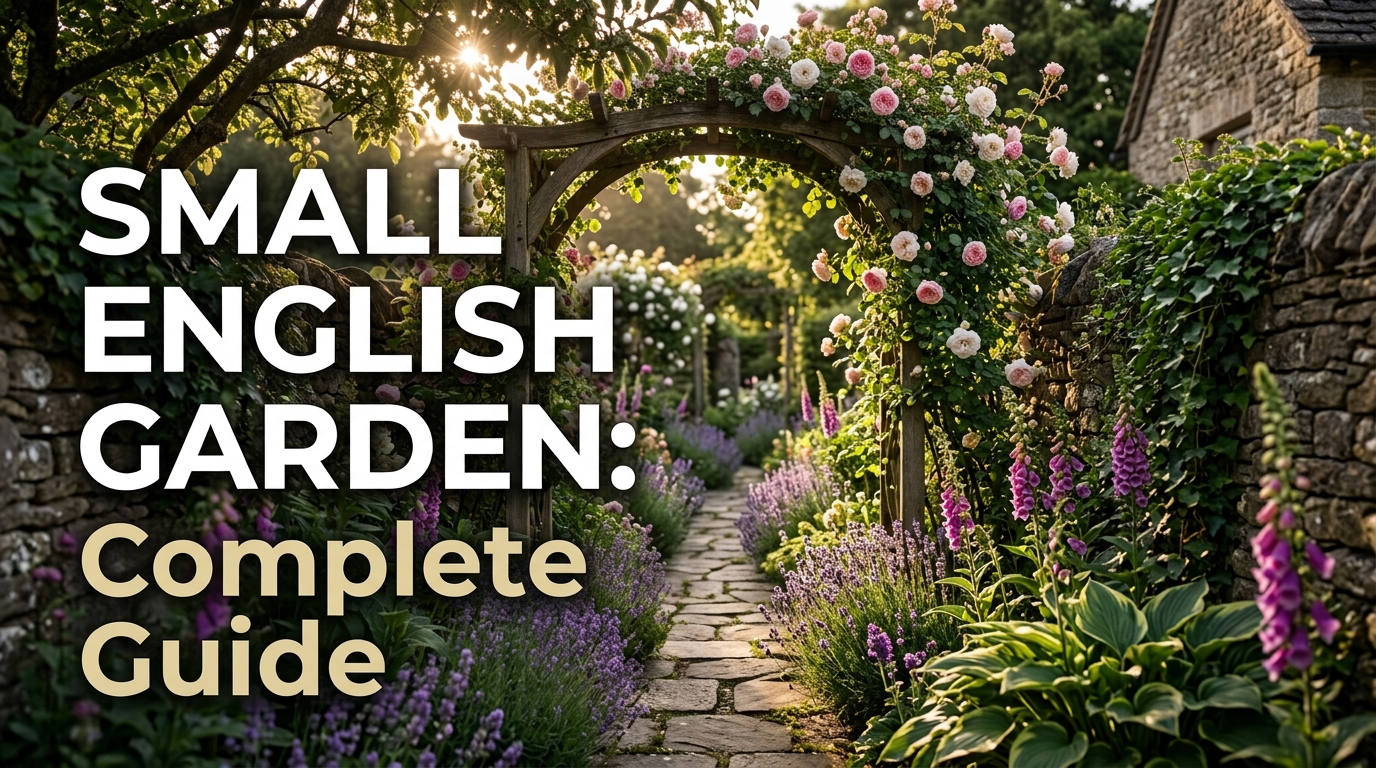
A small English garden brings timeless elegance, colorful flowers, and classic cottage charm into even the smallest outdoor space. Inspired by traditional English country gardens, this style combines layered planting, winding pathways, climbing roses, neatly trimmed hedges, and cozy seating to create a peaceful and welcoming retreat.
You don’t need a large estate to enjoy the beauty of an English garden. With thoughtful planning and carefully selected plants, a compact backyard, front garden, patio, or courtyard can capture the same romantic atmosphere while remaining easy to maintain.
What Is a Small English Garden?
An English garden is known for its natural beauty, abundant flowers, soft planting, and relaxed elegance.
Typical features include:
- Cottage-style flowers
- Curved pathways
- Climbing roses
- Garden arches
- Lavender borders
- Boxwood hedges
- Stone pathways
- Wooden benches
- Decorative containers
- Layered planting
Rather than looking perfectly formal, an English garden feels established, welcoming, and full of seasonal color.
Benefits of a Small English Garden
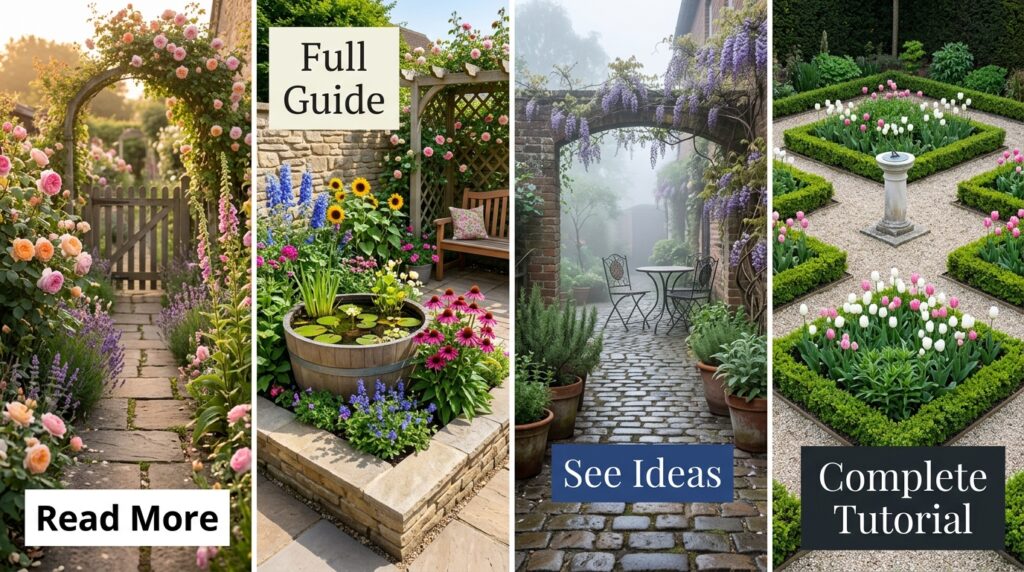
A compact English garden offers many advantages.
It can provide:
- Beautiful flowers throughout the growing season
- A relaxing outdoor retreat
- Excellent curb appeal
- Habitat for pollinators
- Fragrant plants
- A timeless landscape style
- Easy maintenance with proper planning
Even a tiny space can feel lush when plants are layered thoughtfully.
Plan the Garden Layout
Begin by measuring your available space.
Include room for:
- Flower beds
- Pathways
- Seating
- Containers
- Vertical planting
- A focal point
Leave enough open space to keep the garden comfortable and easy to move through.
Create Curved Garden Paths
Curved pathways soften the appearance of a small garden and encourage exploration.
Suitable materials include:
- Natural stone
- Brick
- Gravel
- Stepping stones
Allow plants to gently spill over the edges without blocking the walkway.
Plant Classic English Garden Flowers
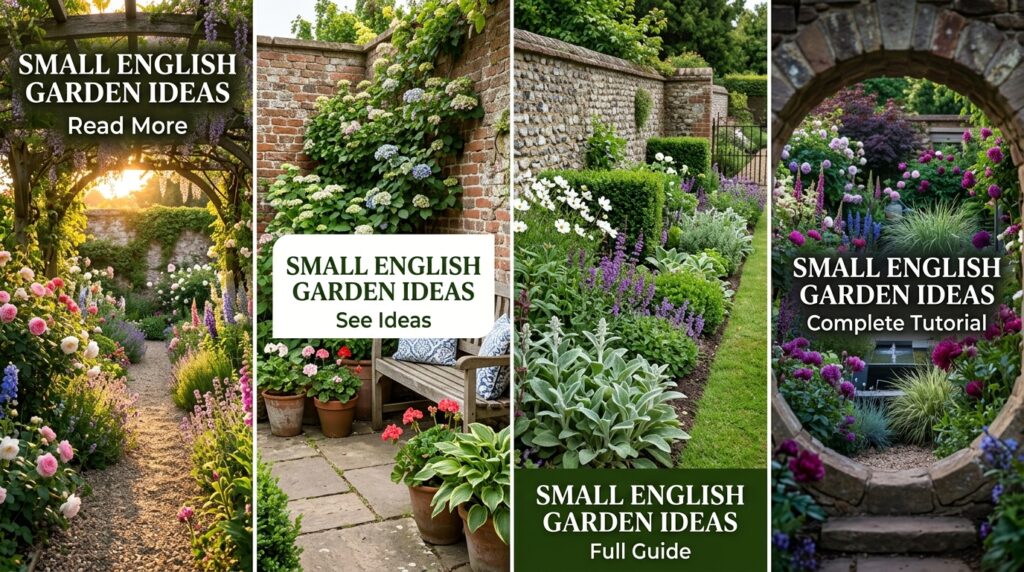
Choose flowers that bloom at different times of the year.
Popular options include:
- Roses
- Lavender
- Foxgloves
- Delphiniums
- Peonies
- Hollyhocks
- Hydrangeas
- Salvia
- Geraniums
- Sweet peas
Select varieties that are well suited to your local climate and growing conditions.
Add Climbing Roses
Climbing roses add height without using much ground space.
Grow them on:
- Arches
- Trellises
- Pergolas
- Garden walls
- Fences
A rose-covered entrance creates a welcoming focal point.
Include Boxwood Hedges
Low boxwood hedges provide structure and year-round greenery.
Use them to:
- Define pathways
- Frame flower beds
- Create borders
- Separate garden areas
Keep hedges neatly trimmed to maintain their shape.
Layer Your Planting
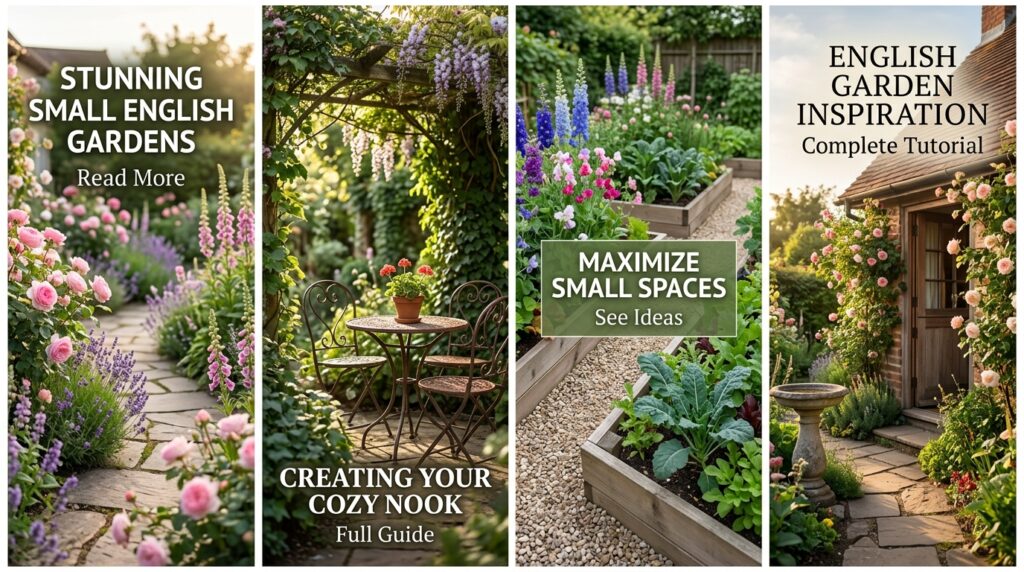
Layering creates the lush appearance that English gardens are known for.
Arrange plants by height:
- Tall plants at the back
- Medium-height flowers in the middle
- Groundcovers and edging plants at the front
This technique adds depth and makes small gardens appear fuller.
Add Decorative Garden Containers
Containers bring flexibility and seasonal interest.
Choose:
- Terracotta pots
- Stone planters
- Ceramic containers
- Wooden barrels
- Wicker baskets with liners
Fill them with flowers, herbs, or compact shrubs.
Create a Cozy Seating Area
Every English garden benefits from a quiet place to sit.
Good seating options include:
- Wooden benches
- Wrought-iron chairs
- Bistro tables
- Garden swings
Place seating where it overlooks flower beds or a focal feature.
Use Natural Materials
Traditional English gardens often feature natural textures.
Incorporate:
- Stone paving
- Brick edging
- Wooden furniture
- Gravel paths
- Weathered timber
These materials complement the soft planting style.
Add a Water Feature
A small fountain or birdbath adds sound and movement.
Ideas include:
- Stone birdbath
- Wall fountain
- Ceramic fountain
- Small reflecting bowl
Water features can also attract birds and beneficial wildlife.
Plant Herbs Among Flowers
Mix ornamental and edible plants for beauty and function.
Popular herbs include:
- Rosemary
- Thyme
- Sage
- Chives
- Parsley
- Mint (best grown in containers to control spreading)
Herbs also provide fragrance throughout the garden.
Attract Butterflies and Bees
Support pollinators with nectar-rich flowers such as:
- Lavender
- Salvia
- Coneflowers
- Catmint
- Cosmos
- Bee balm
Avoid unnecessary pesticide use whenever possible.
Small English Garden for a Courtyard
Courtyards are perfect for English-inspired designs.
Include:
- Climbing roses
- Potted hydrangeas
- Stone paving
- Decorative containers
- Compact seating
- Wall-mounted trellises
Vertical planting helps maximize limited space.
Front Yard English Garden
Create a welcoming entrance with:
- Flower borders
- Low hedges
- Stone pathways
- Decorative gate
- Seasonal flowers
Keep the design balanced without making it overly formal.
English Garden on a Budget
A beautiful English garden doesn’t need a large budget.
Save money by:
- Growing flowers from seeds
- Propagating perennial plants
- Reusing containers
- Building DIY trellises
- Making homemade compost
- Buying young plants and allowing them to mature
Develop the garden gradually over several seasons.
Seasonal Care
Maintain year-round beauty with seasonal tasks.
Spring
Plant annual flowers, divide perennials, and refresh mulch.
Summer
Water deeply, deadhead flowers, and prune lightly when appropriate.
Autumn
Plant spring-flowering bulbs, tidy beds, and add compost.
Winter
Prune suitable plants, protect tender varieties if needed, and clean tools.
Common Mistakes to Avoid
Overcrowding Plants
Allow enough room for mature growth and healthy airflow.
Choosing Plants Unsuited to Your Climate
Research each plant before purchasing.
Ignoring Sunlight Requirements
Match flowers to the available sun or shade.
Using Too Many Decorations
Let plants remain the main attraction.
Forgetting Maintenance
Regular pruning, watering, and weeding keep the garden healthy and attractive.
Frequently Asked Questions
What plants are best for a small English garden?
Roses, lavender, foxgloves, peonies, hydrangeas, delphiniums, salvia, and hollyhocks are classic choices.
Can I create an English garden in a small backyard?
Yes. Layered planting, compact shrubs, climbing roses, and curved pathways work beautifully in limited spaces.
What materials suit an English garden?
Natural stone, brick, gravel, timber, terracotta, and wrought iron all complement the traditional style.
How do I make my garden look like an English cottage garden?
Use abundant flowers, climbing plants, curved paths, natural materials, and cozy seating while keeping the overall design informal.
Are English gardens difficult to maintain?
They require regular care such as watering, pruning, mulching, and deadheading, but choosing suitable plants and planning carefully can make maintenance much easier.
Conclusion
A small English garden combines classic beauty with practical design, proving that even the smallest outdoor space can become a colorful and relaxing retreat. By layering flowers, adding climbing roses, incorporating natural materials, and creating cozy seating areas, you can capture the timeless charm of an English cottage garden.
Start with a simple layout, choose plants suited to your local growing conditions, and allow the garden to develop naturally over time. With patience and consistent care, your small English garden will provide fragrance, seasonal color, and a peaceful escape for years to come.