
 By John
Garden Restaurant Design, Outdoor Dining Ideas, Landscape Decor, Restaurant Garden Concepts, and Nature-Inspired Hospitality
A garden restaurant combines delicious food with the beauty of nature, creating a memorable dining experience that guests love. Surrounded by flowers, greenery, trees, water features, and thoughtfully designed landscapes, garden restaurants offer a relaxing atmosphere that feels like an escape from everyday life. Whether it’s a cozy café courtyard, a luxury botanical dining venue, or a rustic outdoor eatery, garden restaurants continue to grow in popularity among diners seeking unique and Instagram-worthy experiences.
The appeal of a garden restaurant goes beyond aesthetics. Natural surroundings can improve guest comfort, encourage longer visits, and create a stronger connection between food and the environment. Many successful restaurants use garden-inspired design to establish a distinctive brand identity while enhancing customer satisfaction.
This comprehensive guide explores garden restaurant design ideas, landscaping techniques, outdoor seating arrangements, plant selections, lighting concepts, and maintenance strategies to help create a stunning outdoor dining destination.
What Is a Garden Restaurant?
A garden restaurant is a dining establishment that incorporates natural landscaping and outdoor garden elements into its design. These restaurants often feature:
- Outdoor seating areas
- Flower gardens
- Decorative plants
- Water features
- Garden pathways
- Pergolas and gazebos
- Natural shade
- Ambient lighting
The goal is to create a peaceful and visually appealing environment where guests can enjoy meals surrounded by nature.
Benefits of a Garden Restaurant
Unique Dining Experience
Guests enjoy a memorable atmosphere that stands out from traditional indoor restaurants.
Increased Customer Appeal
Beautiful outdoor settings attract more visitors and encourage repeat business.
Social Media Friendly
Photogenic landscapes often generate free marketing through customer photos and social sharing.
Improved Guest Comfort
Greenery and natural surroundings create a relaxing environment.
Flexible Event Space
Garden restaurants are ideal for weddings, parties, and private gatherings.
Planning a Garden Restaurant
Before designing the space, consider:
Available Space
Evaluate the size and layout of the property.
Climate Conditions
Choose plants and materials suitable for local weather.
Target Audience
Design the atmosphere around the preferences of your guests.
Restaurant Theme
The landscape should complement the restaurant’s cuisine and brand identity.
Popular Garden Restaurant Styles
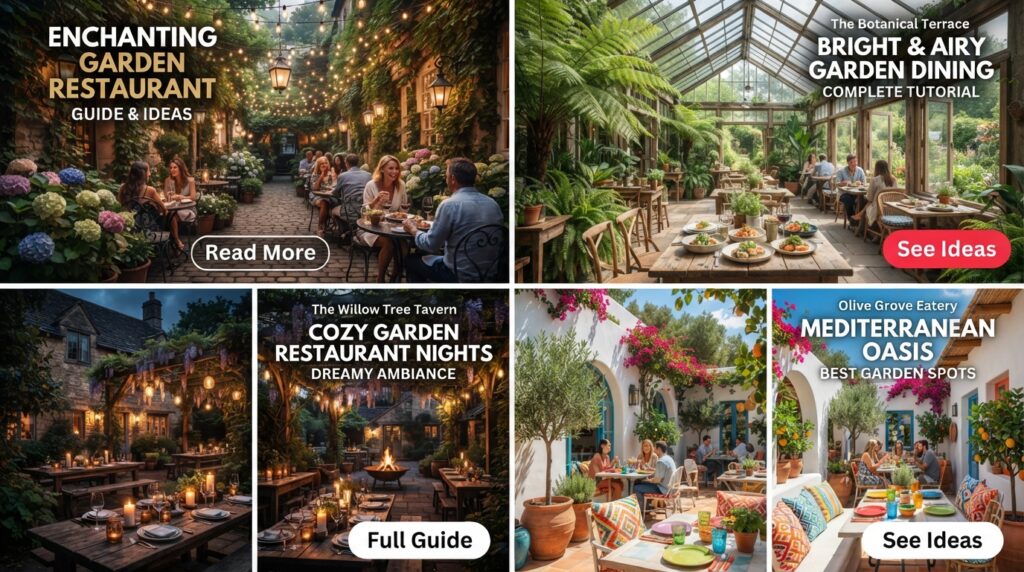
Modern Garden Restaurant
Features:
- Minimalist landscaping
- Clean lines
- Contemporary furniture
- Decorative lighting
Perfect for upscale dining experiences.
Rustic Garden Restaurant
Includes:
- Natural wood furniture
- Stone pathways
- Wildflower plantings
- Farm-to-table atmosphere
Ideal for countryside locations.
Mediterranean Garden Restaurant
Characteristics:
- Olive trees
- Lavender
- Terracotta pots
- Stone courtyards
Creates a warm and inviting ambiance.
Tropical Garden Restaurant
Features:
- Palm trees
- Exotic plants
- Water features
- Lush greenery
Provides a resort-style dining experience.
Outdoor Seating Ideas
Comfortable seating is essential for guest satisfaction.
Popular options include:
Patio Dining Sets
Classic and versatile.
Bistro Tables
Perfect for cafés and smaller spaces.
Lounge Seating
Creates relaxed social areas.
Pergola Dining Zones
Provide shade and architectural interest.
Arrange seating to maintain privacy and comfortable circulation.
Landscaping Ideas for Garden Restaurants
Flower Beds
Colorful flowers create visual appeal.
Popular choices include:
- Roses
- Lavender
- Petunias
- Hydrangeas
Ornamental Grasses
Add texture and movement.
Shrubs and Hedges
Provide natural boundaries and privacy.
Container Gardens
Flexible and easy to update seasonally.
Garden Pathway Design
Pathways guide guests through the landscape.
Popular materials include:
- Natural stone
- Gravel
- Brick
- Concrete pavers
Curved pathways often feel more inviting than straight lines.
Water Features
Water adds movement, sound, and tranquility.
Ideas include:
Fountains
Elegant focal points.
Reflecting Pools
Create a luxurious atmosphere.
Small Waterfalls
Add soothing natural sounds.
Decorative Ponds
Enhance the garden experience.
Lighting for Garden Restaurants
Lighting plays a crucial role in evening ambiance.
Popular options include:
String Lights
Warm and romantic.
Lanterns
Classic and inviting.
Path Lights
Improve safety and aesthetics.
Uplighting
Highlights trees and architectural features.
Layered lighting creates depth and atmosphere.
Shade Solutions
Comfortable outdoor dining requires protection from the sun.
Options include:
- Pergolas
- Umbrellas
- Shade sails
- Covered patios
Shade structures can also become decorative features.
Best Plants for Garden Restaurants
Choose plants that provide beauty and durability.
Popular selections include:
Lavender
Fragrant and attractive.
Boxwood
Excellent for structure and borders.
Olive Trees
Elegant Mediterranean appeal.
Hydrangeas
Large, colorful blooms.
Jasmine
Provides fragrance and climbing interest.
Ornamental Grasses
Low maintenance and visually appealing.
Sustainable Garden Restaurant Design
Eco-friendly features can improve efficiency and reputation.
Ideas include:
- Native plants
- Rainwater harvesting
- Solar lighting
- Composting systems
- Water-efficient irrigation
Sustainable practices appeal to environmentally conscious customers.
Seasonal Garden Decor
Refresh the space throughout the year.
Spring
- Flower displays
- Fresh greenery
Summer
- Bright blooms
- Outdoor events
Autumn
- Seasonal planters
- Warm-toned decorations
Winter
- Evergreen arrangements
- Decorative lighting
Seasonal updates keep the restaurant visually engaging.
Creating Instagram-Worthy Spaces
Modern diners love sharing beautiful experiences.
Ideas include:
- Floral arches
- Decorative walls
- Unique seating areas
- Garden swings
- Statement fountains
Photo-friendly features can boost online visibility.
Garden Restaurant Event Spaces
Outdoor garden settings are ideal for:
- Weddings
- Birthday celebrations
- Corporate events
- Anniversary dinners
Flexible event spaces can increase revenue opportunities.
Maintenance Tips
A beautiful garden restaurant requires regular care.
Prune Plants Regularly
Maintain a neat appearance.
Inspect Irrigation Systems
Ensure healthy landscaping.
Clean Pathways
Keep guest areas safe and attractive.
Refresh Seasonal Plantings
Maintain year-round visual appeal.
Consistent maintenance protects your investment.
Common Design Mistakes
Avoid these common issues:
- Overcrowded seating
- Poor lighting
- Insufficient shade
- High-maintenance plants
- Lack of privacy
Thoughtful planning helps prevent these problems.
Frequently Asked Questions
What is a garden restaurant?
A garden restaurant is a dining venue that incorporates outdoor landscaping, gardens, and natural elements into the dining experience.
Why are garden restaurants popular?
They provide a relaxing atmosphere, beautiful scenery, and memorable dining experiences.
What plants are best for garden restaurants?
Lavender, olive trees, hydrangeas, boxwood, jasmine, and ornamental grasses are excellent choices.
How can I make a garden restaurant more attractive?
Add quality landscaping, comfortable seating, decorative lighting, water features, and seasonal plantings.
Are garden restaurants suitable for events?
Yes. Garden settings are highly popular for weddings, parties, and private gatherings.
Conclusion
A garden restaurant offers much more than great food—it creates an immersive experience where guests can relax, connect with nature, and enjoy a beautiful atmosphere. By combining thoughtful landscaping, comfortable outdoor seating, elegant lighting, and carefully selected plants, restaurant owners can create memorable spaces that attract customers year-round.
Whether you envision a modern courtyard restaurant, a Mediterranean-inspired dining retreat, or a lush tropical oasis, garden restaurant design provides endless opportunities for creativity. With proper planning and maintenance, a garden restaurant can become a destination that guests return to again and again for both the food and the unforgettable setting.