
 By John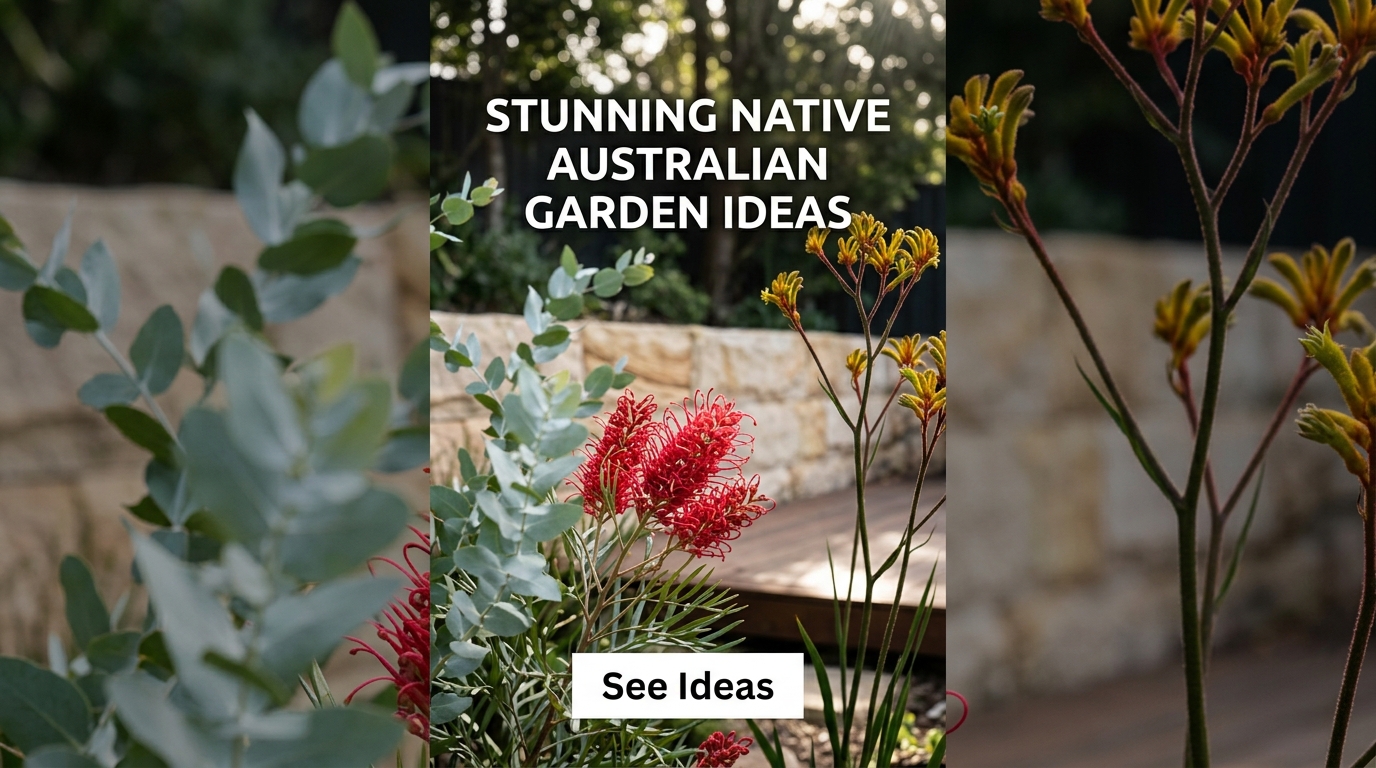
Native Australian Garden Ideas, Drought-Tolerant Plants, Wildlife-Friendly Landscaping, and Low Maintenance Garden Design
A native Australian garden is one of the most sustainable, beautiful, and practical landscaping choices for homeowners. By using plants that naturally occur in Australia, you can create a garden that thrives in local conditions, requires less water, attracts native wildlife, and provides year-round interest with minimal maintenance.
Australian native plants are known for their unique textures, vibrant flowers, silvery foliage, and remarkable ability to withstand drought, heat, and challenging soil conditions. Whether you have a small suburban backyard, a large rural property, a coastal garden, or a modern urban landscape, native plants can help you create an outdoor space that celebrates Australia’s natural beauty.
This complete guide explores native Australian garden ideas, plant selections, design principles, maintenance tips, and landscaping inspiration to help you build a stunning and eco-friendly garden.
Why Choose a Native Australian Garden?
Native gardens offer numerous environmental and practical benefits.
Water Efficient
Most Australian native plants are adapted to dry conditions and require significantly less watering than exotic species.
Low Maintenance
Native plants generally need less pruning, fertilizing, and pest control.
Wildlife Friendly
They provide food and shelter for birds, bees, butterflies, and other beneficial wildlife.
Environmentally Sustainable
Native gardens support local ecosystems and biodiversity.
Unique Beauty
Australian plants offer distinctive forms, colors, and textures not found in traditional gardens.
Characteristics of a Native Australian Garden
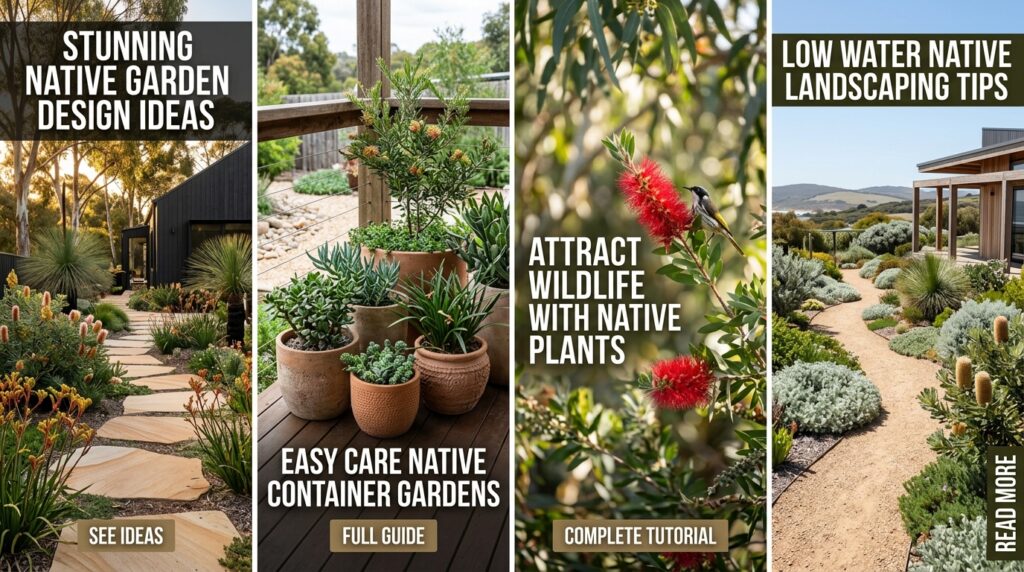
A well-designed native garden often includes:
- Drought-tolerant plants
- Naturalistic planting
- Gravel pathways
- Mulched beds
- Wildlife habitats
- Layered vegetation
- Native grasses
- Water-wise landscaping
The overall appearance is relaxed, natural, and connected to the surrounding environment.
Planning Your Native Garden
Before planting, consider:
Climate Zone
Australia has diverse climate regions, including tropical, temperate, arid, and coastal zones.
Soil Type
Understanding soil conditions helps you choose suitable plants.
Sunlight
Most native plants thrive in full sun, although some tolerate shade.
Garden Purpose
Decide whether the garden is intended for:
- Wildlife attraction
- Low maintenance
- Ornamental beauty
- Privacy screening
- Outdoor entertaining
Best Native Australian Plants
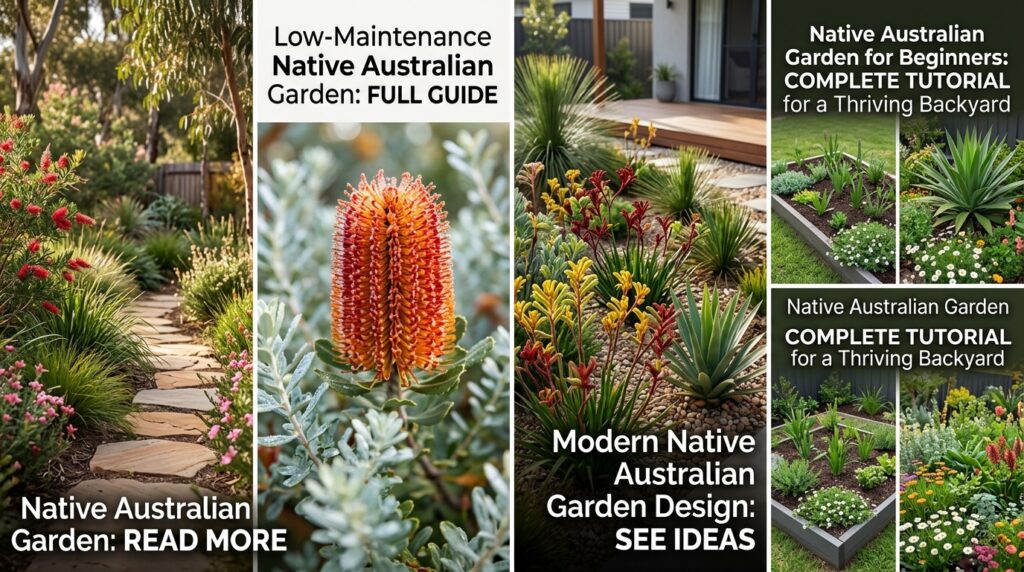
Choosing the right plants is key to success.
Kangaroo Paw (Anigozanthos)
One of Australia’s most iconic flowering plants.
Benefits:
- Bright colorful flowers
- Bird attracting
- Long flowering period
- Drought tolerant
Grevillea
A favorite among gardeners and wildlife.
Advantages include:
- Vibrant flowers
- Nectar for birds
- Low maintenance
- Wide variety of sizes
Bottlebrush (Callistemon)
Known for its striking brush-shaped flowers.
Features:
- Excellent screening plant
- Bird attracting
- Hardy and adaptable
Banksia
A dramatic Australian native with unique flower spikes.
Benefits:
- Architectural appearance
- Wildlife attraction
- Drought resistance
Westringia
Ideal for hedges and borders.
Advantages:
- Evergreen foliage
- Easy maintenance
- Tolerates coastal conditions
Native Grasses
Popular choices include:
- Kangaroo Grass
- Lomandra
- Poa
- Wallaby Grass
They add movement and texture to the landscape.
Create Layered Planting
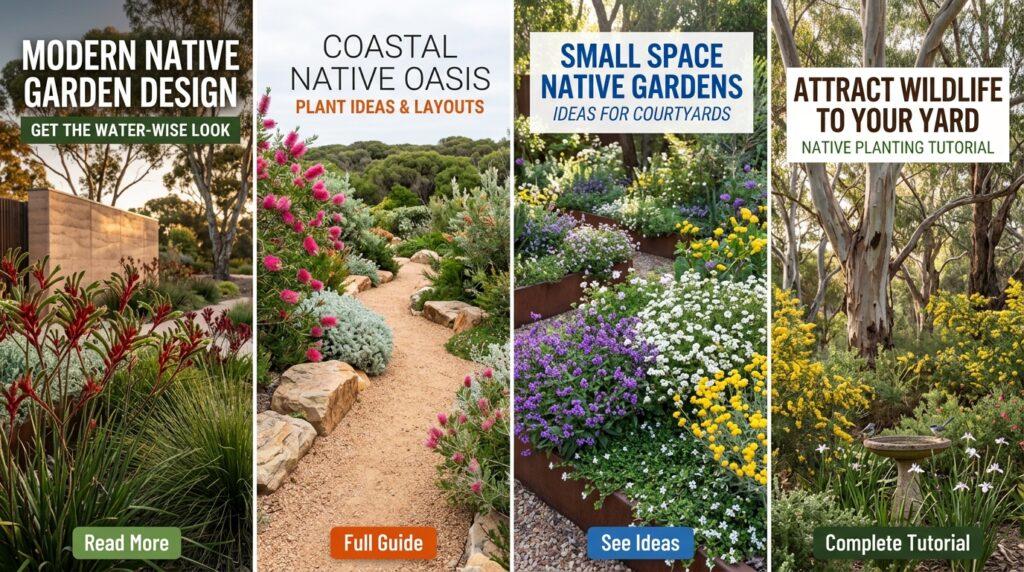
Layering mimics natural ecosystems.
Include:
Canopy Layer
Small native trees such as:
- Eucalyptus
- Lilly Pilly
- Acacia
Shrub Layer
Examples include:
- Grevillea
- Banksia
- Bottlebrush
Ground Layer
Use:
- Native grasses
- Ground covers
- Wildflowers
Layering creates visual depth and wildlife habitat.
Wildlife-Friendly Garden Design
Native gardens are ideal for supporting local wildlife.
To attract birds and pollinators:
- Plant nectar-rich flowers
- Provide water sources
- Include dense shrubs for shelter
- Avoid harmful pesticides
Native wildlife becomes part of the garden experience.
Native Garden Pathway Ideas
Natural pathways enhance the landscape.
Popular materials include:
- Crushed gravel
- Natural stone
- Stepping stones
- Recycled materials
Curved pathways create a relaxed and natural flow.
Drought-Tolerant Landscaping
One of the biggest advantages of native gardens is water efficiency.
Strategies include:
- Mulching
- Drip irrigation
- Grouping plants by water needs
- Reducing lawn areas
These practices help conserve valuable water resources.
Coastal Native Australian Gardens
For coastal regions, choose plants that tolerate salt and wind.
Popular options include:
- Coastal Rosemary
- Westringia
- Pigface
- Coastal Banksia
These plants thrive in challenging seaside environments.
Modern Native Garden Ideas
Modern native landscapes often combine:
- Clean lines
- Decorative gravel
- Sculptural plants
- Steel edging
- Minimalist planting schemes
The result is contemporary yet environmentally responsible.
Native Australian Garden for Small Spaces
Even compact gardens can benefit from native plants.
Ideas include:
- Raised beds
- Container gardens
- Vertical planting
- Courtyard designs
Choose compact varieties suited to smaller spaces.
Native Ground Covers
Ground covers reduce weeds and improve soil health.
Popular choices include:
- Myoporum
- Pigface
- Native Violet
- Creeping Boobialla
These plants create attractive living carpets.
Mulching Native Gardens
Mulch is essential for water conservation.
Benefits include:
- Reduced evaporation
- Weed suppression
- Improved soil quality
- Temperature regulation
Organic mulch works particularly well in native landscapes.
Garden Features for Native Landscapes
Enhance the design with:
- Bird baths
- Natural stone
- Timber seating
- Water features
- Decorative boulders
These elements complement native plantings.
Seasonal Interest
Native Australian gardens can provide year-round beauty.
Spring
- Flowering grevilleas
- Kangaroo paws
- Native wildflowers
Summer
- Banksias
- Bottlebrush
- Flowering gums
Autumn
- Ornamental grasses
- Textural foliage
Winter
- Evergreen shrubs
- Winter-flowering natives
Thoughtful plant selection ensures continuous interest.
Common Mistakes to Avoid
Avoid these common errors:
- Overwatering native plants
- Using unsuitable species
- Poor drainage
- Excessive fertilizing
- Ignoring mature plant size
Understanding plant requirements leads to better results.
Maintenance Tips
Native gardens require relatively little care.
Tasks include:
Light Pruning
Encourages healthy growth and flowering.
Mulch Renewal
Refresh mulch annually.
Weed Control
Remove invasive weeds before they spread.
Occasional Watering
Provide extra water during establishment periods.
Once established, most native plants require minimal intervention.
Frequently Asked Questions
What are the best plants for a native Australian garden?
Grevillea, kangaroo paw, banksia, bottlebrush, westringia, lomandra, and native grasses are among the most popular choices.
Do native Australian gardens need much water?
No. Most native plants are highly drought tolerant once established.
Are native gardens low maintenance?
Yes. They generally require less watering, fertilizing, and pest management than exotic gardens.
Can native gardens attract wildlife?
Absolutely. Native plants provide food and shelter for birds, bees, butterflies, and other wildlife.
Can I create a native garden in a small backyard?
Yes. Many native species are available in compact forms suitable for smaller spaces.
Conclusion
A native Australian garden is a beautiful, sustainable, and practical way to celebrate the country’s unique natural heritage. By choosing locally adapted plants, creating wildlife-friendly habitats, and incorporating water-wise landscaping practices, you can design a garden that thrives with minimal maintenance while supporting biodiversity.
Whether you prefer a modern landscape, a coastal retreat, or a natural bushland-inspired setting, Australian native plants offer endless opportunities for creativity and environmental stewardship. With thoughtful planning and plant selection, your native garden can provide beauty, resilience, and enjoyment for many years to come.