
 By John
Indian Garden: Design Ideas, Plants, Landscaping Tips, and Outdoor Inspiration
An Indian garden is a beautiful blend of nature, culture, architecture, and tradition. Inspired by centuries of landscaping history, Indian gardens feature colorful flowers, fragrant plants, lush greenery, elegant pathways, water features, and peaceful seating areas. Whether you want to create a traditional Mughal-inspired landscape, a tropical backyard retreat, or a modern Indian courtyard, an Indian garden offers timeless beauty while embracing nature and sustainability.
Indian gardens are designed to be both functional and visually appealing. They often include flowering plants, fruit trees, herbs, decorative pots, stone pathways, fountains, pergolas, and shaded sitting areas. With thoughtful planning and the right combination of plants and landscape elements, you can transform any outdoor space into a relaxing oasis.
This comprehensive guide explains everything you need to know about designing an Indian garden, including layout ideas, plant selection, landscaping features, maintenance tips, and sustainable gardening practices.
What Is an Indian Garden?
An Indian garden is a landscaped outdoor space inspired by India’s rich gardening traditions and diverse climate. It combines ornamental plants, useful herbs, fruit trees, and decorative elements to create a peaceful and inviting environment.
Common features include:
- Flower beds
- Shade trees
- Water fountains
- Stone pathways
- Courtyard seating
- Decorative pots
- Pergolas
- Lawn areas
- Garden lighting
- Native plants
Indian gardens can be adapted for large homes, small backyards, terraces, balconies, and courtyards.
Benefits of an Indian Garden

Creating an Indian garden offers many advantages.
Benefits include:
- Enhances outdoor beauty
- Provides a relaxing environment
- Supports biodiversity
- Attracts butterflies and birds
- Improves air quality
- Offers fresh herbs and fruits
- Increases property value
- Creates a peaceful retreat
A thoughtfully designed garden can also reduce stress and improve overall well-being.
Planning Your Indian Garden
Before planting, evaluate your outdoor space.
Consider:
- Available sunlight
- Soil quality
- Drainage
- Climate
- Water source
- Garden size
- Maintenance requirements
- Existing trees
Proper planning ensures a healthy and balanced landscape.
Choosing the Best Layout
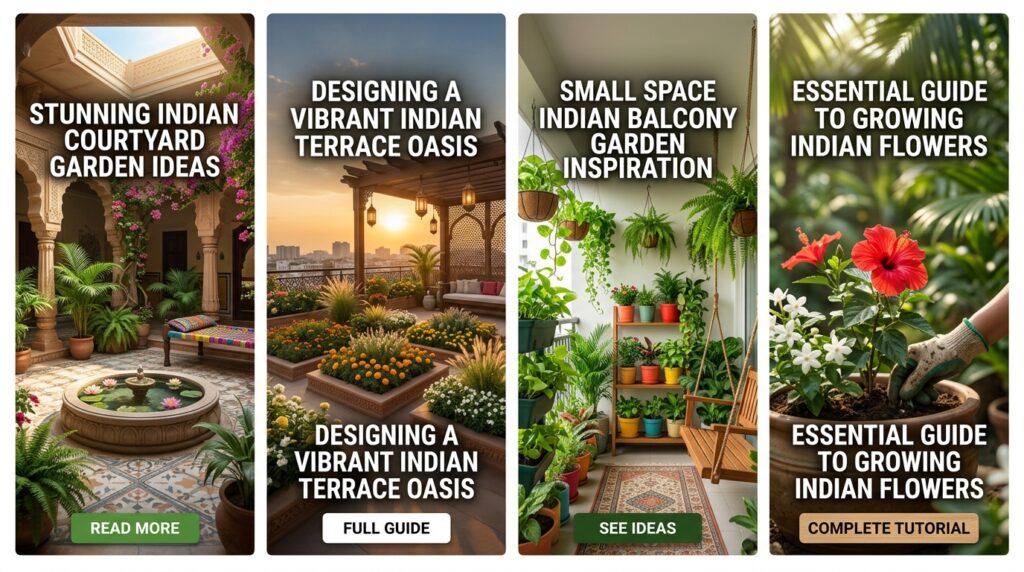
The layout depends on the available space and desired style.
Popular layouts include:
Courtyard Garden
Perfect for traditional Indian homes with a central seating area surrounded by plants.
Lawn-Centered Garden
A green lawn serves as the focal point with flower borders around the edges.
Formal Garden
Features symmetrical flower beds, straight pathways, and fountains inspired by Mughal architecture.
Natural Garden
Uses winding paths, native plants, and mixed planting for a relaxed appearance.
Best Plants for an Indian Garden
Choose plants that thrive in your local climate.
Popular flowering plants include:
- Hibiscus
- Marigold
- Jasmine
- Rose
- Bougainvillea
- Ixora
- Periwinkle
- Lotus
- Lily
- Sunflower
These flowers provide vibrant color throughout the year.
Fragrant Plants
Fragrance is an important feature of many Indian gardens.
Excellent choices include:
- Jasmine
- Tuberose
- Gardenia
- Champa
- Parijat
- Lavender
Plant fragrant flowers near seating areas or entrances.
Shade Trees
Trees provide cooling shade and structure.
Popular options include:
- Neem
- Mango
- Ashoka
- Gulmohar
- Coconut
- Banyan
- Peepal
Select trees according to your available space.
Fruit Trees
Fruit trees combine beauty with productivity.
Grow:
- Mango
- Guava
- Lemon
- Pomegranate
- Papaya
- Banana
- Sapota
Fresh fruit adds value to your home garden.
Herb Garden
Indian kitchens commonly use fresh herbs.
Grow:
- Mint
- Coriander
- Curry leaves
- Tulsi
- Basil
- Lemongrass
Plant herbs near the kitchen for easy harvesting.
Vegetable Garden

Many Indian gardens include a productive vegetable section.
Popular vegetables include:
- Tomatoes
- Okra
- Eggplant
- Spinach
- Chili peppers
- Beans
- Cucumbers
- Bottle gourd
Raised beds help improve productivity.
Water Features
Water creates a calming atmosphere.
Ideas include:
- Stone fountains
- Lotus ponds
- Small waterfalls
- Bird baths
- Reflecting pools
Flowing water attracts birds and enhances relaxation.
Pathway Ideas
Beautiful pathways connect different garden areas.
Popular materials include:
- Natural stone
- Brick
- Gravel
- Sandstone
- Concrete pavers
Curved paths create a softer, more natural appearance.
Decorative Pots
Decorative containers add flexibility and style.
Popular choices include:
- Terracotta pots
- Ceramic planters
- Stone urns
- Brass containers
- Colorful painted pots
Arrange pots at entrances, patios, and seating areas.
Garden Seating
Comfortable seating encourages relaxation.
Ideas include:
- Wooden benches
- Stone seating
- Swing chairs
- Gazebos
- Pergolas
- Outdoor dining sets
Shaded seating areas become favorite gathering spaces.
Garden Lighting
Outdoor lighting extends garden enjoyment into the evening.
Use:
- Solar lights
- Lanterns
- Path lights
- Spotlights
- Hanging lights
Warm lighting highlights plants and pathways beautifully.
Sustainable Gardening
Eco-friendly gardening benefits both plants and the environment.
Sustainable practices include:
- Rainwater harvesting
- Composting
- Organic fertilizers
- Mulching
- Native plants
- Drip irrigation
These methods conserve water while promoting healthy growth.
Pollinator-Friendly Garden
Encourage beneficial insects by planting:
- Marigolds
- Sunflowers
- Jasmine
- Lavender
- Cosmos
- Zinnias
Avoid excessive pesticide use around flowering plants.
Small Indian Garden Ideas
Limited space can still be transformed beautifully.
Ideas include:
- Balcony gardens
- Terrace gardens
- Vertical planters
- Courtyard gardens
- Hanging baskets
- Container gardens
Compact designs maximize every square foot.
Seasonal Gardening
Plan for year-round beauty.
Spring
Plant:
- Marigolds
- Roses
- Jasmine
Summer
Grow:
- Hibiscus
- Bougainvillea
- Sunflowers
Monsoon
Plant:
- Ferns
- Tropical foliage
- Rain-loving flowers
Winter
Enjoy:
- Petunias
- Calendulas
- Chrysanthemums
- Pansies
Seasonal planting keeps the garden colorful all year.
Garden Maintenance
Maintain your Indian garden with regular care.
Tasks include:
- Watering
- Pruning
- Fertilizing
- Weeding
- Mulching
- Pest inspection
- Lawn mowing
Consistent maintenance keeps plants healthy and attractive.
Common Mistakes to Avoid
Avoid these gardening mistakes:
- Overwatering
- Poor drainage
- Plant overcrowding
- Ignoring sunlight requirements
- Lack of mulch
- Skipping pruning
- Choosing unsuitable plants
Thoughtful planning prevents many common issues.
Frequently Asked Questions
What plants grow best in an Indian garden?
Marigolds, hibiscus, jasmine, roses, bougainvillea, neem, mango, tulsi, mint, and curry leaves are excellent choices.
Can I create an Indian garden in a small backyard?
Yes. Use containers, raised beds, vertical planters, and compact flowering plants to maximize limited space.
What is the best irrigation method?
Drip irrigation is highly efficient because it delivers water directly to plant roots while reducing waste.
Which flowers bloom throughout the year?
Hibiscus, periwinkle, bougainvillea, and some jasmine varieties can bloom for much of the year in suitable climates.
How do I make my Indian garden eco-friendly?
Use compost, rainwater harvesting, organic fertilizers, native plants, mulch, and water-efficient irrigation systems.
Conclusion
An Indian garden combines natural beauty, cultural inspiration, and practical gardening to create an inviting outdoor retreat. Whether you choose a traditional Mughal-inspired layout, a tropical landscape, or a modern courtyard garden, thoughtful planning and the right mix of plants can transform any space into a peaceful sanctuary.
By incorporating colorful flowers, fragrant herbs, fruit trees, water features, decorative pathways, and comfortable seating, you can create a garden that is both beautiful and functional. With regular maintenance and sustainable gardening practices, your Indian garden will continue to flourish, providing year-round enjoyment, fresh greenery, and a relaxing escape for family and friends.