
 By John
Low maintenance garden ideas are perfect for homeowners who want a beautiful outdoor space without spending countless hours on upkeep. Whether you have a large backyard, a small front garden, a courtyard, or a balcony, designing a low-maintenance landscape can save time, reduce costs, and allow you to enjoy your garden rather than constantly working in it.
A well-planned low maintenance garden focuses on smart plant choices, durable materials, efficient layouts, and sustainable gardening practices. By selecting hardy plants, minimizing lawn areas, and incorporating practical landscaping features, you can create an attractive garden that remains beautiful throughout the year with minimal effort.
This complete guide explores the best low maintenance garden ideas, landscaping tips, plant selections, and design strategies for creating a stunning yet easy-to-care-for outdoor space.
Why Choose a Low Maintenance Garden?
Modern lifestyles often leave little time for intensive gardening.
A low-maintenance garden allows homeowners to enjoy attractive outdoor spaces without constant weeding, watering, mowing, or pruning.
Benefits include:
- Reduced gardening time
- Lower water consumption
- Fewer maintenance costs
- Year-round beauty
- Less physical effort
- Increased outdoor enjoyment
The right design can provide all the visual appeal of a traditional garden while significantly reducing workload.
Plan Before You Plant
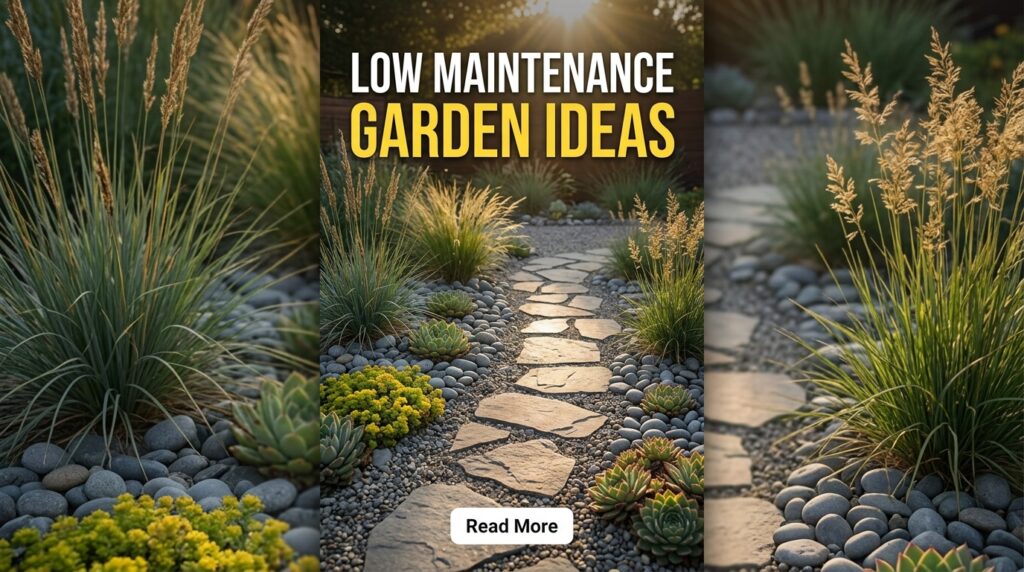
Successful low-maintenance gardens begin with careful planning.
Consider:
- Garden size
- Sunlight conditions
- Soil type
- Climate
- Water availability
- Personal lifestyle
Designing with maintenance in mind helps avoid future problems and unnecessary work.
A thoughtful layout creates a more functional and manageable landscape.
Reduce Lawn Areas
Large lawns often require the most maintenance.
Tasks such as mowing, watering, fertilizing, and edging consume significant time and resources.
Consider reducing lawn space by replacing it with:
- Gravel gardens
- Ground covers
- Decorative paving
- Planting beds
- Outdoor living areas
Smaller lawns are easier to maintain while still providing open space.
Choose Drought-Tolerant Plants
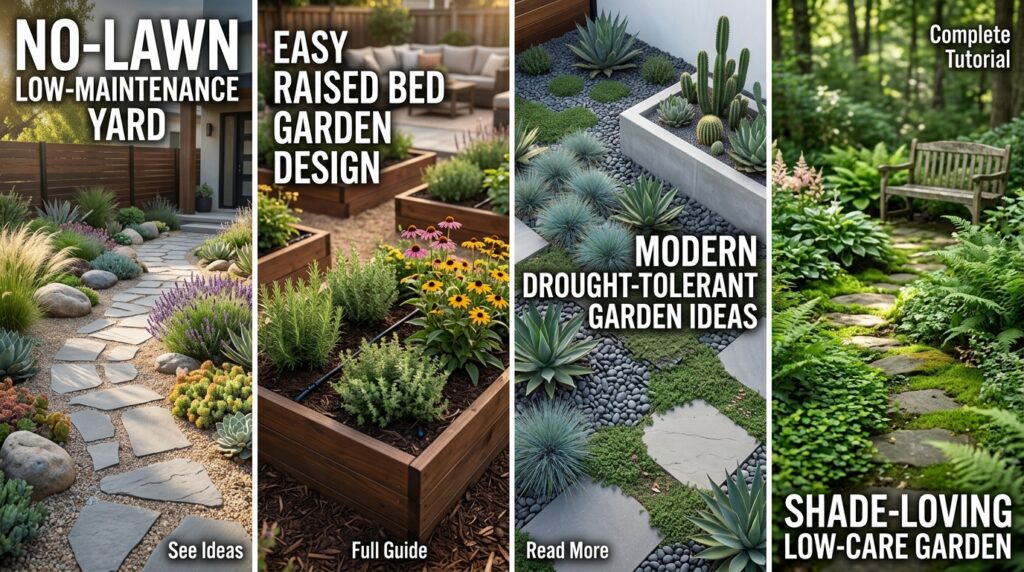
Water-efficient plants reduce irrigation needs and thrive with minimal care.
Popular drought-tolerant plants include:
- Lavender
- Salvia
- Agave
- Sedum
- Russian Sage
- Ornamental Grasses
These plants provide color and texture while requiring less water than traditional garden varieties.
Drought-tolerant landscaping is both practical and environmentally friendly.
Plant Native Species
Native plants are naturally adapted to local conditions.
Benefits include:
- Lower water requirements
- Better pest resistance
- Reduced fertilizer needs
- Support for local wildlife
Native gardens often require significantly less maintenance than exotic plant collections.
Research plants suited to your region for the best results.
Use Mulch Generously
Mulch is one of the simplest ways to reduce garden maintenance.
Benefits include:
- Weed suppression
- Moisture retention
- Soil improvement
- Temperature regulation
Popular mulch options include:
- Bark chips
- Wood chips
- Gravel
- Compost
Mulching reduces the frequency of watering and weeding while improving plant health.
Install Automatic Irrigation
An automated watering system saves time and conserves water.
Popular options include:
- Drip irrigation
- Soaker hoses
- Smart irrigation controllers
These systems deliver water directly to plant roots, reducing waste and promoting healthy growth.
Automation simplifies garden care, especially during hot weather.
Choose Evergreen Plants
Evergreen plants provide year-round structure and color.
Popular choices include:
- Boxwood
- Juniper
- Holly
- Yew
- Pittosporum
Evergreens require minimal seasonal maintenance while keeping the garden attractive throughout the year.
They form the backbone of many low-maintenance landscapes.
Create Gravel Gardens
Gravel gardens are increasingly popular for low-maintenance landscaping.
Advantages include:
- Excellent drainage
- Minimal weed growth
- Reduced watering needs
- Modern appearance
Combine gravel with drought-tolerant plants for an attractive and practical design.
Gravel gardens work especially well in sunny locations.
Use Ground Covers Instead of Grass
Ground cover plants can replace traditional lawns in certain areas.
Popular options include:
- Creeping Thyme
- Sedum
- Ajuga
- Vinca
- Irish Moss
Ground covers suppress weeds and reduce mowing requirements.
Many varieties also produce attractive flowers.
Incorporate Hardscaping
Hardscape features require very little maintenance.
Examples include:
- Patios
- Pathways
- Decks
- Retaining walls
- Stone features
Hardscaping adds structure and functionality while reducing the amount of planted space that requires care.
A balance of hardscape and greenery creates an attractive landscape.
Plant in Groups
Mass planting simplifies maintenance and improves visual impact.
Grouping similar plants together makes watering, pruning, and fertilizing more efficient.
Repeating plant varieties creates a cleaner and more cohesive appearance.
Large drifts of plants often look more professional than scattered individual specimens.
Select Slow-Growing Shrubs
Slow-growing plants require less pruning and maintenance.
Popular choices include:
- Dwarf Boxwood
- Compact Juniper
- Dwarf Hydrangea
- Dwarf Conifers
These plants maintain their shape naturally and reduce ongoing work.
They are ideal for homeowners seeking simplicity.
Create Outdoor Living Spaces
Outdoor living areas reduce maintenance while increasing usability.
Popular features include:
- Patios
- Decks
- Seating areas
- Pergolas
- Outdoor kitchens
These spaces provide opportunities for relaxation and entertainment without requiring extensive gardening.
Functional areas often become favorite parts of the garden.
Use Raised Garden Beds
Raised beds simplify gardening and improve accessibility.
Benefits include:
- Better soil control
- Reduced weeds
- Improved drainage
- Easier maintenance
Raised beds are ideal for vegetables, herbs, and ornamental plants.
They also create a tidy and organized appearance.
Low Maintenance Flower Choices
Choose flowers known for reliability and long bloom periods.
Excellent options include:
- Coneflowers
- Black-Eyed Susans
- Daylilies
- Salvia
- Lavender
- Coreopsis
These plants provide color with minimal care.
Perennials are especially valuable because they return year after year.
Add Ornamental Grasses
Ornamental grasses offer beauty and ease of care.
Popular varieties include:
- Fountain Grass
- Feather Reed Grass
- Blue Fescue
- Maiden Grass
Grasses provide texture, movement, and year-round interest.
Most require little more than occasional trimming.
Container Gardening with Minimal Effort
Containers can be low maintenance when planted correctly.
Choose:
- Self-watering pots
- Hardy plants
- Slow-release fertilizers
Container gardens work well on patios, balconies, and small yards.
Grouping containers together simplifies watering and care.
Low Maintenance Garden Ideas for Small Spaces
Small gardens are naturally easier to manage.
Ideas include:
- Vertical gardens
- Compact shrubs
- Decorative paving
- Built-in seating
- Container planting
A simple design prevents overcrowding and reduces maintenance demands.
Every element should serve a clear purpose.
Sustainable Low Maintenance Gardening
Eco-friendly practices often reduce maintenance.
Consider:
- Rainwater harvesting
- Composting
- Native plants
- Organic mulches
- Pollinator-friendly flowers
Sustainable gardens require fewer resources while supporting local ecosystems.
Environmental responsibility and convenience often go hand in hand.
Common Mistakes to Avoid
Avoid choosing plants that require frequent pruning.
Do not overcrowd planting beds.
Avoid excessive lawn areas.
Choose plants suited to your climate.
Plan for mature plant size to prevent future maintenance problems.
Smart decisions at the beginning save significant effort later.
Seasonal Maintenance Tips
Even low-maintenance gardens require occasional care.
Tasks may include:
- Seasonal pruning
- Mulch replenishment
- Weed removal
- Irrigation checks
- Plant health inspections
A few hours of maintenance each season can keep the garden looking its best year-round.
Consistency is more effective than major cleanup efforts.
Budget-Friendly Low Maintenance Garden Ideas
Creating an easy-care garden does not require a large budget.
Start with:
- Mulching
- Native plants
- Gravel pathways
- Perennial flowers
- DIY raised beds
Gradual improvements often provide the best long-term results.
Investing in quality materials can reduce future maintenance costs.
Final Thoughts
Low maintenance garden ideas make it possible to enjoy a beautiful outdoor space without spending excessive time on upkeep. By reducing lawn areas, choosing hardy plants, incorporating hardscaping, and using smart landscaping techniques, homeowners can create gardens that remain attractive throughout the year with minimal effort.
Whether you have a small courtyard, a suburban backyard, or a large landscape, thoughtful planning can dramatically reduce maintenance requirements while enhancing beauty and functionality. The key is selecting plants and materials that work with your environment rather than against it.
A well-designed low maintenance garden provides the perfect balance of beauty, practicality, and sustainability, allowing you to spend less time working and more time enjoying your outdoor sanctuary.