
 By John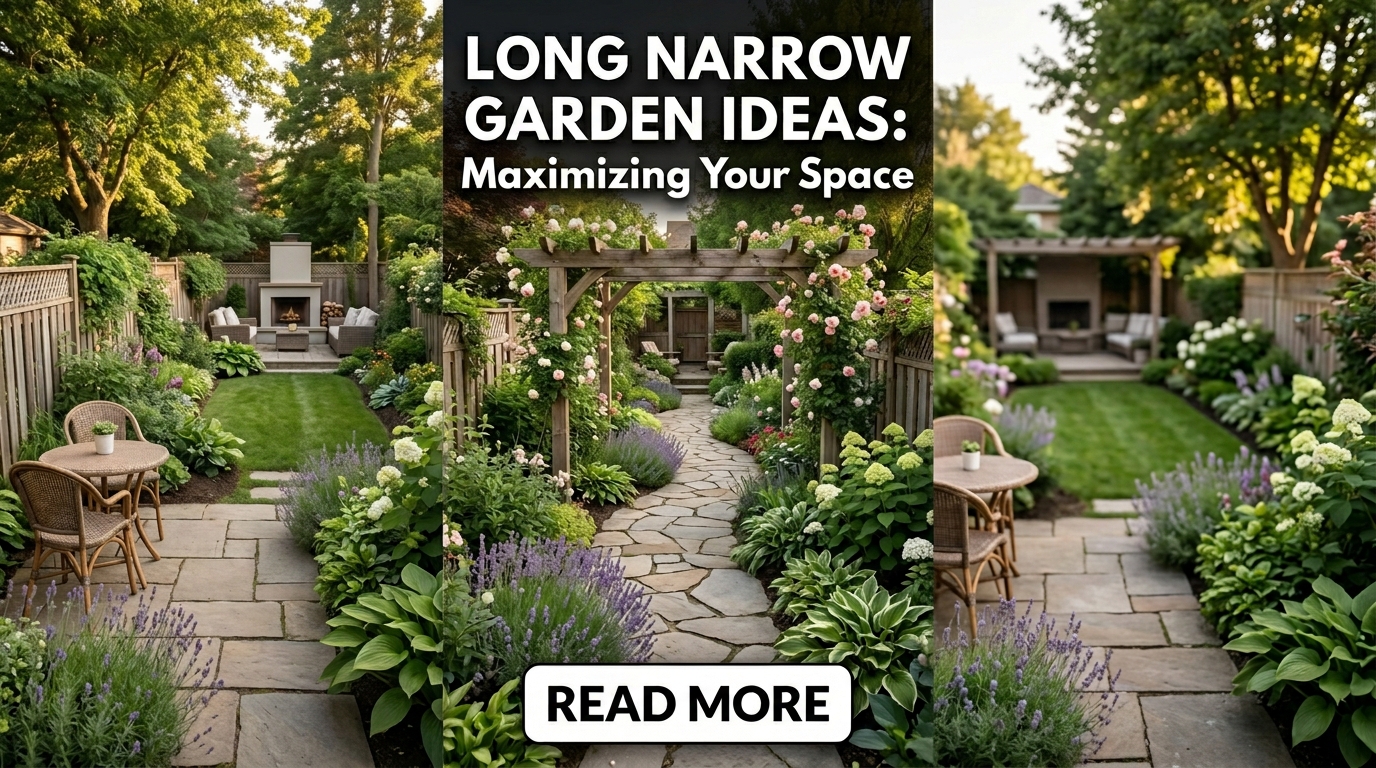
A long garden (also called a narrow garden or linear garden) is a space that stretches in length but has limited width. These gardens are very common in modern homes, townhouses, and urban properties. While the shape may seem challenging at first, a long garden actually offers excellent opportunities for creative landscaping, zoning, and visual depth.
With the right design approach, a long garden can be transformed into a stylish, functional, and visually spacious outdoor area.
Understanding the Challenge of Long Gardens
Long gardens often feel narrow or corridor-like, which can make them appear smaller than they are. The main design challenge is avoiding a “runway effect,” where the eye simply moves straight to the end without interest.
Good design solves this by:
- Breaking up the space visually
- Creating focal points
- Adding layers and depth
- Using curves and angles instead of straight lines
1. Divide the Garden into Zones
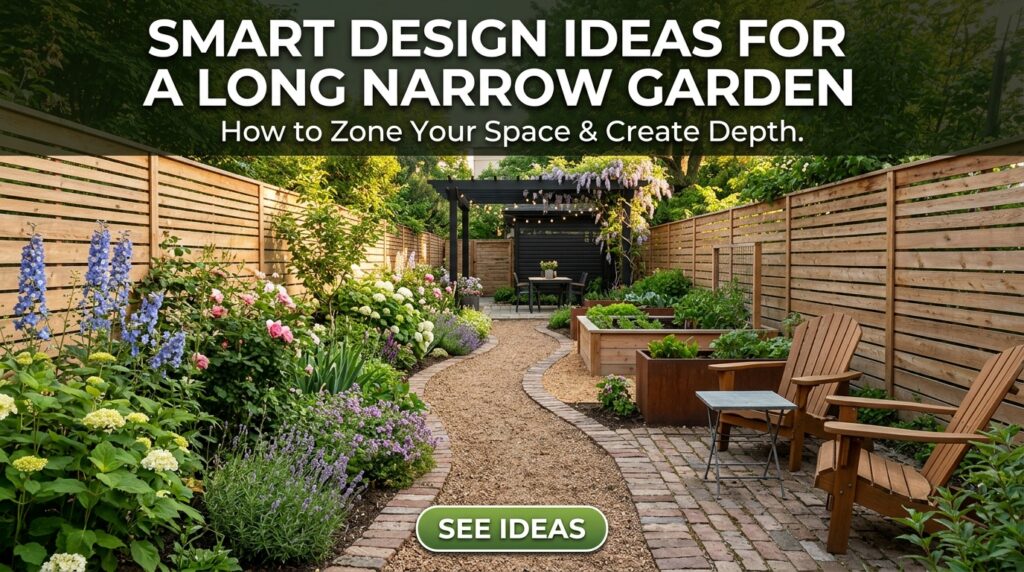
One of the best ways to design a long garden is to divide it into smaller “rooms.” Each section has a different purpose, which makes the space feel larger and more dynamic.
Popular zones include:
- Outdoor dining area
- Lounge or seating space
- Small lawn section
- Flower garden
- Herb or vegetable patch
- Fire pit corner
Use hedges, pergolas, planters, or changes in flooring to separate these zones.
2. Use Curved Pathways for Depth
Straight paths emphasize the narrow shape, while curved paths create mystery and flow.
Path ideas:
- Winding gravel paths
- Stepping stone trails
- Zigzag stone layouts
- Wooden deck walkways
Curves help slow movement and make the garden feel wider and more natural.
3. Create Strong Focal Points
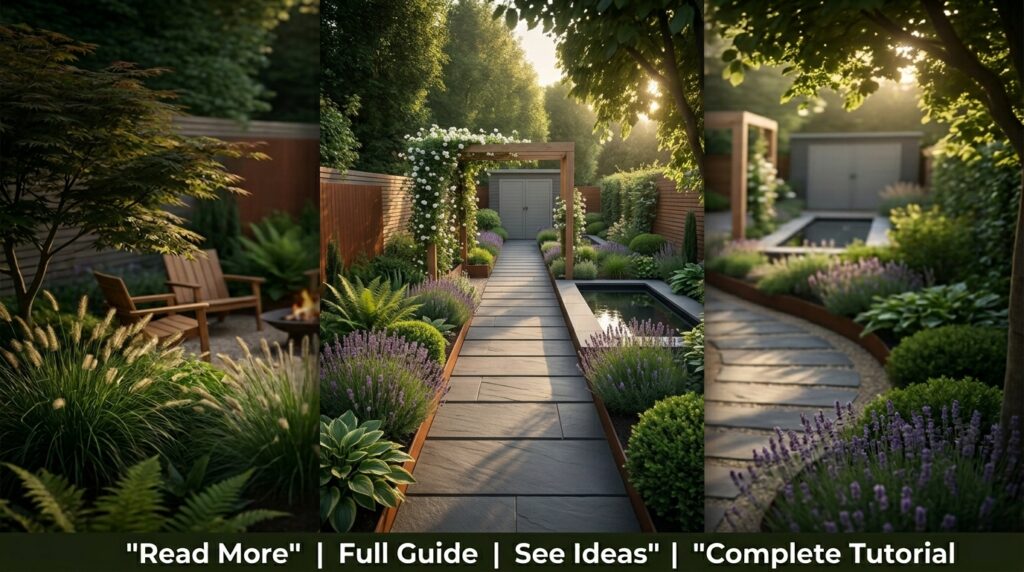
A focal point draws attention and breaks the long visual line.
Focal point ideas:
- Water fountain
- Sculpture or statue
- Feature tree
- Garden bench
- Fire pit
- Large planter arrangement
Place focal points at the end or along key sections of the garden.
4. Use Vertical Landscaping
Vertical elements help balance the narrow shape and add height.
Best vertical features:
- Trellises with climbing roses or ivy
- Bamboo screens
- Tall ornamental grasses
- Espalier fruit trees
- Vertical garden walls
Vertical design creates privacy and makes the garden feel fuller.
5. Layer Plants for a Natural Look
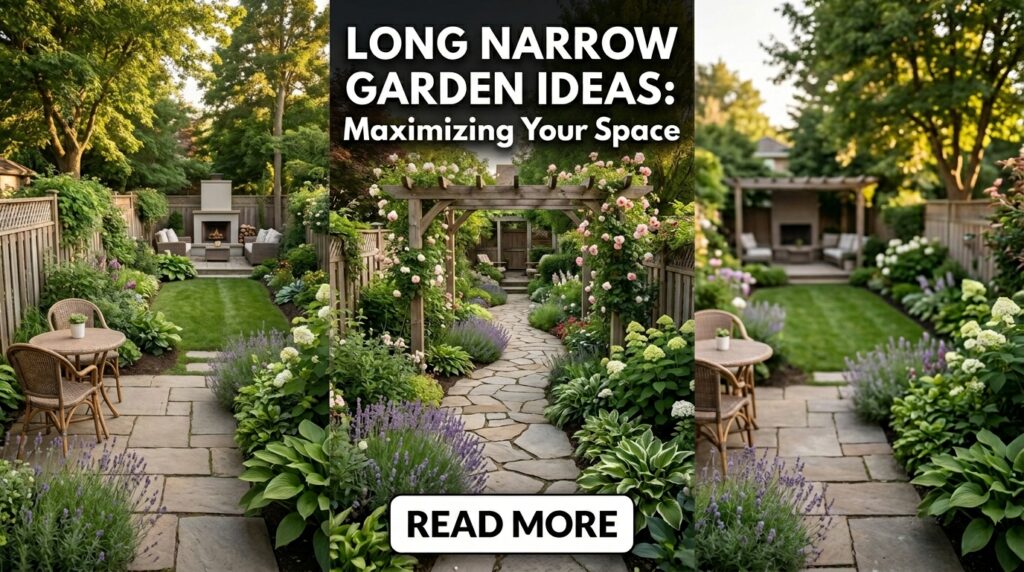
Layering plants adds depth and prevents a flat appearance.
Plant layering strategy:
- Tall plants at the back or center points
- Medium shrubs in the middle
- Low ground cover at edges
Recommended plants:
- Lavender
- Boxwood
- Hydrangeas
- Ferns
- Ornamental grasses
- Roses
Repeating plants throughout the garden creates harmony.
6. Add Seating Areas Along the Way
Instead of one seating space, include multiple resting points.
Seating ideas:
- Small bench under a tree
- Bistro table set
- Built-in wooden seating
- Pergola-covered lounge area
This makes the garden more interactive and inviting.
7. Use Lighting to Expand Space
Lighting plays a major role in making long gardens feel larger and more welcoming.
Lighting options:
- Solar pathway lights
- String lights along fences
- Spotlights on trees
- Hidden ground lighting
- Lantern-style decorations
Soft lighting creates depth and evening ambiance.
8. Modern Minimalist Long Garden Design
A modern design keeps things clean and structured.
Features:
- Straight or geometric paving
- Concrete slabs or stone tiles
- Box-shaped planting beds
- Neutral colors
- Simple furniture
Best plants:
- Boxwood
- Agave
- Olive trees
- Bamboo
- Ornamental grasses
This style is low-maintenance and elegant.
9. Cottage Style Long Garden
A cottage garden makes long spaces feel lush and romantic.
Features:
- Dense flower borders
- Curved paths
- Mixed planting styles
- Rustic furniture
Flowers:
- Roses
- Foxglove
- Delphinium
- Lavender
- Peonies
This design softens the narrow shape beautifully.
10. Small Long Garden Ideas
Even very narrow spaces can look amazing with smart design.
Space-saving tips:
- Use vertical gardens
- Install wall planters
- Keep furniture slim and simple
- Use mirrors to reflect light
- Stick to a consistent color theme
Small gardens benefit most from simplicity and organization.
11. Water Features in Long Gardens
Water adds movement and calmness.
Ideas include:
- Narrow reflecting pool
- Wall-mounted fountain
- Small pond at the end of the garden
- Stream-style water channel
Water features also help create a natural focal point.
12. Common Mistakes to Avoid
Avoid these errors:
- Long straight paths with no breaks
- Overcrowding plants
- No focal point
- Using only one type of plant
- Ignoring lighting design
Each of these can make the garden feel smaller and less attractive.
Conclusion
A long garden offers huge creative potential when designed correctly. By dividing the space into zones, using curved paths, adding vertical planting, and creating strong focal points, you can transform a narrow area into a visually rich and functional outdoor space.
Whether you prefer a modern minimalist style, a lush cottage garden, or a compact urban design, the key is to create balance, depth, and flow. With thoughtful planning, even the narrowest garden can become a beautiful and relaxing outdoor retreat.